
Leucite-reinforced glass-ceramics (LRGC) represent a foundational advancement in the evolution of metal-free dental restorations, offering a unique balance of aesthetic excellence and moderate strength. Since the introduction of IPS Empress in the 1990s, these materials have enabled clinicians to deliver highly aesthetic, pressable, all-ceramic alternatives to traditional metal-ceramic crowns...
Table of contents [Show]
- Chemical Composition and Crystal Structure
- Types of Leucite-Reinforced Ceramics
- Mechanical Properties
- Optical Properties
- Processing Techniques
- Framework Design Principles
- Clinical Applications
- Clinical Performance
- Advantages and Benefits
- Limitations and Contraindications
- Comparison with Other Ceramics
- Recent Developments
- Best Practices and Recommendations
- Conclusion
Leucite-reinforced glass-ceramics (LRGC) represent a foundational advancement in the evolution of metal-free dental restorations, offering a unique balance of aesthetic excellence and moderate strength. Since the introduction of IPS Empress in the 1990s, these materials have enabled clinicians to deliver highly aesthetic, pressable, all-ceramic alternatives to traditional metal-ceramic crowns - Especially for anterior and premolar applications where translucency and color matching are paramount.
Chemical Composition and Crystal Structure
Basic Composition
Leucite-reinforced ceramics are primarily composed of:
SiO₂ (55-65%): Main glass former.
Al₂O₃ (13-18%): Glass network modifier.
K₂O (10-14%): Essential for leucite crystal formation.
Na₂O, CaO, B₂O₃, CeO₂, TiO₂: Various roles in modifying viscosity, fluorescence, and opacity.
Leucite Crystal Formation
Phase: Tetragonal leucite (KAlSi₂O₆) crystals, 1-5 μm in size.
Content: 35-55% by volume.
Distribution: Homogeneous, rounded crystals within a glassy aluminosilicate matrix.
Phase transformation: Cubic to tetragonal at 625°C, contributing to unique thermal properties.
Microstructural Features
Porosity: <0.5% in pressed ceramics.
Crystal-matrix interface: Strong chemical bonding for enhanced toughness.
Residual stress: Managed through careful CTE matching.
Types of Leucite-Reinforced Ceramics
First Generation (IPS Empress)
Leucite content: 35-40%.
Strength: 120-180 MPa.
Applications: Veneers, inlays, crowns.
Translucency: Excellent.
Second Generation (IPS Empress 2)
Leucite content: 40-50%, with added lithium disilicate crystals.
Strength: 300-350 MPa.
Extended indications: Up to 3-unit bridges.
CAD/CAM Variants
ProCAD, Paradigm C, CEREC Blocs, Empress CAD.
Crystal content: 30-40%.
Machinability: Superior for digital dentistry workflows.
Mechanical Properties
Strength and Reliability
Flexural strength: 120-160 MPa (conventional).
Compressive strength: 450-500 MPa.
Fracture toughness: 1.2-1.5 MPa·m^0.5.
Weibull modulus: 8-10, indicating consistent reliability.
Elastic and Fatigue Properties
Elastic modulus: 65 ± 5 GPa.
Fatigue limit: 50-60 MPa, with survival up to 10⁶ cycles.
Moisture sensitivity: Some susceptibility to slow crack growth in wet environments.
Thermal Properties
CTE: 15-18 × 10⁻⁶/°C (25-500°C).
Glass transition: 540-560°C.
Softening point: 650-700°C.
Optical Properties
Translucency and Color
Translucency parameter: 15-25 (1 mm thickness).
Light transmission: 25-35%.
Refractive index: 1.50-1.52.
Fluorescence and opalescence: Natural, enamel-like appearance.
Shade matching: Full compatibility with Vita and other shade systems.
Aesthetic Advantages
Chameleon effect: Blends seamlessly with natural teeth.
Depth of color: Three-dimensional, highly lifelike.
Surface gloss: Excellent retention and polishability.
Processing Techniques
Heat-Pressing Technology
Lost-wax technique: Conventional or CAD/CAM wax-up, minimum 0.8 mm thickness.
Investment: Phosphate-bonded for high-temperature stability.
Burnout and pressing: Precise temperature and pressure control for accurate fit.
Finishing: Slow cooling, alumina blasting, ultrasonic cleaning.
CAD/CAM Processing
Block selection: Shade and translucency matched.
Milling: Diamond burs, water cooling, fine finishing, and optional glazing.
Layering Technique
Cut-back and build-up: For enhanced natural effects, using multiple firings without property degradation.
Framework Design Principles
Minimum thickness: 0.8-1.0 mm (anterior), 1.5-2.0 mm (posterior), 0.5-0.7 mm (veneers).
Design: Uniform thickness, rounded angles, smooth transitions, anatomical contours.
Not recommended: For bridge connectors due to limited flexural strength.
Clinical Applications
Veneers
Minimal preparation: 0.3-0.5 mm.
Aesthetic results: Excellent translucency, predictable color matching.
Longevity: 93.5% at 10 years.
Inlays/Onlays
Conservative: Tooth preservation, strong adhesive bonding.
Success: 95% at 5 years.
Crowns
Anterior/premolar: Primary indications; molars only in select cases.
Survival rates: 95% at 5 years (anterior).
Bridges
Not recommended: High risk of connector failure in posterior regions.
Bonding Protocols
Etching: 4.5-5% hydrofluoric acid, 60 seconds.
Cleaning: Water spray, phosphoric acid neutralization, ultrasonic bath.
Silanization: Silane agent, 60 seconds.
Cementation: Light-cure for veneers; dual-cure for crowns; self-adhesive for simplified workflow.
Clinical Performance
Veneers: 93.5% at 10 years, 82.9% at 20 years.
Inlays/Onlays: 95.2% at 5 years.
Anterior crowns: 95.2% at 5 years.
Posterior crowns: 89% at 5 years.
Common failures: Bulk fracture, chipping, marginal defects—minimized with proper protocol.
Advantages and Benefits

Aesthetic Superiority
Natural translucency and color.
Predictable shade matching.
Long-term color stability.
Clinical and Technical Benefits
Conservative prep, strong bonding, easy repair.
Pressable and machinable for lab efficiency.
Consistent, predictable results.
Limitations and Contraindications
Mechanical: Lower strength than lithium disilicate or zirconia; not suitable for bridges or heavy occlusion.
Clinical: Not for deep discoloration, insufficient space, or poor moisture control.
Technical: Technique sensitive, requires skilled laboratory and clinical execution.
Comparison with Other Ceramics
Lithium Disilicate: Higher strength, similar aesthetics, broader indications.
Feldspathic Porcelain: 2-3x stronger, more reliable.
Zirconia: Superior translucency, easier bonding, more natural aesthetics.
Recent Developments
Nano-leucite and gradient structures: Improved strength, aesthetics.
Digital integration: Enhanced workflow and consistency.
Bioactive and composite structures: Potential for therapeutic effects.
Best Practices and Recommendations
Case selection: Aesthetic demands, conservative prep, anterior teeth, normal occlusion.
Preparation: 0.3-0.5 mm (veneers), 1.0-1.5 mm (crowns), chamfer margins, smooth finish.
Laboratory communication: Detailed shade, photos, prep depth, and occlusal records.
Cementation: Try-in, isolation, protocol adherence, careful adjustment and polishing.
Maintenance: Regular recalls, gentle cleaning, patient education.
Conclusion
Leucite-reinforced glass-ceramics remain a cornerstone for aesthetic, conservative dental restorations, especially in the anterior region where natural translucency and color are critical. With proven long-term success and excellent optical properties, they continue to be the material of choice for veneers, inlays, onlays, and select crowns. For dental practices seeking quality and consistency, partnering with a specialized lab like XDENT LAB ensures optimal outcomes and patient satisfaction in every case.
XDENT LAB – Your trusted partner for lab-to-lab full-service solutions, delivering FDA- and ISO-approved leucite-reinforced ceramic restorations to the U.S. and global markets.
About XDENT LAB:
We are experts in Lab-to-Lab Full Service from Vietnam, with the signature services of Removable, meet U.S. market standards, FDA-registered, ISO 13485-certified. Founded in 2017, from local root to global reach, we scale with 2 Factories with over 100+ employees.
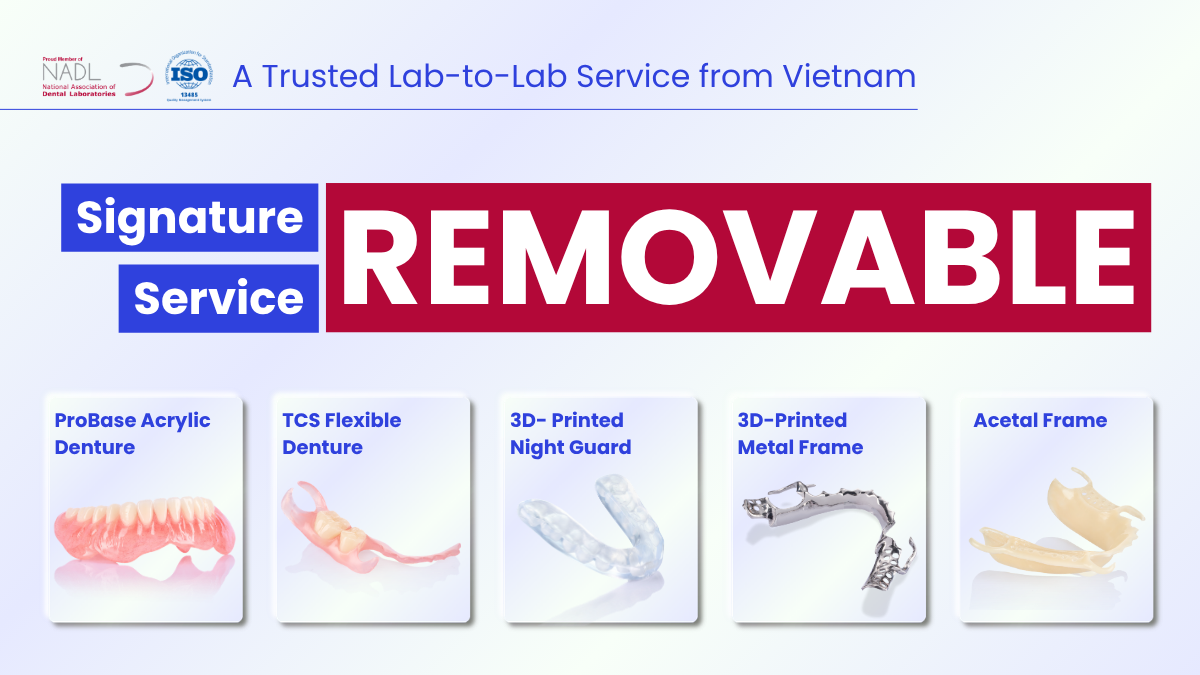
Our Commitments Built on “Trusted. Commitment. Quality”
- Commit to Large-Scale Manufacturing, high volume, remake rate < 1%.
- Commit to 5-Year Warranty
- Commit to Competitive Price
XDENT LAB | A Trusted Lab-to-Lab Service from Vietnam
Share this post:
Related Posts
Learn the key differences between titanium and cobalt-chromium alloys used in removable partial denture frameworks, from mechanical properties to production requirements.
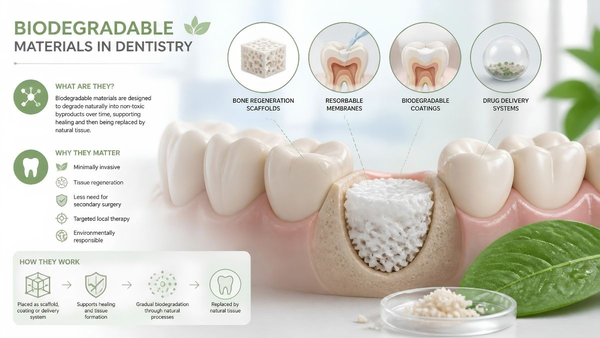
Explore biodegradable materials in dentistry, including their applications, benefits, limitations, and future potential in regenerative and sustainable dental care.
Learn how polyamide dental materials support flexible dentures and removable prosthetics through biocompatibility, aesthetics, comfort, and lightweight performance.

