
Learn the key differences between titanium and cobalt-chromium alloys used in removable partial denture frameworks, from mechanical properties to production requirements.
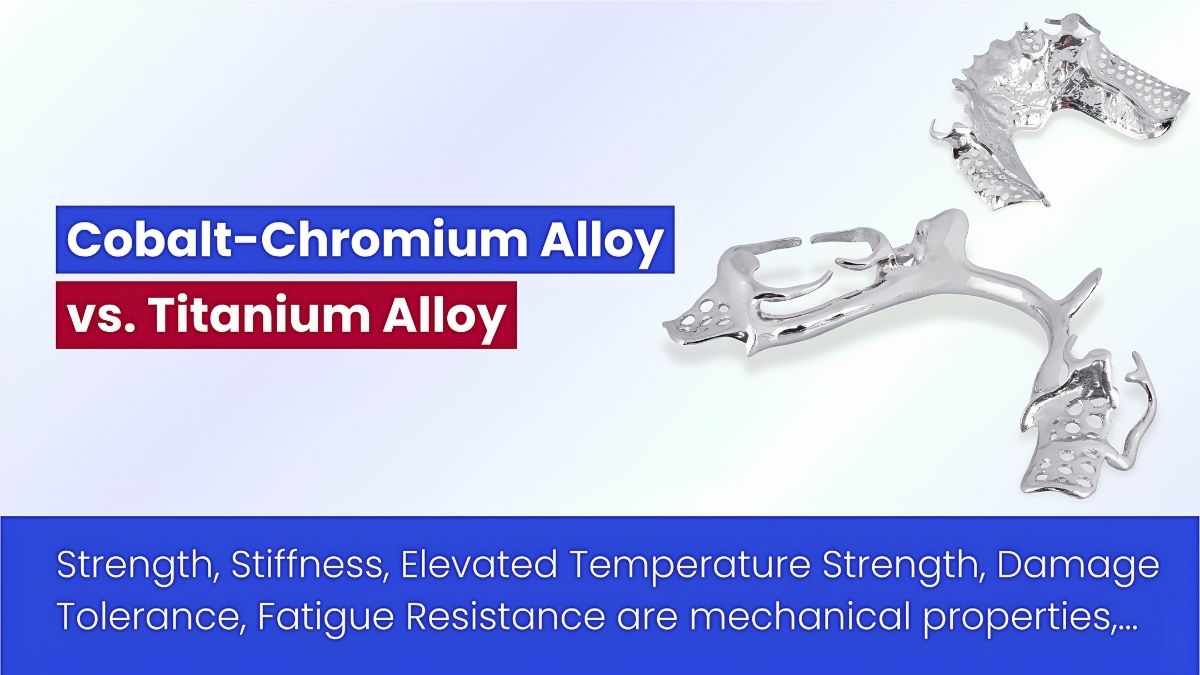
Table of contents [Show]
- Titanium Alloy in Removable Prosthodontics
- Cobalt-Chromium Alloy in Dental Framework Manufacturing
- Strength Comparison
- Stiffness and Elastic Modulus
- Fatigue Resistance
- Damage Tolerance and Fracture Toughness
- Elevated Temperature Performance During Manufacturing
- Material Selection for Dental Frameworks
Material selection for removable partial denture (RPD) frameworks plays a significant role in determining mechanical performance, manufacturing efficiency, and long-term prosthesis durability. Among the metallic materials commonly used in modern removable prosthodontics, Titanium Alloy and Cobalt-Chromium Alloy remain two of the most widely adopted options.
While both materials satisfy fundamental requirements for strength, corrosion resistance, and intraoral stability, they exhibit distinct mechanical characteristics that influence framework design, manufacturing processes, and clinical performance.
Titanium Alloy in Removable Prosthodontics
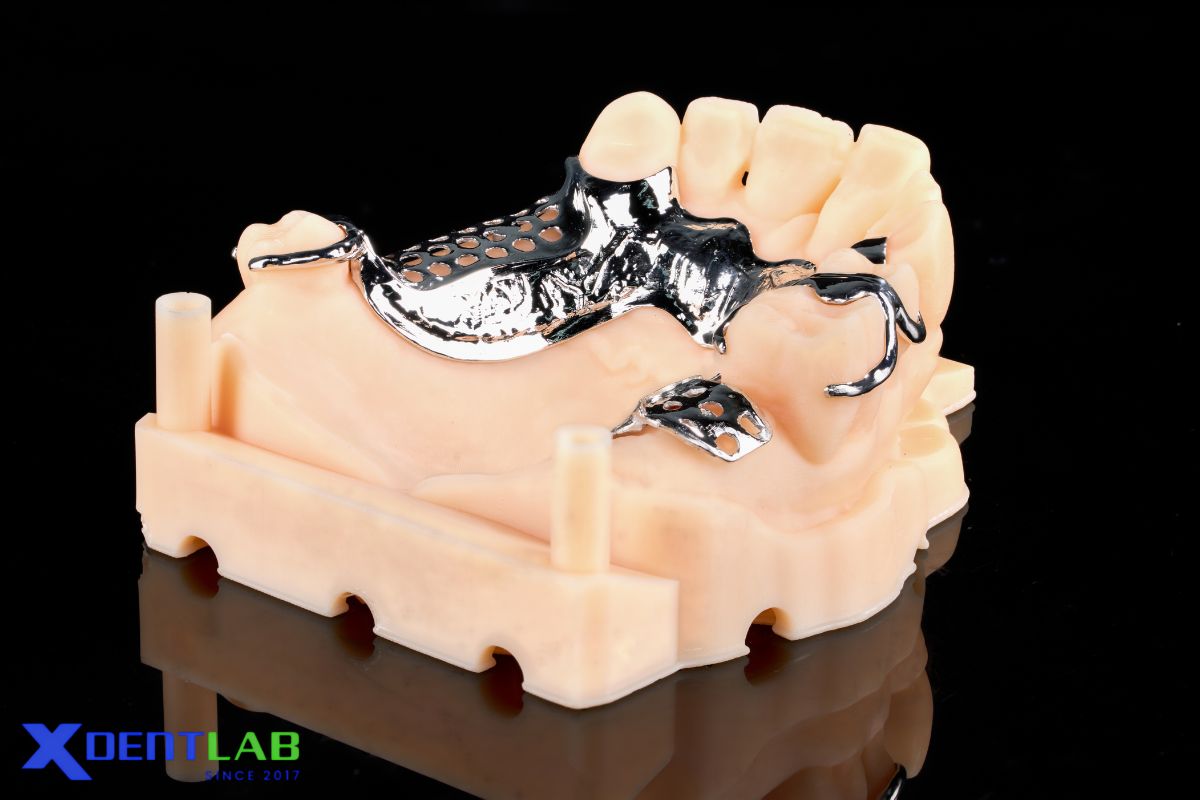
Titanium and its alloys have been extensively used in biomedical applications due to their biocompatibility and corrosion resistance in physiological environments.
One of the most notable characteristics of titanium alloy is its relatively low density, approximately 4.5 g/cm³. Compared with many conventional dental alloys, titanium enables the fabrication of lightweight frameworks while maintaining sufficient mechanical performance for removable prosthetic applications.
When exposed to oxygen, titanium naturally forms a stable titanium oxide layer on its surface. This passive film enhances corrosion resistance and contributes to the long-term stability of the material in the oral environment.
Titanium alloys are also recognized for their high strength-to-weight ratio. This property allows frameworks to achieve the required load-bearing capacity without substantially increasing prosthesis weight.
In recent years, titanium alloys have gained increasing attention in CAD/CAM workflows and additive manufacturing technologies, particularly Laser Powder Bed Fusion (LPBF), where complex dental structures can be fabricated with high precision.
Cobalt-Chromium Alloy in Dental Framework Manufacturing
Cobalt-chromium alloy has a long history of use in removable partial denture framework fabrication.
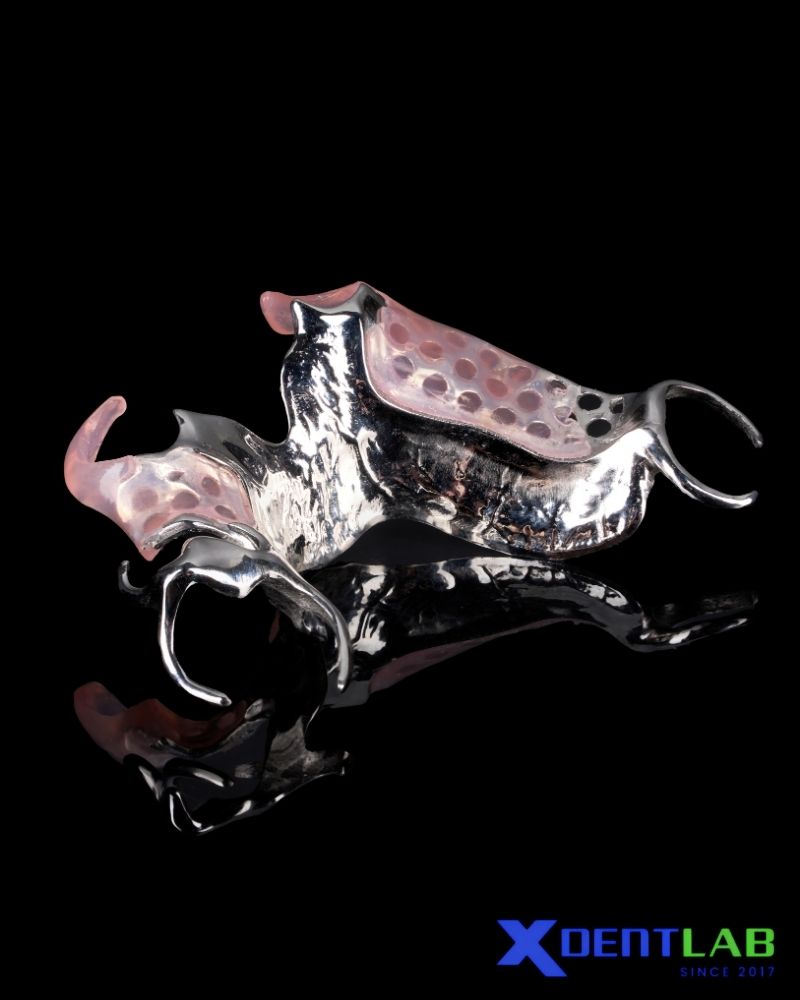
Its high elastic modulus and resistance to deformation enable the production of relatively thin structures while maintaining the rigidity required for clinical function.
The corrosion resistance of cobalt-chromium alloys is primarily attributed to the formation of a stable chromium oxide layer on the material surface. This passive film serves as a protective barrier, helping the alloy remain stable in the oral environment.
In addition, cobalt-chromium alloys demonstrate favorable wear resistance and dimensional stability under long-term functional loading. These characteristics have contributed to their continued use in conventional removable framework fabrication.
Strength Comparison
Strength refers to a material's ability to withstand applied stress before permanent deformation or failure occurs.
Both titanium alloy and cobalt-chromium alloy provide sufficient strength for removable prosthodontic applications. However, cobalt-chromium alloys generally exhibit higher hardness and yield strength, allowing frameworks to maintain their structural integrity under masticatory loading.
Titanium alloys, while often exhibiting lower yield strength than some cobalt-chromium systems, offer a superior strength-to-weight ratio. This characteristic can be advantageous in framework designs where weight reduction is a key consideration.
Stiffness and Elastic Modulus
Stiffness is commonly evaluated through elastic modulus, which measures a material's resistance to elastic deformation.
Titanium alloys typically exhibit an elastic modulus in the range of 100–120 GPa, whereas cobalt-chromium alloys generally range from 200–230 GPa.
This difference means that cobalt-chromium frameworks are significantly stiffer and more resistant to deformation under functional loading. In clinical applications, this characteristic can support dimensional stability in long-span or highly loaded framework designs.
Titanium alloys, by comparison, exhibit greater flexibility. Consequently, framework design may require adjustments in thickness, cross-sectional geometry, or reinforcement features to achieve the desired rigidity.
Fatigue Resistance
Fatigue is the progressive development of material damage caused by repeated cyclic loading over time.
Removable partial denture frameworks and clasps are subjected to millions of loading cycles during insertion, removal, and mastication throughout their service life. As a result, fatigue resistance is a critical factor affecting long-term prosthesis performance.
Titanium alloys generally demonstrate favorable fatigue behavior due to the combination of strength and elasticity. The material can absorb cyclic stresses efficiently before fatigue-related damage develops.
Cobalt-chromium alloys also provide adequate fatigue performance; however, careful framework design remains essential to minimize stress concentrations, particularly in transition zones and areas with reduced cross-sectional dimensions.
Damage Tolerance and Fracture Toughness
Damage tolerance describes a material's ability to continue functioning in the presence of small defects such as microporosities, microcracks, or manufacturing imperfections.
This property is closely related to fracture toughness, which measures resistance to crack initiation and propagation.
Titanium alloys typically exhibit higher fracture toughness than cobalt-chromium alloys. As a result, crack growth may progress more slowly under functional loading conditions.
This characteristic can be particularly relevant for frameworks produced through additive manufacturing processes or for designs involving complex geometries where localized stress concentrations may occur.
Elevated Temperature Performance During Manufacturing
Although dental prostheses operate at body temperature, elevated temperature properties remain important during manufacturing.
Cobalt-chromium alloys possess high melting temperatures and generally maintain mechanical stability during casting and thermal processing procedures.
Titanium alloys also exhibit excellent thermal performance; however, they require more controlled manufacturing conditions. At elevated temperatures, titanium has a strong affinity for oxygen, nitrogen, and hydrogen. Consequently, casting and additive manufacturing processes often require environments specific to prevent contamination and preserve material properties.
Material Selection for Dental Frameworks
Selecting between titanium alloy and cobalt-chromium alloy depends on multiple factors, including clinical requirements, framework design, available manufacturing technologies, and intended functional objectives.
Titanium alloys may be considered when reducing prosthesis weight is a primary objective or when leveraging a high strength-to-weight ratio is beneficial. Cobalt-chromium alloys, on the other hand, remain widely utilized in framework designs that require high rigidity and dimensional stability under long-term loading conditions.
Rather than focusing on a single property, dental laboratories typically evaluate a combination of factors, including strength, stiffness, fatigue resistance, fracture toughness, corrosion resistance, and manufacturing compatibility, when selecting the most appropriate material for a specific removable prosthodontic application.
About XDENT LAB:
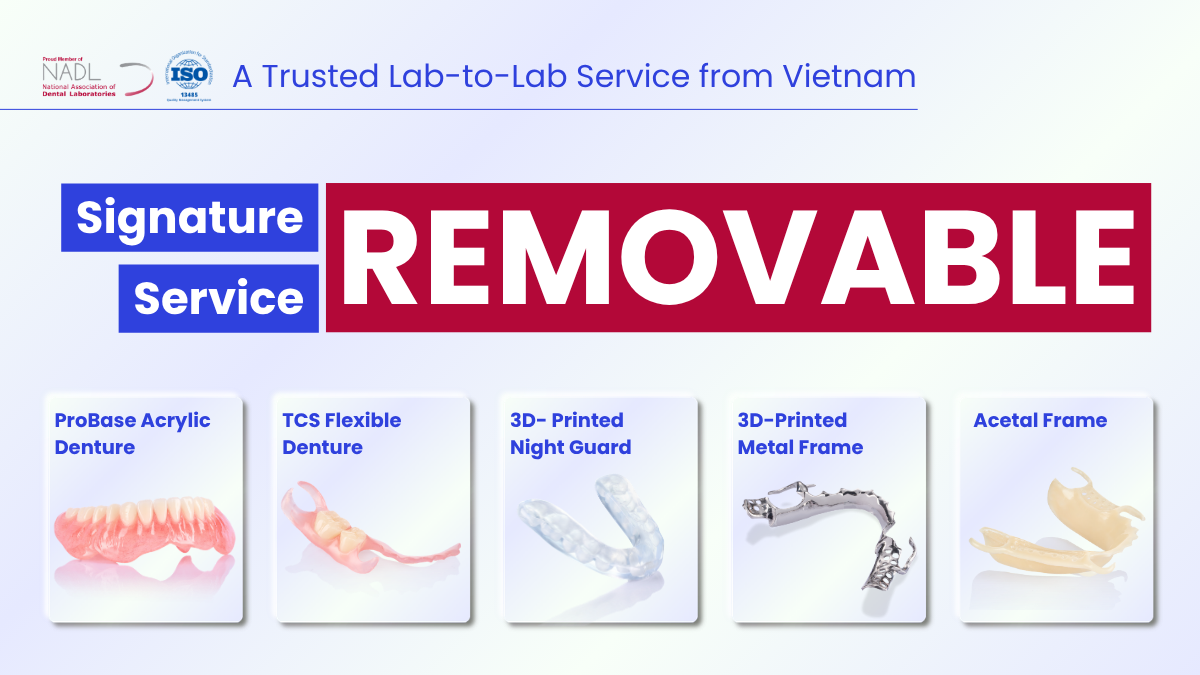
We are experts in Lab-to-Lab Full Service from Vietnam, with the signature services of Removable, meet U.S. market standards, FDA-registered, ISO 13485-certified. Founded in 2017, from local root to global reach, we scale with 2 Factories with over 100+ employees.
Our Commitments Built on “Trusted. Commitment. Quality”
- Commit to Large-Scale Manufacturing, high volume, remake rate < 1%.
- Commit to 5-Year Warranty
- Commit to Competitive Price
XDENT LAB | A Trusted Lab-to-Lab Service from Vietnam
Share this post:
Related Posts
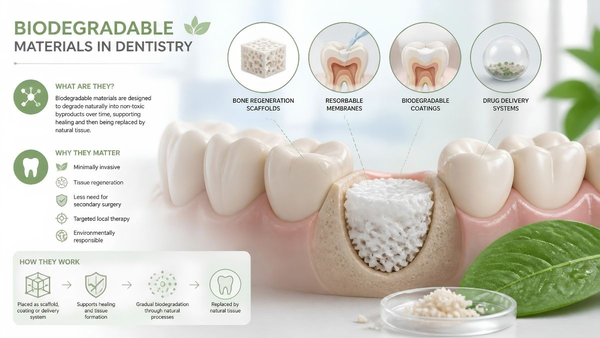
Explore biodegradable materials in dentistry, including their applications, benefits, limitations, and future potential in regenerative and sustainable dental care.
Learn how polyamide dental materials support flexible dentures and removable prosthetics through biocompatibility, aesthetics, comfort, and lightweight performance.
Explore how light-curing resin is being applied in 3D printed nightguards, from flexible materials and digital workflows to post-processing techniques that improve accuracy, durability, and overall pe...

