
Learn key polishing considerations for hard and soft night guards, including heat control, surface finish, fit accuracy, polishing compounds, and material-specific techniques.
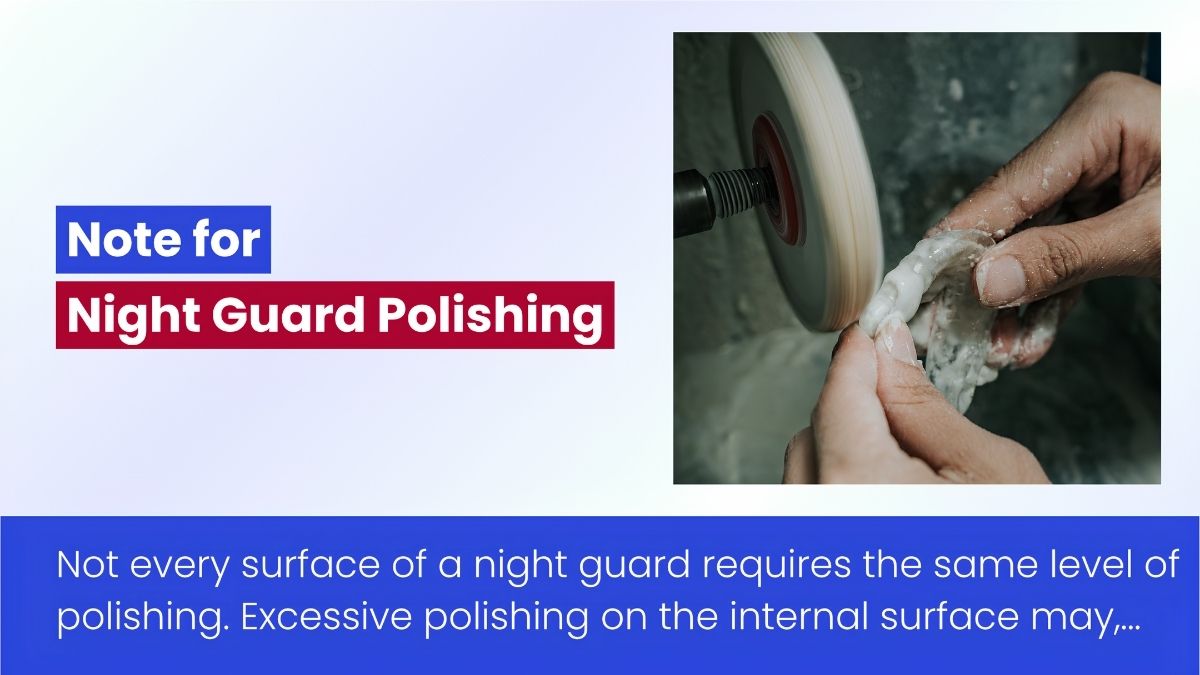
In the manufacturing process of dental night guards, polishing is a critical step that directly affects surface finish, wearing comfort, and the overall appearance of the appliance. Whether the night guard is made from hard or soft material, improper polishing techniques may alter the fit, distort the surface, or reduce the optical clarity of the material.
For hard night guards, the material generally offers higher rigidity and dimensional stability. However, excessive polishing pressure or overheating during the finishing process may cause localized surface haze, excessive gloss burnishing, or slight deformation in thinner areas. This is particularly important around the occlusal surface and margins, where maintaining dimensional accuracy is essential after fabrication.
Soft night guards, on the other hand, tend to be more sensitive to heat and friction. During polishing, controlling motor speed and contact pressure becomes even more important compared to hard materials. Using an inappropriate buff wheel or polishing compound may lead to surface dragging, uneven texture, or a “wave-like” appearance on the material surface.
One commonly overlooked aspect of polishing is the removal of support marks and print lines prior to final finishing. For appliances produced through 3D printing technology, residual layer lines or support traces may become more visible after polishing if they are not pre-treated using fine abrasive discs or suitable surface conditioning materials. Rather than attempting to eliminate imperfections through aggressive polishing pressure, a more effective workflow usually begins with a controlled and consistent pre-finishing stage.
In addition, not every surface of a night guard requires the same level of polishing. In many cases, technicians focus polishing on the external surface and margins while minimizing adjustments to the intaglio surface in order to preserve appliance fit. Excessive polishing on the internal surface may compromise adaptation to the dentition, especially in appliances requiring high precision.
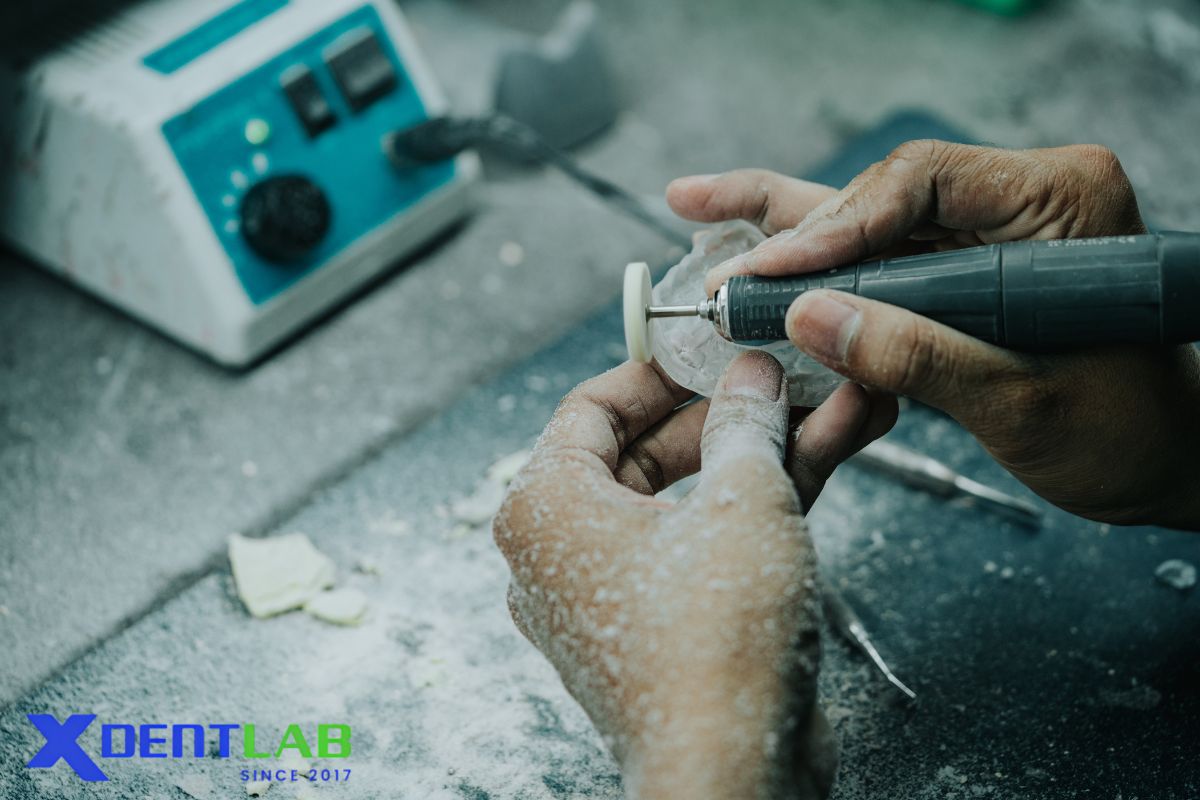
The selection of polishing compounds also significantly influences the final result. Coarser compounds are typically used during the initial stage to reduce scratches and refine the surface, followed by finer polishing compounds to achieve higher gloss. Transitioning between polishing stages should also include proper cleaning of the appliance to avoid cross-contamination between materials.
Beyond polishing compounds, the choice of buff wheel should also be carefully considered. Larger, flatter cloth wheels often provide more uniform polishing across occlusal surfaces, while smaller wheels may offer better control around margins or complex anatomical areas. In practical laboratory workflows, consistency of technique is often more important than applying excessive force in an attempt to achieve faster results.
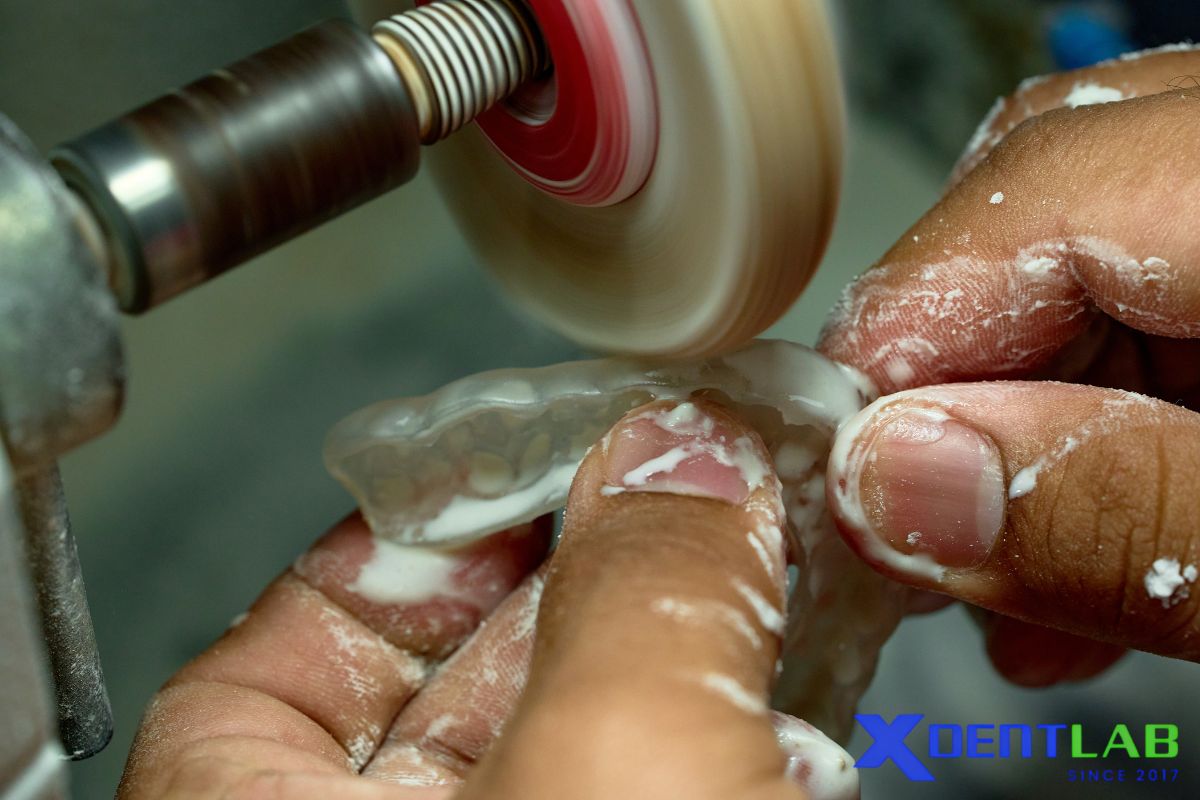
For night guards requiring high optical clarity, some laboratories may incorporate an additional high-gloss finishing stage or use specialized polishing liquids during the final process. However, the objective of polishing is not limited to achieving surface shine alone. The process must also maintain dimensional accuracy, material stability, and long-term appliance performance.
Polishing should be considered a technical finishing procedure rather than a purely cosmetic step. An effective polishing workflow requires balance between gloss, fit accuracy, heat control, and surface consistency. When performed correctly, polishing can significantly improve the final quality of both hard and soft dental night guards.
Another important factor in the polishing process of night guards is following the technical recommendations provided by the resin manufacturer. In practice, each resin material may have different mechanical properties, surface hardness, heat resistance, and reactions to polishing compounds. For this reason, many material manufacturers provide dedicated finishing and polishing guidelines specifically designed for their materials.
These technical guides often include recommendations regarding the appropriate tools, motor speed settings, compatible buff wheels, suitable polishing compounds, and the correct polishing sequence to achieve optimal surface gloss and stability. Some materials require strict heat control during polishing, while others may be more sensitive to pressure or prolonged friction.
In addition, manufacturers may provide guidance on which areas should be polished cautiously in order to avoid affecting the fit of the appliance. For 3D printed devices, resin manufacturers often include recommendations for handling print lines, support marks, and pre-polishing procedures before the final high-gloss finishing stage.
In a dental manufacturing environment, reviewing the technical documentation from the resin manufacturer can help technicians select a more suitable polishing workflow instead of applying the same technique to every material. This not only improves surface finishing quality, but also helps maintain the dimensional stability and accuracy of the night guard after production.
If technicians want to optimize the polishing process for a specific material, it is recommended to consult additional technical documents, polishing guides, or finishing recommendations directly from the resin manufacturer in order to obtain the most appropriate instructions for the material being used.
About XDENT LAB:
We are experts in Lab-to-Lab Full Service from Vietnam, with the signature services of Removable, meet U.S. market standards, FDA-registered, ISO 13485-certified. Founded in 2017, from local root to global reach, we scale with 2 Factories with over 100+ employees.
Our Commitments Built on “Trusted. Commitment. Quality”
- Commit to Large-Scale Manufacturing, high volume, remake rate < 1%.
- Commit to 5-Year Warranty
- Commit to Competitive Price
XDENT LAB | A Trusted Lab-to-Lab Service from Vietnam
Share this post:
Related Posts
Understanding and applying the correct Layer Thickness settings not only saves labs time and production cost, but also ensures stable output quality for each specific type of dental product.
A technical guide to post curing in digital denture fabrication, helping dental lab technicians understand the parameters for consistent product quality.
Learn about digital dentistry, including scanners, CAD/CAM, 3D printing, AI, workflows, benefits, challenges, and dental lab applications.

