
Rest seat geometry controls how force enters the abutment tooth. Here are the design rules every RPD technician needs to know, with the reasoning behind each one.
Table of contents [Show]
- Introduction
- 1. The Rest Must Be Rigid Enough To Transfer Load Without Flexing
- 2. The Rest Seat Outline Must Be A Rounded Triangle
- 3. Width and Length Of Rest Seat Must Be Proportional, With A Minimum Base Of 2.5mm
- 4. The Marginal Ridge Must Be Lowered By Approximately 1.5mm
- 5. The Floor Of The Rest Seat Must Be Concave
- 6. The Angle Between The Rest And The Minor Connector Must Stay Below 90 Degrees
- 7. Use A Secondary Rest When The Primary Rest Cannot Be Corrected
- 8. The Rest-To-Tooth Relationship Should Function Like A Shallow Ball-and-Socket Joint
- Conclusion
- References
Introduction
Part 1 of this series covered what rests are, what they do, and why they matter across different case types. This post continues to explore the specific form requirements for occlusal rest seats, with the reasoning behind each rule.
The occlusal rest seat is a small preparation, but it is not a simple one. Each dimension, angle, and surface quality has a mechanical reason behind it. A rest seat that does not meet these requirements does not fail completely and immediately. It usually fails gradually, producing lateral force on the abutment tooth, or allowing the denture to slide it incrementally, or putting the clasp in a position where it can no longer do its job. By the time the clinical problem was visible, the preparation was already wrong.
These are the eight requirements that govern correct occlusal rest and rest seat design.
1. The Rest Must Be Rigid Enough To Transfer Load Without Flexing
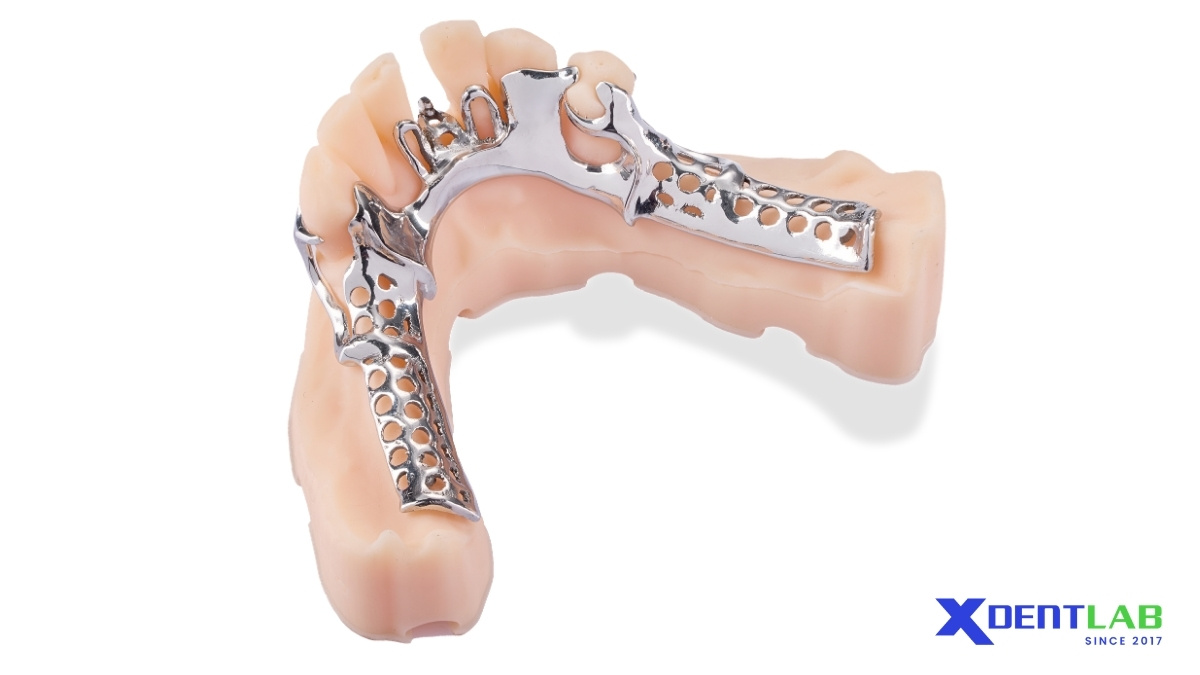
Rigidity is the foundational requirement for any rest. If the rest bends under occlusal force, it cannot transfer that force into the abutment tooth. The load goes somewhere else, either into the soft tissue below the denture base or unevenly distributed to adjacent structures in ways the framework was not designed to handle.
Rigidity in the rest is a function of metal bulk. The rest seat preparation must provide enough space for the metal to be thick enough to resist deformation under normal occlusal loading. This is why the dimensional requirements below are not arbitrary. They exist to ensure the metal has the cross-sectional area it needs to stay rigid.
At the same time, bulk cannot be added without limit. A rest that is too prominent above the occlusal surface will create a premature contact that throws off the patient’s bite. The goal is sufficient bulk within the prepared space, not bulk above it.
2. The Rest Seat Outline Must Be A Rounded Triangle
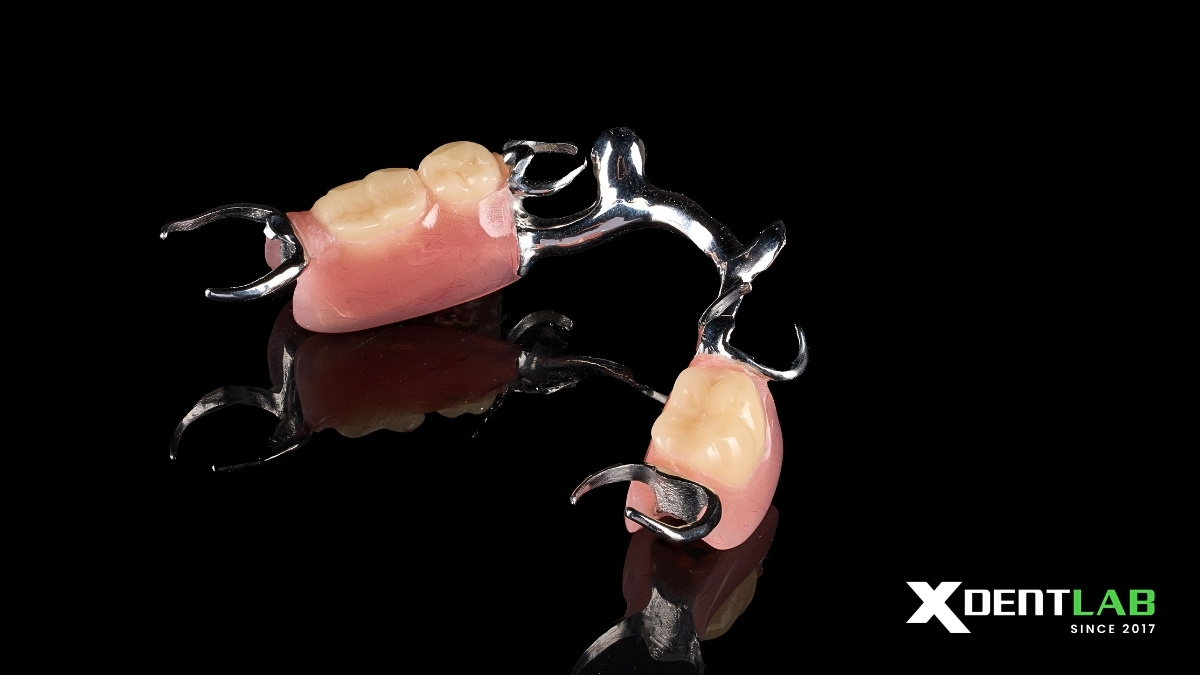
The outline of an occlusal rest seat should be a rounded triangle. The base of the triangle sits at the marginal ridge. The apex points toward the center of the occlusal surface.
The triangular outline gives the rest enough surface area to distribute occlusal load across the preparation rather than concentrating it at a single point. The rounded corners eliminate stress concentrations that would otherwise develop at sharp angles in the enamel or restoration over time.
The apex pointing inward also matters. It positions the bulk of the rest toward the center of the tooth, which is the most structurally stable area of the occlusal surface and the furthest from the marginal ridge where tooth structure is thinnest.
3. Width and Length Of Rest Seat Must Be Proportional, With A Minimum Base Of 2.5mm
The rest seat should be approximately as long as it is wide. The base of the triangular shape at the marginal ridge must be at least 2.5mm for both molars and premolars.
This minimum exists because of the metal thickness required for the rest to function without fracturing. A rest that is too narrow will have insufficient cross-sectional bulk at the minor connector junction, that is where bending stress concentrates under load. At 2.5mm base width, there is enough metal to maintain rigidity through the functional life of the prosthesis. Narrower than that, and the rest becomes a fracture risk, particularly in patients with heavy occlusal loads.
If the clinical situation makes 2.5mm difficult to achieve, for example on a small premolar, that constraint should be communicated clearly between the clinician and the lab before the preparation is finalized.
4. The Marginal Ridge Must Be Lowered By Approximately 1.5mm
This is one of the most commonly underestimated steps in rest seat preparation. The marginal ridge in its natural position is elevated relative to the occlusal surface. If the rest seat is prepared without lowering it, the metal rest will have to sit higher than the surrounding tooth surface to clear the ridge. That means the rest will contact the opposing dentition before anything else does, creating a premature contact that disrupts occlusion and places unintended load on the abutment tooth.
Lowering the marginal ridge by approximately 1.5mm creates the vertical clearance the metal needs to sit flush within the preparation without altering the occlusal plane. It also allows the minor connector to emerge from below the marginal ridge cleanly.
5. The Floor Of The Rest Seat Must Be Concave
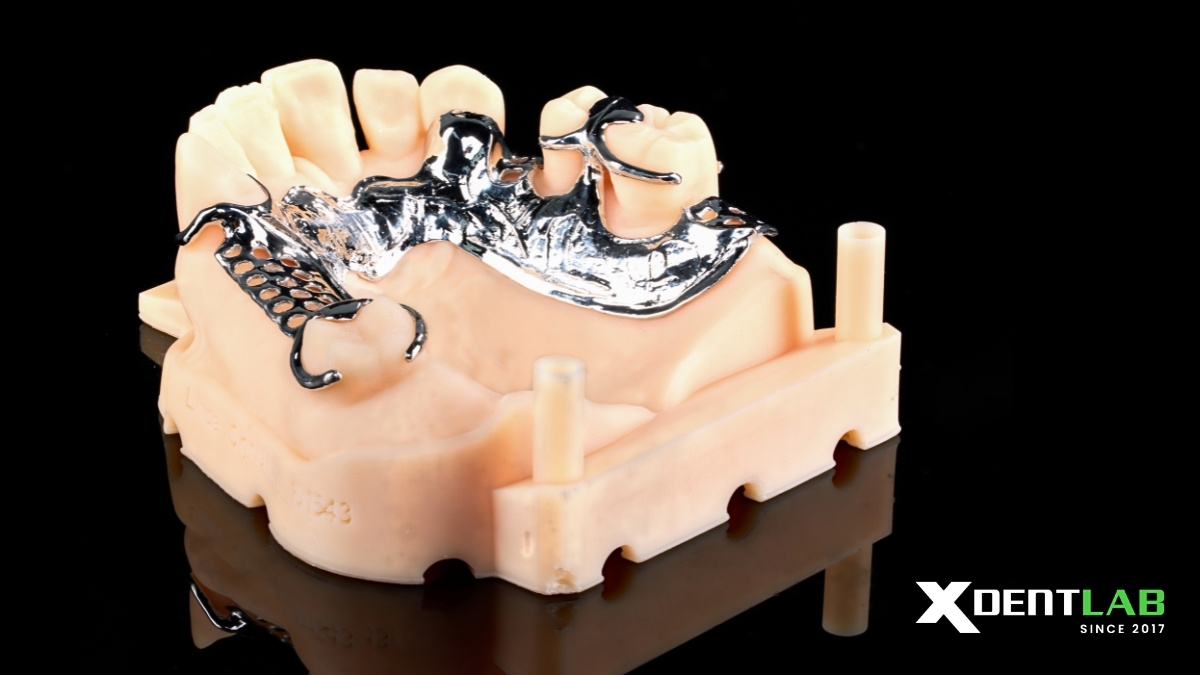
The floor of the occlusal rest seat should be concave, shaped like the inside of a shallow spoon. It should sit apical to both the marginal ridge and the surrounding occlusal surface.
There are two reasons for this. The first is mechanical. A concave floor cradles the convex underside of the rest, creating a stable seating relationship. A flat floor allows the rest to shift position under lateral forces because there is no curved geometry to resist that movement.
The second reason is biological. Sharp internal angles in any tooth preparation concentrate stress at the angle point. Under repeated occlusal loading, those concentration points can initiate cracks in enamel or at the margins of existing restorations. A smoothly curved floor distributes stress evenly and eliminates those initiation sites.
When preparing a rest seat, any transition between walls and floor should be rounded, not angular.
6. The Angle Between The Rest And The Minor Connector Must Stay Below 90 Degrees
This is the most critical geometric requirement in occlusal rest design, and the one most directly responsible for abutment tooth movement when it is wrong.
The minor connector approaches the rest seat vertically from the major connector. Where the minor connector meets the horizontal rest, an angle is formed. That angle must be less than 90 degrees, meaning the rest floor is inclined slightly apically from the marginal ridge toward the center of the tooth.
When this angle is correct, occlusal force pressing down on the rest is directed along the long axis of the tooth. The load goes straight down into the periodontal ligament, which distributes it evenly, and the tooth remains stable.
When this angle is greater than 90 degrees, the force is no longer directed axially. Instead it pushes the rest laterally, causing the prosthesis to slide away from the abutment. The rest then contacts an inclined surface on the tooth and applies an orthodontic-like force, with repeated loading this can move the abutment tooth over time.
7. Use A Secondary Rest When The Primary Rest Cannot Be Corrected
Sometimes the primary rest seat cannot be deepened or corrected because the preparation is already close to the pulp or the edge of a restoration. In those cases, the floor angle cannot be made compliant, and the primary rest will not direct force correctly on its own.
The solution is a secondary occlusal rest placed on the opposite side of the same tooth. The secondary rest passes over the lowered marginal ridge on the opposing proximal surface and is inclined slightly apically from that ridge.
Two opposing rests on diverging tooth inclines work against each other’s tendency to slide, keeping the prosthesis stable as long as all related connectors are sufficiently rigid.
8. The Rest-To-Tooth Relationship Should Function Like A Shallow Ball-and-Socket Joint
The rest should seat into the rest seat with a close but not locked fit. The relationship should allow for very slight movement in the horizontal plane, similar to how a ball sits in a shallow socket: stable under vertical load, but not rigidly constrained against minor lateral displacement.
This matters because occlusal forces in function are never perfectly vertical. There is always a small horizontal component. If the rest is locked rigidity in all directions, that horizontal force transfers directly to the abutment tooth as leverage. If the rest can release it through slight movement, the tooth is protected. Resisting horizontal forces is the job of other framework components, not the rest.
Conclusion
None of these eight requirements works in isolation. The shape of the rest seat determines whether the correct approach angle is achievable. The marginal ridge reduction determines whether the metal will clear the occlusion. The concave floor determines whether the rest seats stably. The sub-90-degree angle determines whether the load goes into the tooth or pushes the prosthesis away from it. And the rigidity of the metal determines whether any of the geometry matters at all.
Getting all eight right is not complicated. But it requires understanding what each one is doing and why the preparation has to be correct before the impression is taken, not after the framework comes back from the lab.
References
- Carr AB, Brown DT. McCracken's Removable Partial Prosthodontics. 12th ed. St. Louis: Mosby/Elsevier; 2011.
- Stewart KL, Rudd KD, Kuebker WA. Clinical Removable Partial Prosthodontics. 2nd ed. Ishiyaku EuroAmerica; 1992
About XDENT LAB:
We are experts in Lab-to-Lab Full Service from Vietnam, with the signature services of Removable, meet U.S. market standards, FDA-registered, ISO 13485-certified. Founded in 2017, from local root to global reach, we scale with 2 Factories with over 100+ employees.

Our Commitments Built on “Trusted. Commitment. Quality”
- Commit to Large-Scale Manufacturing, high volume, remake rate < 1%.
- Commit to 5-Year Warranty
- Commit to Competitive Price
XDENT LAB | A Trusted Lab-to-Lab Service from Vietnam
Share this post:
Related Posts
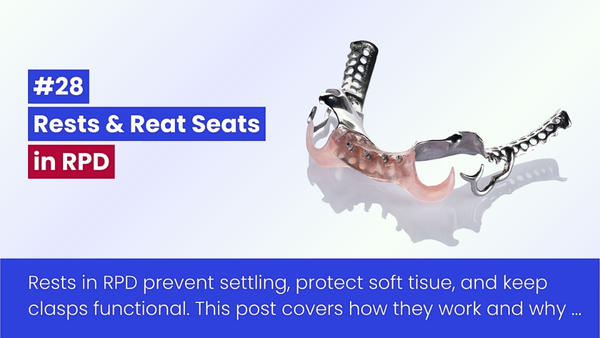
Rests in removable partial dentures prevent settling, protect soft tissue, and keep clasps functional. Here is how they work and why their design matters.

Learn how lab quality affects fixed partial dentures and bridges through fit, materials, connector design, occlusion, and long-term clinical performance.
Learn how dental crown manufacturing supports prosthodontics through material selection, digital workflow, precise fit, and laboratory quality control.

