
What Is RPD Stress Breaking? A Key Stress-Reduction Principle in Removable Partial Dentures.
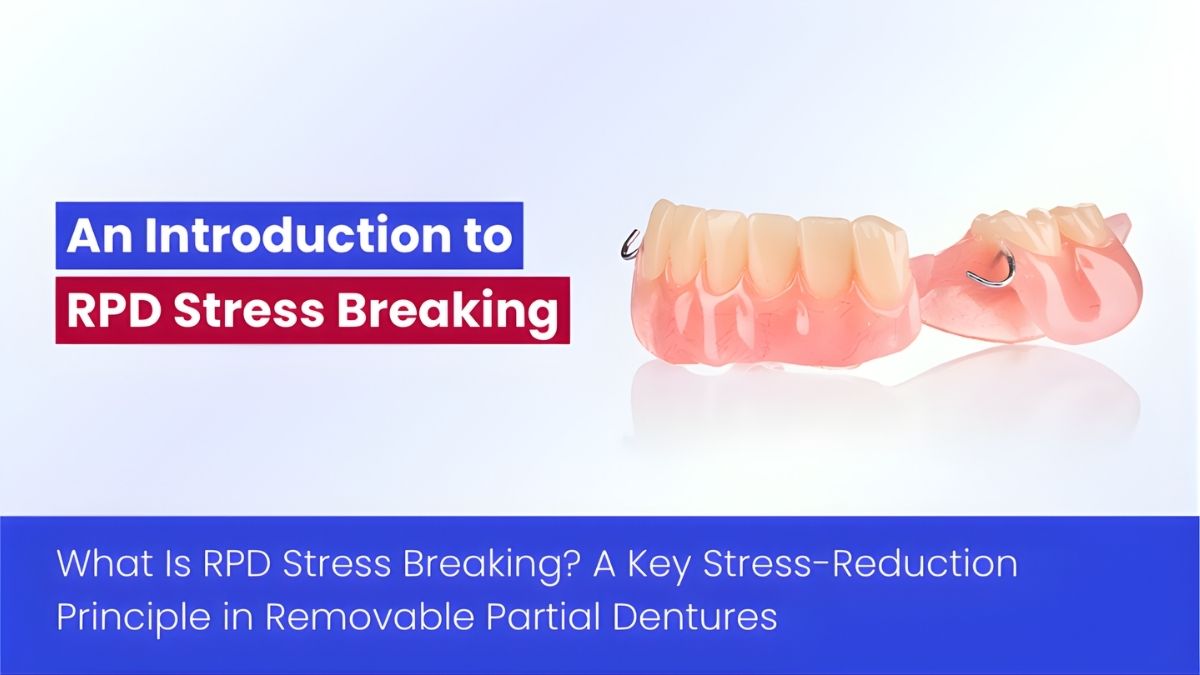
Table of contents [Show]
What Is RPD Stress Breaking?
RPD Stress Breaking is a design principle in removable partial dentures (RPDs) that aims to reduce and distribute occlusal forces transmitted to the abutment teeth, especially in cases involving posterior edentulous areas with distal extension bases.
Simply put, stress breaking allows the denture to move in a controlled manner during mastication, which helps to:
Reduce leverage forces on abutment teeth.
Protect periodontal tissues.
Increase the durability and longevity of the prosthesis.
Why Do RPDs Need Stress Breaking?
During mastication:
Soft tissue beneath the denture base has a higher degree of resiliency.
Abutment teeth exhibit minimal vertical movement.
This discrepancy creates torquing and leverage forces on the abutment teeth. If an RPD is designed without stress breaking, potential consequences may include:
Loosening of abutment teeth.
Alveolar bone resorption around abutments.
Fractured clasps or framework distortion.
Reduced lifespan of the prosthesis.
Stress breaking was developed to address these issues.
How Stress Breaking Works in RPD Design
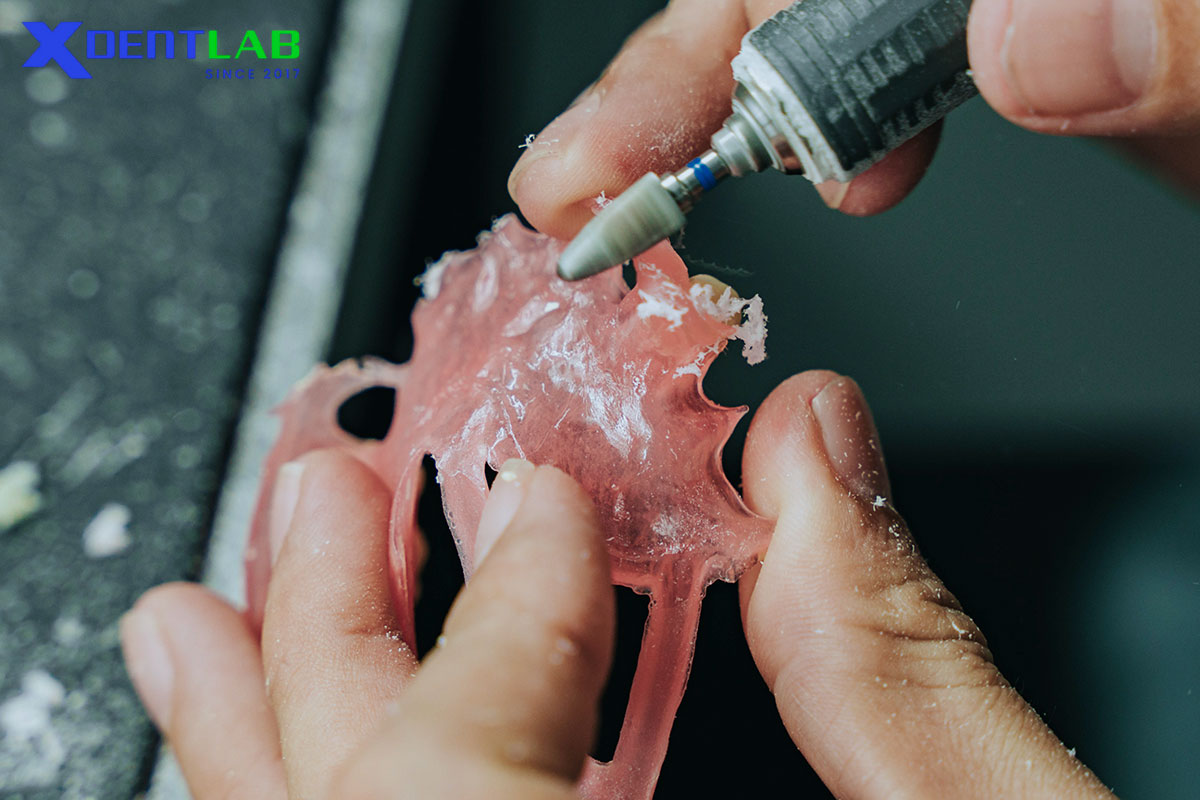
Stress breaking is based on three main principles:
Allowing the denture base to settle relatively independently from the abutment teeth.
Reducing torsional forces transmitted directly to the abutments.
Distributing occlusal forces to the posterior supporting tissues.
A properly designed stress-breaking RPD allows the prosthesis to function more flexibly rather than transferring all forces to the abutment teeth.
Common Stress-Breaking Methods in RPDs
1. Stress-Releasing Clasp Design
RPI (Rest – Proximal Plate – I-Bar).
RPA (Rest – Proximal Plate – Akers Clasp).
Key features:
Mesial rest placement.
Allows clasp movement as the denture base settles.
Reduces leverage forces on abutment teeth.
Semi-precision attachments.
Attachments that allow vertical or rotational movement.
Indicated for cases with:
High esthetic demands.
Abutment teeth with a fair prognosis.
Good coordination between the dental laboratory and clinician.
3. Proper Denture Base and Framework Design
Adequately extended denture bases for optimal tissue support.
Major connectors with controlled physiological flexibility.
Even distribution of occlusal forces over a wide area.
When Should Stress Breaking Be Applied?
Stress breaking is particularly important in the following cases:
Kennedy Class I and Class II.
Weak abutment teeth or compromised periodontal conditions.
Patients with strong masticatory forces.
Long-term prosthetic cases requiring abutment preservation.
Benefits of Stress Breaking in RPD Prosthetics
Protects abutment teeth.
Reduces periodontal complications.
Improves prosthesis durability.
Enhances patient comfort during mastication.
Elevates overall RPD design quality.
Conclusion
RPD Stress Breaking is not merely a technical detail—it is a fundamental principle in modern removable partial denture design. A well-executed stress-breaking design enables harmonious function with oral biomechanics, protects abutment teeth, and delivers long-term value for patients.
References:
[1] McCracken’s Removable Partial Prosthodontics
Carr AB, Brown DT. McCracken’s Removable Partial Prosthodontics, 13th ed.
Elsevier.
[2] Stewart’s Clinical Removable Partial Prosthodontics
Stewart KL, Rudd KD, Kuebker WA. Clinical Removable Partial Prosthodontics.
[3] Textbook of Prosthodontics
Boucher CO. Boucher’s Prosthodontic Treatment for Edentulous Patients.
[4] The Glossary of Prosthodontic Terms
Journal of Prosthetic Dentistry.
[5] Journal of Prosthetic Dentistry
Various authors.
[6] Academy of Prosthodontics
Educational publications and clinical guidelines.
[7] Essentials of Removable Partial Denture Prosthesis
Sankeshwari B, Ankola A.
About XDENT LAB:
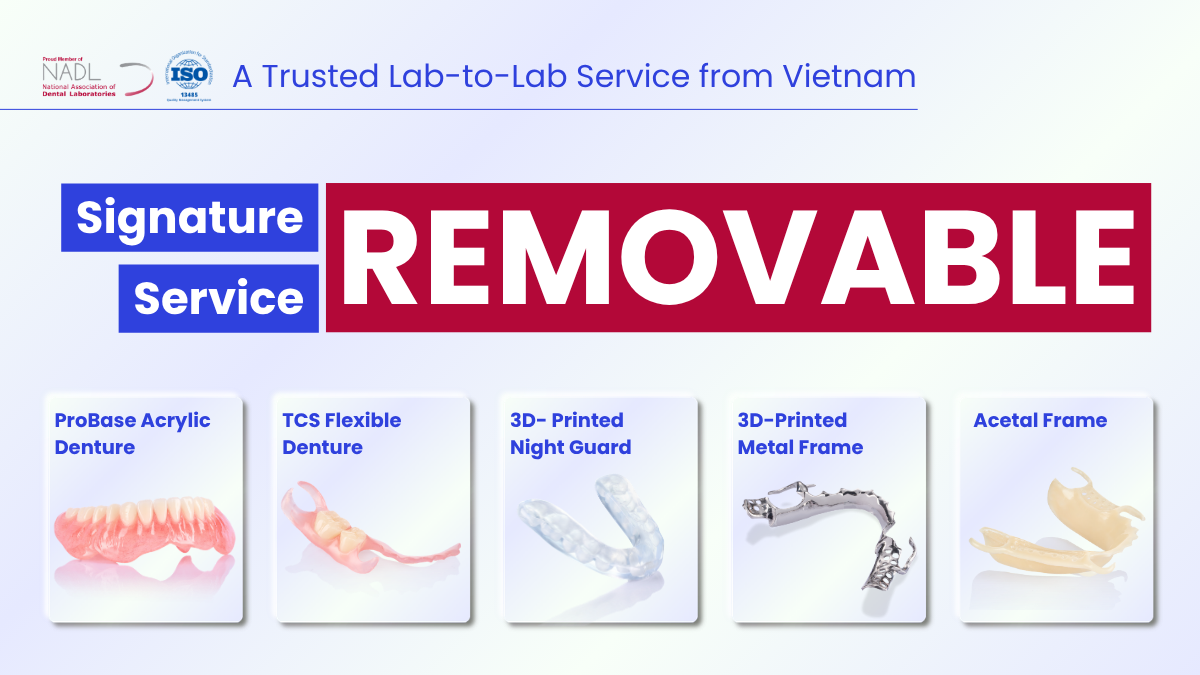
We are experts in Lab-to-Lab Full Service from Vietnam, with the signature services of Removable, meet U.S. market standards, FDA-registered, ISO 13485-certified. Founded in 2017, from local root to global reach, we scale with 2 Factories with over 100+ employees.
Our Commitments Built on “Trusted. Commitment. Quality”
- Commit to Large-Scale Manufacturing, high volume, remake rate < 1%.
- Commit to 5-Year Warranty
- Commit to Competitive Price
XDENT LAB | A Trusted Lab-to-Lab Service from Vietnam
Share this post:
Related Posts
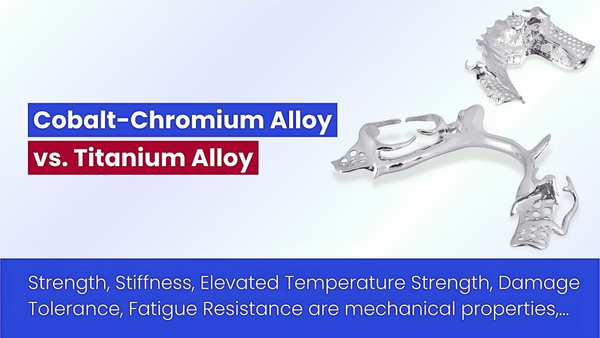
Learn the key differences between titanium and cobalt-chromium alloys used in removable partial denture frameworks, from mechanical properties to production requirements.
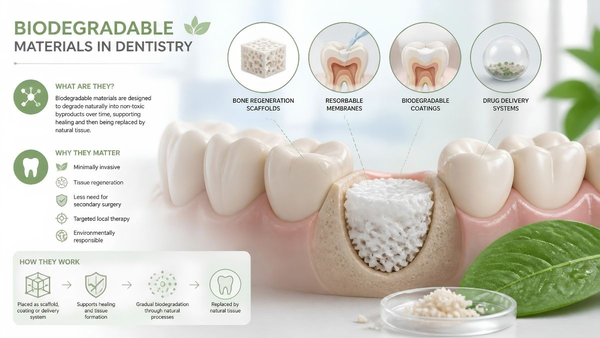
Explore biodegradable materials in dentistry, including their applications, benefits, limitations, and future potential in regenerative and sustainable dental care.
Learn how polyamide dental materials support flexible dentures and removable prosthetics through biocompatibility, aesthetics, comfort, and lightweight performance.

