
Comparison between Semi-Flexible and Flexible Partial Dentures, highlighting differences in flexibility, stability, and esthetics. Discover how clear clasps in semi-flexible dentures improve anterior aesthetics and help dental labs choose the right solution for each clinical indication.
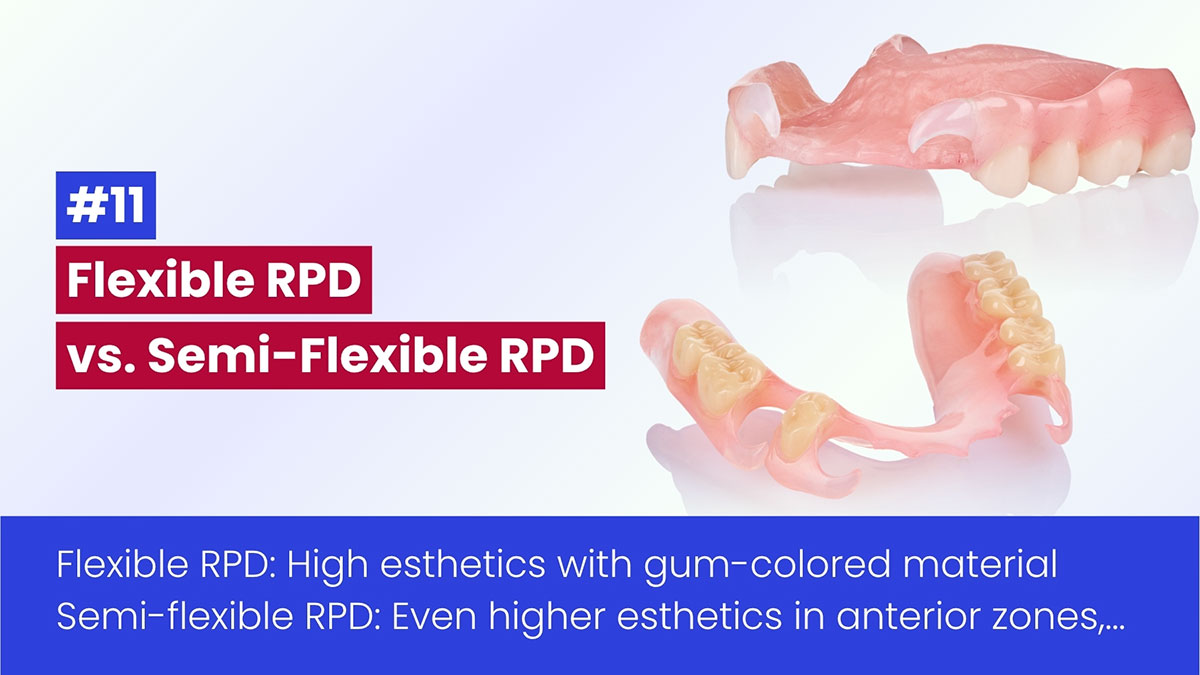
Table of contents [Show]
Overview of Aesthetic Removable Prosthetics
When referring to Flexible RPD (Removable Partial Denture), most people are only familiar with the traditional flexible denture option.
However, in today’s market, a more advanced solution has emerged: Semi-Flexible Partial Denture, a hybrid design that combines flexibility with enhanced aesthetics.
Understanding the differences between these two types of prostheses helps dental laboratories and clinicians select the most appropriate solution for each clinical indication.
What Are Flexible Partial Dentures?
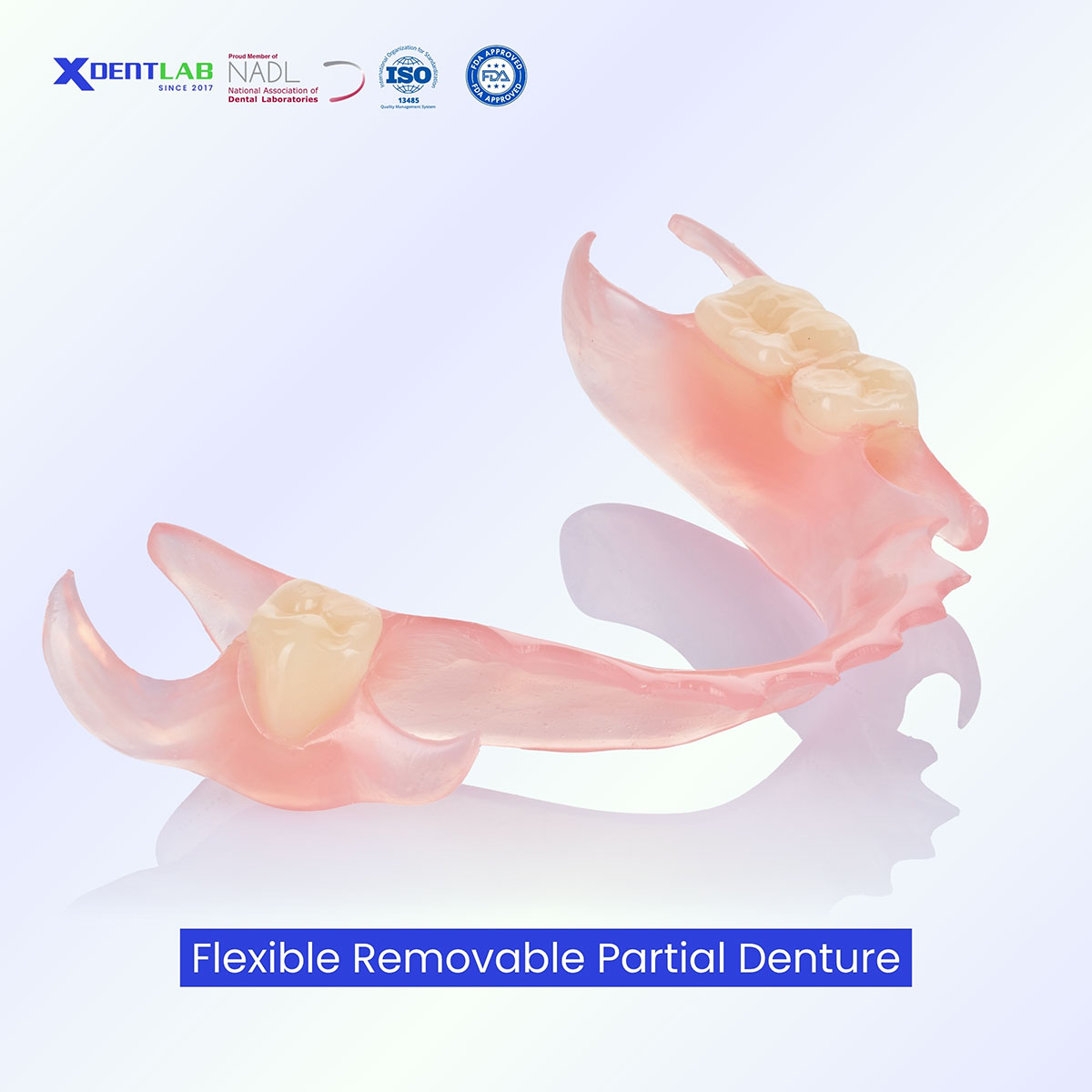
Flexible Partial Dentures are removable prostheses made from thermoplastic materials (commonly nylon or polyolefin).
Key Characteristics:
- High flexibility and softness
- Can adapt to soft tissue movement
- No metal clasps
- Gum-colored base for improved aesthetics
Advantages:
- Comfortable for daily wear
- Superior aesthetics compared to metal clasps
- Suitable for patients with metal allergies
Limitations:
- Lower stability in cases of extensive tooth loss
- Difficult to adjust and repair
- Limited support under masticatory load
What Are Semi-Flexible Partial Dentures?
Semi-Flexible Partial Dentures are an enhanced hybrid design, developed to improve aesthetics in specific clinical situations.
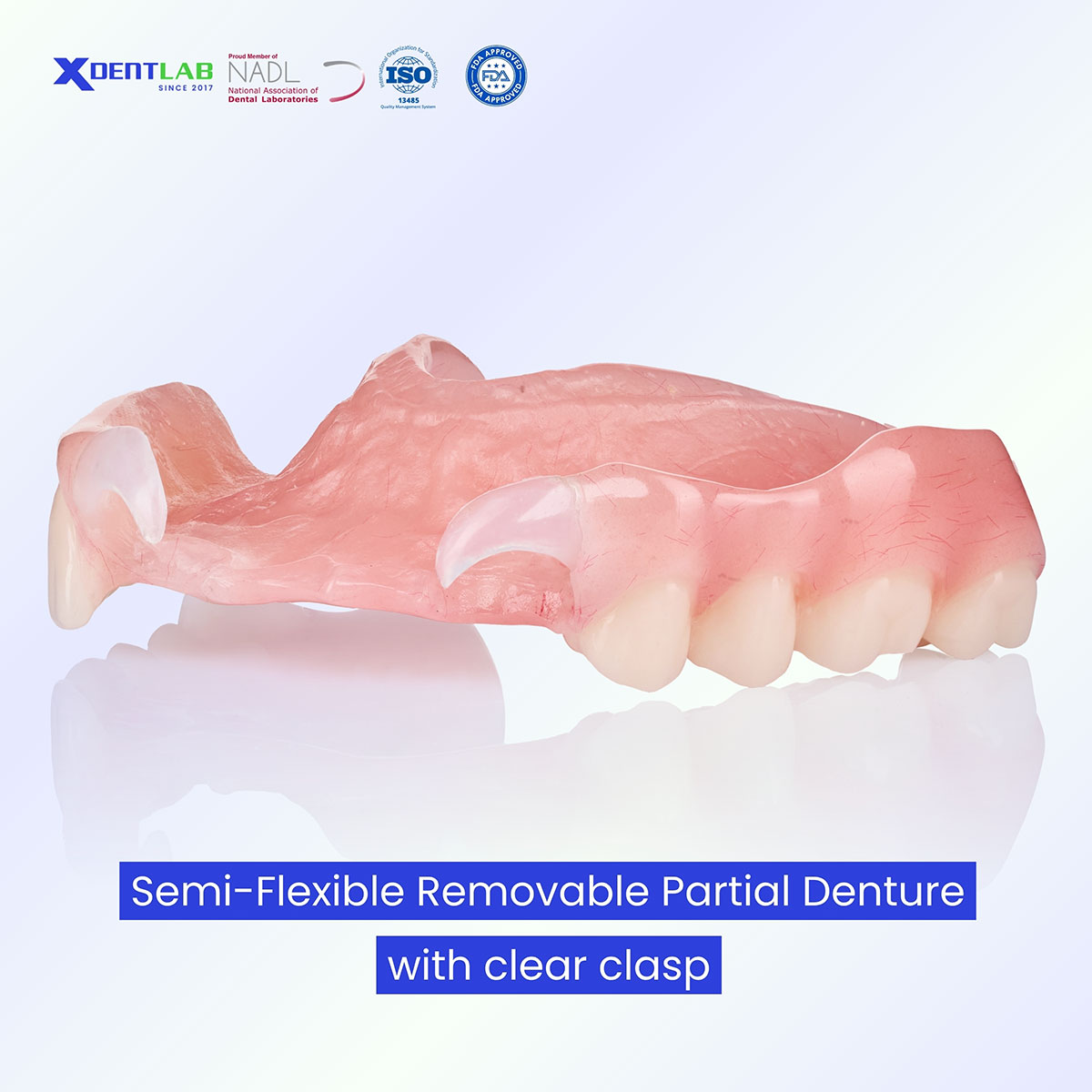
The most distinctive feature is the ability to integrate clear clasps, offering superior esthetic outcomes.
Key Characteristics:
- Moderate flexibility (not overly soft)
- Can incorporate clear aesthetic clasps
- Balanced performance between comfort, stability, and aesthetics
Advantages:
- Enhanced esthetics, especially with transparent clasps
- Suitable for a wider range of clinical indications
- Better balance between retention and comfort
Limitations:
- Less soft compared to fully flexible dentures
- May feel slightly less comfortable in some cases
- Typically higher cost than standard flexible dentures
Comparison: Semi-Flexible vs. Flexible Partial Dentures
1. Flexibility
- Flexible denture: Highly flexible and soft
- Semi-flexible denture: Moderately flexible, more controlled
2. Stability
- Flexible denture: Lower stability in large edentulous cases
- Semi-flexible denture: Improved stability due to balanced structure
3. Aesthetics
- Flexible denture: High esthetics with gum-colored material
- Semi-flexible denture: Even higher esthetics in anterior zones thanks to clear clasps
Semi-flexible dentures offer a clear advantage in anterior (esthetic) regions.
4. Clinical Applications
Flexible Denture:
- Cases requiring maximum comfort
- Sensitive patients
Semi-Flexible Denture:
- Cases requiring a balance between esthetics and retention
- High esthetic demand areas (anterior zone)
When Should You Choose Semi-Flexible Over Flexible?
Consider Semi-Flexible Partial Dentures when:
- Increased retention is needed while maintaining esthetics
- Greater stability is required compared to traditional flexible dentures
- Clear clasps are preferred over gum-colored flexible clasps
On the other hand, Flexible Dentures are more suitable when:
- Maximum comfort is the top priority
- Esthetic demands are not critical
Conclusion
Both Flexible Partial Dentures and Semi-Flexible Partial Dentures are modern aesthetic removable solutions.
- Flexible → excels in softness and comfort
- Semi-Flexible → excels in balance between esthetics and stability
The final choice depends on clinical indications, patient expectations, and the design strategy of the dental lab and clinic.
Lab Perspective Insight
In the context of increasing demand for aesthetic prosthetics, Semi-Flexible Dentures are emerging as a growing trend because they:
- Provide a more premium solution for B2B clients
- Enable labs to differentiate their service offerings
This represents a valuable product direction for dental laboratories looking to enhance service value and stand out in a competitive market.
References
- American College of Prosthodontists
Classification and clinical guidelines for removable partial dentures. - McCracken's Removable Partial Prosthodontics
Standard reference for RPD design principles, materials, and clinical applications. - Journal of Prosthetic Dentistry
Research articles on thermoplastic materials and flexible denture performance. - International Journal of Prosthodontics
Studies on esthetics, retention, and material behavior in removable prosthetics. - National Association of Dental Laboratories
Industry insights on dental lab trends, outsourcing, and product development. - Thermoplastic Materials in Dentistry
Overview of nylon and polyolefin materials used in flexible denture fabrication.
About XDENT LAB:
We are experts in Lab-to-Lab Full Service from Vietnam, with the signature services of Removable, meet U.S. market standards, FDA-registered, ISO 13485-certified. Founded in 2017, from local root to global reach, we scale with 2 Factories with over 100+ employees.
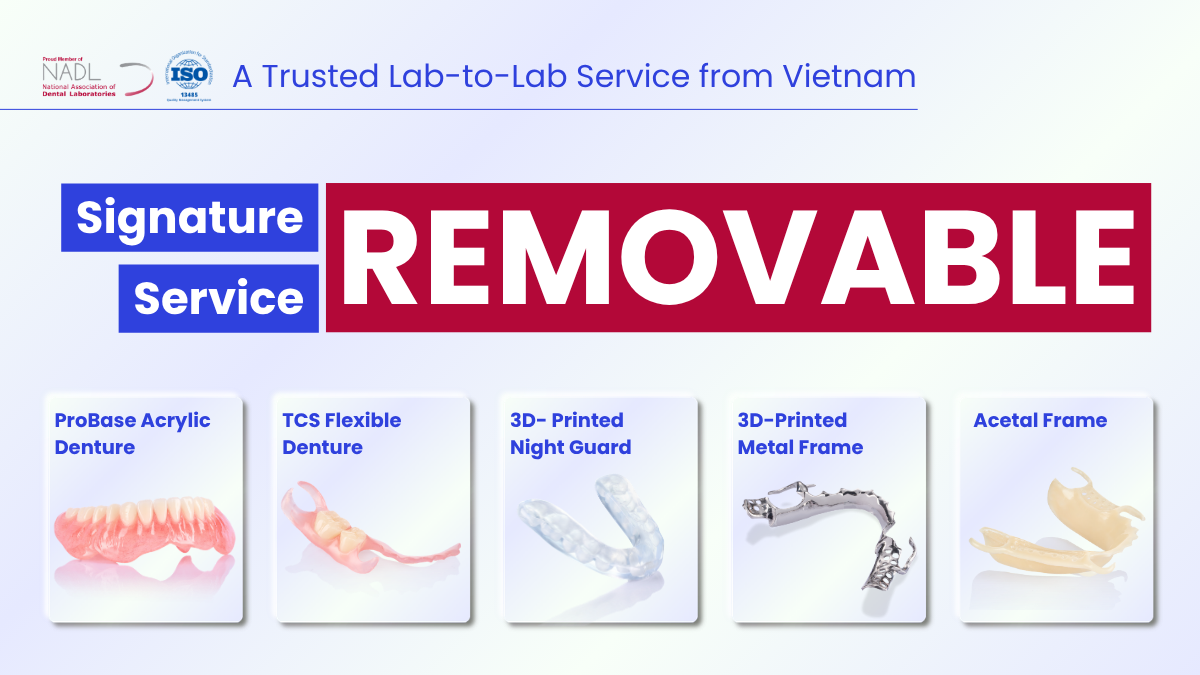
Our Commitments Built on “Trusted. Commitment. Quality”
- Commit to Large-Scale Manufacturing, high volume, remake rate < 1%.
- Commit to 5-Year Warranty
- Commit to Competitive Price
XDENT LAB | A Trusted Lab-to-Lab Service from Vietnam
Related Posts
Explore telescopic denture materials, retention designs and lab workflows, with practical guidance on fit, fabrication and maintenance for dental practices.
Materials used in fixed prosthodontics, from zirconia and lithium disilicate to alloys, with guidance on indications, bonding, workflows, and selection.
Learn how implant-retained overdentures rely on clinical planning, attachment selection, and laboratory QC for stable, predictable removable outcomes.

