
Build trusted cross-border dental lab collaborations with standardized protocols, traceability, and audit-ready documentation.

Table of contents [Show]
- Overview
- Benefits of International Dental Lab Partnerships
- Best Practices for Successful Partnerships
- Strategic Considerations for Cross‑Border Partnerships
- Compliance & Quality Framework
- Economic Impact and ROI
- Risk Management and Continuity
- Integration Playbook for Practices
- XDENT LAB: Lab‑to‑Lab Partnership Model
- Key Takeaways for Decision‑Makers
Overview
International dental lab partnerships connect practices with laboratories across borders to access specialized expertise, advanced technologies, and cost‑effective production. When managed with clear communication, shared standards, and robust quality systems, these alliances improve clinical predictability, speed, and patient satisfaction. Below is a structured review of benefits, best practices, and strategic considerations.
Benefits of International Dental Lab Partnerships
Strategic collaboration expands capabilities while safeguarding consistency.
Enhanced Quality and Expertise
A skilled lab partner functions as an extension of the clinical team, elevating case planning, material selection, and fabrication consistency.
Interactive, two‑way collaboration (photos, shade maps, occlusion notes, prep design feedback) reduces remakes and strengthens reputation.
Improved Patient Outcomes
Reliable turnaround and validated workflows support timely care, fewer chairside adjustments, and durable restorations.
Consistent bite registration handling, margin fidelity, and shade matching improve comfort and aesthetics.
Access to Global Networks
Multi‑site lab networks provide local service with centralized standards—aligning materials, calibration, and QA across regions.
Redundancy in production ensures continuity during peak demand or regional disruptions.
Educational and Research Opportunities
Cross‑border partnerships facilitate shared case libraries, protocol benchmarking, and joint studies on materials and workflows.
Continuous training (webinars, CE modules) drives standardization and measurable improvement across teams.
Best Practices for Successful Partnerships
Foundational practices sustain quality and trust at scale.

Establish Clear Communication Channels
Standardize case intake: scanner presets, STL naming, preparation photos, shade tabs, bite records, and occlusion notes.
Use structured forms and checklists; maintain a single point of contact for clinical questions and escalations.
Align on Core Values and Goals
Define clinical priorities: minimal prep vs. strength, turnaround targets, aesthetic thresholds, and remakes policy.
Set shared KPIs: on‑time delivery rate, remake percentage, marginal fit metrics, shade accuracy, and average chairside adjustment time.
Ensure Compliance and Quality Standards
Align with ISO 13485‑style QMS and document traceability: lot numbers, material certificates, and device history records.
Respect regional regulations (e.g., U.S. FDA expectations for materials, labeling, and device classifications).
Foster Interactive Relationships
Schedule case reviews and quarterly quality meetings to analyze outcomes, variance, and continuous improvement.
Encourage bidirectional feedback—tech notes from the lab and preparation/scan feedback from clinicians.
Prioritize Reliability and Consistency
Validate lead times per indication; maintain buffer capacity for urgent cases.
Use statistical process control (SPC) to monitor accuracy and consistency across sites.
Strategic Considerations for Cross‑Border Partnerships
Deliberate planning minimizes risk and maximizes clinical value.
Operational Model and Logistics
Map workflows: scan acquisition → CAD → CAM → finishing → QA → shipping → clinical insertion.
Plan shipping windows with customs expectations; use protective packaging and climate‑aware logistics for resins/metals.
Standardization and Technology Stack
Harmonize scanners, design software, nesting strategies, and post‑processing routines across labs.
Maintain calibration schedules for printers, mills, ovens, scanners, and shade lights.
Data, Security, and Privacy
Protect PHI with secure transfer portals, encryption, and access controls; comply with HIPAA/GDPR where applicable.
Keep version control of designs; retain audit trails for case changes and approvals.
Compliance & Quality Framework
Clear governance builds confidence across regions and stakeholders.
Regulatory Alignment
Classify devices appropriately (e.g., prosthetics, guides) and ensure materials and workflows meet regional requirements.
Maintain device history records, material traceability, and documented acceptance criteria for each indication.
Quality Assurance Protocols
Incoming QC: verify scans and case documentation before production.
In‑process QC: margin integrity checks, fit simulation, occlusal contact verification.
Final QC: shade verification under standardized lighting (D65), fit tests on calibrated models, documentation completeness.
Economic Impact and ROI
A disciplined partnership model lowers total cost and improves throughput.
Cost Drivers and Savings
Scale reduces unit costs through standardized materials, optimized scheduling, and fewer remakes.
Faster cycles increase chairtime productivity and case acceptance, boosting practice revenue.
Performance Metrics to Track
On‑time delivery rate
Remake percentage and root causes
Marginal fit deviation (microns) by indication
Shade match accuracy and patient satisfaction scores
Average time‑to‑delivery per case type
Risk Management and Continuity
Preparedness sustains clinical operations.

Contingency Planning
Dual‑sourcing across regions for critical indications.
Spare capacity and priority lanes for urgent, medically necessary cases.
Documented escalation paths and service‑level agreements (SLAs).
Material and Supply Chain Stability
Approved vendor lists with alternates for ceramics, resins, metals, and components.
Regular stock audits and environmental controls for storage (temperature, humidity, light).
Integration Playbook for Practices
A practical roadmap to start and scale partnerships.
Phase 1: Assessment
Define indications to outsource, accuracy requirements, turnaround expectations, and budget.
Audit current outcomes: remakes, chairside adjustments, and patient satisfaction.
Phase 2: Pilot and Validation
Begin with 10–20 cases across common indications.
Measure fit, shade, occlusion, turnaround; hold joint review to refine protocols.
Phase 3: Standardization
Document workflows, parameter libraries, and acceptance criteria.
Train staff; deploy checklists; implement shared dashboards.
Phase 4: Scale and Optimize
Expand indications; implement SPC; set quarterly improvement goals.
Integrate feedback loops, CE resources, and cross‑lab benchmarking.
XDENT LAB: Lab‑to‑Lab Partnership Model
How a compliant, Vietnam‑based network supports U.S.‑aligned quality.
Service Scope and Standards
Removable and implant specialties delivered within FDA/ISO‑aligned workflows.
Two factories, 100+ certified technicians, unified QA, and material traceability.
What Practices Gain
Consistent quality with documented parameters and device history records.
Predictable turnaround, transparent communication, and audit‑ready documentation.
Cost‑effective scaling without compromising clinical outcomes or compliance.
Key Takeaways for Decision‑Makers
Choose partners who prove reliability, compliance, and measurable quality—not just low price.
Standardize communication, materials, and QA to reduce variance and remakes.
Track performance with shared KPIs to ensure continuous, evidence‑based improvement.
Use phased integration to validate outcomes before full scale.
XDENT LAB’s Lab‑to‑Lab service delivers compliant, consistent results through standardized workflows, cross‑regional capacity, and rigorous QA—helping dental practices ensure quality and consistency while optimizing cost and turnaround.
About XDENT LAB:
We are experts in Lab-to-Lab Full Service from Vietnam, with the signature services of Removable, meet U.S. market standards, FDA-registered, ISO 13485-certified. Founded in 2017, from local root to global reach, we scale with 2 Factories with over 100+ employees.
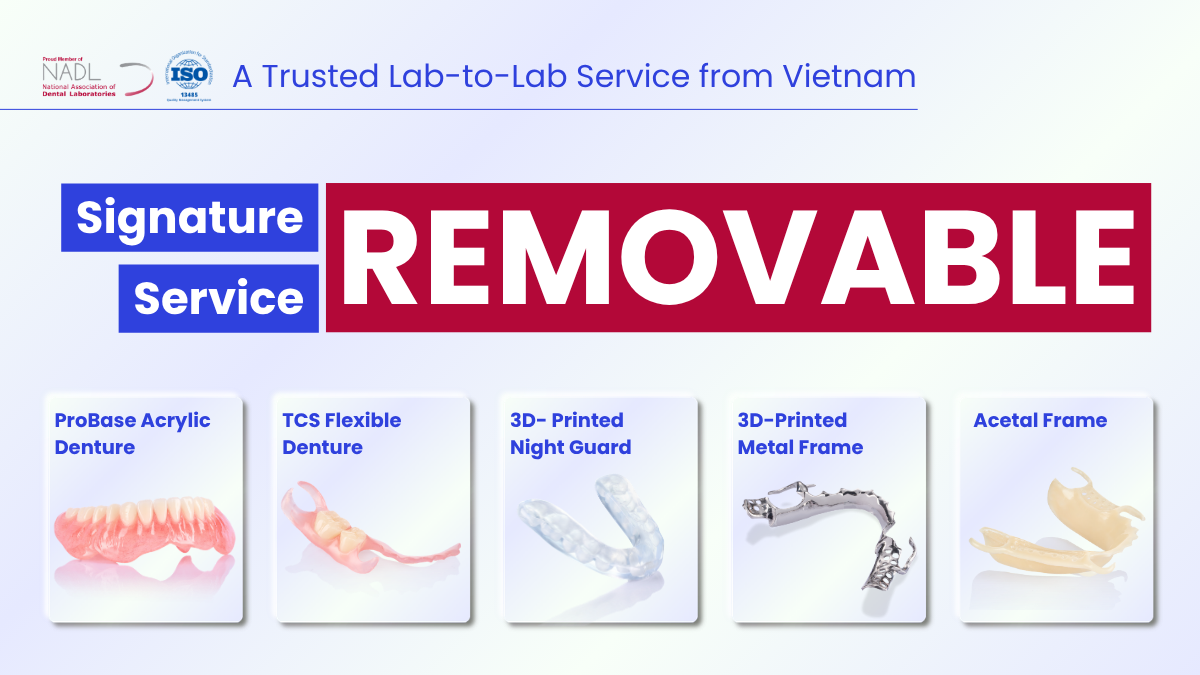
Our Commitments Built on “Trusted. Commitment. Quality”
- Commit to Large-Scale Manufacturing, high volume, remake rate < 1%.
- Commit to 5-Year Warranty
- Commit to Competitive Price
XDENT LAB | A Trusted Lab-to-Lab Service from Vietnam
Share this post:
Related Posts
Learn how B2B dental labs improve quality and consistency for dental practices through digital workflows, material control, expert QC, and reliable turnaround.
Learn how the dental lab subcontract model helps labs expand capacity, manage workloads, access technology, and maintain quality in outsourced production.
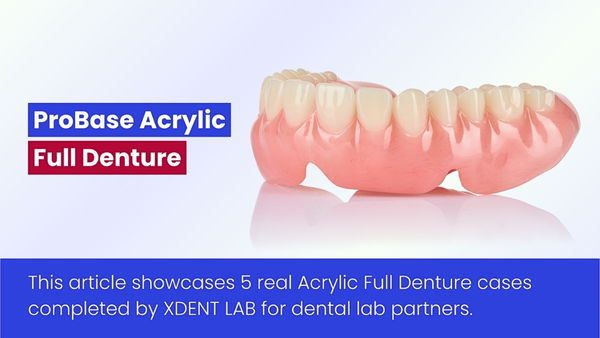
See 5 completed Acrylic Full Denture cases from XDENT LAB, a Vietnamese dental laboratory serving worldwide, especially US, Europe, and Australia. Trusted oversea outsourcing dental laboratory partner...

