
Discover the key physical properties of resins used for dental model printing, including dimensional accuracy, stiffness, strength, HDT, detail reproduction, and long-term stability.
Table of contents [Show]
- What Is Dental Model Resin?
- Why Choosing the Right Dental Model Resin Matters
- Key Physical Properties of Dental Model Printing Resins
- 1. Dimensional Accuracy
- 2. Stiffness and Shape Stability (Stiffness & Modulus)
- 3. Mechanical Strength
- 4. Thermal Stability (Heat Deflection Temperature – HDT)
- 5. Detail Reproduction
- 6. Chemical Stability and Material Aging
- 7. Color and Contrast
- Typical Properties of Dental Model Resins
- How to Choose the Right Dental Model Resin for Your Lab
- Conclusion
- References
In the era of digital dentistry, 3D-printed dental models play a central role in almost every workflow—from crown and bridge design, aligners, and orthodontic appliances to occlusal analysis and treatment planning. However, not all resins are suitable for printing dental models.
Based on our hands-on experience working with dental labs and technical data from leading manufacturers such as Formlabs, NextDent, and Detax, we have found that dental model resins should prioritize accuracy and dimensional stability over high load-bearing capacity.
This article analyzes the most important physical properties that a dental model resin must possess.
What Is Dental Model Resin?
Dental model resin is a photopolymer material specifically designed for printing dental models used in:
Crown and bridge design and try-ins
Occlusal analysis
Aligner production
Indirect splints and surgical guides
Physical patient record archiving
Unlike engineering resins or biocompatible resins, dental model resins do not need to withstand high mechanical loads. Instead, they must be highly accurate, dimensionally stable, and capable of reproducing fine details.
Why Choosing the Right Dental Model Resin Matters
In practice, many labs encounter issues such as:
Slight warping after a few days
Cumulative errors during prosthetic fitting
Loss of marginal detail
Chipping during handling
These problems often stem not from the printer, but from using unsuitable materials. Choosing the right resin helps to:
Reduce prosthetic errors
Improve occlusal accuracy
Save adjustment time
Enhance overall output quality
Key Physical Properties of Dental Model Printing Resins
1. Dimensional Accuracy
This is the most critical factor.
A dental model resin should offer:
Extremely low tolerance (typically < ±50 µm)
Minimal shrinkage
Shape stability after post-curing
In practice, even deviations of a few tens of microns can affect crown fit and occlusal contacts.
2. Stiffness and Shape Stability (Stiffness & Modulus)
The model must be rigid enough to resist deformation during:
Crown placement
Aligner fitting
Occlusal checks
Repeated insertion and removal
Key values:
Flexural / Tensile Modulus: typically 2–4 GPa
If the resin is too soft → the model may warp slightly.
If it is too brittle → edges may chip easily.
3. Mechanical Strength
Although dental models are not load-bearing like engineering components, they still need sufficient strength to:
Avoid breaking when removed from the build platform
Resist edge chipping during handling
Prevent cracking during transport
Typical values:
Tensile Strength: 30–60 MPa
Flexural Strength: 60–100 MPa
4. Thermal Stability (Heat Deflection Temperature – HDT)
In a lab environment, models may be exposed to heat during post-curing or storage.
A suitable resin should have:
HDT ≥ 50–70°C
If HDT is too low, slight deformation can occur, compromising overall accuracy.
5. Detail Reproduction
A high-quality dental model must clearly reproduce:
Gingival margins
Restoration margins
Occlusal surfaces
Undercuts
The resin should offer:
Appropriate viscosity
No edge bleeding
No detail loss after curing
6. Chemical Stability and Material Aging
A good resin should:
Have low moisture absorption
Resist rapid embrittlement
Maintain color stability
This is crucial for long-term model storage.
7. Color and Contrast
Although not a mechanical property, color is extremely important in dentistry:
Gray, beige, or ivory tones
Matte surface
Low reflectivity
These features help technicians visualize restoration margins and fine details more easily.
Typical Properties of Dental Model Resins
Tensile Strength: 30–60 MPa
Flexural Strength: 70–100 MPa
Modulus: 2–4 GPa
Elongation at Break: 5–10%
Heat Deflection Temperature (HDT): 50–80°C
Shrinkage: Very low
How to Choose the Right Dental Model Resin for Your Lab
When selecting a resin, prioritize:
Clear technical specifications
Manufacturer certification for dental model use
Long-term dimensional stability
Suitable color
Printer compatibility
Conclusion
Dental model resins do not need to withstand high mechanical loads like engineering materials. However, they must deliver high accuracy, excellent dimensional stability, precise detail reproduction, and minimal shrinkage.
Choosing the right material not only improves prosthetic quality but also reduces errors, saves time, and lowers operational costs for dental labs.
References
[1] Liqcreate Dental Model Pro Grey Resin – High-accuracy dental model resin with excellent dimensional stability and published mechanical properties: Tensile Strength ~49 MPa, Tensile Modulus ~2.3 GPa, Flexural Strength ~89 MPa, Flexural Modulus ~2.4 GPa, Linear Shrinkage ~0.3–0.4% (low).
[2] Liqcreate Dental Model Pro Beige Resin – Dental model resin with dimensional stability and low shrinkage; tensile and flexural properties suitable for dental models and aligner applications.
[3] eSUN Dental Model Resin – Example of a dental model resin characterized by high precision, low shrinkage, smooth surface finish, and appropriate tensile and flexural strength values for dental use.
[4] 3DM-DENT Dental Materials – Dental resins designed for model printing with suitable tensile and flexural modulus ranges and HDT of 60–70°C, demonstrating the importance of thermal stability.
[5] Formlabs Model Resin (Official Datasheet) – Specialized resin for dental model printing with tensile strength ~48 MPa, tensile modulus ~2.3 GPa, and HDT ~75°C, highlighting the stiffness and accuracy required in this application.
[6] Formlabs Precision Model Resin – Improved version with increased toughness and impact resistance, with tensile and flexural properties documented in official datasheets.
[7] Neway3DP Dental Resin Overview – A compilation of dental resin specifications, including tensile strength, flexural modulus, hardness, and print tolerance of ~±0.03–0.05 mm, aligning with the criteria for accurate dental model printing.
About XDENT LAB:
We are experts in Lab-to-Lab Full Service from Vietnam, with the signature services of Removable, meet U.S. market standards, FDA-registered, ISO 13485-certified. Founded in 2017, from local root to global reach, we scale with 2 Factories with over 100+ employees.
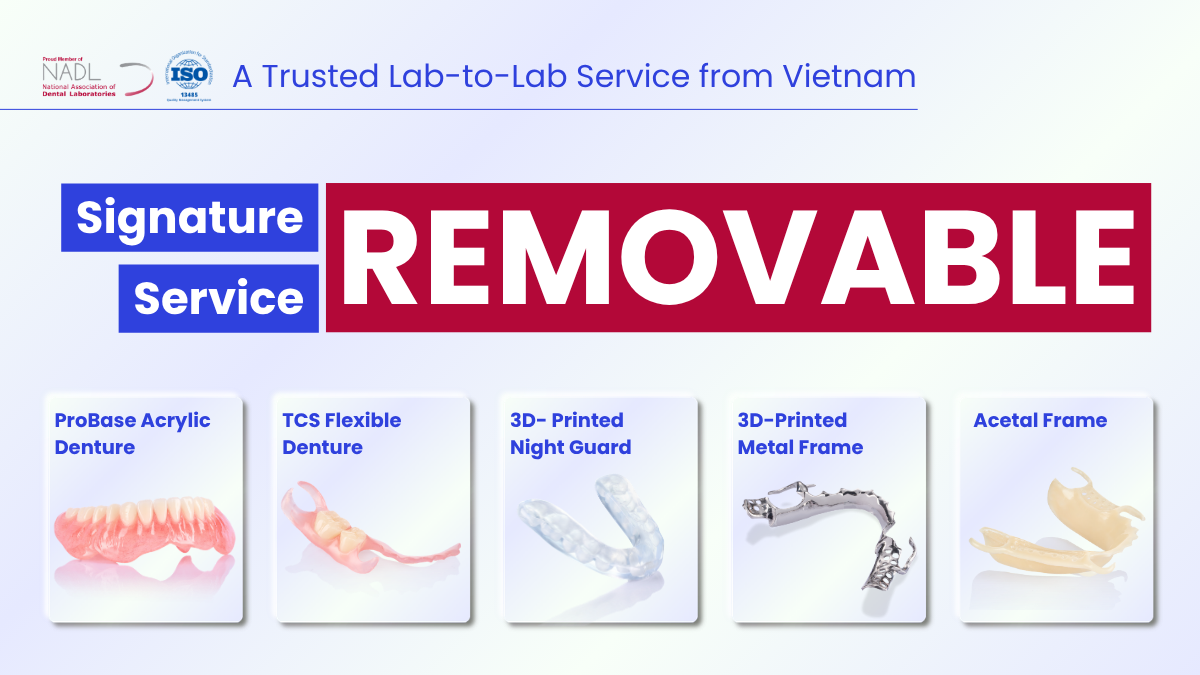
Our Commitments Built on “Trusted. Commitment. Quality”
- Commit to Large-Scale Manufacturing, high volume, remake rate < 1%.
- Commit to 5-Year Warranty
- Commit to Competitive Price
XDENT LAB | A Trusted Lab-to-Lab Service from Vietnam
Share this post:
Related Posts
Discover how critical laboratory checks reduce remakes and improve restoration quality in dental lab outsourcing for fixed and implant cases.
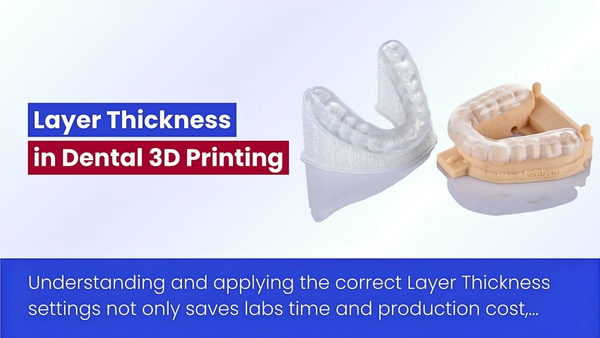
Understanding and applying the correct Layer Thickness settings not only saves labs time and production cost, but also ensures stable output quality for each specific type of dental product.
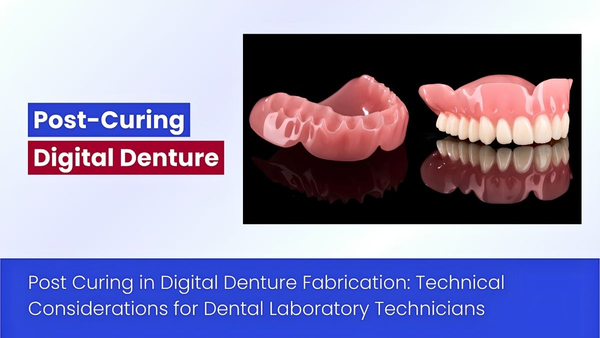
A technical guide to post curing in digital denture fabrication, helping dental lab technicians understand the parameters for consistent product quality.

