
Mica glass-ceramics are a unique class of machinable dental materials first developed in the 1970s. Commercially known as Dicor (Dentsply) and its later variations, these ceramics introduced the concept of machinability to dental materials—offering a balance of biocompatibility, moderate strength, and natural tooth-like translucency.
Table of contents [Show]
- Chemical Composition and Crystal Structure
- Material Properties
- Processing Technologies
- Types of Mica Glass-Ceramics
- Framework Design Considerations
- Clinical Applications
- Bonding and Cementation
- Clinical Performance
- Advantages
- Limitations
- Comparison with Modern Ceramics
- Research and Future Perspectives
- Conclusion
Mica glass-ceramics are a unique class of machinable dental materials first developed in the 1970s. Commercially known as Dicor (Dentsply) and its later variations, these ceramics introduced the concept of machinability to dental materials - Offering a balance of biocompatibility, moderate strength, and natural tooth-like translucency. The distinctive plate-like mica crystals dispersed within a glass matrix provide excellent machinability and aesthetics. Although largely surpassed by newer ceramics, mica glass-ceramics remain important for understanding the evolution of dental ceramics and are still valued in specialized applications.
Chemical Composition and Crystal Structure
Mica glass-ceramics typically contain:
SiO₂ (45–70%): Glass network former.
Al₂O₃ (8–20%): Strength enhancer.
K₂O (8–12%): Mica former.
MgO (10–20%): Mica crystal component.
F⁻ (4–9%): Essential for mica formation.
ZrO₂ (0–18%): Optional strengthening.
B₂O₃, CeO₂: Modifiers and fluorescence.
The main crystalline phase is fluorophlogopite mica (KMg₃AlSi₃O₁₀F₂), forming plate-like crystals (0.1–20 μm) with a layered, “house of cards” microstructure. Well-processed materials have 35–70% crystalline phase with <1% porosity.
Material Properties
Mechanical Properties
Flexural strength: 120–350 MPa.
Compressive strength: 500–800 MPa.
Fracture toughness: 1.2–2.5 MPa·m^0.5.
Elastic modulus: 60–70 GPa.
Vickers hardness: 3,600–6,200 MPa.
Machinability
Machinability index: 8–10 (excellent).
Low tool wear and dry machining possible.
Surface finish: Ra 0.5–1.0 μm.
Optical Properties
Translucency: Moderate to high.
Refractive index: 1.52–1.55.
Opalescence: Natural tooth-like.
Color stability: Good.
Thermal Properties
Thermal expansion: 9–13 × 10⁻⁶/°C.
Thermal shock resistance: Good.
Processing Technologies
Glass-Ceramic Formation
Manufactured by melting, casting, annealing, nucleation, and crystallization. Controlled cooling prevents cracking.
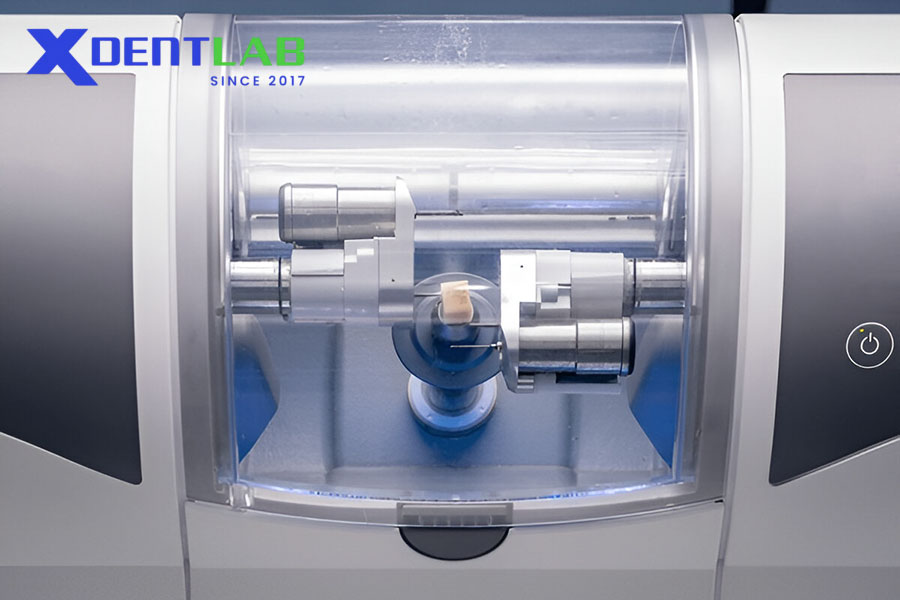
CAD/CAM Processing
Blocks are pre-crystallized and can be milled dry or wet. No post-crystallization is required—making them ideal for efficient digital workflows.
Lost-Wax and Pressing
Historically, Dicor was processed via lost-wax casting and ceramming. Pressing technology and zirconia-toughened variants have improved strength and machinability.
Types of Mica Glass-Ceramics
First Generation (Dicor): Cast, cerammed, 120–160 MPa strength, excellent translucency.
Second Generation (Dicor MGC): Machinable, 150–230 MPa, CAD/CAM compatible.
Zirconia-Toughened: 250–350 MPa, improved durability, research stage.
Experimental: Nano-mica, bioactive, colored, and hybrid systems.
Framework Design Considerations
Minimum thickness: 1.0–1.5 mm.
Connector dimensions: 4×4 mm.
Margin design: 0.8–1.0 mm shoulder.
Uniform thickness and rounded angles are critical for stress distribution.
Clinical Applications
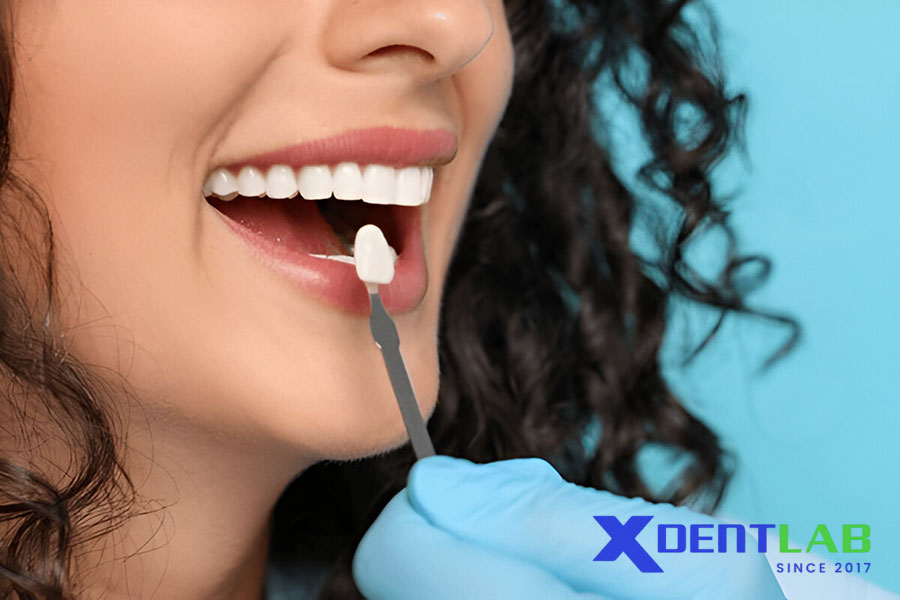
Historical
Anterior crowns, veneers, inlays/onlays, short-span bridges, implant crowns.
Current
Temporary restorations, teaching models, research, specialty cases.
Contraindications
Posterior bridges, heavy occlusion, bruxism, thin sections (<1.0 mm).
Bonding and Cementation
Surface treatment: 9.5% HF etch for 2–4 min, silanization essential.
Cements: Resin cements preferred; dual-cure for thicker restorations.
Bond strength: 15–25 MPa (shear); surface treatment can double bond strength.
Clinical Performance
5-year survival: 75–85% for crowns, 80–90% for veneers.
10-year survival: 60–70% (anterior).
Main failures: Fracture, chipping, debonding, wear.
Decline reasons: Strength limitations, color options, newer materials.
Advantages
Excellent machinability and polishability.
Biocompatibility.
Wear-friendly to opposing teeth.
Thermal insulation.
Repairable with composite.
Limitations
Lower strength than lithium disilicate or zirconia.
Limited clinical indications.
Color limited to surface stains.
Technique-sensitive bonding.
Obsolescence and higher remake rates.
Comparison with Modern Ceramics
Property | Mica Glass-Ceramic | Lithium Disilicate | Zirconia | Leucite-Reinforced |
| Flexural Strength | 120–350 MPa | 400–500 MPa | 900–1200 MPa | 120–160 MPa |
| Machinability | Excellent | Good | Moderate | Good |
| Aesthetics | Good | Excellent | Moderate | Good |
| Indications | Limited | Broad | Broad | Moderate |
Research and Future Perspectives
Zirconia-toughened mica: Promising for higher strength with machinability.
Nanoengineering, bioactive, and hybrid systems: Potential for revival in niche or specialized applications.
3D printing and AI design: Opportunities for future integration.
Conclusion
Mica glass-ceramics were pioneers in machinable dental ceramics, offering a unique blend of machinability, biocompatibility, and moderate strength. While largely replaced by stronger ceramics, they remain relevant for education, research, and select clinical cases. Ongoing research into zirconia-toughened and hybrid systems may see their properties further enhanced for future applications.
XDENT LAB – Your trusted partner in dental innovation, quality, and global lab-to-lab service.
About XDENT LAB:
We are experts in Lab-to-Lab Full Service from Vietnam, with the signature services of Removable, meet U.S. market standards, FDA-registered, ISO 13485-certified. Founded in 2017, from local root to global reach, we scale with 2 Factories with over 100+ employees.
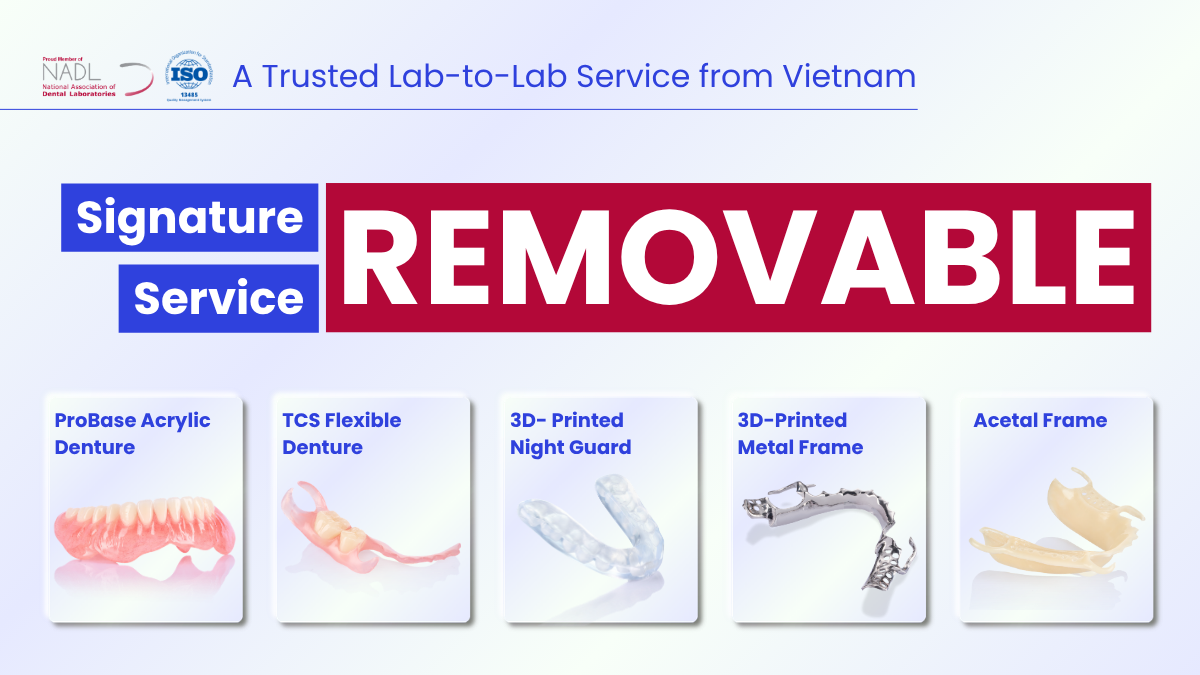
Our Commitments Built on “Trusted. Commitment. Quality”
- Commit to Large-Scale Manufacturing, high volume, remake rate < 1%.
- Commit to 5-Year Warranty
- Commit to Competitive Price
XDENT LAB | A Trusted Lab-to-Lab Service from Vietnam
Share this post:
Related Posts
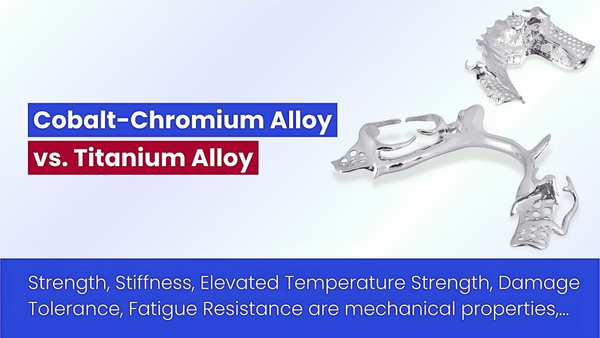
Learn the key differences between titanium and cobalt-chromium alloys used in removable partial denture frameworks, from mechanical properties to production requirements.
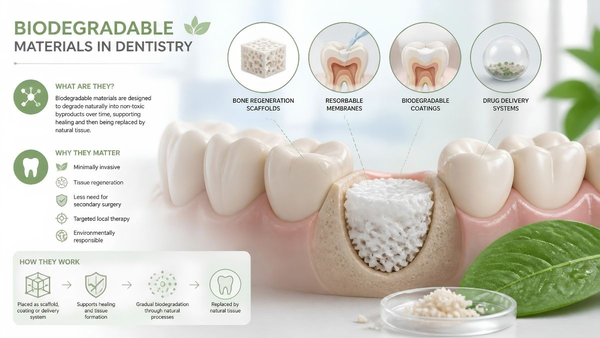
Explore biodegradable materials in dentistry, including their applications, benefits, limitations, and future potential in regenerative and sustainable dental care.
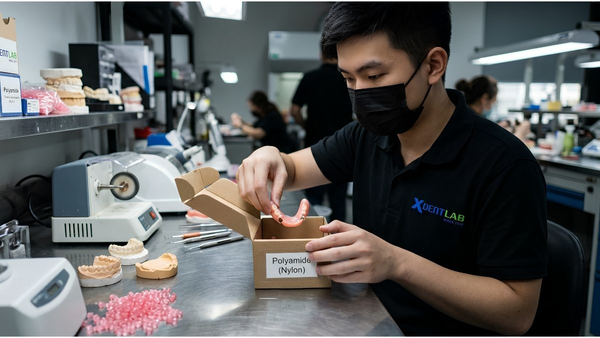
Learn how polyamide dental materials support flexible dentures and removable prosthetics through biocompatibility, aesthetics, comfort, and lightweight performance.

