Discover how the lab-to-lab model in the dental lab industry supports scalable production, specialized workflows, quality control, and efficient outsourcing solutions.
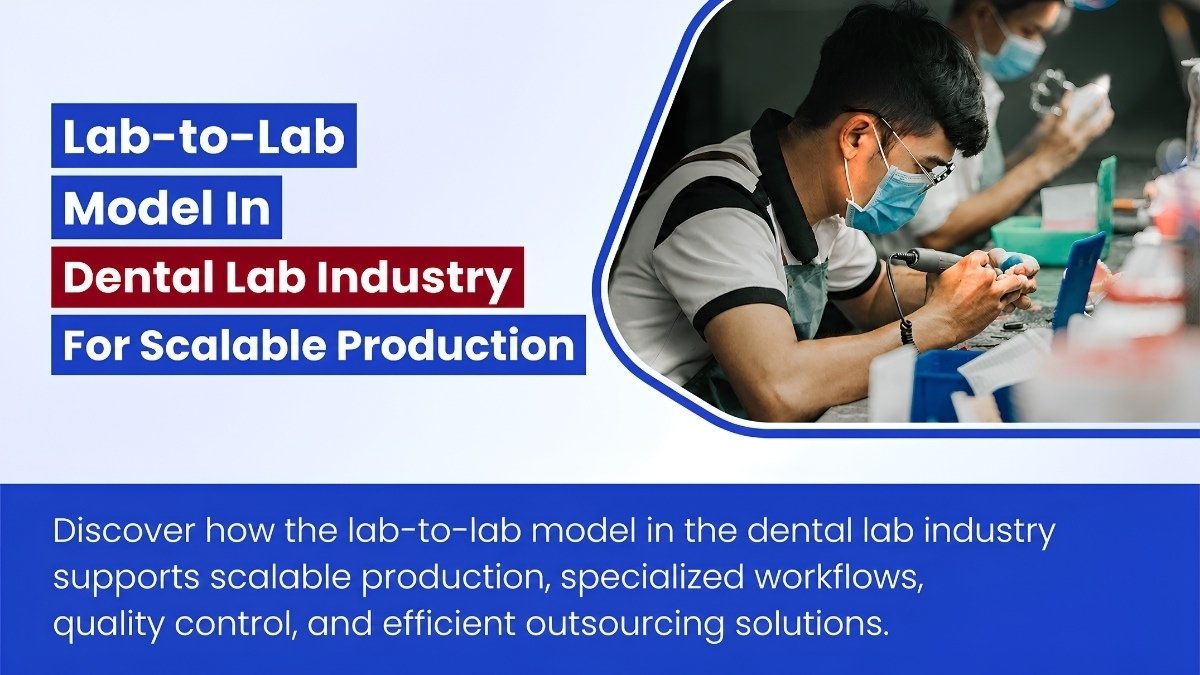
Table of contents [Show]
- What Is The Lab-to-Lab Model?
- How The Lab-to-Lab Model Works
- Why The Lab-to-Lab Model Is Growing
- Key Benefits Of The Lab-to-Lab Model
- Challenges In The Lab-to-Lab Model
- What Makes A Strong Lab-to-Lab Partnership?
- Lab-to-Lab Model And Digital Dentistry
- Lab-to-Lab Model In Dental Lab Outsourcing
- Where XDENT LAB Fits In The Lab-to-Lab Model
- Future Of The Lab-to-Lab Model
- Key Takeaways
The lab-to-lab model has become an important operating framework in the modern dental lab industry. Instead of every dental laboratory handling every process in-house, many labs now collaborate with other laboratories to share production capacity, specialized expertise, digital workflows, and manufacturing technology. This model helps laboratories improve efficiency, reduce operational strain, and expand the range of restorations and prosthetic solutions they can deliver to dental practices.
In today’s dental market, speed, consistency, compliance, and scalability matter more than ever. As case complexity increases across removable prosthetics, implant restorations, full-arch workflows, and digitally designed appliances, dental labs often need support beyond their internal resources. The lab-to-lab model addresses this need by creating a structured partnership system where one laboratory provides technical, production, or specialized support to another. When managed well, this model strengthens quality control, improves turnaround time, and allows dental practices to receive more reliable restorative outcomes.
What Is The Lab-to-Lab Model?
The lab-to-lab model refers to a business and production relationship in which one dental laboratory supports another dental laboratory rather than working directly only with a dental clinic or dentist.
Core Definition
In this model:
- A local or client-facing lab receives the case
- That lab outsources part or all of the production to a partner lab
- The partner lab may provide design, milling, printing, fabrication, finishing, or full-service manufacturing
- The final restoration is returned to the originating lab for delivery to the dentist or practice
This structure allows one lab to function as an extension of another lab’s technical and manufacturing capabilities.
Why The Model Exists
Not every lab has the same:
- Equipment
- Technician specialization
- Capacity
- Material inventory
- Digital workflow maturity
- Regulatory infrastructure
Because of these differences, lab-to-lab partnerships help bridge operational gaps without forcing every laboratory to invest in every technology or department internally.
How The Lab-to-Lab Model Works
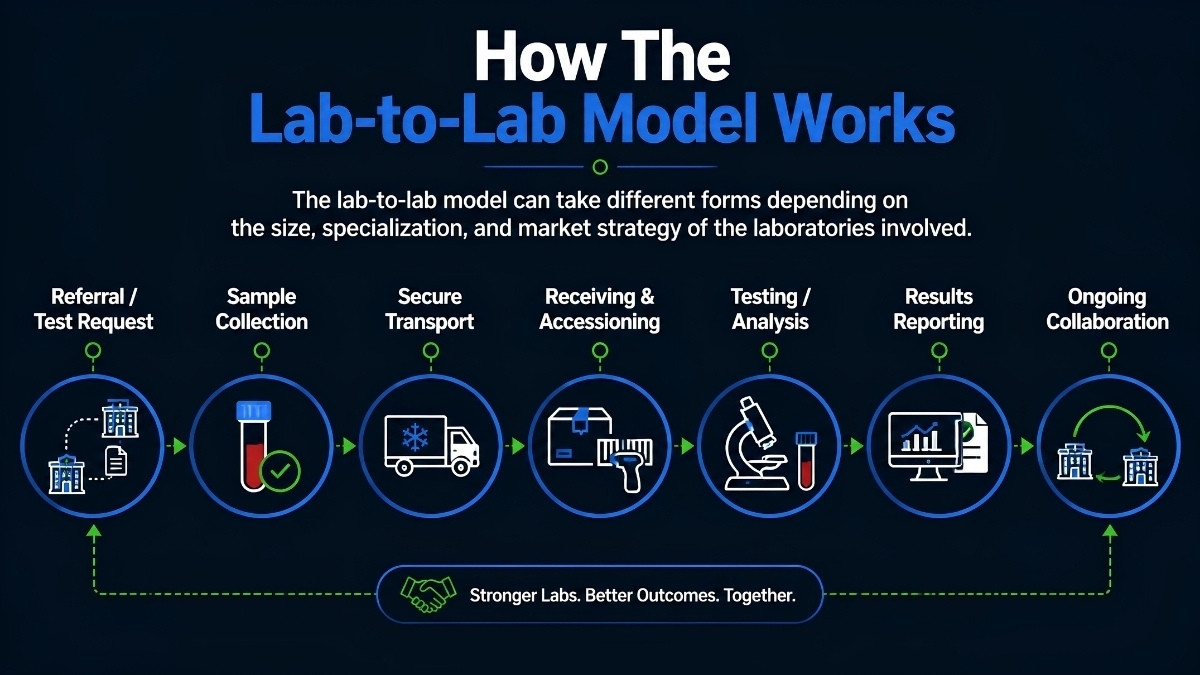
The lab-to-lab model can take different forms depending on the size, specialization, and market strategy of the laboratories involved.
Typical Workflow
A common workflow may look like this:
- A dentist sends a case to the primary dental lab
- The primary lab evaluates the case and identifies the need for external support
- The case is transferred to a partner production lab or specialist lab
- The partner lab completes the assigned design or manufacturing steps
- The restoration is returned to the primary lab for quality review, final adjustments, and delivery
Services Commonly Handled In Lab-to-Lab Partnerships
These may include:
- Crown and bridge production
- Full-contour zirconia milling
- Implant restorations
- Custom abutment support
- Denture setup and processing
- Cast framework fabrication
- 3D printed models and surgical guides
- CAD design services
- Full-arch prosthetic workflows
There is no single structure. The model may involve:
Overflow Production Support
A partner lab handles excess case volume during busy periods.
Specialized Case Support
A partner lab handles specific categories such as removable prosthetics, implant cases, or digital design.
Full-Service Manufacturing Support
A partner lab provides broad production support across multiple restoration types.
International Outsourcing Support
A domestic lab collaborates with an offshore dental lab to gain cost efficiency, scale, or technical specialization.
Why The Lab-to-Lab Model Is Growing
The growth of the lab-to-lab model reflects broader changes in the dental lab industry.
Rising Technology Costs
Modern equipment such as:
- Milling machines
- CAD software
- Intraoral scan integrations
- 3D printers
- Sintering furnaces
- Implant planning tools
Requires substantial investment. Many labs prefer strategic partnership over full in-house expansion.
Increased Demand For Specialization
Dental restorations are becoming more advanced, especially in:
- Implant prosthetics
- Full-arch cases
- Digital dentures
- Esthetic anterior restorations
- Hybrid prostheses
This makes specialized partnerships more valuable.
Pressure For Faster Turnaround And Consistency
Dental practices expect:
- Predictable turnaround times
- Fewer remakes
- Better fit and function
- Smoother communication
- Reliable case tracking
The lab-to-lab model can support these expectations when the right systems are in place.
Globalization Of Dental Manufacturing
Cross-border outsourcing and digital file transfer have made it easier for labs to collaborate beyond local markets. A digital impression or CAD file can now move across systems and geographies much faster than traditional analog records.
Key Benefits Of The Lab-to-Lab Model
The main strength of the lab-to-lab model is that it allows dental laboratories to become more capable without having to build every capability themselves.
Labs can handle more cases without overloading internal teams.
This helps with:
- Seasonal surges
- Large account management
- Rapid business growth
- Staffing shortages
- Complex multi-unit production needs
Access To Specialized Expertise
Some labs excel in removable prosthetics. Others are stronger in implants, digital design, or full-contour zirconia. Through partnership, a lab can offer these solutions without needing every specialist in-house.
Better Use Of Advanced Technology
The lab-to-lab model gives smaller or mid-sized labs access to production systems they may not own directly.
This may include:
- CAD/CAM manufacturing
- High-precision milling
- 3D printing
- Digital denture systems
- Implant workflow support
Cost Efficiency
Instead of making large capital investments in equipment, facilities, and personnel, labs can allocate resources more strategically.
Potential financial benefits include:
- Lower overhead expansion pressure
- Improved production efficiency
- More flexible cost structure
- Better margin management on selected case types
Improved Scalability
As a laboratory grows, the lab-to-lab model creates an easier path to scale. The lab can add services, increase volume, and enter new categories without building every process internally from day one.
Stronger Service Range For Dental Practices
Ultimately, dental practices benefit when their laboratory partner can offer:
- More restoration types
- More predictable timelines
- Consistent quality
- Support for digital and analog cases
- Better access to implant and removable expertise
Challenges In The Lab-to-Lab Model
The model offers real advantages, but it also requires discipline. Without clear systems, collaboration can create quality and communication problems rather than solve them.
Communication And Coordination Risk
When multiple labs are involved, errors can occur in:
- Prescription interpretation
- Shade communication
- Margin design expectations
- Implant component selection
- Delivery timing
- Revision tracking
Strong documentation and case protocols are essential.
Quality Consistency Concerns
A primary lab’s reputation depends on the restoration delivered to the dentist, even if another lab produced it.
This means the originating lab must ensure:
- Material consistency
- Technical accuracy
- Fit standards
- Esthetic expectations
- Final inspection protocols
Data Security And File Management
Modern lab-to-lab workflows often involve digital case data, scans, design files, and patient-related information. Proper data handling, secure transfer, and privacy-conscious workflow management are critical.
Dependency On The Partner Lab
If the production partner has workflow delays, staffing issues, or inconsistent standards, the client-facing lab may suffer. That is why lab-to-lab relationships should be built on reliability rather than price alone.
Operational Misalignment
Different labs may have different:
- Turnaround expectations
- Case acceptance standards
- Material preferences
- Technical protocols
- Communication styles
Alignment must be created intentionally.
What Makes A Strong Lab-to-Lab Partnership?
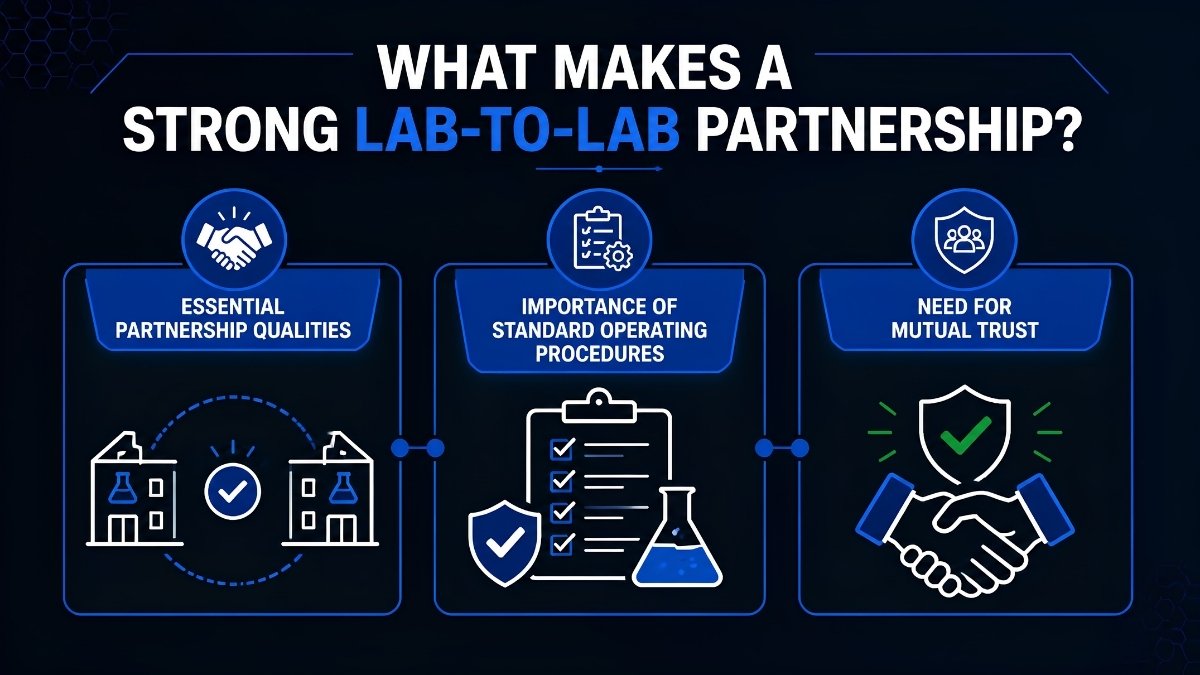
The success of a lab-to-lab model depends less on the concept itself and more on how the partnership is structured.
Essential Partnership Qualities
A strong partner lab should offer:
- Consistent quality control
- Clear communication
- Defined turnaround times
- Material transparency
- Technical expertise
- Scalable production systems
- Documentation and traceability
- Reliability across routine and complex cases
SOPs help ensure repeatable outcomes.
These should cover:
- Case intake
- File naming and transfer
- Design approval steps
- Material selection
- Final inspection
- Packaging and shipping
- Remake handling
- Communication timelines
Need For Mutual Trust
A lab-to-lab relationship works best when both sides understand that they are protecting the same end result: the quality delivered to the dental practice and ultimately to the patient.
Lab-to-Lab Model And Digital Dentistry
Digital dentistry has accelerated the growth of the lab-to-lab model more than almost any other industry shift.
Why Digital Workflows Matter
Digital workflows make it easier to transfer and reproduce data with fewer analog distortions.
This supports:
- Faster collaboration
- Better design standardization
- Easier remote production
- More precise case planning
- Improved documentation
Common Digital Tools That Support The Model
These include:
- Intraoral scan file transfer
- CAD design software
- CAM production systems
- Cloud-based case communication
- 3D printing
- Implant planning software
- Digital smile and prosthetic design tools
Digital Does Not Eliminate Human Expertise
Even with advanced software, lab-to-lab production still depends on technician evaluation. Occlusion, emergence profile, fit expectations, and prosthetic function still require trained judgment.
Lab-to-Lab Model In Dental Lab Outsourcing
Lab-to-lab outsourcing is one of the most practical expressions of this model. It allows a domestic or client-facing lab to work with an external production partner that can deliver high-volume, technically consistent restorations.
Why Outsourcing Fits The Model
Dental labs outsource to improve:
- Capacity
- Cost structure
- Access to specialized teams
- Turnaround flexibility
- Digital manufacturing support
Why Outsourcing Partner Selection Matters
A poor outsourcing decision can create:
- Frequent remakes
- Inconsistent fit
- Weak communication
- Limited accountability
- Material uncertainty
- Client dissatisfaction
A strong outsourcing partner creates the opposite effect: better support, smoother operations, and stronger confidence from dental practices.
Vietnam As A Growing Outsourcing Destination
Vietnam is increasingly recognized in the dental manufacturing and outsourcing space because of its combination of:
- Skilled technicians
- Competitive cost structure
- Growing digital capability
- Expanding compliance awareness
- Production scalability
For dental practices and labs seeking a Vietnam dental lab, the key is finding a partner with both technical depth and process discipline.
Where XDENT LAB Fits In The Lab-to-Lab Model
XDENT LAB is well aligned with the lab-to-lab model because its structure reflects the needs of modern dental laboratory partnerships. As a Vietnam dental lab with expertise in lab-to-lab full service, removable prosthetics, and implant workflows, XDENT LAB is positioned to support dental practices and partner laboratories that need consistency, scalability, and regulatory-minded production support.
Relevant Strengths Of XDENT LAB
Its value in the lab-to-lab model includes:
- Full-service lab-to-lab support
- Expertise in removable and implant cases
- FDA and ISO-aligned positioning
- Certified technicians
- State-of-the-art production technology
- Scalable capacity across two factories
- Team strength with more than 100 employees
- Focus on U.S. market standards
Why This Matters To Partner Labs And Practices
For client-facing labs and dental practices, these strengths translate into:
- Better production reliability
- Stronger quality consistency
- Support for growth without full internal expansion
- Access to technical capabilities at scale
- Greater confidence in outsourcing workflows
This is especially important in markets where quality expectations, turnaround pressure, and compliance awareness are all high.
Future Of The Lab-to-Lab Model
The lab-to-lab model is likely to become even more important as the dental lab industry continues to digitize and globalize.
Future Developments To Watch
Several trends will likely shape the next stage of growth.
Deeper Digital Integration
Expect stronger use of connected platforms for:
- Case tracking
- File transfer
- Design collaboration
- Quality reporting
- Production planning
More Specialization Across Partner Networks
Labs may increasingly focus on what they do best while relying on trusted partners for complementary services.
Greater Standardization
As outsourcing and collaboration increase, standardized protocols will become more important for maintaining quality across networks.
AI-Assisted Workflow Management
Artificial intelligence may help with:
- Case routing
- Design support
- Production forecasting
- Quality analysis
- Workflow optimization
Stronger Global Lab Ecosystems
Cross-border lab-to-lab networks will continue to grow, especially where digital compatibility, quality control, and regulatory expectations are well managed.
Key Takeaways
The lab-to-lab model in the dental lab industry is a collaborative framework that allows one dental laboratory to support another through production, specialization, technology, and operational scale. It is growing because modern dentistry demands faster turnaround, higher consistency, advanced technical capability, and efficient cost structures.
When executed well, the model helps laboratories expand service capacity, improve access to digital workflows, and deliver better support to dental practices. However, success depends on communication, quality control, aligned protocols, and the reliability of the production partner. In that environment, XDENT LAB represents the type of Vietnam dental lab partner that reflects the strengths of a modern lab-to-lab service model: scalable, compliant, technically capable, and built for long-term consistency.
About XDENT LAB:
We are experts in Lab-to-Lab Full Service from Vietnam, with the signature services of Removable, meet U.S. market standards - approved FDA & ISO. Founded in 2017, from local root to global reach, we scale with 2 Factories with over 100+ employees.
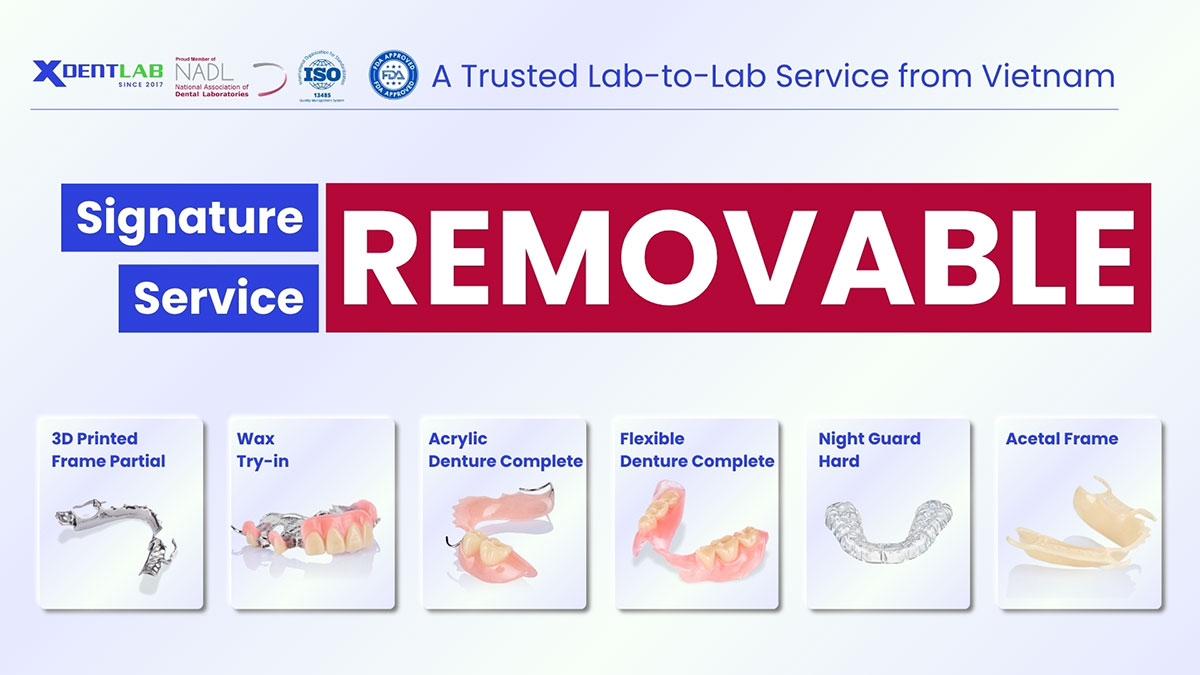
Our 5 Commitments Built on “Trusted. Commitment. Quality”
- Commit to 100% FDA-Approved Materials
- Commit to Large-Scale Manufacturing, high volume, remake rate < 1%.
- Commit to 2~3 days in lab (*digital file)
- Commit to Cost Savings 30%
- Commit to Best Price
XDENT LAB | A Trusted Lab-to-Lab Service from Vietnam
Share this post:
Related Posts
Explore the traditional and modern dental lab industry, including key differences, digital trends, materials, workflows, and outsourcing benefits for dental practices.
Growing a dental lab does not have to mean expanding the facility or doubling the headcount. Partnering with an overseas manufacturing partner under the subcontract model lets a lab reach production r...
XDENT LAB helps dental lab owners offer removable case services (dentures, removable appliances) to clinics, without investing in their own resources. Learn the step-by-step partnership process.

