
C-clasp in RPD explained: structure, function, types, advantages, and clinical indications of circumferential clasps in removable partial denture design.
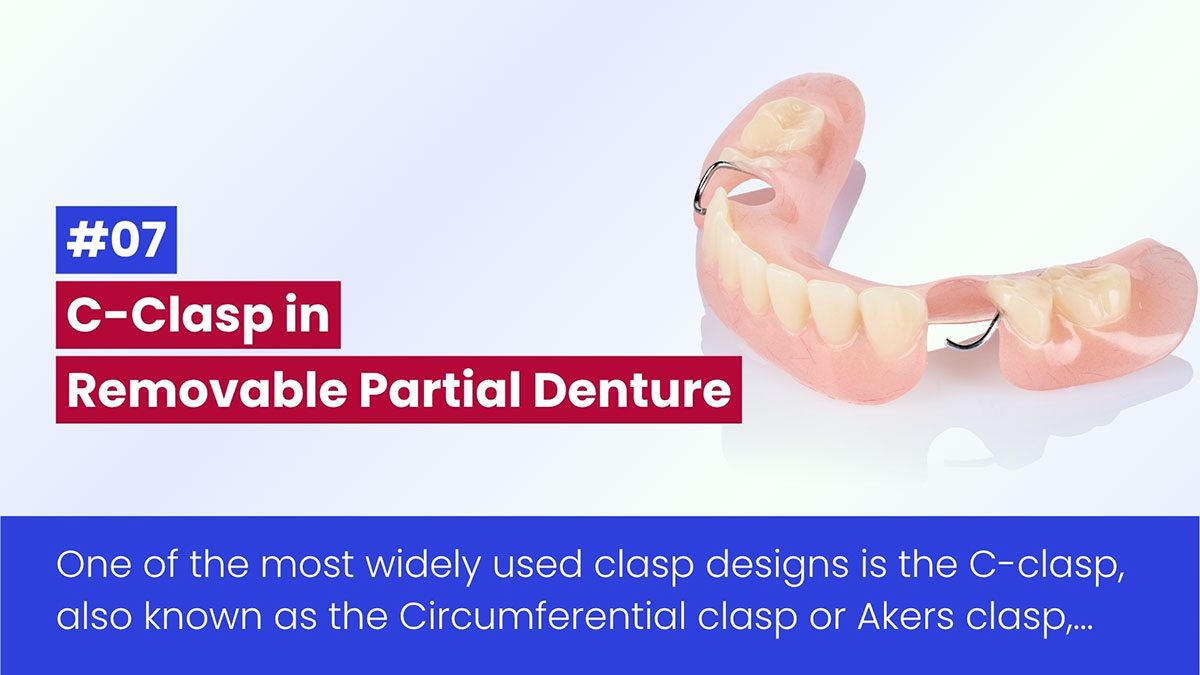
Table of contents [Show]
Introduction
Removable partial dentures (RPDs) remain an essential treatment option for partially edentulous patients. Among the various components of RPDs, clasps play a critical role in ensuring retention, stability, and support. One of the most widely used clasp designs is the C-clasp, also known as the circumferential clasp or Akers clasp.
Due to its simplicity, effectiveness, and versatility, the C-clasp continues to be a fundamental element in prosthodontic practice. This article provides a comprehensive overview of the C-clasp, including its structure, biomechanical principles, indications, advantages, and limitations.
What is a C-Clasp?
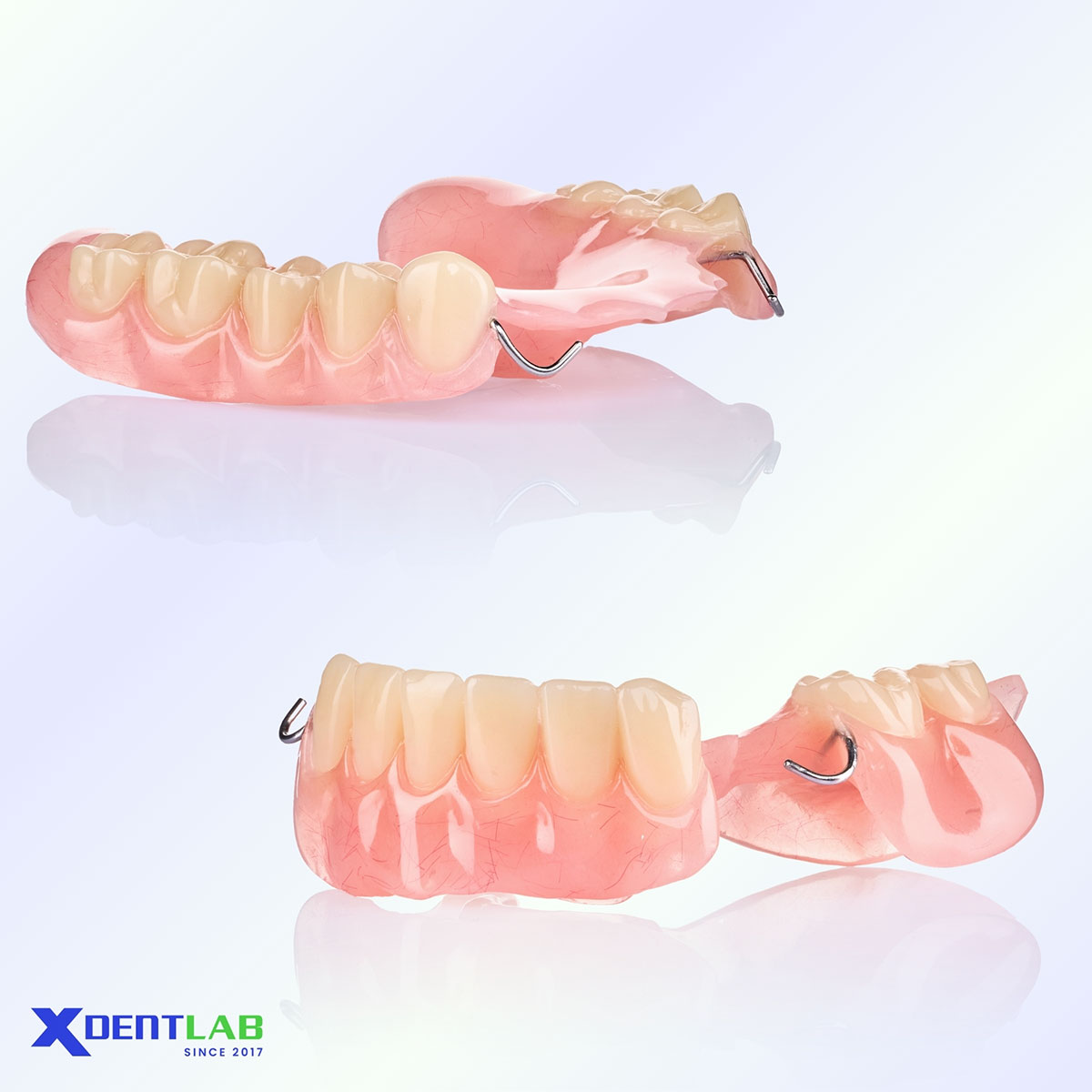
A C-clasp is a type of direct retainer used in removable partial dentures that partially encircles the abutment tooth in a C-shaped configuration. It approaches the tooth from the occlusal (suprabulge) direction, passing over the height of contour and engaging an undercut for retention.
This design allows the clasp to provide mechanical retention while maintaining stability during functional movements such as mastication and speech.
Biomechanical Functions of the C-Clasp
The effectiveness of a C-clasp lies in its ability to fulfill several biomechanical requirements simultaneously:
Retention
The retentive arm engages the undercut area of the tooth, preventing vertical dislodgement of the denture during function.
Stability
The rigid components of the clasp resist horizontal and lateral forces, ensuring that the prosthesis remains stable during chewing.
Reciprocation
The reciprocal arm counteracts the lateral forces exerted by the retentive arm during insertion and removal, protecting the abutment tooth from excessive stress.
Support
The occlusal rest directs functional forces along the long axis of the tooth, minimizing harmful lateral loading.
These combined functions make the C-clasp a reliable and efficient retentive component in RPD design.
Structural Components of a C-Clasp
A properly designed C-clasp consists of four main components:
Retentive Arm
The retentive arm is flexible and located below the survey line. It engages the undercut and provides retention. Its flexibility allows it to deform slightly during insertion and removal without damaging the tooth.
Reciprocal Arm
The reciprocal arm is rigid and positioned above the survey line. It stabilizes the tooth and neutralizes the lateral forces generated by the retentive arm.
Occlusal Rest
The rest is placed on the occlusal surface of the abutment tooth. It provides vertical support and prevents the denture from sinking into the soft tissues.
Minor Connector
The minor connector links the clasp assembly to the major connector, ensuring proper distribution of forces throughout the framework.
Principle of Retention
The C-clasp operates based on the concept of tooth undercut engagement:
During insertion, the retentive arm flexes as it crosses the height of contour
Once fully seated, it engages the undercut area
During removal, the arm flexes again to disengage
This controlled flexibility allows the clasp to provide retention while minimizing stress on the abutment tooth. Proper selection of undercut depth and clasp material is essential to maintain this balance.
Variations of C-Clasp
Several variations of the C-clasp exist to accommodate different clinical situations:
Simple Circlet (Akers Clasp)
The most commonly used design, ideal for tooth-supported cases such as Kennedy Class III.
Reverse Circlet Clasp
Indicated when the undercut is located on the opposite side of the tooth, requiring a modified path of the clasp arm.
Embrasure Clasp
Used between two adjacent teeth without an edentulous space. It provides retention on both sides but requires sufficient occlusal clearance.
Multiple Circlet Clasp
Incorporates additional retentive arms to increase retention and stability in complex cases.
Advantages of C-Clasp
Simple design and ease of fabrication
High strength and durability
Effective retention and stability
Good force distribution
Applicable in a wide range of clinical scenarios
Because of these benefits, it is often the first choice in many RPD designs.
Disadvantages of C-Clasp
Reduced esthetics due to visible metal components
Potential for food accumulation around the clasp
Limited flexibility compared to infrabulge clasps
Not suitable for anterior teeth where esthetics are critical
These factors must be considered during treatment planning.
Clinical Indications
Tooth-supported RPDs (Kennedy Class III)
Cases with well-defined and accessible undercuts
Situations requiring rigid and stable retention
Posterior regions where esthetics are less critical
Contraindications
Highly esthetic areas, especially anterior teeth
Cases with shallow or unfavorable undercuts
Periodontally compromised abutment teeth
Situations requiring stress-releasing clasp designs (e.g., distal extension cases)
Design Considerations
For optimal performance, several design principles must be followed:
The clasp should engage an appropriate undercut (typically 0.25 mm for cast metal)
The retentive arm should taper gradually toward the tip
The reciprocal arm must be rigid and properly positioned
The clasp should encircle more than 180 degrees of the tooth
The rest seat must be properly prepared to ensure support
Failure to follow these principles may result in poor retention, instability, or damage to the abutment tooth.
Conclusion
The C-clasp remains one of the most important and widely used clasp designs in removable partial dentures. Its ability to provide reliable retention, stability, and support makes it indispensable in prosthodontic practice.
A thorough understanding of its structure, biomechanical principles, and clinical applications is essential for designing effective and long-lasting RPDs. When used appropriately, the C-clasp contributes significantly to the success of removable prosthodontic treatment.
References
[1] Rudd KD, Morrow RM, Rhoads JE. Dental Laboratory Procedures: Removable Partial Dentures. 2nd ed. St. Louis: C.V. Mosby; 1986.
[2] McCracken WL. McCracken’s Removable Partial Prosthodontics. 13th ed. St. Louis: Elsevier; 2016.
[3] Stewart KL, Rudd KD, Kuebker WA. Clinical Removable Partial Prosthodontics. 2nd ed. Quintessence Publishing; 1983.
[4] Carr AB, Brown DT. McCracken’s Removable Partial Prosthodontics. 13th ed. Elsevier; 2016.
[5] Phoenix RD, Cagna DR, DeFreest CF. Stewart’s Clinical Removable Partial Prosthodontics. 4th ed. Quintessence Publishing; 2008.
[6] Applegate OC. Essentials of Removable Partial Denture Prosthesis. 3rd ed. Saunders; 1965.
[7] Jacobson TE, Krol AJ. A contemporary review of the factors involved in complete dentures. Journal of Prosthetic Dentistry. 1983;49(1):5–15.
[8] Henderson D, Steffel VL. McCracken’s Removable Partial Prosthodontics. 9th ed. Mosby; 1981.
[9] Zarb GA, Bolender CL. Prosthodontic Treatment for Edentulous Patients. 12th ed. Mosby; 2004.
[10] Boucher CO. Boucher’s Prosthodontic Treatment for Edentulous Patients. 11th ed. Mosby; 1997.
About XDENT LAB:
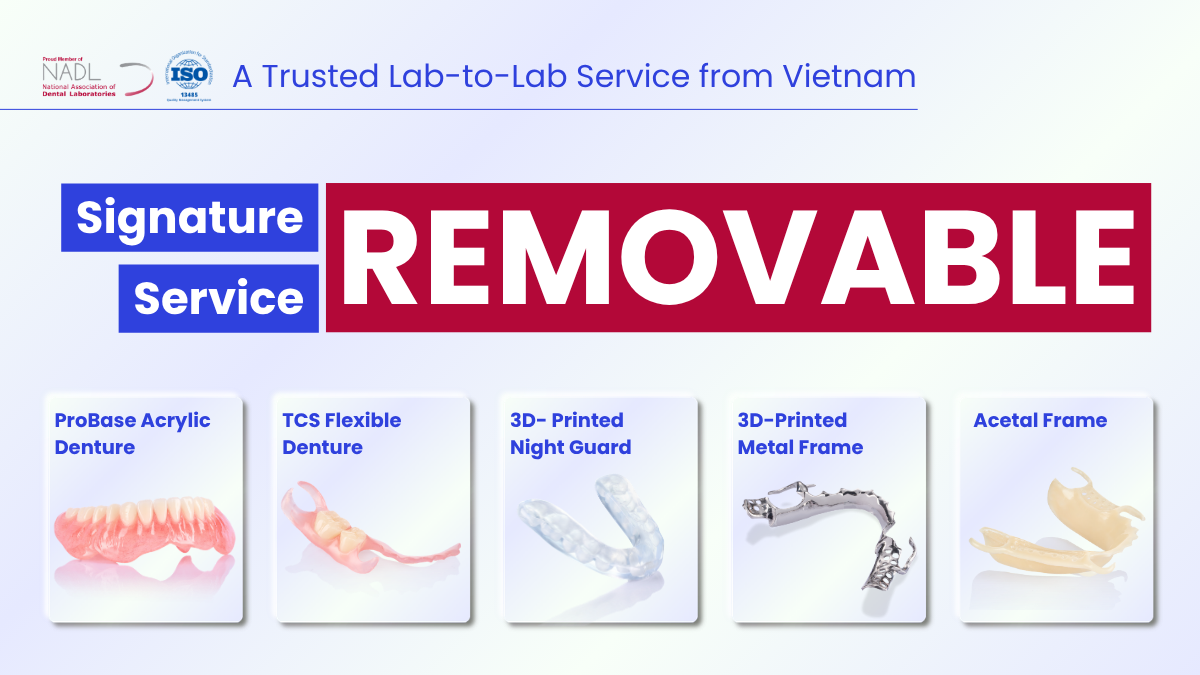
We are experts in Lab-to-Lab Full Service from Vietnam, with the signature services of Removable, meet U.S. market standards, FDA-registered, ISO 13485-certified. Founded in 2017, from local root to global reach, we scale with 2 Factories with over 100+ employees.
Our Commitments Built on “Trusted. Commitment. Quality”
- Commit to Large-Scale Manufacturing, high volume, remake rate < 1%.
- Commit to 5-Year Warranty
- Commit to Competitive Price
XDENT LAB | A Trusted Lab-to-Lab Service from Vietnam
Share this post:
Related Posts
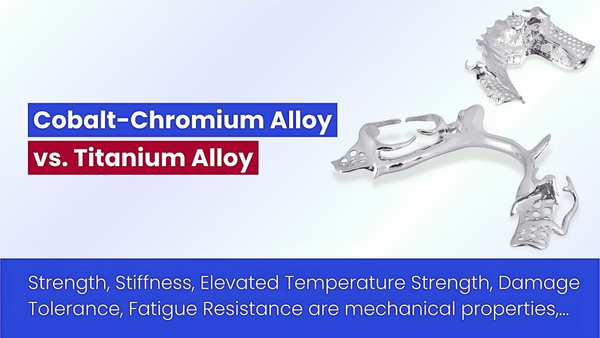
Learn the key differences between titanium and cobalt-chromium alloys used in removable partial denture frameworks, from mechanical properties to production requirements.
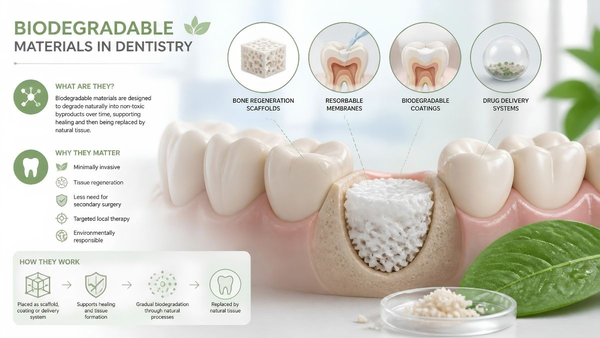
Explore biodegradable materials in dentistry, including their applications, benefits, limitations, and future potential in regenerative and sustainable dental care.
Learn how polyamide dental materials support flexible dentures and removable prosthetics through biocompatibility, aesthetics, comfort, and lightweight performance.

