
A technical guide to post curing in digital denture fabrication, helping dental lab technicians understand the parameters for consistent product quality.
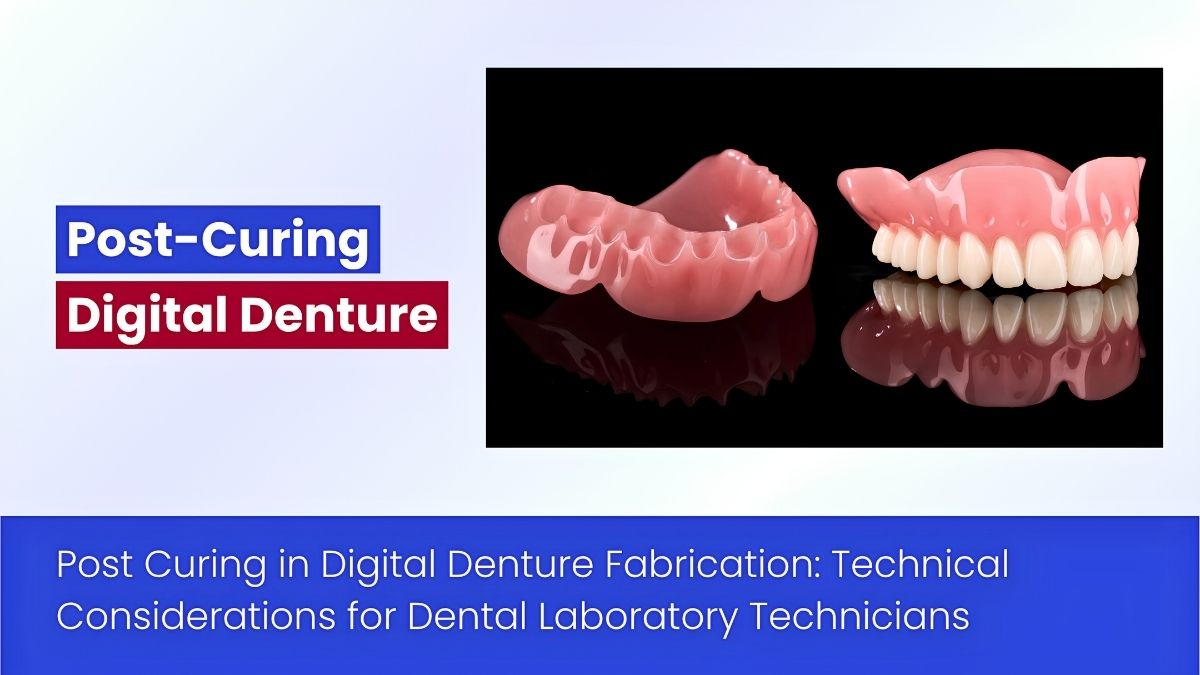
Table of contents [Show]
Post curing is the final polymerization step for 3D printed dentures, and it directly determines the mechanical strength, dimensional stability, and biological safety of the finished product. As digital denture workflows become increasingly common, understanding and controlling the post curing step correctly is essential for any denture lab adopting 3D printing technology.
What Is Post Curing And Why It Matters
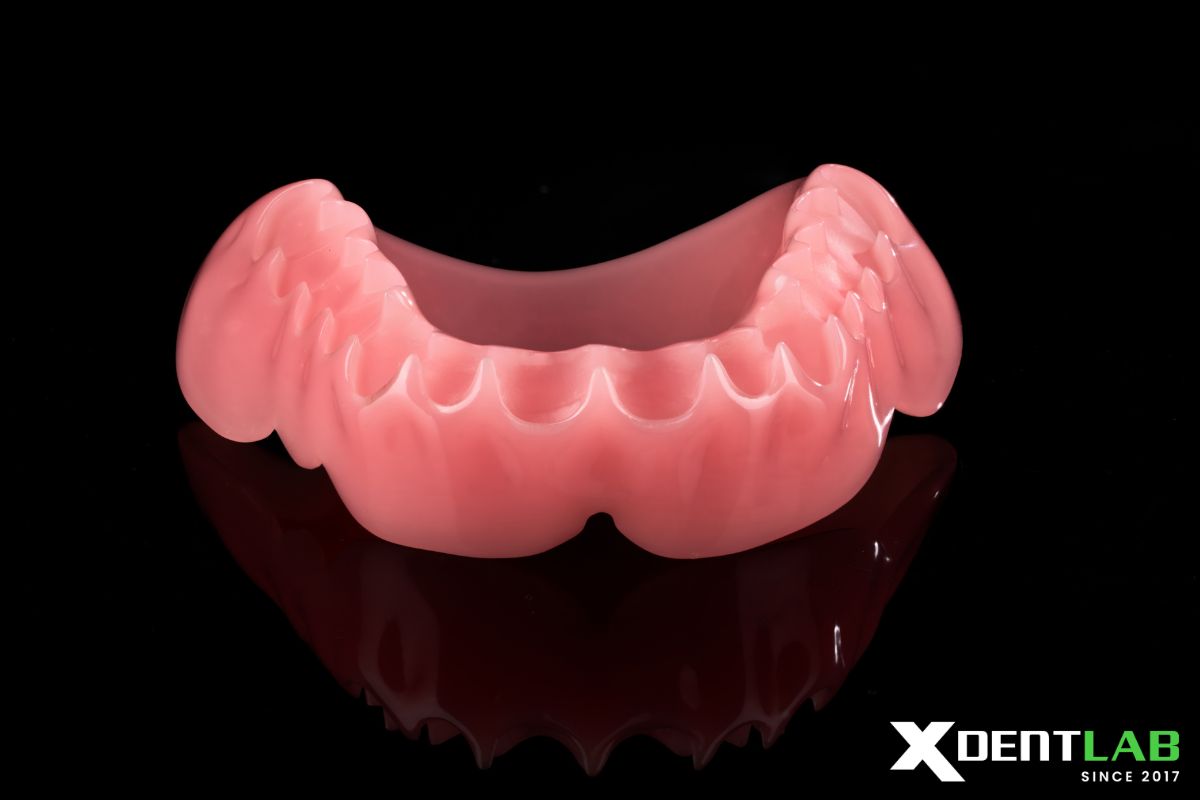
Denture base resin (typically a light activated PMMA system) only reaches partial monomer conversion during the printing process itself. After printing, a significant amount of unreacted monomer remains within the resin matrix. Post curing uses light of an appropriate wavelength (commonly in the range of 390 to 540 nm, most often 405 nm) combined with controlled temperature to complete the crosslinking of the remaining monomer.
Skipping or improperly performing this step can lead to the following problems.
Low polymer conversion reduces flexural strength and surface hardness. Residual monomer causes cytotoxicity, affecting biocompatibility when the appliance contacts oral mucosa. The material becomes more prone to water sorption and solubility over time, shortening the service life of the denture.
Key Parameters To Control
Post curing time
Studies on 3D printed denture base resin indicate that the minimum post curing time needed to achieve stable mechanical properties typically falls in the range of 20 to 30 minutes. Some studies report that extending post curing to 60 minutes further improves overall clinical performance, particularly surface microhardness, which continues to increase with longer post curing time even when flexural strength shows no significant change beyond a certain threshold.
Important note: extending post curing beyond the recommended range does not provide proportional benefit and may cause dimensional distortion or discoloration. Technicians should follow the resin manufacturer's recommendations rather than assuming that longer curing is always better.
Light wavelength
Most dedicated post curing units for denture base resin operate at 405 nm, matching the absorption spectrum of the photoinitiator systems used in current dental resins. Some systems use a broader range (390 to 540 nm). Technicians should verify that their post curing unit's wavelength matches the resin manufacturer's specification, since a wavelength mismatch reduces polymerization efficiency even when curing time is sufficient.
Post curing temperature
Temperature is typically controlled within a range of 40 to 80 degrees C, depending on the equipment and resin type. Higher temperatures (for example 80 degrees C) tend to improve impact strength compared to lower temperatures at the same processing time, though extending time at high temperature does not add meaningful further improvement. Exceeding the recommended temperature range can introduce warping or internal stress within the resin.
Print orientation and its effect on post curing
The orientation used during printing (0, 45, or 90 degrees relative to the build platform) affects how layers stack and how stress is distributed, which in turn indirectly affects post curing outcomes. Horizontally printed specimens (0 degrees) tend to produce smoother intaglio surfaces and better interlayer bonding, while vertically printed specimens (90 degrees) are more prone to stair stepping and unsupported regions during polymerization.
Recommended Post Curing Workflow For Labs
After printing, specimens should be cleaned of excess resin using isopropyl alcohol (typically 95 percent concentration) in an ultrasonic bath, to remove uncured resin from the surface and from between print layers. Allow specimens to dry completely before placing them in the post curing chamber, to avoid residual alcohol affecting surface quality. Position specimens correctly within the post curing chamber so that light reaches all surfaces evenly, avoiding shadowed areas that cause uneven polymerization. Set time, wavelength, and temperature according to the resin manufacturer's exact specifications, rather than applying a single generic setting across all materials. Periodically check the accuracy of the UV lamp and temperature sensor in the post curing unit, since lamp output degrades over time and reduces curing effectiveness even when the time setting remains unchanged.
Common Mistakes To Avoid
Using an overly short post curing time to speed up production, resulting in insufficient polymer conversion and compromised strength and biosafety. Skipping the resin cleaning step before post curing, leaving an uncured surface layer that blocks light from reaching the interior. Applying the same post curing settings across different resins, when each resin has its own photoinitiator formulation and wavelength requirement. Failing to periodically verify UV lamp output, causing a mismatch between the programmed curing time and the actual energy delivered to the specimen.
Conclusion
Post curing is not a minor finishing step in the digital denture workflow. It is the stage that determines the final quality of the product, directly affecting mechanical strength, dimensional stability, and biological safety for the patient. Dental technicians should strictly follow the resin manufacturer's specifications for time, wavelength, and temperature, while standardizing the cleaning process and equipment maintenance to ensure consistent quality across production batches.
References
- Effect of printing orientation and post curing time on the mechanical properties of 3D printed denture base resin. Journal of Functional Biomaterials, 2025.
- Enhancing the impact strength of 3D printed denture bases through post curing: an experimental study on the effects of temperature and time. AIP Conference Proceedings, 2025.
About XDENT LAB:
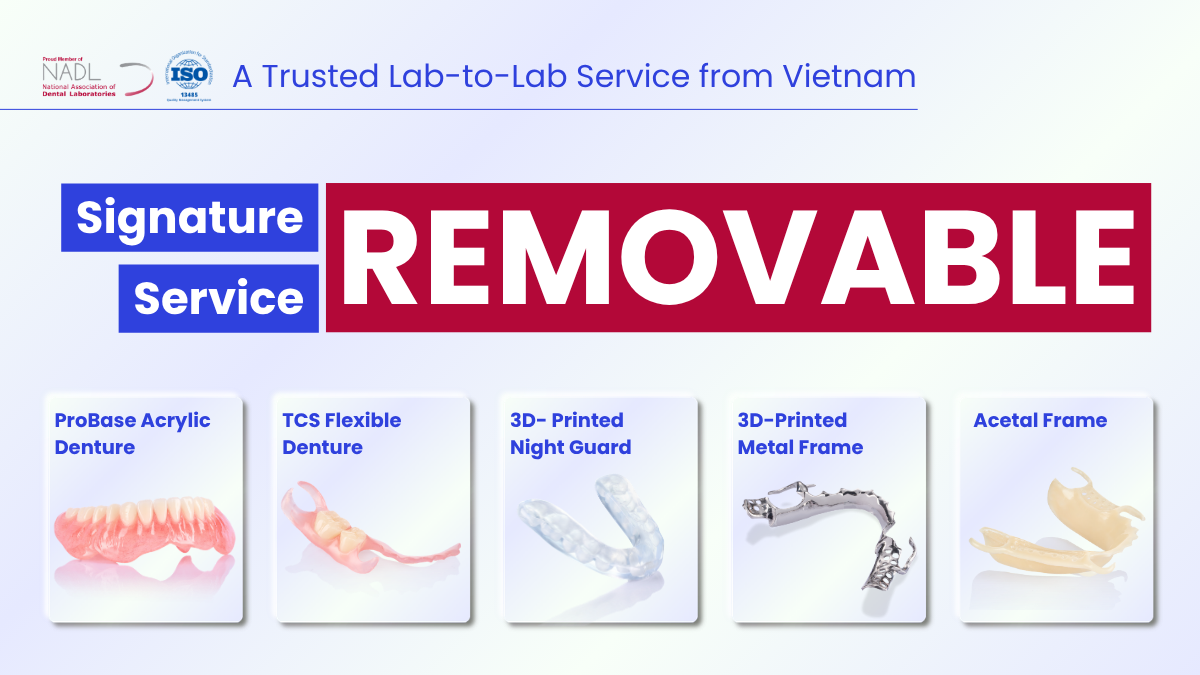
We are experts in Lab-to-Lab Full Service from Vietnam, with the signature services of Removable, meet U.S. market standards, FDA-registered, ISO 13485-certified. Founded in 2017, from local root to global reach, we scale with 2 Factories with over 100+ employees.
Our Commitments Built on “Trusted. Commitment. Quality”
- Commit to Large-Scale Manufacturing, high volume, remake rate < 1%.
- Commit to 5-Year Warranty
- Commit to Competitive Price
XDENT LAB | A Trusted Lab-to-Lab Service from Vietnam
Share this post:
Related Posts
Discover how critical laboratory checks reduce remakes and improve restoration quality in dental lab outsourcing for fixed and implant cases.
Understanding and applying the correct Layer Thickness settings not only saves labs time and production cost, but also ensures stable output quality for each specific type of dental product.
Learn about digital dentistry, including scanners, CAD/CAM, 3D printing, AI, workflows, benefits, challenges, and dental lab applications.

