
A practical overview of international dental markets in 2026, covering growth drivers, digital workflows, patient trends, regional developments, and dental lab outsourcing.
Table of contents [Show]
- Global Dental Market Growth and Industry Direction
- Technology Trends Reshaping International Dental Markets
- Patient-Centered Trends Influencing Market Demand
- Key Challenges in the International Dental Industry
- Regional Insights: How International Dental Markets Differ
- Future Trends That Will Shape the Dental Industry Beyond 2026
- Comparison of Major International Dental Market Trends for 2026
- What These Trends Mean for Dental Labs and Outsourcing
- Key Takeaways
- References
The international dental industry in 2026 is being shaped by a combination of market expansion, digital transformation, changing patient expectations, workforce pressure, and global production realignment. Across regions, dental businesses are adapting to a more technology-driven and efficiency-focused environment while still facing familiar challenges such as cost control, reimbursement pressure, and talent shortages.
For dental practices, dental labs, distributors, and outsourcing partners, the key shift is clear: growth is no longer driven only by treatment demand. It is increasingly influenced by workflow integration, material innovation, digital case management, cross-border production, and patient-centered service models. Below is a practical overview of the most important international dental market trends and what they mean for the industry in 2026.
Global Dental Market Growth and Industry Direction
The global dental sector continues to expand as oral healthcare demand rises across both developed and emerging markets. Market growth is being supported by increasing awareness of oral health, aging populations, rising demand for aesthetic and restorative treatment, greater access to dental technology, and recovery of deferred treatment from previous years.
Industry projections suggest that the dental services market will continue growing steadily through 2026, with strong momentum in both clinical services and laboratory-related sectors. This growth is not limited to routine care. It also includes cosmetic dentistry, implant dentistry, orthodontics, prosthodontics, and preventive and wellness-focused treatment.
What Is Driving This Expansion
Several structural factors are pushing the international dental market forward.
Demographic demand: More adults are seeking long-term restorative and implant solutions. Older populations require more prosthetic and maintenance care. Younger patient groups continue to adopt esthetic and orthodontic treatments.
Clinical complexity: Patients increasingly expect multidisciplinary care. Cases often involve digital planning, implant coordination, and high aesthetic requirements. Treatment acceptance rises when communication and convenience improve.
Global production models: Dental practices are more open to working with external and international lab partners. Cross-border dental lab outsourcing is becoming more normalized where quality, compliance, and turnaround are reliable.
This means the market is expanding not just in size, but in operational complexity.
Technology Trends Reshaping International Dental Markets
Technology remains one of the strongest forces behind growth and differentiation in dentistry.
AI-Powered Diagnostics
Artificial intelligence is moving from experimental use into practical adoption. AI-supported systems are increasingly used to analyze radiographs, flag possible lesions or pathology, support caries detection, improve workflow consistency, and assist treatment presentation.
AI does not replace clinical judgment, but it does improve screening speed and diagnostic standardization. In competitive markets, that can influence both efficiency and patient trust.
Digital Dentistry and Workflow Integration
Digital dentistry is no longer a premium-only feature. It is becoming a baseline expectation in many markets.
Key digital workflow components include: intraoral scanning, CAD/CAM design, 3D printing, digital smile design, virtual articulation, guided implant planning, and cloud-based case collaboration.
These systems improve accuracy, case communication, remake reduction, turnaround time, and patient understanding.
For labs and outsourcing providers, digital workflows also make cross-border collaboration easier. A case can move internationally with a scan file instead of a physical impression, improving speed and operational efficiency.
Advancements in Implant Materials and Prosthetic Solutions
Implant dentistry remains one of the most active high-value segments of the dental market. Growth is supported by improved surgical planning, better prosthetic design tools, more material options, and increased patient awareness.
Materials such as zirconia, titanium-based systems, PEEK in selected prosthetic applications, and advanced polymers and hybrid materials are helping practices and labs meet different needs for strength, weight, esthetics, and biocompatibility.
Patient-Centered Trends Influencing Market Demand
The dental market in 2026 is not shaped only by clinicians and manufacturers. Patients are influencing treatment delivery more than ever.
Whole-Health Integration
A growing number of practices are positioning dentistry as part of broader health management. This includes stronger recognition of links between oral health and diabetes, cardiovascular conditions, pregnancy-related health concerns, inflammation, and systemic wellness.
This trend supports preventive care, interdisciplinary communication, and long-term patient retention.
Personalization and Convenience
Patients increasingly expect transparent pricing, digital scheduling, clear treatment planning, faster turnaround, remote communication options, and personalized case presentation.
Internationally, this trend is affecting how practices select suppliers and lab partners. If a lab can support smoother workflows, predictable timelines, and consistent quality, it helps the practice deliver a better patient experience.
Growth of Esthetic and Elective Treatment
In many regions, demand is increasing for veneers, clear aligners, whitening, implant-supported restorations, and natural-looking prosthetics.
This demand is particularly strong in urban and middle-to-upper income markets where appearance, confidence, and digital visibility influence treatment decisions.
Key Challenges in the International Dental Industry
The industry is growing, but several challenges continue to shape market behavior and business strategy.
Rising Treatment Costs
Costs are increasing across materials, equipment, staffing, compliance, logistics, and laboratory services. As a result, dental organizations are looking for ways to preserve margins without compromising quality.
Common responses include: expanding outsourcing relationships, using digital workflows to reduce inefficiency, offering financing or subscription-based care options, and focusing on case acceptance strategies.
Workforce Shortages
Many regions are dealing with shortages in dentists, dental assistants, hygienists, dental technicians, and specialized laboratory personnel.
These shortages affect appointment availability, production capacity, training burden, labor costs, and turnaround times.
In lab environments, technician shortages create a strong incentive for process standardization and trusted outsourcing partnerships.
Insurance and Payer Pressure
In some markets, reimbursement limitations and administrative complexity continue to affect profitability. Practices must balance patient affordability, insurance constraints, cost of technology adoption, and quality expectations.
This makes operational efficiency a competitive advantage rather than a secondary benefit.
Regional Insights: How International Dental Markets Differ
Regional growth patterns matter because each market has different drivers, constraints, and sourcing models.
North America
North America remains one of the most significant dental markets globally due to high treatment spending, strong technology adoption, large implant and restorative segments, and advanced private practice infrastructure.
The region also has strong demand for premium esthetic outcomes, digital case workflows, reliable lab partnerships, and regulatory compliance. For outsourcing partners, North America remains highly attractive but also highly demanding.
Europe
European dental markets are shaped by strong public awareness of oral health, mature regulatory systems, preventive care emphasis, and growing demand for advanced restorative and prosthetic treatment.
In many parts of Europe, sustainability and material traceability are becoming more important in procurement decisions.
Asia-Pacific
Asia-Pacific is expected to remain one of the fastest-growing regions because of urbanization, rising disposable income, expanding private dental care, cosmetic dentistry demand, and investment in healthcare infrastructure.
This region is also strategically important because it includes major production and outsourcing hubs. For companies like XDENT LAB, this regional position supports both manufacturing scale and international service potential.
Middle East and Africa
Growth in these regions is supported by expanding healthcare systems, increased oral health awareness, investment in private care facilities, and demand for modern dental technology in major cities.
Market growth is uneven across countries, but the long-term development potential is significant.
Future Trends That Will Shape the Dental Industry Beyond 2026
Looking beyond immediate market performance, several long-range trends are already influencing strategic decisions.
Sustainability in Dental Operations
Dental organizations are increasingly exploring eco-friendly materials, reduced packaging waste, energy-efficient equipment, more responsible disposal practices, and digitally streamlined workflows that reduce physical waste.
Sustainability is moving from branding language toward procurement and operational planning.
Teledentistry and Remote Support
Teledentistry is growing in areas such as triage, follow-up consultation, treatment education, remote case review, and access support in underserved locations.
While it does not replace in-person clinical care, it strengthens access and communication.
Preventive Care Expansion
Many markets are placing greater emphasis on early diagnosis, risk-based patient education, maintenance programs, and wellness-driven dental communication.
This could reduce disease burden over time while supporting more stable patient relationships.
Education and Specialization
As technologies evolve, dental professionals are investing more in implant education, digital design training, AI-supported diagnostics, interdisciplinary treatment planning, and materials science literacy.
The future dental market will reward not only clinical skill, but also adaptive learning.
Comparison of Major International Dental Market Trends for 2026
Below is a practical summary of the main trends shaping the global dental industry.
| Trend | What It Means | Business Impact |
|---|---|---|
| Digital dentistry growth | More scanning, CAD/CAM, 3D printing, and cloud collaboration | Faster workflows, fewer remakes, easier outsourcing |
| AI-powered diagnostics | Better screening and case analysis support | Improved efficiency and communication |
| Patient-centered care | More transparency, convenience, and personalized treatment | Higher service expectations and stronger competition |
| Workforce shortages | Fewer qualified clinical and technical professionals | Greater pressure on productivity and training |
| Rising treatment costs | More margin pressure across practices and labs | Need for efficiency, outsourcing, and cost control |
| Implant and esthetic demand | Growth in high-value restorative treatment | Increased need for premium prosthetic quality |
| Sustainability and prevention | More focus on responsible operations and long-term health | Changes in procurement and patient communication |
This comparison shows that international dental markets are evolving across both clinical demand and business infrastructure at the same time.
What These Trends Mean for Dental Labs and Outsourcing
International market changes are especially important for dental labs because labs sit at the intersection of clinical quality, technology adoption, material selection, turnaround speed, and cost management.
Why Labs Matter More in 2026
As practices become more digital and more efficiency-focused, they need lab partners that can provide consistent product quality, digital case compatibility, reliable communication, regulatory awareness, scalable production, and expertise in removable and implant cases.
This is where outsourcing becomes a strategic model rather than simply a cost-saving decision.
Relevance to XDENT LAB
For XDENT LAB, the international dental market trends of 2026 align closely with the strengths of a modern Vietnam dental lab offering lab-to-lab full service.
XDENT LAB is well positioned in areas that matter most to global practices: removable prosthetics, implant restorations, quality-controlled production, FDA and ISO-aligned standards, scalable manufacturing capacity, and digital-ready workflows.
For dental practices looking to maintain quality and consistency while adapting to international market pressures, working with a capable outsourcing partner can improve turnaround reliability, cost efficiency, case consistency, and operational flexibility.
In a competitive market, the right lab partnership supports not only production, but also practice growth.
Key Takeaways
The international dental industry in 2026 is being shaped by a combination of market growth, digital transformation, AI integration, rising esthetic and implant demand, patient-centered service expectations, and workforce and cost pressures.
Regional dynamics matter, but the global direction is consistent: dental businesses must become more efficient, more digital, and more adaptable.
For practices and lab partners, the most important strategic opportunity lies in building workflows that combine quality, speed, compliance, digital connectivity, and predictable outcomes.
The central takeaway is clear: international dental markets in 2026 reward organizations that can deliver technology-enabled, patient-focused, and operationally consistent care at scale.
References
- 2026 Dental Industry Statistics: Key Trends & Market Insights - Patient Desk
- Dental Industry Predictions for 2026 - ADA
- Dental Industry Trends to Adopt in 2026 - CareCredit
- Key Dental Market Trends to Watch in 2026 - Ameritas
About XDENT LAB:
We are experts in Lab-to-Lab Full Service from Vietnam, with the signature services of Removable, meet U.S. market standards, FDA-registered, ISO 13485-certified. Founded in 2017, from local root to global reach, we scale with 2 Factories with over 100+ employees.
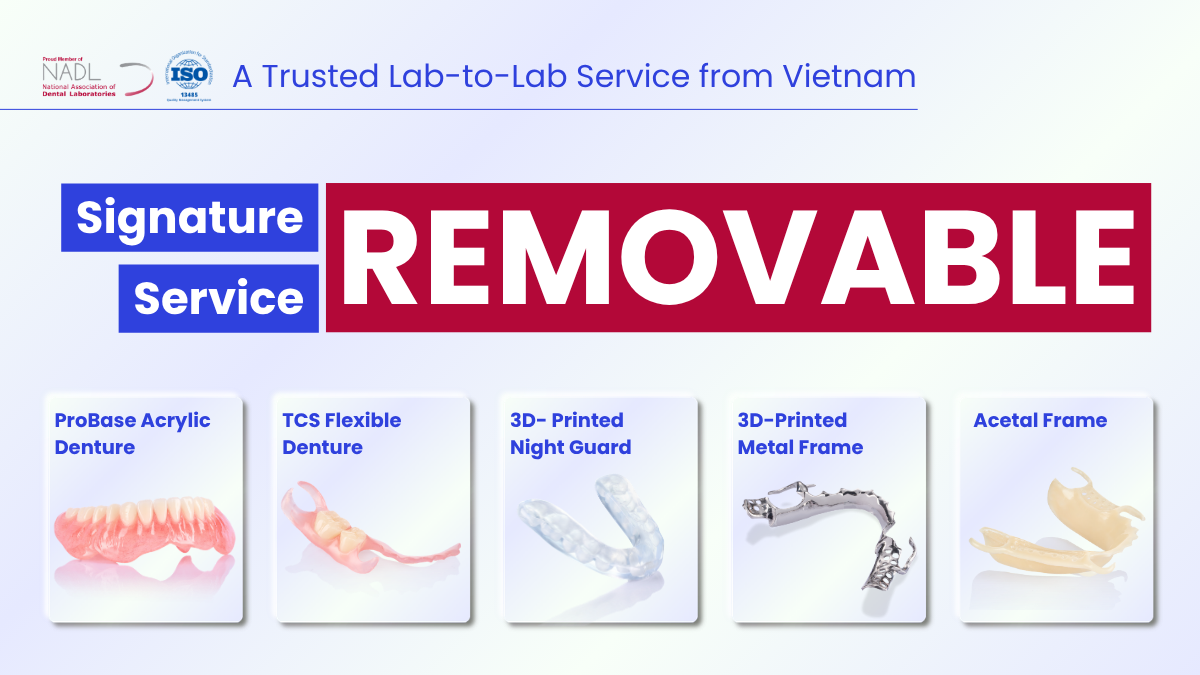
Our Commitments Built on “Trusted. Commitment. Quality”
- Commit to Large-Scale Manufacturing, high volume, remake rate < 1%.
- Commit to 5-Year Warranty
- Commit to Competitive Price
XDENT LAB | A Trusted Lab-to-Lab Service from Vietnam
Tags:
International MarketsShare this post:
Related Posts
Explore how independent dental labs support dentistry through custom restorations, digital workflows, quality control, and material traceability.
Learn how B2B dental labs improve quality and consistency for dental practices through digital workflows, material control, expert QC, and reliable turnaround.
Learn how the dental lab subcontract model helps labs expand capacity, manage workloads, access technology, and maintain quality in outsourced production.

