
Uncover why fluoride varnishes are essential in preventive dentistry. Learn about their benefits, application protocols, and safety with insights from XDENT LAB.
Table of contents [Show]
- Introduction to Fluoride Varnishes
- Composition and Formulations
- Mechanism of Action
- Clinical Effectiveness
- Application Protocols and Techniques
- Advantages of Fluoride Varnish
- Safety Considerations
- Cost-Effectiveness Analysis
- Comparative Effectiveness Studies
- Special Populations
- Recent Innovations
- Quality of Evidence
- Future Directions
- Conclusion
Introduction to Fluoride Varnishes
Fluoride varnishes represent one of the most effective professional topical fluoride treatments in preventive dentistry. The Cochrane database indicates that fluoride varnish is effective in reducing tooth decay in both primary and permanent dentitions, making it a cornerstone of modern caries prevention strategies. Most fluoride varnishes are lacquers containing 5% sodium fluoride in a colophony/resin base, providing a highly concentrated fluoride source that adheres to tooth surfaces for extended periods.
Composition and Formulations
Standard Sodium Fluoride Varnishes
The majority of fluoride varnishes contain 5% sodium fluoride (NaF), which equals 22,600 ppm fluoride. This high concentration allows for effective fluoride delivery while maintaining safety through controlled professional application. The resin base typically consists of natural colophony or synthetic resins that provide adhesion to tooth surfaces.
Alternative Formulations
Different fluoride varnish formulations include:
Duraphat: Contains 2.26% fluoride in natural carrier resin with alcohol as solvent.
Fluor Protector: Contains 0.9% difluorosilane by weight.
Various proprietary formulations with different resin bases and additives.
Fluoride Release Characteristics
Studies documenting fluoride release from seven commercially available fluoride varnishes containing 5% sodium fluoride show variable release patterns depending on:
Resin composition.
Solvent systems.
Environmental conditions.
Application thickness.
Mechanism of Action
Immediate Effects
Upon application, fluoride varnish provides:
Formation of calcium fluoride (CaF₂) deposits on tooth surfaces.
Creation of a fluoride reservoir for sustained release.
Immediate high fluoride concentration in saliva and plaque.
Protection of exposed dentin and enamel surfaces.
Sustained Prevention
The preventive effects of fluoride varnish extend beyond the initial application through:
Gradual fluoride release over several months.
Enhanced remineralization of early carious lesions.
Inhibition of demineralization during acid challenges.
Modification of tooth surface properties.
Clinical Effectiveness
Caries Reduction Rates
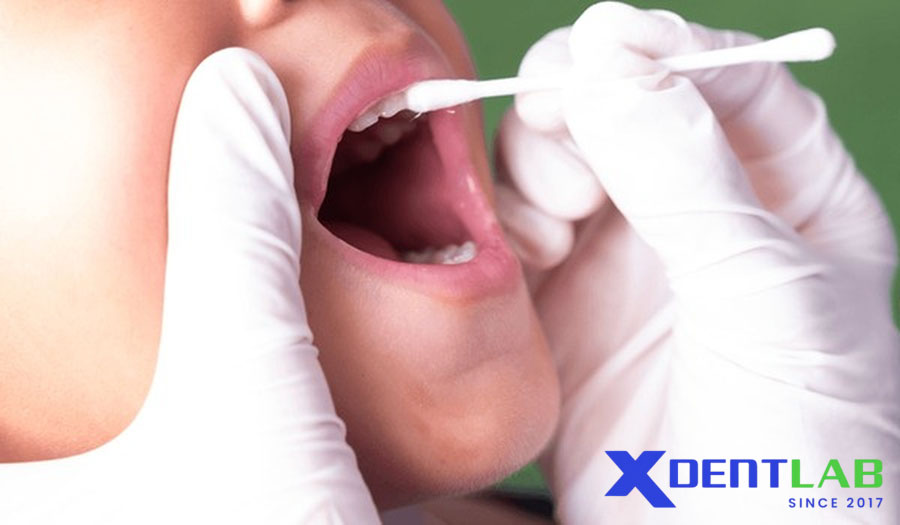
Compelling evidence demonstrates that fluoride varnish prevents caries with:
Approximately 37% caries reduction in primary dentition.
47% caries reduction in permanent dentition.
Higher effectiveness in high-risk populations.
Significant benefits in educational settings.
Population-Specific Effectiveness
Previous studies found that fluoride varnish demonstrated:
Lower caries-preventive efficacy in low-risk populations compared to high-risk populations.
Greater benefits in children with active caries or high caries risk.
Effectiveness across different age groups and dentition types.
Variable results based on application frequency and protocol.
Application Protocols and Techniques
Standard Application Procedure
The recommended application protocol includes:
Tooth surface cleaning (though not always necessary).
Moisture control with gauze or cotton rolls.
Application of thin layer using brush or applicator.
Allowing varnish to set in presence of saliva.
Post-application instructions to patients.
Frequency Recommendations
Current evidence-based recommendations suggest:
High-risk patients: Application every 3-4 months.
Moderate-risk patients: Application every 6 months.
Low-risk patients: Annual application or as indicated.
More frequent applications may be beneficial in very high-risk cases.
Clinical Prioritization
Recent recommendations suggest that clinicians prioritize:
Use of 38% silver diamine fluoride (SDF) solution (biannual application) over 5% NaF varnish (application once per week) for arresting cavitated lesions.
Fluoride varnish for prevention in non-cavitated lesions.
Combined approaches for comprehensive caries management.
Advantages of Fluoride Varnish
Clinical Benefits
Fluoride varnish offers several advantages over other topical fluoride treatments:
Ease of application requiring minimal equipment.
Safety due to small amounts used and controlled application.
Prolonged contact time with tooth surfaces.
No need for extensive moisture control.
Acceptance by young children and special needs patients.
Practical Advantages
Quick application time (1-4 minutes).
No need for patient cooperation during setting.
Can be applied by various trained personnel.
Cost-effective prevention strategy.
Minimal risk of fluoride ingestion.
Safety Considerations
Fluoride Exposure
Despite high fluoride concentration, varnishes are considered safe because:
Small volume applied (0.3-0.5 mL).
Rapid binding to tooth surfaces.
Minimal systemic absorption.
Lower total fluoride dose compared to gels or foams.
Contraindications and Precautions
Fluoride varnish should be avoided in:
Patients with ulcerative gingivitis or stomatitis.
Known allergies to colophony or resin components.
Severe asthma (for some formulations).
Very young children under professional guidance only.
Cost-Effectiveness Analysis
Economic Benefits
Studies on cost-effectiveness demonstrate:
Favorable cost-benefit ratio in preventing dental caries.
Reduced need for restorative treatment.
Lower overall dental care costs.
Particularly cost-effective in high-risk populations.
Implementation in Public Health Programs
Fluoride varnish programs in educational settings show:
Feasibility of large-scale implementation.
Reduced disparities in oral health.
High acceptability among parents and children.
Sustainable prevention model.
Comparative Effectiveness Studies
Versus Other Fluoride Modalities
When compared to other professional fluoride treatments:
Superior to fluoride gels in young children due to safety.
More effective than fluoride mouth rinses for high-risk patients.
Comparable to fluoride foam but with better patient acceptance.
Synergistic effects when combined with other preventive measures.
Educational Settings Outcomes
Systematic reviews of evidence from educational settings reveal:
Consistent caries reduction across different school-based programs.
Effectiveness regardless of water fluoridation status.
Benefits in both primary and permanent teeth.
Positive impact on oral health disparities.
Special Populations
Early Childhood Caries Prevention
Fluoride varnish is particularly effective for:
Children under 6 years of age.
Prevention of early childhood caries.
High-risk infants and toddlers.
Special needs populations.
Adolescent Applications
In adolescents, fluoride varnish provides:
Protection during high caries-risk periods.
Prevention around orthodontic appliances.
Management of white spot lesions.
Support during dietary challenges.
Recent Innovations
Enhanced Formulations
Recent developments include:
Extended-release formulations.
Addition of calcium and phosphate.
Improved taste and appearance.
Clear varnishes for better aesthetics.
Combination Therapies
Integration with other preventive agents:
CPP-ACP enhanced varnishes.
Xylitol-containing formulations.
Antimicrobial additives.
pH-modifying components.
Quality of Evidence
Systematic Reviews
Multiple systematic reviews confirm:
Strong evidence for caries prevention.
Consistent results across studies.
High-quality randomized controlled trials.
Long-term follow-up data available.
Clinical Guidelines
Professional organizations recommend fluoride varnish based on:
Robust scientific evidence.
Clinical effectiveness data.
Safety profile.
Cost-effectiveness analyses.
Future Directions
Research Priorities
Ongoing research focuses on:
Optimal application intervals for different risk groups.
Combination with emerging preventive technologies.
Personalized prevention protocols.
Long-term effectiveness in adult populations.
Innovation Opportunities
Future developments may include:
Smart varnishes with controlled release.
Bioactive components for enhanced remineralization.
Targeted delivery systems.
Integration with digital health monitoring.
Conclusion
Fluoride varnishes represent a highly effective, safe, and practical preventive intervention in modern dentistry. With caries reduction rates of 37-47% and excellent safety profiles, they have become essential tools in caries prevention programs. Their ease of application, cost-effectiveness, and acceptance across all age groups make them particularly valuable in both clinical and public health settings. The evidence strongly supports regular fluoride varnish applications as part of comprehensive preventive care, with frequency determined by individual caries risk assessment. Continued research into enhanced formulations and optimal protocols promises to further improve their effectiveness in preventing dental caries.
About XDENT LAB:
We are experts in Lab-to-Lab Full Service from Vietnam, with the signature services of Removable, meet U.S. market standards, FDA-registered, ISO 13485-certified. Founded in 2017, from local root to global reach, we scale with 2 Factories with over 100+ employees.
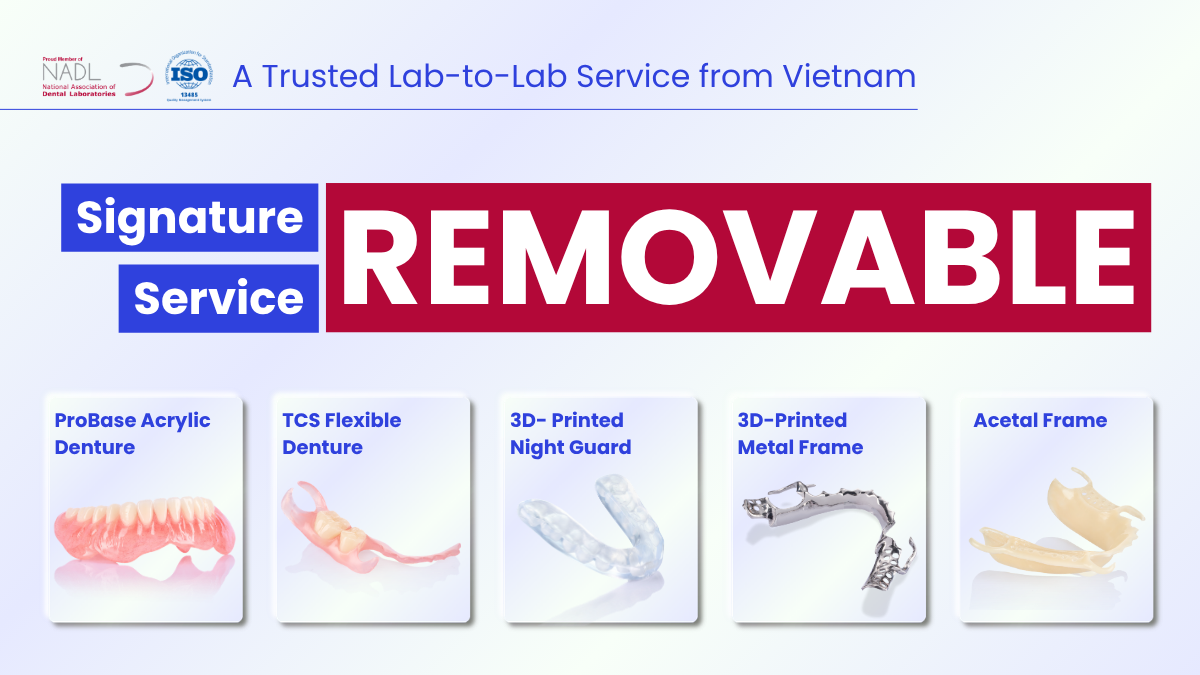
Our Commitments Built on “Trusted. Commitment. Quality”
- Commit to Large-Scale Manufacturing, high volume, remake rate < 1%.
- Commit to 5-Year Warranty
- Commit to Competitive Price
XDENT LAB | A Trusted Lab-to-Lab Service from Vietnam
Share this post:
Related Posts
Learn the key differences between titanium and cobalt-chromium alloys used in removable partial denture frameworks, from mechanical properties to production requirements.
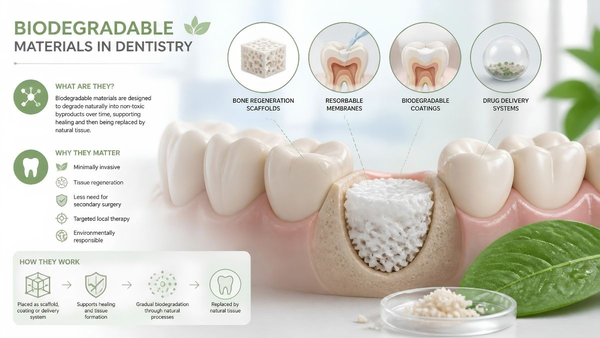
Explore biodegradable materials in dentistry, including their applications, benefits, limitations, and future potential in regenerative and sustainable dental care.
Learn how polyamide dental materials support flexible dentures and removable prosthetics through biocompatibility, aesthetics, comfort, and lightweight performance.

