
Explore fluoride‑bioactive glasses (F‑BAGs) for preventive dentistry: controlled ion release, fluorapatite formation, deeper subsurface remineralization, caries prevention, hypersensitivity relief, clinical protocols, safety, and cost‑effectiveness—evidence‑based guidance for dental practices with FDA/ISO‑aligned quality from XDENT LAB.
Table of contents [Show]
- Overview
- Historical Development & Evolution
- Composition & Chemistry
- Mechanism of Action
- Types of F-BAG Materials
- Clinical Applications
- Comparative Effectiveness
- Research Findings
- Formulation Considerations
- Safety & Biocompatibility
- Clinical Protocols
- Special Populations
- Recent Innovations
- Commercial Products
- Future Directions
- Challenges & Limitations
- Clinical Decision Making
- Economic Considerations
- Regulatory Aspects
- Conclusion
- XDENT LAB Perspective (Quality & Consistency)
Overview
Fluoride-containing bioactive glasses fuse the remineralization potential of bioactive glass with the anticariogenic power of fluoride. By releasing calcium, phosphate, and fluoride in a controlled manner, they promote fluorapatite formation and subsurface lesion repair—making them compelling alternatives to conventional fluoride systems for caries prevention, enamel remineralization, and dentin hypersensitivity. In workflows emphasizing predictable outcomes and compliance, F-BAGs provide sustained effects with reduced technique sensitivity and strong public-health applicability.
Historical Development & Evolution
F-BAGs emerged from medical biomaterials and evolved for preventive dentistry.
Origins of Bioactive Glass
Built on the original 45S5 Bioglass composition.
Proven in bone regeneration before dental adaptation.
Refined with fluoride chemistry for anticariogenic action.
Progressed toward preventive formulations and chairside products.
Progression to Dental Applications
Recognized for enamel/dentin remineralization potential.
Modified for oral pH, saliva interactions, and plaque biofilms.
Fluoride integrated via melt, substitution, and surface fluoridation.
Optimized for consumer and professional delivery; commercialized.
Composition & Chemistry
Formulation choices drive ion release, bioactivity, and stability.

Basic Glass Network
SiO₂ (≈45–55%): Network former.
CaO (≈20–25%): Network modifier.
Na₂O (≈20–25%): Network modifier.
P₂O₅ (≈2–6%): Nucleation agent.
CaF₂ (≈5–15%): Fluoride source.
Fluoride Incorporation Methods
Direct CaF₂ addition to glass melt.
Partial substitution of CaO with CaF₂.
Post-synthesis surface fluoridation.
Ion-exchange treatments.
Hybrid strategies combining multiple routes.
Structural Modifications
Silicate network disruption increases reactivity.
Si–F interactions and reduced connectivity enhance dissolution.
Tuned kinetics yield rapid initial release and sustained activity.
Mechanism of Action
The bioactive cascade underpins clinical benefits.
Ion Release Profile
Initial burst for fast onset.
Sustained fluoride release over time.
Co-release of calcium/phosphate supports apatite formation.
pH buffering improves acid-resistance.
Synergistic effects drive deeper remineralization.
Remineralization Process
Fluorapatite formation with improved acid resistance.
Enhanced crystal growth and subsurface repair.
Increased enamel microhardness and lesion reversal.
Durable protective effects under pH cycling.
Bioactivity Sequence
Surface hydration and ion exchange.
Silica gel layer development.
Calcium phosphate precipitation.
Fluorapatite crystallization.
Structural integration with enamel/dentin.
Types of F-BAG Materials
Multiple formats support tailored preventive protocols.
Toothpaste Formulations
NovaMin with fluoride, BioMin F technology.
Experimental and combination pastes.
Specialty preventive products for high-risk cohorts.
Varnish Applications
High-fluoride F-BAG professional varnishes.
Extended-release films with enhanced adhesion.
Standardized chairside protocols for predictable delivery.
Restorative Materials
Integrated into GICs and resin composites.
Pit and fissure sealants; orthodontic adhesives.
Preventive restorations emphasizing sustained ion release.
Clinical Applications
F-BAGs fit neatly into risk-based, minimally invasive strategies.
Caries Prevention
High-risk patient pathways and early lesion management.
Orthodontic care and white spot prevention.
Xerostomia and reduced salivary flow scenarios.
Community-based prevention programs.
Dentin Hypersensitivity
Tubule occlusion with durable relief.
Reduced nerve excitability via mineral deposition.
Long-term maintenance with simple home-care routines.
Enamel Remineralization
White spot lesion reversal and early caries repair.
Post-orthodontic decalcification management.
Erosion mitigation; careful fluorosis considerations.
Comparative Effectiveness
Material choice should reflect goals, risk, and compliance.
Versus Conventional Fluorides
Greater subsurface remineralization depth.
Enhanced fluoride uptake with lower required concentrations.
More durable lesion repair and sustained effects.
Versus Standard Bioactive Glass
Faster and deeper remineralization.
Superior caries resistance via fluoride synergy.
Improved clinical outcomes in risk-based protocols.
Efficacy Considerations
Relies on adequate salivary Ca/P availability.
Balanced fluoride dosing to avoid fluorosis.
Age-specific guidance and professional oversight.
Research Findings
Evidence spans bench to chairside.
In Vitro Studies
40–60% greater remineralization vs NaF alone.
Deeper lesion penetration; acid-resistant crystals.
Robust performance under pH-cycling; microhardness gains.
Clinical Trials
Reduced caries incidence; white spot reversal.
Hypersensitivity relief with patient-reported satisfaction.
Favorable safety and tolerability profiles.
Systematic Reviews
Consistent preventive effects across cohorts.
Dose-dependent outcomes; age considerations.
Cost-effectiveness supporting broader adoption.
Formulation Considerations
Engineering decisions influence performance and usability.
Particle Size Optimization
Nano-scale (≈20–100 nm) increases surface area.
Enhanced reactivity and lesion penetration.
Smoother aesthetics and mouthfeel.
Stability Issues
Moisture/pH sensitivity demands careful excipient design.
Ingredient compatibility and shelf-life control.
Manufacturing complexity for uniform dispersion.
Delivery Systems
Aqueous vs anhydrous formats; gels and powders.
Controlled-release matrices for sustained ion delivery.
Patient-friendly systems to improve adherence.
Safety & Biocompatibility
Rigorous safeguards ensure predictable, compliant care.
Fluoride Content Management
Age-appropriate concentrations and dosing.
Ingestion risk mitigation; fluorosis prevention.
Alignment with regulatory thresholds; labeling clarity.
Biocompatibility Studies
Excellent tissue compatibility; minimal inflammation.
No cytotoxicity at therapeutic doses.
Designed for ongoing use within safety margins.
Systemic Considerations
Predominantly local action with limited systemic uptake.
Contraindication screening for special populations.
Clear guidance for pediatric and geriatric cohorts.
Clinical Protocols
Standardization increases effectiveness and reduces variability.
Professional Application
Clean and prepare tooth surfaces.
Isolate as needed for moisture control.
Apply F-BAG material per instructions (time/dose).
Allow specified contact; avoid immediate rinsing.
Provide post-care guidance and scheduling.
Home Care Regimens
Twice-daily use with correct amounts.
Gentle technique and timed contact.
Compliance monitoring via recall.
Adjustments based on risk and response.
Combination Therapies
Layered professional + home-care strategies.
Integration with varnish, sealants, and SDF where indicated.
Risk-based customization and outcome tracking.
Special Populations
Tailored protocols maximize benefit and safety.
Pediatric Considerations
Reduced fluoride concentrations and supervised use.
School-based initiatives; early preventive pathways.
Clear instructions to caregivers.
Geriatric Applications
Root caries prevention; xerostomia management.
Simple routines compatible with polypharmacy.
Focus on comfort and quality of life.
High-Risk Groups
Oncology, Sjögren’s, eating disorders, special needs.
Enhanced protocols with professional oversight.
Documentation for medical-dental coordination.
Recent Innovations
Next-gen designs improve precision and persistence.
Smart F-BAG Systems
pH-responsive and biofilm-triggered release.
Self-regulating, targeted delivery.
Personalization aligned with risk profiles.
Multifunctional Materials
Antimicrobial, whitening, anti-inflammatory add-ons.
Protein-guided remineralization.
All-in-one preventive care concepts.
Nanotechnology Applications
Better penetration and aesthetics.
Enhanced stability and controlled release.
Upgraded efficacy in challenging environments.
Commercial Products
Market landscape helps guide selection and expectations.
Available Formulations
BioMin F toothpaste; Sensodyne Repair & Protect.
Experimental offerings; professional-only variants.
Regional differences in concentration and labeling.
Product Comparisons
F-BAG load, excipient synergy, and release profiles.
Added actives such as nitrates for sensitivity.
Format, cost, and strength of evidence.
Future Directions
Research and integration continue to expand utility.
Research Priorities
Optimized compositions and ion ratios.
Enhanced bioactivity and aesthetic performance.
Personalized prevention with robust longitudinal data.
Technological Advances
3D-printed delivery systems and smart packaging.
IoT adherence monitoring and AI-assisted risk scoring.
Precision prevention pathways.
Clinical Integration
Evidence-based guidelines and CE training
Patient education and clear instructions
Outcomes assessment embedded in practice workflows
Challenges & Limitations
Pragmatic constraints should shape adoption strategies.
Technical Challenges
Complex formulation and stability management.
Manufacturing scalability and quality control demands.
Cost implications for high-load F-BAG systems.
Clinical Limitations
Patient compliance variability.
Training gaps for optimized usage.
Insurance and availability barriers; uneven access.
Research Gaps
Ideal concentrations by age and risk.
Long-term safety and mixed-therapy effects.
Population-specific performance and health economics.
Clinical Decision Making
Use risk-based protocols to target the greatest gains.
Patient Selection
High caries risk, orthodontic patients, hypersensitivity.
Xerostomia and prevention-forward individuals.
Special populations benefiting from sustained local action.
Treatment Planning
Caries risk assessment and current status.
Preferences, costs, and long-term objectives.
Integration with recall schedules and documentation.
Monitoring Protocols
Periodic evaluation of lesion status and sensitivity.
Safety checks and dosing adjustments.
Consistent outcome tracking tied to preventive KPIs.
Economic Considerations
Invest strategically to reduce long-term restorative burden.
Cost-Effectiveness
Higher upfront product cost offset by fewer interventions.
Long-term savings from arrested or reversed lesions.
Quality-adjusted benefits across patient cohorts.
Access Issues
Distribution and training availability.
Coverage variability and regional regulations.
Socioeconomic and geographic disparities.
Regulatory Aspects
Compliance supports predictable, scalable care.
Approval Processes
Safety and efficacy documentation.
Manufacturing and labeling standards.
Post-market surveillance and adverse-event tracking.
International Standards
Regional fluoride limits and age rules.
Professional guidelines and harmonization efforts.
Clear instructions to minimize ingestion risk.
Conclusion
Fluoride-containing bioactive glasses deliver sustained, synergistic remineralization via controlled ion release and fluorapatite formation, outperforming conventional fluoride-only systems in subsurface repair and long-term protection. With solid biocompatibility, versatile formats, and growing clinical evidence, F-BAGs are well-suited to preventive, minimally invasive care—particularly for high-risk, orthodontic, xerostomic, pediatric, and geriatric patients. Strategic formulation choices and standardized protocols enable consistent results across practices, making F-BAGs a valuable component of modern preventive dentistry.
XDENT LAB Perspective (Quality & Consistency)
For practices collaborating with XDENT LAB’s lab-to-lab services, standardized preventive workflows—clear instructions, risk-based selection, and documentation—align with FDA/ISO expectations and reduce variability. Whether integrating F-BAG toothpastes in home care or professional varnishes chairside, consistent protocols elevate preventive impact, improve patient outcomes, and support scalable quality across multi-location practices.
About XDENT LAB:
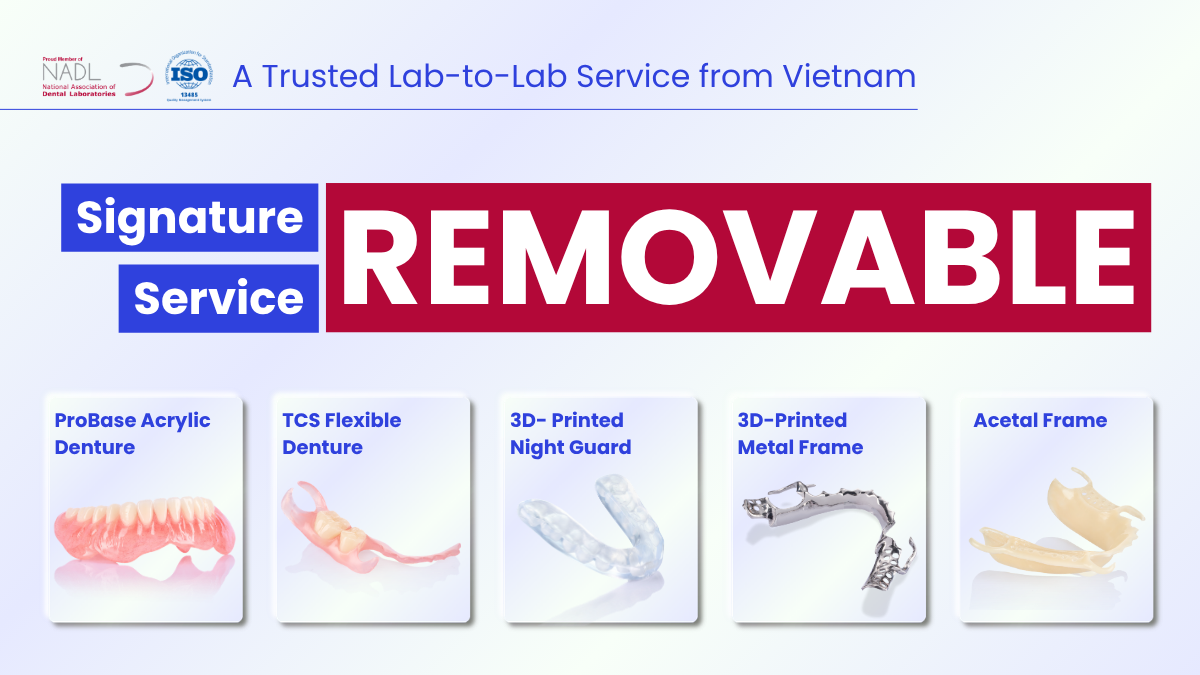
We are experts in Lab-to-Lab Full Service from Vietnam, with the signature services of Removable, meet U.S. market standards, FDA-registered, ISO 13485-certified. Founded in 2017, from local root to global reach, we scale with 2 Factories with over 100+ employees.
Our Commitments Built on “Trusted. Commitment. Quality”
- Commit to Large-Scale Manufacturing, high volume, remake rate < 1%.
- Commit to 5-Year Warranty
- Commit to Competitive Price
XDENT LAB | A Trusted Lab-to-Lab Service from Vietnam
Share this post:
Related Posts
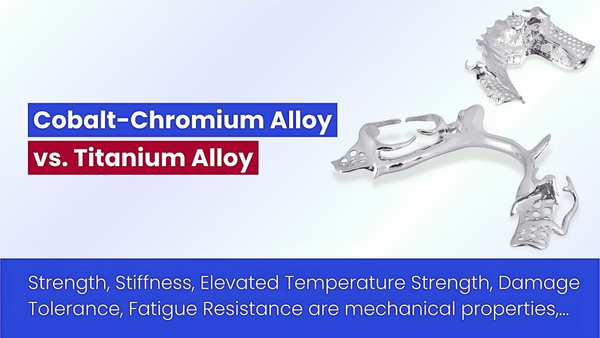
Learn the key differences between titanium and cobalt-chromium alloys used in removable partial denture frameworks, from mechanical properties to production requirements.
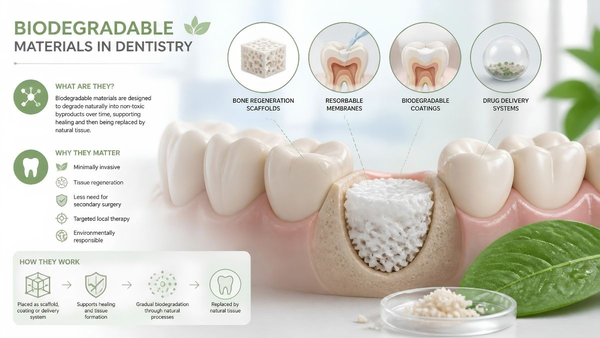
Explore biodegradable materials in dentistry, including their applications, benefits, limitations, and future potential in regenerative and sustainable dental care.
Learn how polyamide dental materials support flexible dentures and removable prosthetics through biocompatibility, aesthetics, comfort, and lightweight performance.

