
Comprehensive, evidence-based guide to acrylic (PMMA) denture bases covering material properties, processing methods (heat‑cure, injection, CAD/CAM, 3D‑print), bonding protocols, dimensional stability, repairs, biocompatibility, and ISO 20795‑1 standards to improve fit, strength, and durability.
Table of contents [Show]
- Overview
- Material Fundamentals
- Mechanical Performance
- Dimensional Stability & Water Sorption
- Processing Techniques
- Bonding: Teeth to Base and Metal to Resin
- Biocompatibility & Hygiene
- Repairs, Relines, and Adjustments
- Standards, Compliance, and QA
- Practical Playbook to Reduce Fractures and Remakes
- XDENT LAB Advantage (Lab‑to‑Lab, FDA/ISO Aligned)
- Quick Comparison Table
- Key Takeaways
Overview
Acrylic resin—chiefly PMMA—has anchored removable prosthodontics since the 1930s due to its esthetics, reparability, and practical processing. The modern challenge isn’t whether PMMA works; it’s how to process, reinforce, and validate it so dentures resist fracture, maintain fit, and meet ISO/FDA requirements across traditional and digital workflows. This comprehensive analysis consolidates peer‑reviewed findings and standards into lab-ready guidance—aligned with XDENT LAB’s FDA/ISO‑compliant, lab‑to‑lab service model.
Material Fundamentals
Acrylic resin denture bases balance performance, esthetics, and cost when properly processed and QA‑validated.
Composition & Variants
Matrix: PMMA from MMA monomer with initiators (benzoyl peroxide), pigments, opacifiers; optional rubber modifiers for “high‑impact” grades.
Forms and workflows:
Heat‑polymerized (compression or injection).
Auto‑polymerized (repairs/relines; higher residual monomer).
High‑impact PMMA (rubber‑modified for toughness).
CAD/CAM discs (pre‑polymerized, milled).
Photopolymer resins for 3D printing (DLP/SLA).
Why PMMA Persists
Strength‑to‑cost practicality, esthetics and polishability, intra‑oral reparability, low solubility, familiar handling.
Limitations: polymerization shrinkage, moderate impact/flexural strength, fatigue cracking at stress risers, water sorption, residual monomer risk if under‑cured.
Mechanical Performance
Clinical durability depends on flexural behavior, impact resistance, and fatigue.
Flexural Strength/Modulus
Governs deflection across palatal/lingual spans; adequate for most cases with ISO‑compliant processing.
Determinants: cure cycle, powder:liquid ratio, packing pressure, reinforcement strategy, water aging, microcrack initiation.
Impact Strength and Fatigue
Conventional PMMA is drop‑fracture prone; midline fatigue cracks are common.
Enhancers:
Rubber‑modified high‑impact PMMA.
Fibers (E‑glass, UHMWPE, carbon); woven or continuous aligned fibers outperform chopped strands when well‑wetted.
Nanoparticles (ZrO2, Al2O3, TiO2, SiO2) at optimized loadings improve toughness; overdosing can embrittle.
Typical Fracture Loci
Maxillary midline, around frenal notches, thin borders, and around partial clasp areas with stress concentration.
Dimensional Stability & Water Sorption
Fit reflects the balance between polymerization shrinkage and post‑process expansion.
Shrinkage Control
Shrinkage ~0.2–0.6% volumetric in heat‑cure PMMA; controlled by packing discipline, continuous pressure (injection), and slow bench cooling.
Continuous pressure during cure reduces voids and distortion.
Water Sorption and Solubility
Diffusion‑driven expansion partially offsets shrinkage; excessive sorption can soften the matrix.
Follow ISO 20795‑1 limits; brief water storage before delivery stabilizes dimensions; avoid heat exposure that warps bases.
Processing Techniques
Your technique choice sets the baseline for accuracy and toughness.
Heat‑Cure Compression Molding
Pros: validated, economical, widely available.
Watch‑outs: distortion from over‑packing, flask separation, rapid heating, or fast cooling.
Tips: long cure cycles for low residual monomer; trial closures and vents; cool in flask to room temperature.
Heat‑Cure Injection Molding
Continuous pressure often improves adaptation in palatal/post‑dam regions and reduces voids.
Requires system calibration and thoughtful sprue/channel design.
Microwave Curing
Rapid and effective if power/time and flask type are validated; miscalibration risks porosity.
CAD/CAM Subtractive (Milled PMMA)
High conversion, low porosity, consistent fit from industrially pre‑polymerized pucks.
Trade‑offs: higher material cost, waste management, limited post‑milling base thickness changes.
Additive Manufacturing (3D‑Printed Bases)
Speed, reproducibility, and digital recall.
Caveats: generally lower impact/flexural strength than heat‑cure or milled; properties hinge on post‑cure dose and oxygen inhibition control.
Best use: try‑ins and interim dentures; definitive bases only with ISO‑meeting resins and validated post‑cure.
Many “mystery failures” originate at the interface.
Teeth–Base Bond (Acrylic Teeth to PMMA)
Mechanism: monomer interdiffusion plus micromechanics.
Boosters: clean, de‑waxed ridge laps; grooves/diatorics; brief MMA wetting; compatible bonding agents; adequate packing pressure; long cure cycles.
Failure risks: highly cross‑linked tooth bases, contamination, under‑cure.
RPD Framework–Resin Interface
Use macro‑mechanical retention (mesh, beads, pearls) as primary strategy.
Silica coating/primers on Co‑Cr can help, but rely on mechanical design for longevity.
Biocompatibility & Hygiene
Lower residual monomer via long cures and post‑polymerization heat treatment.
Maintain surface roughness Ra < 0.2 µm; meticulous polishing or approved glaze resins.
Use alkaline peroxide tablets for PMMA; avoid hypochlorite with metal and avoid hot water immersion.
Reduce Candida with daily cleaning and overnight drying.
Repairs, Relines, and Adjustments
Balance convenience with strength.
Repair Materials and Methods
Autopolymerizing PMMA or light‑cure resins are convenient but usually weaker than heat‑cure parent material.
Strengthen repairs: air abrasion, MMA/acetone etch, scarf joints, fiber splints across fracture lines, and post‑repair water‑bath heat treatment.
Relines
Chairside (fast, lower properties) vs. lab heat‑cure or milled relines (better accuracy and durability).
Standards, Compliance, and QA
Turn science into consistent outcomes.
Standards
ISO 20795‑1: requirements for flexural strength/modulus, impact, water sorption/solubility, and test methods for denture base polymers.
U.S. compliance: FDA Class II controls and ADA/ANSI specs; 510(k) where applicable.
QA Essentials for Labs
Validated cure cycles; porosity inspection; SPC on cure conversion.
Printer post‑cure verification (irradiance/dose), resin lot tracking, and storage controls.
Milling tool wear logs; environmental controls; device history records under ISO 13485 QMS.
Practical Playbook to Reduce Fractures and Remakes
Select heat‑cure injection or milled PMMA for definitive cases; deploy printed bases when ISO‑validated and post‑cure is controlled.
Use high‑impact PMMA for bruxers, prior midline fracture, or thin design constraints.
Design to avoid stress risers: adequate palatal thickness, generous fillets at frenal notches, smooth internal line angles.
Reinforce selectively with aligned fibers in high‑risk zones.
Elevate tooth bonding: clean surfaces, retention grooves, brief MMA wet, pressure‑controlled packing, long cures.
Cool in‑flask and hydrate briefly pre‑delivery for dimensional stability.
Provide cleaning kits/instructions and schedule periodic professional polishing.
XDENT LAB Advantage (Lab‑to‑Lab, FDA/ISO Aligned)
Operational Differentiators
FDA and ISO‑compliant materials with documented cure/post‑cure regimes.
Hybrid production: printed try‑ins with milled or injection‑cured finals for strength and fit.
SPC‑driven QA: post‑cure dose audits, disc/tool life tracking, and batch traceability.
Reinforcement and high‑impact protocols for high‑risk cases.
U.S.‑standard logistics and consistent lab‑to‑lab communication (design sheets, bonding checklists, hygiene inserts).
Quick Comparison Table
| Technique | Key Benefits | Watch‑outs |
|---|---|---|
| Heat‑cure compression | Proven, economical | Shrinkage/warpage if heating/cooling not controlled |
| Heat‑cure injection | Better dimensional control, fewer voids | Equipment/technique calibration |
| Milled PMMA | High conversion, low porosity, consistent fit | Material cost, waste management |
| 3D‑printed bases | Speed, repeatability, digital archive | Typically lower toughness; post‑cure critical |
Key Takeaways
PMMA remains the standard for denture bases due to reliable esthetics, reparability, and cost‑effective performance when processed and validated correctly.
Mechanical weaknesses are manageable with high‑impact grades, reinforcements, smart design, and controlled curing/cooling.
Digital workflows excel when hybridized: print try‑ins, finalize with milled or validated heat‑cured bases for durability.
Anchor production to ISO 20795‑1 and FDA‑compliant QA to ensure predictable fit, strength, and patient comfort—scalable in a lab‑to‑lab model.
About XDENT LAB:
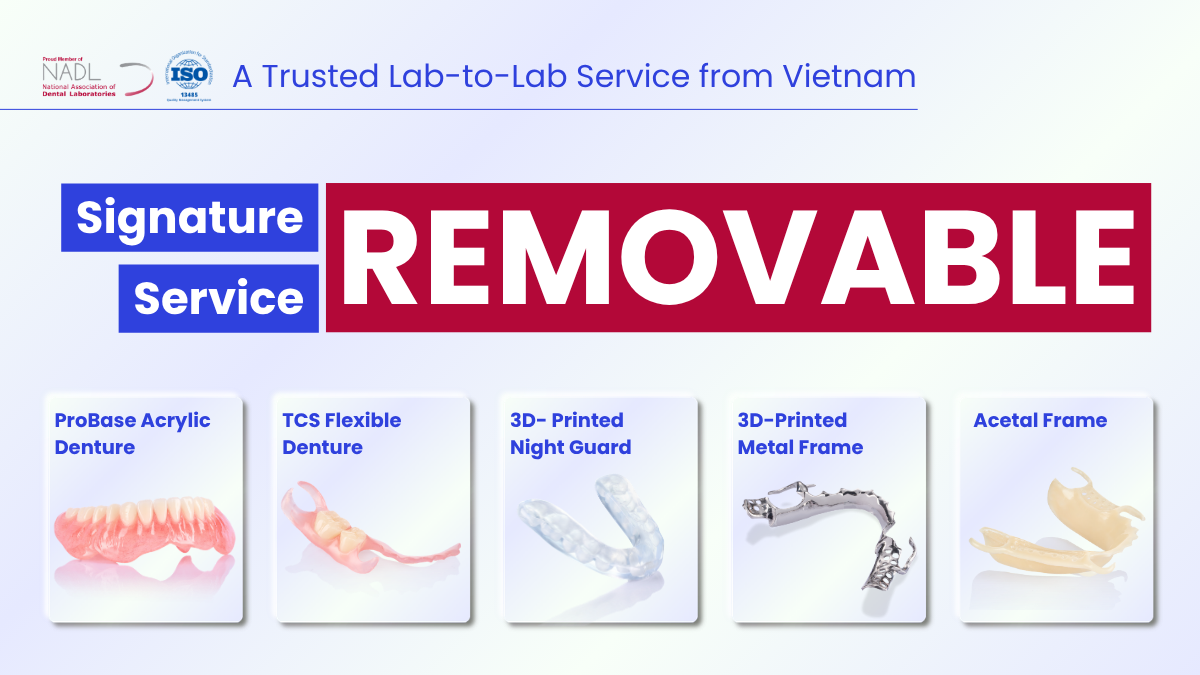
We are experts in Lab-to-Lab Full Service from Vietnam, with the signature services of Removable, meet U.S. market standards, FDA-registered, ISO 13485-certified. Founded in 2017, from local root to global reach, we scale with 2 Factories with over 100+ employees.
Our Commitments Built on “Trusted. Commitment. Quality”
- Commit to Large-Scale Manufacturing, high volume, remake rate < 1%.
- Commit to 5-Year Warranty
- Commit to Competitive Price
XDENT LAB | A Trusted Lab-to-Lab Service from Vietnam
Share this post:
Related Posts
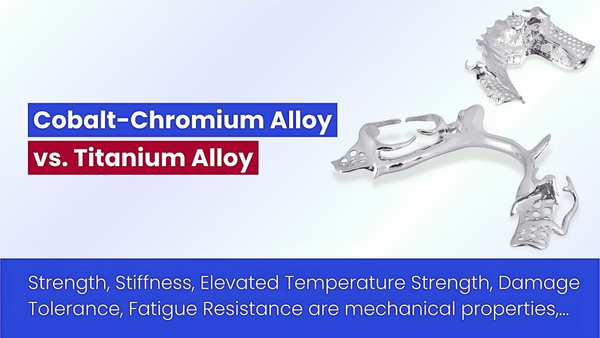
Learn the key differences between titanium and cobalt-chromium alloys used in removable partial denture frameworks, from mechanical properties to production requirements.
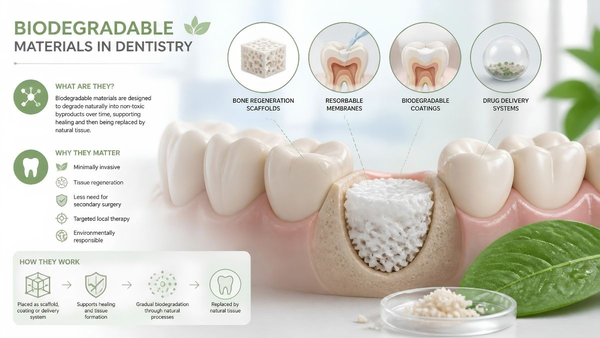
Explore biodegradable materials in dentistry, including their applications, benefits, limitations, and future potential in regenerative and sustainable dental care.
Learn how polyamide dental materials support flexible dentures and removable prosthetics through biocompatibility, aesthetics, comfort, and lightweight performance.

