
Learn about common denture base materials such as acrylic and metal, their advantages, limitations, and clinical applications in removable prosthodontics
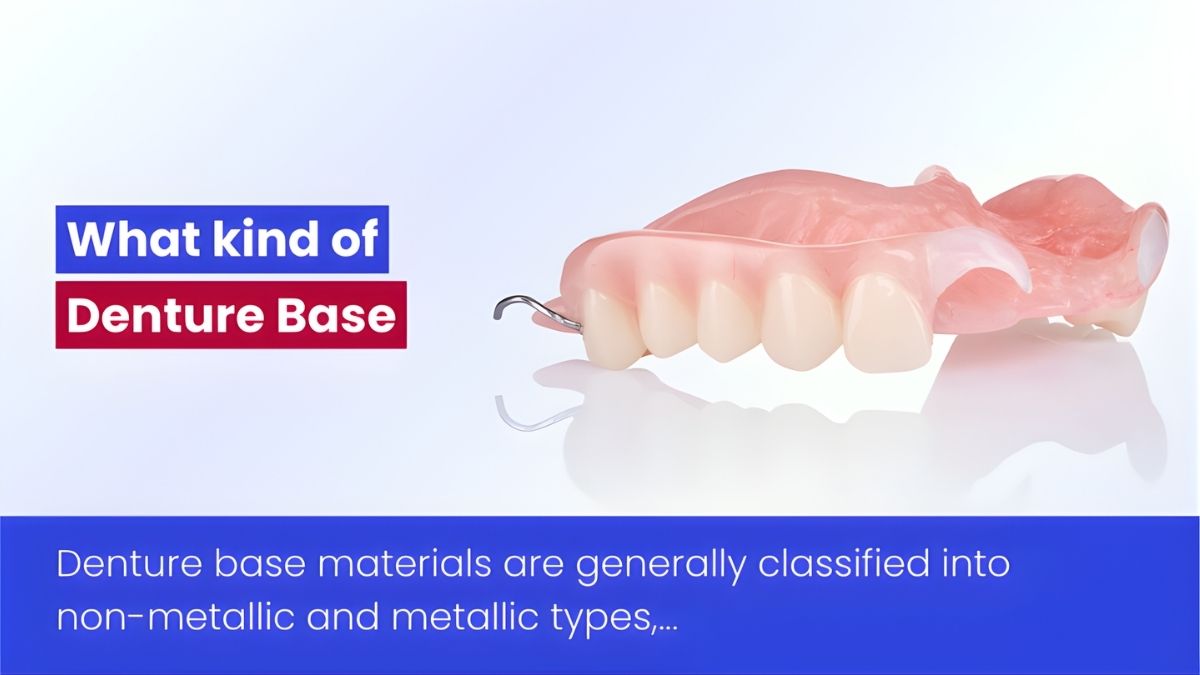
Table of contents [Show]
A denture base is a fundamental component of removable prostheses. It directly contacts oral tissues, supports artificial teeth, distributes occlusal forces, and plays a critical role in comfort, function, and esthetics.
Choosing the right type of denture base material is essential for long-term clinical success.
So, what kind of denture base materials are commonly used today? Below is a comprehensive overview based on prosthodontic principles and laboratory practice.
What Is a Denture Base?
A denture base is the part of a removable denture that:
Rests on the oral mucosa and residual ridge
Supports and retains artificial teeth
Restores lost soft tissue appearance
It must be biocompatible, dimensionally stable, strong enough to withstand mastication, and esthetically acceptable.
Main Types of Denture Base Materials
Denture base materials are generally classified into non-metallic and metallic types.
Heat-Cured Acrylic Resin (PMMA)
Heat-cured polymethyl methacrylate (PMMA) is the most widely used denture base material worldwide.
Advantages:
Natural gingival color and translucency
Good dimensional stability
Adequate mechanical strength
Easy to process, adjust, and repair
Cost-effective
Good bonding to acrylic denture teeth
Limitations:
Polymerization shrinkage
Low thermal conductivity
Susceptible to surface scratches
Possible allergic reaction due to residual monomer
Clinical indication:
Ideal for definitive complete and partial dentures requiring long-term durability.
Chemical-Cured Acrylic Resin (Self-Cured / Cold-Cured)
Chemical-cured acrylic resin polymerizes at room temperature using a chemical activator (tertiary amine).
Advantages:
Fast setting time
Simple processing
Less polymerization shrinkage
Limitations:
Lower mechanical strength
Higher residual monomer content
Poorer color stability over time
Higher water sorption
Clinical indication:
Commonly used for repairs, relines, provisional dentures, and custom trays.
Light-Activated Acrylic Resin
Light-cured denture base materials polymerize when exposed to visible light.
Advantages:
Minimal residual monomer
Reduced risk of allergic reactions
Excellent adaptation to tissues
Clean and controlled working process
Limitations:
Lower flexural strength than heat-cured PMMA
Higher material cost
Clinical indication:
Suitable for patients with acrylic sensitivity, special trays, and selected denture bases with moderate functional demands.
Metal denture bases are fabricated using alloys such as cobalt-chromium, titanium, stainless steel, or gold alloys.
Advantages:
Superior mechanical strength
Excellent thermal conductivity
Thin and rigid design
High resistance to fracture
Minimal microbial adhesion
Limitations:
Limited esthetics
Higher cost
Difficult to adjust and repair
Risk of galvanic corrosion with dissimilar metals
Clinical indication:
Frequently used in removable partial dentures with metal frameworks.
Managing Acrylic Allergy in Denture Base Selection
For patients with known sensitivity to acrylic monomer, several strategies are recommended:
Extended heat-curing cycles to reduce residual monomer
Post-polymerization water immersion
Use of light-activated acrylic or vinyl-based acrylic materials
These approaches significantly improve biocompatibility while maintaining clinical performance.
Key Factors When Choosing a Denture Base Material
When selecting a denture base, clinicians and laboratories should consider:
Mechanical strength and fracture resistance
Polymerization shrinkage and dimensional accuracy
Biocompatibility and residual monomer content
Esthetic requirements
Repairability and long-term maintenance
Cost-effectiveness
There is no single “perfect” material—the optimal denture base depends on clinical indication, patient needs, and laboratory capability.
Conclusion
Understanding what kind of denture base materials are available allows clinicians and dental laboratories to make informed decisions that improve prosthetic outcomes.
While heat-cured acrylic resin remains the gold standard, alternatives such as chemical-cured, light-activated, and metal denture bases each serve specific clinical purposes.
A well-chosen denture base enhances comfort, function, esthetics, and patient satisfaction, making it a cornerstone of successful removable prosthodontics.
References
[1] Anusavice, K. J., Shen, C., & Rawls, H. R.
Phillips’ Science of Dental Materials (12th–13th ed.)
[2] Zarb, G. A., Hobkirk, J. A., Eckert, S. E., & Jacob, R. F.
Prosthodontic Treatment for Edentulous Patients (13th ed.)
[3] Craig, R. G., Powers, J. M., & Wataha, J. C.
Dental Materials: Properties and Manipulation (11th ed.)
[4] McCabe, J. F., & Walls, A. W. G.
Applied Dental Materials (9th–10th ed.)
[5] Vallittu, P. K.
Acrylic Resin Polymers and Fiber-Reinforced Composites in Prosthodontics
(Published in Journal of Prosthetic Dentistry)
[6] Phoenix, R. D., Mansueto, M. A., Ackerman, N. A., & Jones, R. E.
Evaluation of Mechanical and Thermal Properties of Denture Base Materials
(Published in Journal of Prosthetic Dentistry)
[7] Darvell, B. W.
Materials Science for Dentistry (9th ed.)
[8] ADA Council on Scientific Affairs.
Denture Base Resins – Clinical Considerations
About XDENT LAB:
We are experts in Lab-to-Lab Full Service from Vietnam, with the signature services of Removable, meet U.S. market standards, FDA-registered, ISO 13485-certified. Founded in 2017, from local root to global reach, we scale with 2 Factories with over 100+ employees.
Our Commitments Built on “Trusted. Commitment. Quality”
- Commit to Large-Scale Manufacturing, high volume, remake rate < 1%.
- Commit to 5-Year Warranty
- Commit to Competitive Price
XDENT LAB | A Trusted Lab-to-Lab Service from Vietnam
Share this post:
Related Posts
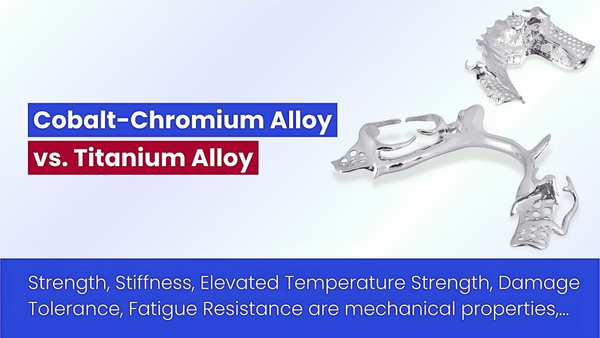
Learn the key differences between titanium and cobalt-chromium alloys used in removable partial denture frameworks, from mechanical properties to production requirements.
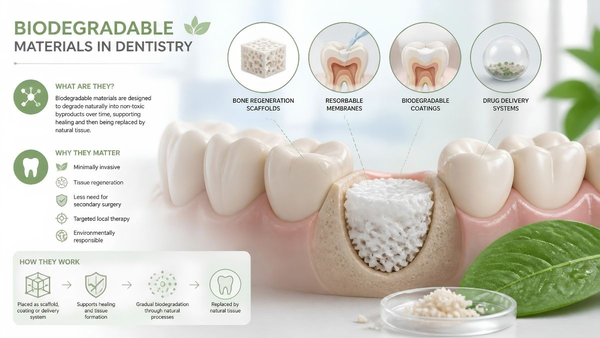
Explore biodegradable materials in dentistry, including their applications, benefits, limitations, and future potential in regenerative and sustainable dental care.
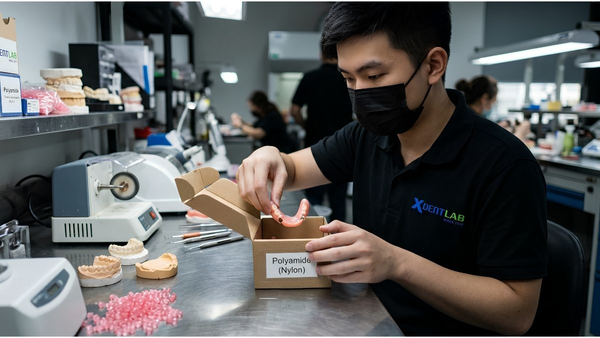
Learn how polyamide dental materials support flexible dentures and removable prosthetics through biocompatibility, aesthetics, comfort, and lightweight performance.

