
Metal-based frameworks are essential in dentistry, providing structural support for removable partial dentures, implant-supported restorations, and fixed dental prostheses. The three primary materials used for these frameworks are Cobalt-Chromium (Co-Cr) alloys, Titanium (Ti) and its alloys, and Precious Metal alloys.
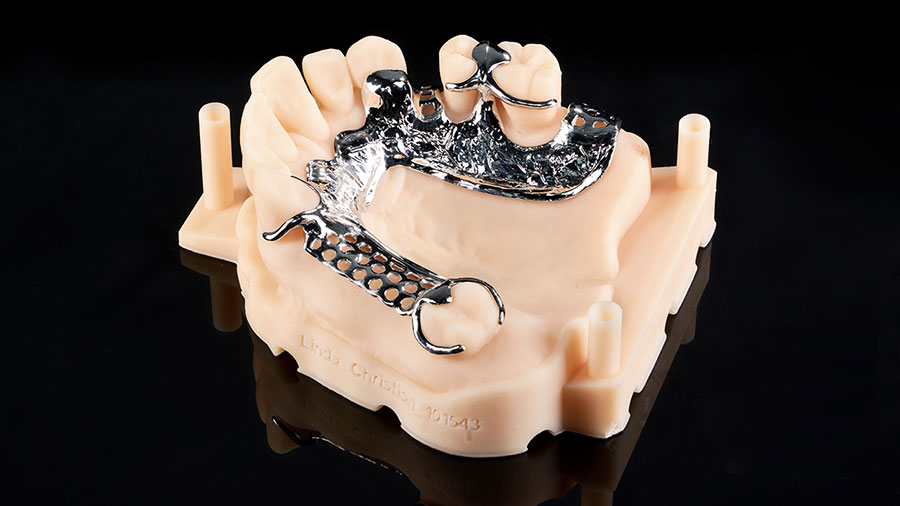
Table of contents [Show]
Metal-based frameworks are essential in dentistry, providing structural support for removable partial dentures, implant-supported restorations, and fixed dental prostheses. The three primary materials used for these frameworks are Cobalt-Chromium (Co-Cr) alloys, Titanium (Ti) and its alloys, and Precious Metal alloys. Each material offers unique advantages and limitations, making them suitable for specific applications.
Cobalt-Chromium (Co-Cr) Frameworks
Properties and Characteristics
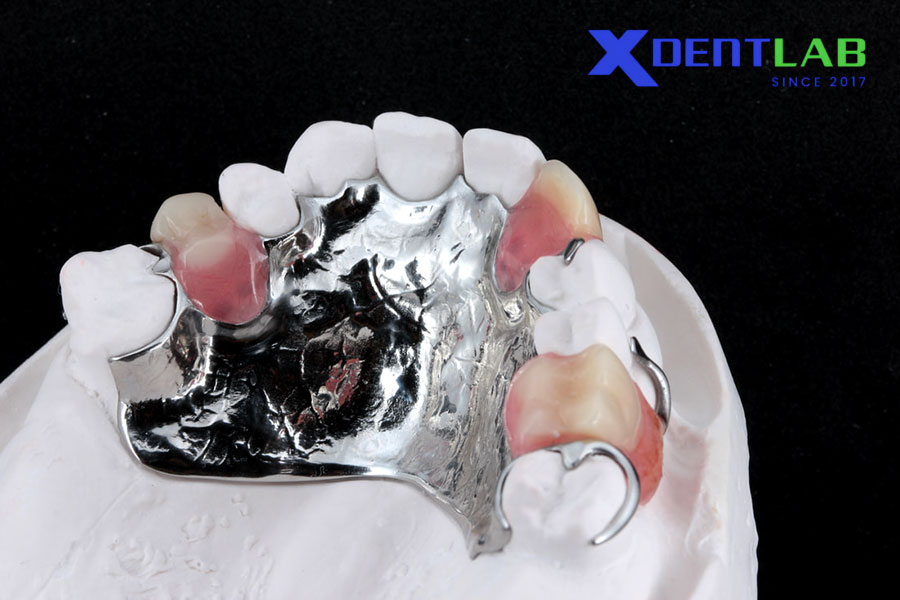
Cobalt-Chromium alloys are the standard for cast partial denture frameworks due to their:
- High Strength: Excellent mechanical properties for load-bearing applications.
- Heat Resistance: Reliable under thermal cycling.
- Corrosion Resistance: Chromium oxide layer protects against degradation.
- Non-Magnetic Properties: Compatible with MRI imaging.
Composition
Typical Co-Cr alloys contain:
- Cobalt: 50-65% (primary constituent).
- Chromium: 25-35% (provides corrosion resistance).
- Molybdenum: 4-6% (grain refinement).
- Other Elements: Carbon, silicon, manganese (minor additions).
Applications
Co-Cr frameworks are widely used for:
- Removable Partial Dentures (RPDs): Primary choice for framework construction.
- Implant Superstructures: Bar attachments and hybrid prostheses.
- Fixed Dental Prostheses: Long-span bridges.
- Orthodontic Appliances: Space maintainers and retainers.
Advantages
- Cost-Effective: Affordable compared to precious metal alloys.
- High Strength-to-Weight Ratio: Allows thinner, more comfortable designs.
- Durability: Resistant to wear and corrosion.
Limitations
- Difficult Adjustments: High hardness complicates chairside modifications.
- Casting Challenges: Requires specialized equipment.
- Potential Allergies: Some patients may react to nickel or chromium.
Titanium (Ti) Frameworks
Properties and Characteristics
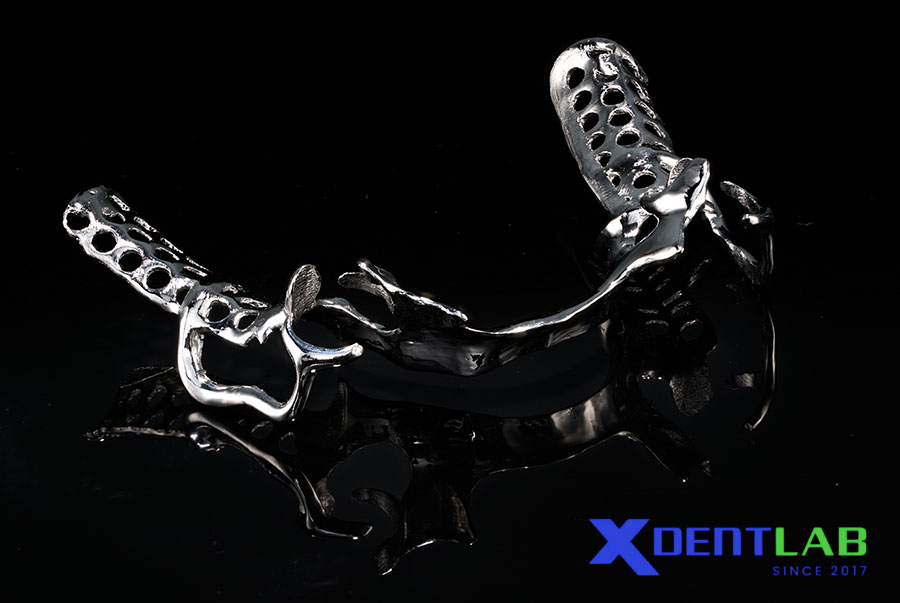
Titanium is gaining popularity due to its:
- Lightweight Nature: 400% lighter than Co-Cr alloys.
- Biocompatibility: Excellent tissue response and osseointegration.
- Corrosion Resistance: Performs well in oral fluids.
- Low Thermal Conductivity: Improves patient comfort.
Types of Titanium Used
- Commercially Pure Titanium (CP Ti): Grades 1-4 with varying oxygen content.
- Titanium Alloys: Ti-6Al-4V is the most common for dental applications.
Manufacturing Methods
Titanium frameworks are produced using:
- CAD/CAM Milling: Precision frameworks.
- Selective Laser Melting (SLM): Additive manufacturing for complex designs.
Applications
Titanium frameworks are ideal for:
- Removable Partial Dentures: Lightweight alternative to Co-Cr.
- Implant-Supported Frameworks: Compatible with titanium implants.
- Full-Arch Restorations: All-on-4 and All-on-6 concepts.
Advantages
- Hypoallergenic: Perfect for patients with sensitivities.
- MRI Compatibility: Non-ferromagnetic properties.
- Long-Term Stability: Resistant to corrosion or degradation.
Limitations
- Higher Cost: More expensive than Co-Cr.
- Processing Challenges: Requires specialized equipment.
- Surface Treatment Needs: May require coatings for esthetics.
Types and Composition
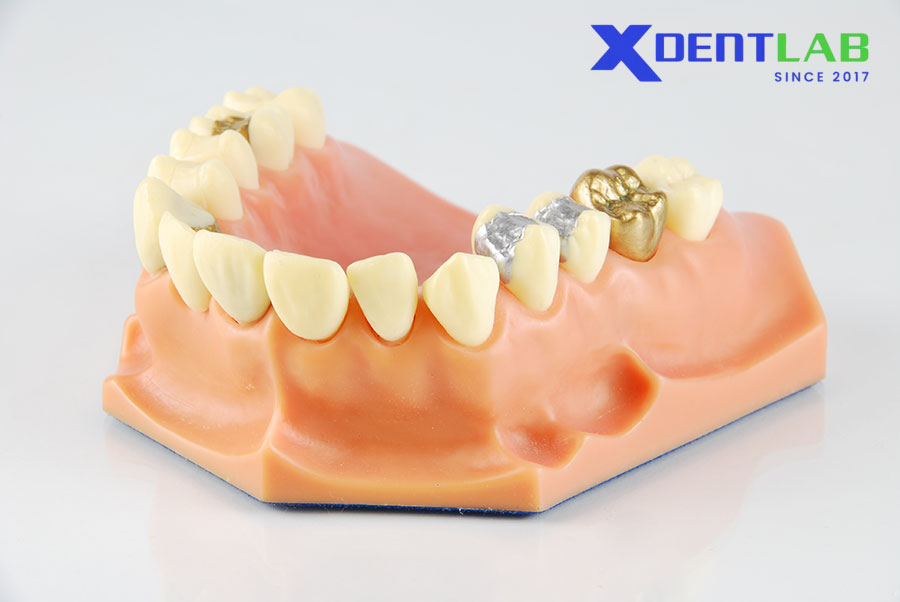
Precious metal alloys include:
- High Noble Alloys: >60% noble metal content (Au, Pt, Pd).
- Noble Alloys: >25% noble metal content.
- Gold-Based Alloys: Traditional premium choice.
- Palladium-Based Alloys: Cost-effective noble alternative.
Properties
- Biocompatibility: Minimal tissue irritation.
- Corrosion Resistance: Stable in the oral environment.
- Casting Properties: Precise reproduction of details.
Applications
Precious metal frameworks are preferred for:
- Premium Fixed Prostheses: Crown and bridge frameworks.
- Telescopic Dentures: Precision attachments.
- Implant Superstructures: Where biocompatibility is critical.
Advantages
- Proven Biocompatibility: Long clinical track record.
- Aesthetic Compatibility: Matches ceramic expansion rates.
Limitations
- High Cost: Precious metals are the most expensive option.
- Weight: Heavier than Co-Cr and titanium frameworks.
Comparative Analysis
Mechanical Properties
Property | Co-Cr | Titanium | Precious Metals |
| Elastic Modulus | 200-220 GPa | 100-120 GPa | 80-100 GPa |
| Yield Strength | 500-800 MPa | 240-550 MPa | 200-450 MPa |
| Density | 8.3-8.5 g/cm³ | 4.5 g/cm³ | 10-19 g/cm³ |
| Hardness | 350-450 HV | 150-350 HV | 100-250 HV |
Clinical Performance Factors
- Biocompatibility: Titanium > Precious Metals > Co-Cr.
- Cost: Co-Cr < Titanium < Precious Metals.
- Weight: Titanium < Co-Cr < Precious Metals.
Future Trends and Innovations
- Advanced Alloy Development: Improved formulations for biocompatibility and strength.
- Digital Integration: AI-assisted design and automated manufacturing.
- Hybrid Frameworks: Combining materials like titanium bases with precious metal superstructures.
Conclusion
Metal-based frameworks are indispensable in dentistry, offering strength, durability, and biocompatibility for prosthetic applications. The choice between Cobalt-Chromium, Titanium, and Precious Metal alloys depends on clinical requirements, patient needs, and budget considerations.
At XDENT LAB, we specialize in crafting high-quality frameworks using advanced materials and digital workflows to meet U.S. market standards. Whether you need cost-effective Co-Cr frameworks, lightweight titanium solutions, or premium precious metal restorations, we are your trusted partner for lab-to-lab dental services.
Contact XDENT LAB today to learn how we can elevate your dental practice!
About XDENT LAB:
We are experts in Lab-to-Lab Full Service from Vietnam, with the signature services of Removable, meet U.S. market standards, FDA-registered, ISO 13485-certified. Founded in 2017, from local root to global reach, we scale with 2 Factories with over 100+ employees.
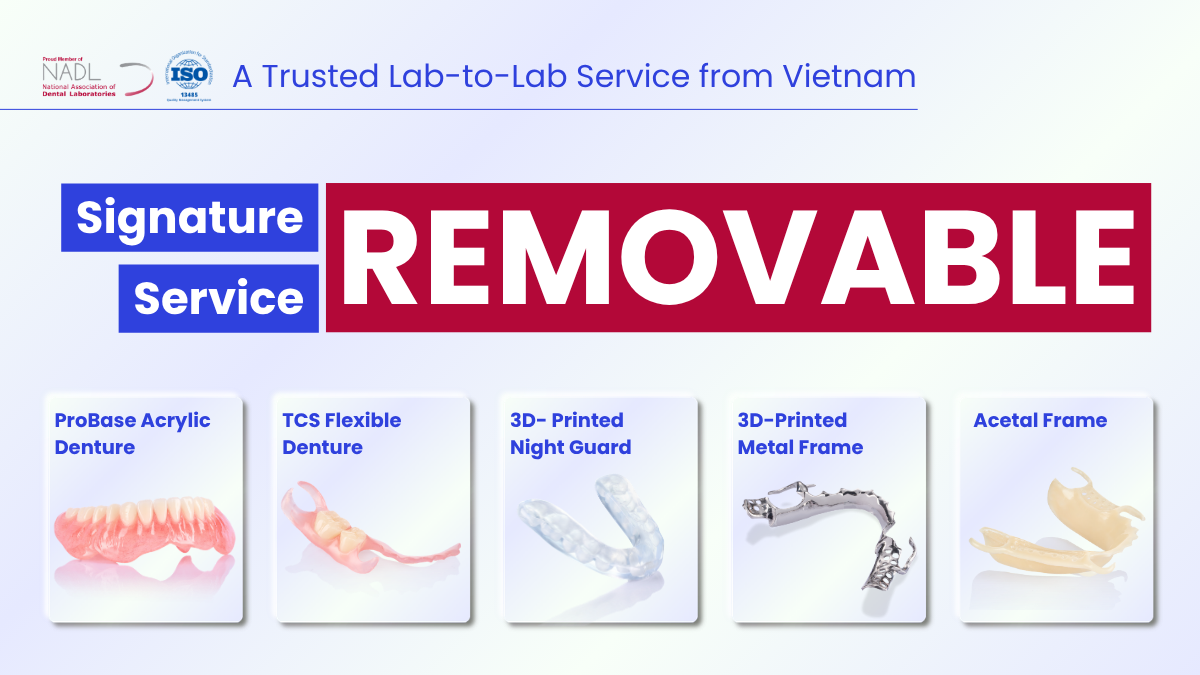
Our Commitments Built on “Trusted. Commitment. Quality”
- Commit to Large-Scale Manufacturing, high volume, remake rate < 1%.
- Commit to 5-Year Warranty
- Commit to Competitive Price
XDENT LAB | A Trusted Lab-to-Lab Service from Vietnam
Share this post:
Related Posts
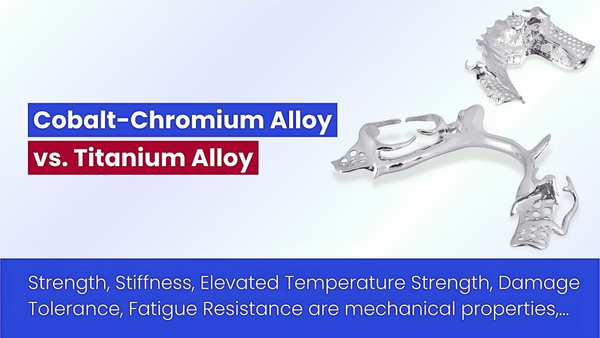
Learn the key differences between titanium and cobalt-chromium alloys used in removable partial denture frameworks, from mechanical properties to production requirements.
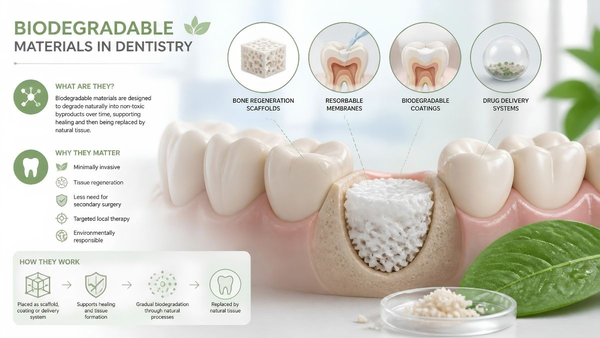
Explore biodegradable materials in dentistry, including their applications, benefits, limitations, and future potential in regenerative and sustainable dental care.
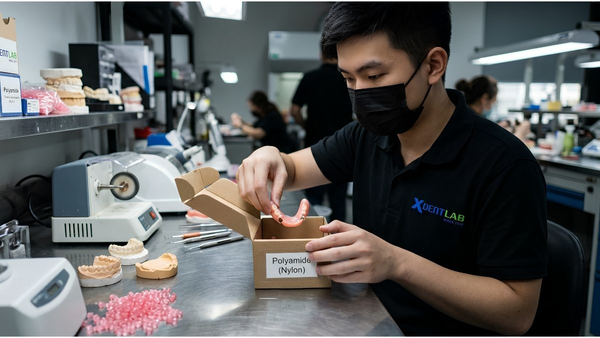
Learn how polyamide dental materials support flexible dentures and removable prosthetics through biocompatibility, aesthetics, comfort, and lightweight performance.

