
The I-bar is one of the clasp types used in removable partial denture (RPD) prosthodontics, alongside C clasp, Roach clasp, flexible clasp, and tooth-colored clasp.
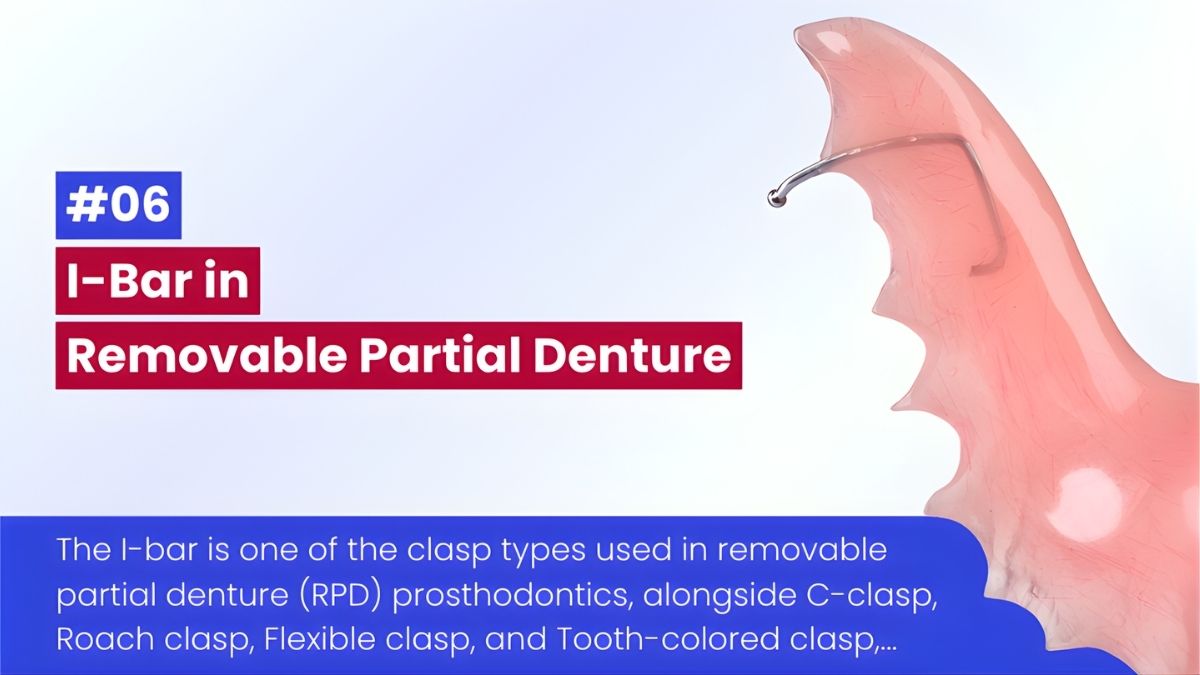
Table of contents [Show]
1. Introduction
The I-Bar clasp is one of the most commonly used clasp designs in removable partial dentures (RPDs). It belongs to the bar clasp category and is widely applied in modern prosthodontic treatment due to its functional efficiency and improved esthetic appearance.
In removable partial denture design, the clasp assembly plays an important role in maintaining retention and stability of the prosthesis. Among various clasp types, the I-Bar clasp is particularly valued because it reduces stress on abutment teeth while providing reliable retention.
Understanding the design and application of the I-Bar clasp in RPD is essential for dentists and dental laboratory technicians to achieve successful treatment outcomes.
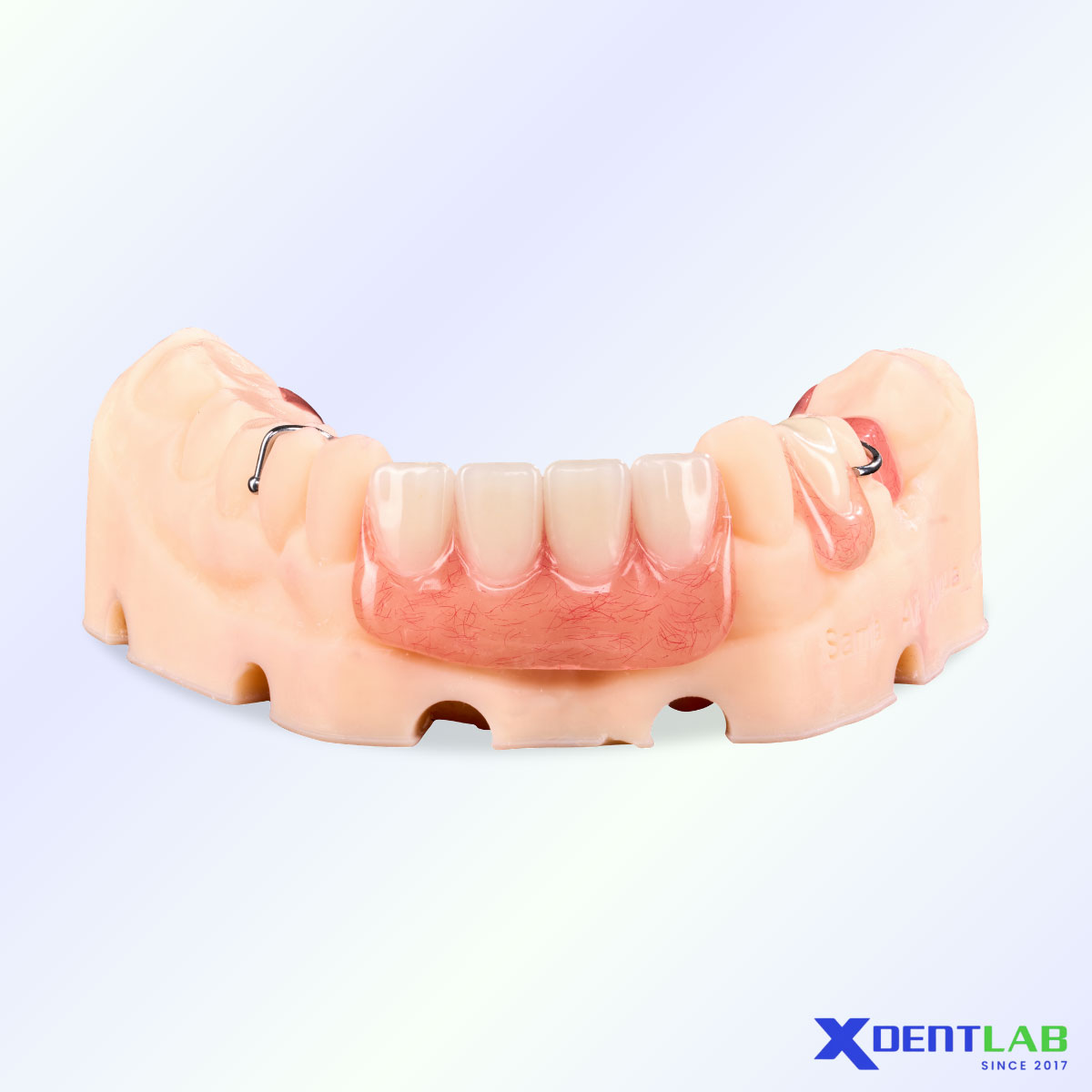
An I-Bar clasp is a type of gingivally approaching clasp used in removable partial dentures. Unlike circumferential clasps that approach the tooth from the occlusal direction, the I-Bar clasp approaches the abutment tooth from the gingival direction.
The clasp arm typically extends from the denture framework and contacts the tooth in the undercut area, creating retention while allowing the denture to be inserted and removed smoothly.
The name “I-Bar” comes from its straight vertical shape, which resembles the letter “I”.
An I-Bar clasp is usually part of a clasp assembly system, often integrated within the RPI system, which stands for:
R – Rest
P – Proximal Plate
I – I-Bar Clasp
Each component contributes to the stability and stress control of the removable partial denture.
The occlusal rest provides vertical support, the proximal plate stabilizes the denture against lateral movement, and the I-Bar clasp offers retention by engaging the tooth undercut.
This combination allows the prosthesis to distribute functional forces more effectively and reduce harmful stress on the abutment teeth.
The I-Bar clasp design offers several advantages in removable partial denture treatment.
First, it provides better esthetics because the clasp approaches the tooth from the gingival direction, making the metal component less visible compared to traditional circumferential clasps.
Second, it allows stress-releasing movement during function. When occlusal forces are applied, the clasp can disengage slightly from the tooth undercut, reducing torque on the abutment tooth.
Third, the design allows better hygiene and periodontal health, as it covers less tooth surface compared to circumferential clasps.
Because of these benefits, the I-Bar clasp is frequently used in distal extension RPD cases, particularly in Kennedy Class I and Class II situations.
The I-Bar clasp is recommended in several clinical situations where stress control and esthetics are important.
Common indications include:
Distal extension removable partial dentures.
Kennedy Class I and Class II cases.
Cases requiring stress-releasing clasp design.
Situations where esthetic concerns are important.
Teeth with suitable buccal undercut areas.
When properly designed, the I-Bar clasp helps improve both the functional performance and appearance of removable partial dentures.
Although the I-Bar clasp offers many advantages, it may not be suitable for all clinical situations.
For example, the design may be contraindicated when:
There is insufficient vestibular depth.
Soft tissue undercuts interfere with clasp placement.
The abutment tooth lacks an appropriate undercut.
Severe gingival recession is present.
In such situations, alternative clasp designs such as circumferential clasps may be more appropriate.
Proper design and placement of the I-Bar clasp are critical for long-term prosthetic success.
Dental professionals must carefully evaluate:
Tooth undercut location.
Soft tissue anatomy.
Occlusal force distribution.
Overall RPD framework design.
A well-designed I-Bar clasp can significantly improve denture retention while minimizing stress on the abutment teeth.
8. Conclusion
The I-Bar clasp is an important clasp design in removable partial dentures. Its gingivally approaching design provides reliable retention while improving esthetics and reducing stress on abutment teeth.
Because of its stress-releasing characteristics, the I-Bar clasp is widely used in distal extension RPDs and modern prosthodontic treatment planning.
For dental laboratories and clinicians, understanding the design and clinical application of the I-Bar clasp in RPD is essential to achieve stable, functional, and esthetic removable prostheses.
References
[1] Carr AB, Brown DT. McCracken’s Removable Partial Prosthodontics. 13th ed. St. Louis: Elsevier; 2016.
[2] Phoenix RD, Cagna DR, DeFreest CF. Stewart’s Clinical Removable Partial Prosthodontics. 4th ed. Chicago: Quintessence Publishing; 2008.
[3] American College of Prosthodontists. Glossary of Prosthodontic Terms. J Prosthet Dent. 2017.
About XDENT LAB:
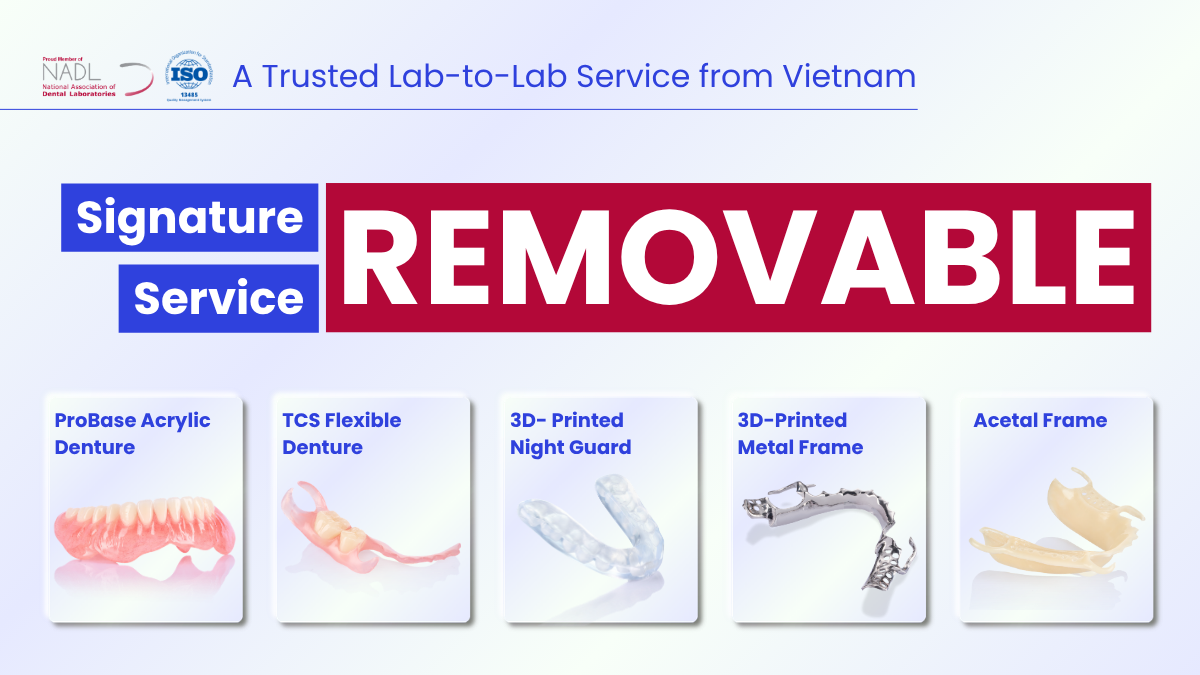
We are experts in Lab-to-Lab Full Service from Vietnam, with the signature services of Removable, meet U.S. market standards, FDA-registered, ISO 13485-certified. Founded in 2017, from local root to global reach, we scale with 2 Factories with over 100+ employees.
Our Commitments Built on “Trusted. Commitment. Quality”
- Commit to Large-Scale Manufacturing, high volume, remake rate < 1%.
- Commit to 5-Year Warranty
- Commit to Competitive Price
XDENT LAB | A Trusted Lab-to-Lab Service from Vietnam
Share this post:
Related Posts
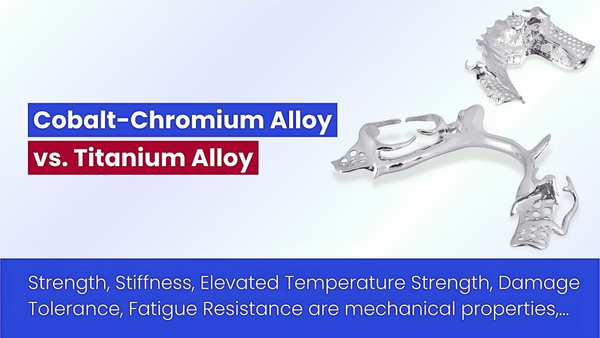
Learn the key differences between titanium and cobalt-chromium alloys used in removable partial denture frameworks, from mechanical properties to production requirements.
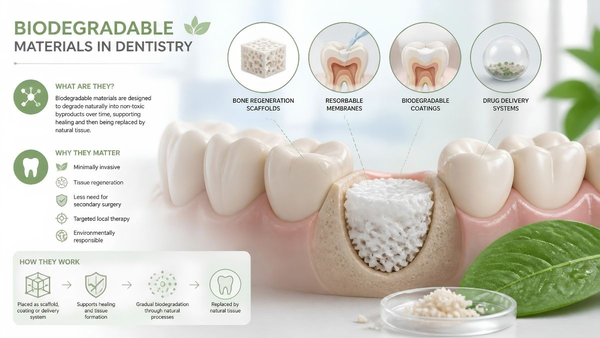
Explore biodegradable materials in dentistry, including their applications, benefits, limitations, and future potential in regenerative and sustainable dental care.
Learn how polyamide dental materials support flexible dentures and removable prosthetics through biocompatibility, aesthetics, comfort, and lightweight performance.

