
Explore how independent dental labs support dentistry through custom restorations, digital workflows, quality control, and material traceability.
Table of contents [Show]
- What is an independent dental lab
- Independent dental lab vs other lab models
- Role of independent dental labs in the dental industry
- Products made by independent dental labs
- Why dentists work with independent dental labs
- Why independent labs matter despite corporate consolidation
- Independent dental lab business models
- Digital transformation of independent dental labs
- Materials used by independent dental labs
- Quality standards for independent dental labs
- Regulation and compliance in independent dental labs
- Infection control in independent dental labs
- Independent lab case communication
- Independent lab workflow
- Laboratory quality control by product type
- Challenges facing independent dental labs
- Competitive advantages of independent dental labs
- Independent dental lab and outsourcing
- Independent dental lab business operations
- Marketing and positioning for independent dental labs
- How dentists should evaluate an independent dental lab
- Future of independent dental labs
- Why this matters for XDENT LAB
- Key takeaways
An independent dental lab is a standalone dental laboratory that manufactures custom restorations and appliances based on a licensed dentist’s prescription. Unlike an in-house clinic lab or a corporate-owned production center, an independent lab operates as a separate business and often serves multiple dentists, specialists, DSOs, and even other laboratories.
In the modern dental industry, independent dental labs remain essential because they combine technical craftsmanship, materials science, CAD/CAM production, regulatory awareness, case communication, and restorative problem-solving. Their role goes beyond fabricating products. A strong independent lab helps dentists improve fit, esthetics, workflow predictability, and patient satisfaction while maintaining quality and traceability.
What is an independent dental lab
An independent dental laboratory is a privately operated business that manufactures or customizes dental restorations and appliances according to a prescription from a licensed dentist.
Unlike a chairside or in-house lab, an independent lab functions as a separate technical partner. It may work with many dental practices rather than only one office.
Core definition
A dental laboratory manufactures or customizes products that support licensed dentists in oral healthcare.
Common products include
- Crowns
- Bridges
- Dentures
- Partial dentures
- Implant restorations
- Orthodontic appliances
- Night guards
- Surgical guides
- Diagnostic wax-ups
- Digital models
- Full-arch implant prostheses
Independent labs serve the restorative workflow by translating clinical data into patient-specific devices that must fit, function, and remain biologically acceptable.
Independent dental lab vs other lab models
Independent labs differ from corporate labs, in-house labs, milling centers, and offshore production partners.
Main industry models
| Lab model | Ownership / structure | Typical clients | Main strength |
|---|---|---|---|
| Independent dental lab | Privately owned standalone lab | Local dentists, specialists, small groups | Personalized service and case communication |
| Corporate dental lab | Part of larger lab group or chain | DSOs, high-volume clinics | Scale and standardized production |
| In-house dental lab | Owned by a clinic or group | One clinic or organization | Fast chairside or same-location workflow |
| Milling center | Production-focused facility | Labs, clinics, design centers | CAD/CAM manufacturing capacity |
| Digital design center | CAD-only service provider | Labs and clinics | Fast digital design support |
| Offshore lab | International production provider | Labs, dentists, DSOs | Cost efficiency and scalability |
| Boutique esthetic lab | Specialized independent or small lab | Cosmetic dentists, prosthodontists | High-end ceramics and characterization |
What makes an independent lab distinct
- Dentist relationships
- Technical customization
- Flexible case handling
- Direct communication
- Local service
- Esthetic skill
- Specialty expertise
- Quality consistency
- Personalized remake support
They may be small, mid-sized, or highly specialized. Many independent labs now use advanced digital technologies while preserving artisan-level finishing.
Role of independent dental labs in the dental industry
Independent dental laboratories act as a technical extension of the dental practice.
Their role includes
- Fabricating patient-specific restorations
- Supporting dentists with material selection
- Reviewing scans and impressions
- Designing crowns, bridges, dentures, and implant prostheses
- Managing shade and esthetic requirements
- Providing feedback on preparation or case records
- Helping reduce chairside adjustment
- Supporting complex restorative cases
- Maintaining product traceability
- Documenting materials and production steps
This is where independent labs create value beyond manufacturing. They contribute technical judgment, case interpretation, and process control.
Products made by independent dental labs
Independent labs may be full-service or specialized depending on their capabilities and market position.
Common product categories
| Category | Products | Typical use |
|---|---|---|
| Fixed restorations | Crowns, bridges, veneers, inlays, onlays | Restoring damaged or missing tooth structure |
| Implant prosthetics | Implant crowns, custom abutments, bars, full-arch bridges | Implant-supported rehabilitation |
| Removable prosthetics | Complete dentures, partial dentures, overdentures | Replacing missing teeth with removable devices |
| Orthodontic appliances | Retainers, expanders, space maintainers | Tooth movement or retention |
| Occlusal appliances | Night guards, splints, sports guards | Bruxism, protection, TMJ-related support |
| Digital products | Printed models, digital wax-ups, surgical guides | Planning and manufacturing support |
| Provisional restorations | PMMA crowns, temporary bridges, printed provisionals | Interim protection and esthetic testing |
Full-service vs specialized independent labs
| Lab type | Specialization |
|---|---|
| Crown and bridge lab | Zirconia, lithium disilicate, PFM, veneers |
| Denture lab | Full dentures, partials, relines, repairs |
| Implant lab | Custom abutments, screw-retained crowns, All-on-X |
| Orthodontic lab | Retainers, expanders, aligner support |
| Esthetic ceramic lab | Layered ceramics, anterior veneers, smile design |
| Digital production lab | CAD design, milling, printing, model production |
Why dentists work with independent dental labs
Dentists often choose independent labs because of relationship-based service and closer technical collaboration.
Main advantages
- Direct communication with technicians
- Case-by-case customization
- Flexible shade and design requests
- Local pickup and delivery in some markets
- Faster troubleshooting
- Better familiarity with dentist preferences
- Personalized technical support
- Stronger feedback loop on remakes
- Ability to handle complex or unusual cases
Practice benefits
- Restoration fit
- Esthetic outcomes
- Patient satisfaction
- Chairside efficiency
- Case acceptance
- Complex treatment planning
- Implant restorative predictability
- Remake reduction
The lab’s value is not only the restoration itself. The value is the technical judgment behind the restoration.
Why independent labs matter despite corporate consolidation
The dental laboratory industry has seen increasing consolidation, digital centralization, and offshore production. Even so, independent labs remain highly relevant.
Why independent labs still compete
Personalized relationships
Dentists often value direct access to the technician designing and finishing the case.
Customization
Independent labs may adapt more easily to individual doctor preferences.
Esthetic craftsmanship
Anterior ceramics, full-mouth cases, and implant esthetics often require artistic judgment.
Clinical feedback
Small and mid-sized labs can quickly identify repeated preparation, scan, or occlusal issues.
Agility
Independent labs can adopt niche services faster than larger organizations in some cases.
Local trust
Many dentists prefer knowing where, how, and by whom restorations are made.
Transparency is a competitive advantage here. Dentists increasingly care about material origin, manufacturing methods, and accountability.
Independent dental lab business models
Independent labs may operate under several business models based on their market, capabilities, and specialization.
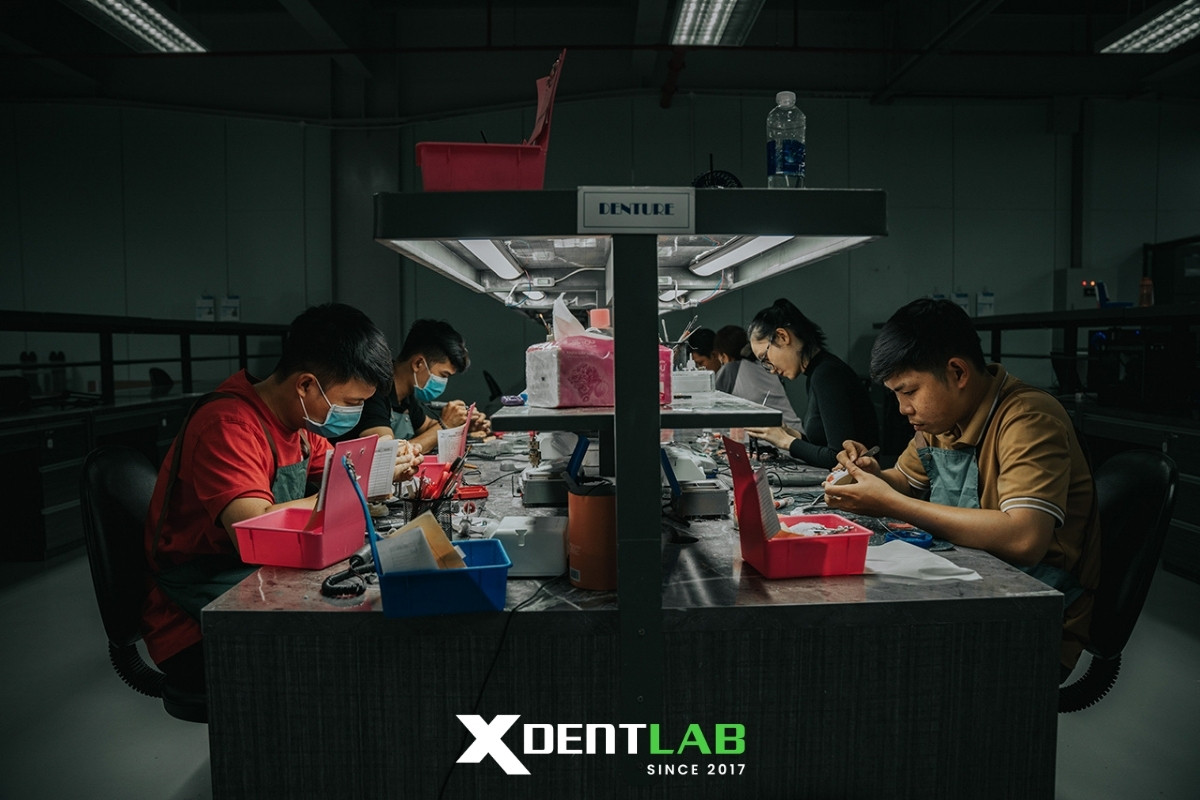
Local full-service lab
A local full-service lab serves nearby practices and offers multiple product lines.
Typical services include
- Crowns
- Bridges
- Dentures
- Partials
- Implants
- Night guards
- Repairs
- Digital scans and model work
Boutique esthetic lab
This type focuses on high-end anterior and cosmetic work.
Common cases include
- Veneers
- Anterior crowns
- Smile makeovers
- Layered ceramics
- Custom shade matching
- Full-mouth esthetic rehabilitation
Implant specialty lab
An implant specialty lab focuses on implant restorations and full-arch cases.
Products include
- Custom titanium abutments
- Zirconia abutments
- Screw-retained implant crowns
- Implant bridges
- Full-arch zirconia
- Hybrid prostheses
- Verification jigs
- Surgical guides
Removable specialty lab
A removable lab specializes in dentures and partial dentures.
Services include
- Complete dentures
- Immediate dentures
- Cast partials
- Flexible partials
- Implant overdentures
- Repairs and relines
Digital independent lab
A digitally focused independent lab may offer modern production workflows.
Services may include
- CAD design
- Zirconia milling
- 3D printing
- Digital dentures
- Surgical guides
- Model production
- Night guards
- Digital wax-ups
Lab-to-lab independent partner
Some independent labs support other labs by handling overflow or specialty production.
Examples include
- Milling zirconia frameworks
- Designing implant cases
- Processing dentures
- Printing models
- Finishing removable cases
- Producing surgical guides
Digital transformation of independent dental labs
Digital dentistry has changed the independent lab industry significantly.
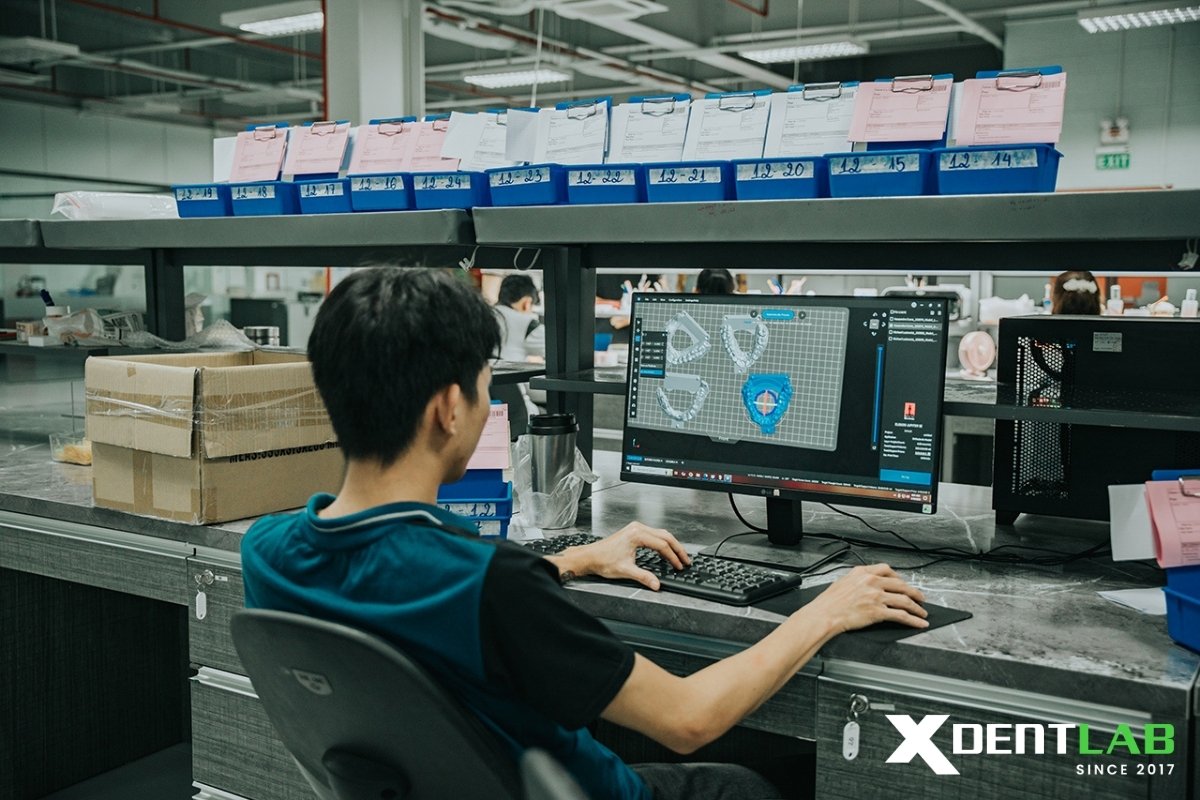
Technologies used
- Intraoral scanner portals
- Desktop lab scanners
- CAD software
- CAM nesting software
- 4-axis and 5-axis milling machines
- 3D printers
- Sintering furnaces
- Ceramic furnaces
- Digital denture software
- Implant planning software
- Cloud case management systems
- Digital shade communication tools
Common digital workflow
Digital prescription
→ Intraoral scan upload
→ Case review
→ Margin and bite verification
→ CAD design
→ Manufacturing by milling or printing
→ Sintering / curing / crystallization
→ Stain, glaze, polish, or finish
→ Final quality control
→ Packaging and delivery
Benefits for independent labs
- Faster case intake
- Better design reproducibility
- Digital file storage
- Easier remakes
- Reduced physical model dependency
- Improved scalability
- More efficient zirconia production
- Expanded service offerings
- Better lab-to-lab collaboration
Risks of digital workflows
- Poor scan quality
- Incorrect margin marking
- Bite registration errors
- Wrong implant library selection
- Milling bur wear
- Sintering distortion
- Inadequate post-processing
- Data security risks
- Over-reliance on automated design
Digital technology helps independent labs compete, but it does not replace technician judgment.
Materials used by independent dental labs
Independent dental labs must understand material behavior, indications, processing requirements, and regulatory documentation.
Common materials
| Material | Used for | Important lab controls |
|---|---|---|
| Zirconia | Crowns, bridges, implant restorations | Sintering, thickness, connector design, polish |
| Lithium disilicate | Crowns, veneers, onlays | Crystallization, etching protocol, thickness |
| Feldspathic porcelain | Veneers, layered ceramics | Firing, layering, esthetic characterization |
| PFM alloy | Metal-ceramic crowns and bridges | Casting, oxide control, ceramic bond |
| Cobalt-chromium | Partial frameworks, metal frameworks | Casting or milling, polish, fit |
| Titanium | Implant abutments, bars | Milling, passivity, component interface |
| PMMA | Provisionals, denture bases | Milling or processing, polish, temporary use |
| Denture acrylic | Complete and partial dentures | Polymerization, fit, porosity control |
| Flexible resin | Flexible partial dentures | Injection technique, finishing |
| 3D printing resin | Models, guides, splints, temps | Validated curing, biocompatibility, cleaning |
| Composite resin | Temporaries, repairs, selected veneers | Bonding, polish, wear behavior |
Material responsibility
- Material name
- Manufacturer
- Lot number
- Indication
- Expiration date
- Processing parameters
- Technician responsible
- Final QC release
This supports traceability, especially in regulated markets.
Quality standards for independent dental labs
Quality is the defining difference between a production vendor and a professional dental laboratory.
Core quality areas
- Prescription review
- Case intake documentation
- Infection control
- Material traceability
- Equipment calibration
- CAD design parameters
- Manufacturing settings
- In-process inspection
- Final quality control
- Packaging and delivery
- Complaint handling
- Remake analysis
- Professional credibility
- Dentist confidence
- Quality assurance
- Staff accountability
- Infection-control discipline
- Better internal processes
- Differentiation from low-cost competitors
- Stronger marketing position
Certification is voluntary in many places, but it signals commitment to standards. That matters more than a fancy binder collecting dust in the corner.
Regulation and compliance in independent dental labs
Dental laboratories operate in a regulated environment because they manufacture patient-specific dental devices.
Common regulatory concerns
- Medical device classification
- Dentist prescription requirements
- Material safety
- Infection control
- Good manufacturing practices
- Quality system expectations
- Device labeling
- Import and export rules
- Complaint handling
- Traceability
- Documentation retention
International standards often relevant
| Standard / framework | Relevance to independent dental labs |
|---|---|
| ISO 13485 | Quality management system for medical device organizations |
| ISO 14971 | Risk management for medical devices |
| ISO 10993 series | Biological evaluation of medical devices |
| ISO 7405 | Biological evaluation of dental materials |
| ISO 6872 | Dental ceramic materials |
| ISO 22674 | Metallic materials for fixed and removable restorations |
| ISO 20795 series | Denture base polymers and orthodontic base polymers |
| Manufacturer IFU | Required processing instructions for dental materials |
| FDA medical device requirements | U.S. regulatory framework for applicable dental devices |
Practical compliance records
- Dentist prescription
- Patient or case identifier
- Restoration type
- Material brand
- Material lot number
- Design file
- Manufacturing date
- Technician assignment
- Equipment used
- Furnace or printer settings where relevant
- Final QC record
- Shipping record
- Complaint or remake record
Documentation protects both the patient and the laboratory.
Infection control in independent dental labs
Dental labs may receive impressions, dentures, try-ins, bite records, and other items exposed to oral fluids.
Infection-control responsibilities
- Receiving potentially contaminated cases
- Disinfecting impressions and appliances
- Separating clean and dirty areas
- Using PPE
- Cleaning benches and equipment
- Handling pumice and polishing materials
- Packaging outbound restorations
- Managing returned cases
- Communicating disinfection status with clinics
Digital workflow advantage
Digital scans reduce exposure to contaminated impressions and models. However, physical dentures, try-ins, occlusal guards, and repairs still require careful handling.
Independent lab case communication
A large percentage of remake problems begin with incomplete or unclear communication.
A complete prescription should include
- Dentist name
- Practice name
- Patient or case ID
- Tooth number or arch
- Restoration type
- Material
- Shade
- Stump shade if relevant
- Margin location
- Pontic design
- Implant system and platform
- Screw-retained or cement-retained preference
- Occlusal notes
- Contact preferences
- Photos for anterior cases
- Due date
- Special instructions
Common communication problems
| Problem | Possible result |
|---|---|
| Missing shade | Delayed case or poor esthetics |
| Unclear margin | Open margin or over-contour |
| Wrong tooth number | Wrong restoration produced |
| Missing implant platform | Wrong component or library |
| Poor bite record | High occlusion or remake |
| No photos for anterior case | Shade or shape mismatch |
| Unclear pontic design | Hygiene or esthetic issue |
Best practices
- Standard RX forms
- Digital intake checklist
- Implant verification checklist
- Shade photo protocol
- Doctor preference profiles
- Remake reason tracking
- Case issue alerts before production
Good communication is one of the cheapest quality-control tools in dentistry.
Independent lab workflow
Independent labs may use conventional, digital, or hybrid workflows.
Conventional workflow
Prescription received
→ Impression disinfected
→ Model poured
→ Die trimmed
→ Wax-up or setup
→ Casting / pressing / processing
→ Finishing
→ QC
→ Delivery
Digital workflow
Digital scan received
→ File review
→ CAD design
→ CAM milling or printing
→ Sintering / curing / crystallization
→ Finishing and characterization
→ QC
→ Delivery
Hybrid workflow
Physical impression
→ Model fabrication
→ Lab scan
→ CAD design
→ CAM manufacturing
→ Manual finishing
→ QC
→ Delivery
Many independent labs use hybrid workflows because they still receive physical impressions while producing restorations digitally.
Laboratory quality control by product type
Different product categories require different QC priorities.
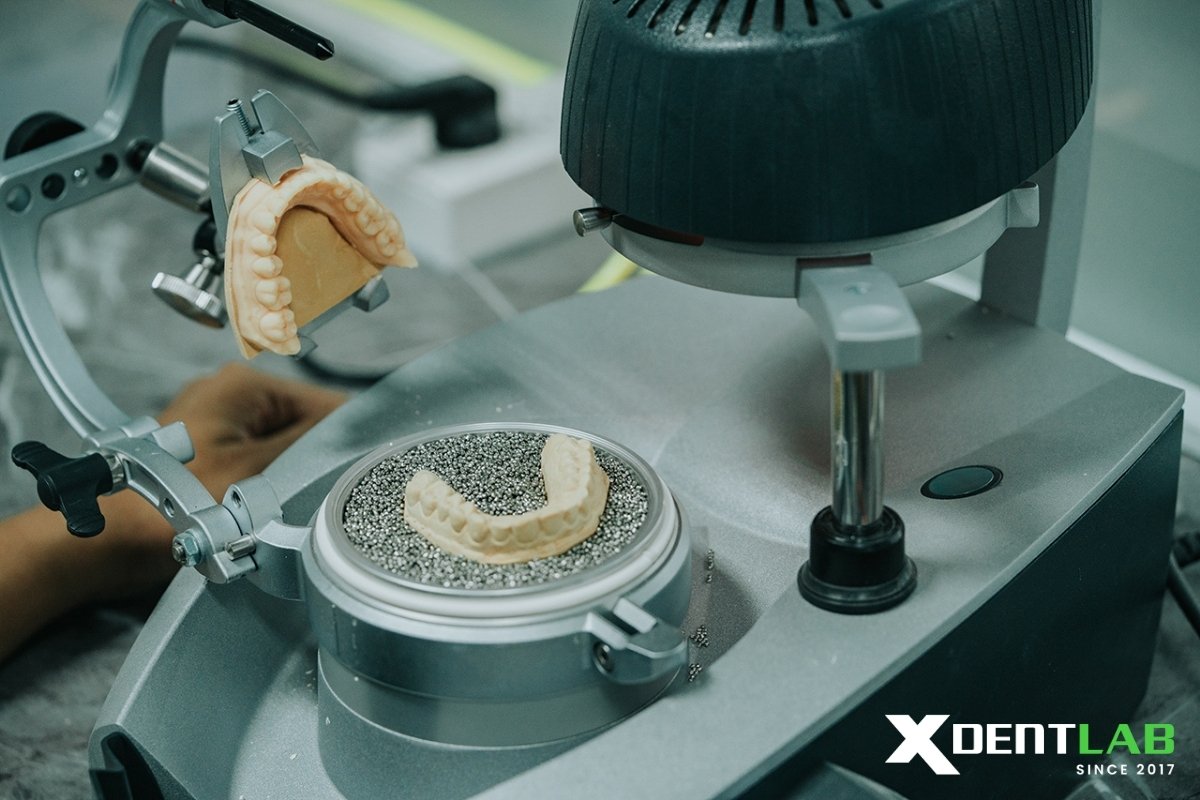
Crowns and bridges
- Marginal fit
- Internal fit
- Proximal contacts
- Occlusion
- Anatomy
- Shade
- Surface polish
- Material thickness
- Connector dimensions
- Cement space
Dentures
- Base adaptation
- Border extension
- Occlusion
- Tooth arrangement
- Midline
- Smile line
- Vertical dimension
- Acrylic finish
- Tissue surface
- Polish
Implant restorations
- Implant system
- Implant platform
- Scan body accuracy
- CAD library
- Screw access
- Ti-base bonding
- Passive fit
- Emergence profile
- Occlusion
- Cleanability
Orthodontic appliances
- Appliance fit
- Wire adaptation
- Acrylic finish
- Retention
- Expansion screw function
- Patient comfort surfaces
- Labeling
Challenges facing independent dental labs
Independent labs face both technical and business pressures.
| Challenge | Impact |
|---|---|
| Technician shortage | Limits capacity and succession planning |
| Digital equipment cost | Requires capital investment |
| Price competition | Compresses margins |
| Corporate lab consolidation | Increases competitive pressure |
| Offshore outsourcing | Reduces price floor |
| Material complexity | Requires constant training |
| Regulatory burden | Increases documentation demands |
| Dentist chairside systems | Some simple cases move in-house |
| DSO purchasing power | Favors high-volume contracts |
| Data security | Digital case handling increases responsibility |
Technician workforce issue
The independent lab industry depends on skilled technicians. Training, certification, continuing education, and career pathways are critical to maintaining quality.
Competitive advantages of independent dental labs
Despite industry pressure, independent labs still have meaningful strengths.
Key advantages
Direct technician-dentist relationship
Faster communication and better case-specific problem-solving.
Customization
Greater flexibility for unique preferences and unusual cases.
Esthetic excellence
Especially in anterior ceramics, full-mouth rehabilitation, and implant esthetics.
Agility
Faster adoption of niche products or workflows.
Local reputation
Trust built through consistent service and visible accountability.
Specialized expertise
Many independent labs dominate specific niches such as dentures, implants, or cosmetic ceramics.
Transparent production
Dentists increasingly value knowing where restorations are made and what materials are used.
Independent dental lab and outsourcing
Independent labs may outsource certain services to remain competitive.
Common outsourced services
- CAD design
- Zirconia milling
- Metal framework production
- Partial framework casting
- Denture processing
- Surgical guide printing
- Night guard production
- Full-arch zirconia
- Overflow crown and bridge work
Why outsource
- Manage production overflow
- Add product lines
- Reduce equipment investment
- Improve turnaround
- Access specialized skill
- Lower production cost
- Support scalability
Outsourcing risks
- Loss of quality control
- Material substitution
- Longer shipping time
- Communication delays
- Regulatory traceability gaps
- Inconsistent esthetics
- Confidentiality concerns
- Brand reputation risk
Best practice
If an independent lab outsources, it should still control:
- Material specifications
- Final QC
- Case records
- Dentist communication
- Remake policy
- Supplier qualification
- Documentation
- Disclosure obligations where applicable
Outsourcing can strengthen an independent lab, but only when managed as a controlled production extension, not a mystery box.
Independent dental lab business operations
An independent lab must manage both craftsmanship and manufacturing operations.
Core operational areas
- Case intake
- Scheduling
- Technician assignment
- CAD/CAM production
- Material inventory
- Equipment maintenance
- Quality control
- Customer service
- Billing
- Delivery logistics
- Remake tracking
- Staff training
- Compliance records
Important KPIs
| KPI | Meaning |
|---|---|
| On-time delivery rate | Reliability of service |
| Remake rate | Product and communication quality |
| Chairside adjustment feedback | Clinical usability |
| Case rejection rate | Incoming data quality |
| Average turnaround time | Production efficiency |
| Rush case success rate | Operational flexibility |
| Shade remake rate | Esthetic workflow accuracy |
| Implant component error rate | Digital or implant workflow accuracy |
| Material waste rate | Cost and process control |
| Technician productivity | Capacity planning |
Independent labs that measure performance can improve faster than labs that rely only on experience.
Marketing and positioning for independent dental labs
Independent labs must communicate value clearly in a crowded and increasingly standardized market.
Strong positioning angles
- Local craftsmanship
- Certified technicians
- Certified Dental Laboratory status
- Digital workflow capability
- Implant expertise
- Esthetic anterior specialization
- Removable prosthetics excellence
- Fast communication
- Material transparency
- Low remake rate
- Doctor-specific preferences
- Complex case support
Trust-building content topics
- How to submit better digital scans
- Zirconia vs lithium disilicate selection
- Implant crown screw access planning
- Denture impression tips
- Shade photo protocols
- Why pontic design affects tissue health
- How to reduce crown remakes
- Material traceability and patient safety
- Digital denture workflow
- Lab infection-control standards
Educational marketing works well because dentists do not only buy products. They buy confidence.
How dentists should evaluate an independent dental lab
Dental practices should evaluate a lab based on evidence, not only price.
Evaluation checklist
| Area | Questions to ask |
|---|---|
| Technical capability | What products are made in-house? |
| Certification | Is the lab CDL-certified or employing CDTs? |
| Materials | What brands and materials are used? |
| Traceability | Can the lab provide lot numbers? |
| Digital workflow | Which scanners and file formats are accepted? |
| Implant support | Which implant systems are supported? |
| QC | Is every case inspected before delivery? |
| Communication | Who answers technical questions? |
| Turnaround | What are realistic delivery timelines? |
| Remake policy | How are remakes handled and categorized? |
| Outsourcing | Are any cases outsourced? |
| Infection control | Are disinfection protocols documented? |
Practical scoring model
| Category | Score 1–5 |
|---|---|
| Fit and marginal quality | |
| Esthetic quality | |
| Communication speed | |
| Technical expertise | |
| Digital compatibility | |
| Implant knowledge | |
| Remake handling | |
| Turnaround reliability | |
| Material transparency | |
| Certification / standards |
A scorecard helps dentists compare labs based on operational reality rather than sales promises.
Future of independent dental labs
Independent dental laboratories will continue evolving as dentistry becomes more digital and data-driven.
Likely future trends
- More intraoral scan workflows
- More cloud-based case portals
- More AI-assisted CAD design
- More digital denture adoption
- More 3D printed appliances
- More chairside-lab collaboration
- More specialization in implant and esthetic cases
- More demand for traceability
- More pressure to document materials
- More lab-to-lab partnerships
- More technician certification and training initiatives
- More boutique labs focused on high-value complex work
What will not disappear
- Skilled ceramic artistry
- Denture setup judgment
- Occlusal knowledge
- Implant restorative planning
- Material science understanding
- Case communication
- Final quality control
- Ethical decision-making
The future independent lab will be part craft studio, part digital manufacturer, and part clinical support partner.
Why this matters for XDENT LAB
Although XDENT LAB is positioned as a scalable lab-to-lab full-service partner from Vietnam, this topic is still highly relevant. Independent dental labs often need trusted outsourcing relationships to expand product scope, manage overflow, improve turnaround, or add removable and implant capabilities without building every workflow internally.
Strategic relevance for XDENT LAB
- Lab-to-lab production capacity
- Removable prosthetics expertise
- Implant restoration support
- Digital manufacturing workflows
- FDA and ISO-aligned quality expectations
- Scalable production through multiple factories
- Consistency for international clients
For independent labs, the right outsourcing partner helps preserve their local relationships and brand reputation while extending technical and manufacturing capacity behind the scenes.
Key takeaways
Independent dental labs remain a vital part of the dental industry because they provide custom, prescription-based restorations and appliances for dental professionals. Their strength lies not only in manufacturing but in personalized technical collaboration, case communication, material knowledge, and quality control.
The most important points are
- Independent dental labs are standalone technical service providers
- They manufacture custom dental devices for dentists, specialists, DSOs, and other labs
- Their strongest advantage is personalized technical collaboration
- Digital technology has transformed their workflows through CAD/CAM, 3D printing, and scan-based case intake
- Quality systems such as traceability, infection control, and final QC are essential
- Certification adds credibility and supports process discipline
- Transparency about materials and manufacturing origin matters more than ever
- Independent labs face pressure from consolidation, outsourcing, and chairside systems
- They stay competitive through specialization, service, quality, and trust
- The future independent lab combines craftsmanship with digital manufacturing and strong documentation
A successful independent dental lab is more than a supplier. It is a technical partner that helps dentists deliver restorations that fit, function, look natural, and meet professional expectations for safety and consistency.
About XDENT LAB:
We are experts in Lab-to-Lab Full Service from Vietnam, with the signature services of Removable, meet U.S. market standards, FDA-registered, ISO 13485-certified. Founded in 2017, from local root to global reach, we scale with 2 Factories with over 100+ employees.
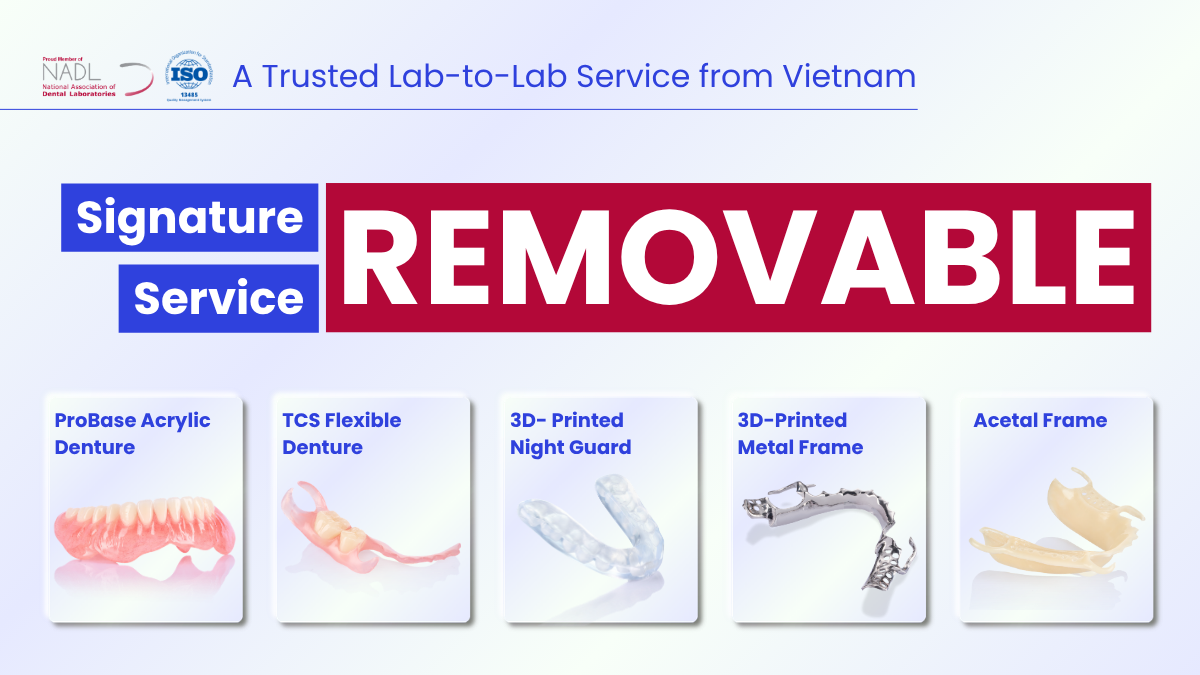
Our Commitments Built on “Trusted. Commitment. Quality”
- Commit to Large-Scale Manufacturing, high volume, remake rate < 1%.
- Commit to 5-Year Warranty
- Commit to Competitive Price
XDENT LAB | A Trusted Lab-to-Lab Service from Vietnam
Share this post:
Related Posts
Learn how B2B dental labs improve quality and consistency for dental practices through digital workflows, material control, expert QC, and reliable turnaround.
Learn how the dental lab subcontract model helps labs expand capacity, manage workloads, access technology, and maintain quality in outsourced production.
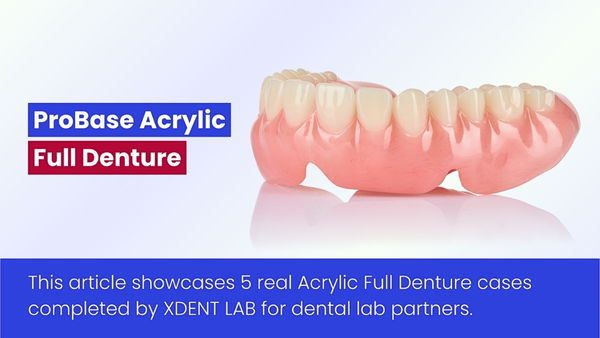
See 5 completed Acrylic Full Denture cases from XDENT LAB, a Vietnamese dental laboratory serving worldwide, especially US, Europe, and Australia. Trusted oversea outsourcing dental laboratory partner...

