
Learn about clasps in removable partial dentures (RPD), including types such as I-Bar, C clasp, Roach clasp, flexible clasp, and tooth-colored clasp, along with their functions and clinical applications.
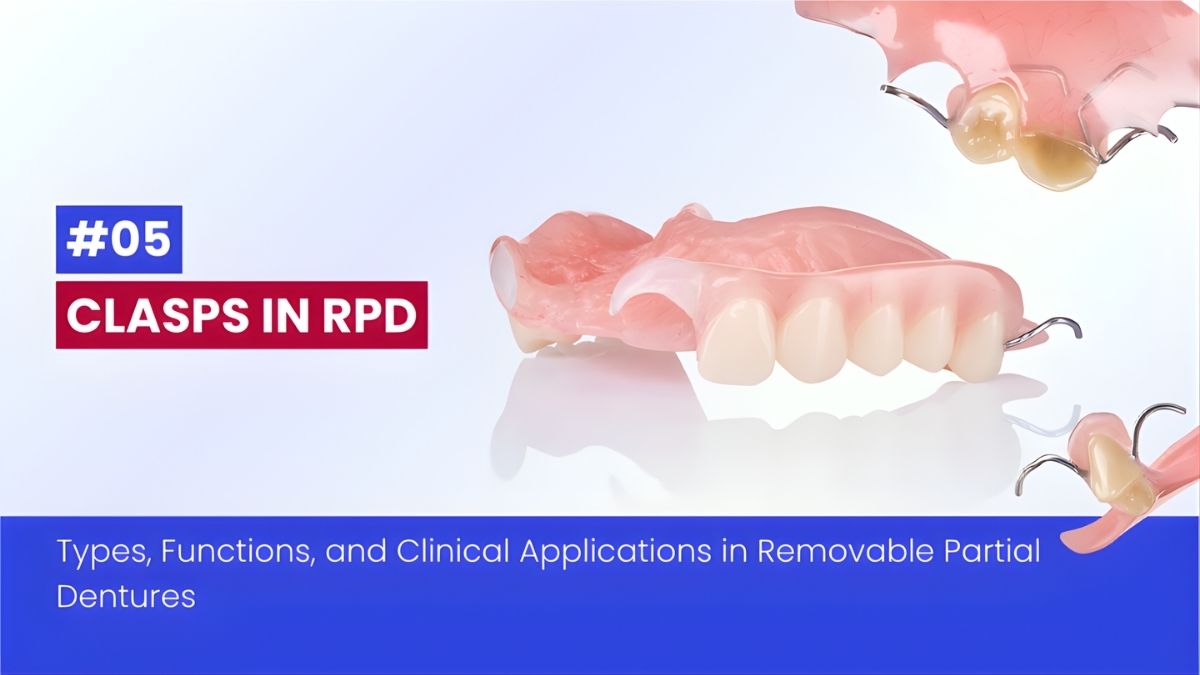
Table of contents [Show]
1. Introduction
Clasps are one of the most important components in removable partial dentures (RPDs). They play a critical role in maintaining the stability, retention, and support of the prosthesis by engaging the remaining natural teeth.
A well-designed clasp system ensures that the denture remains secure during chewing, speaking, and daily oral function while minimizing stress on the abutment teeth.
Understanding the different types of clasps used in RPD design is essential for dentists and dental laboratory technicians to achieve optimal clinical outcomes and long-term patient comfort.
2. What Are Clasps in Removable Partial Dentures?
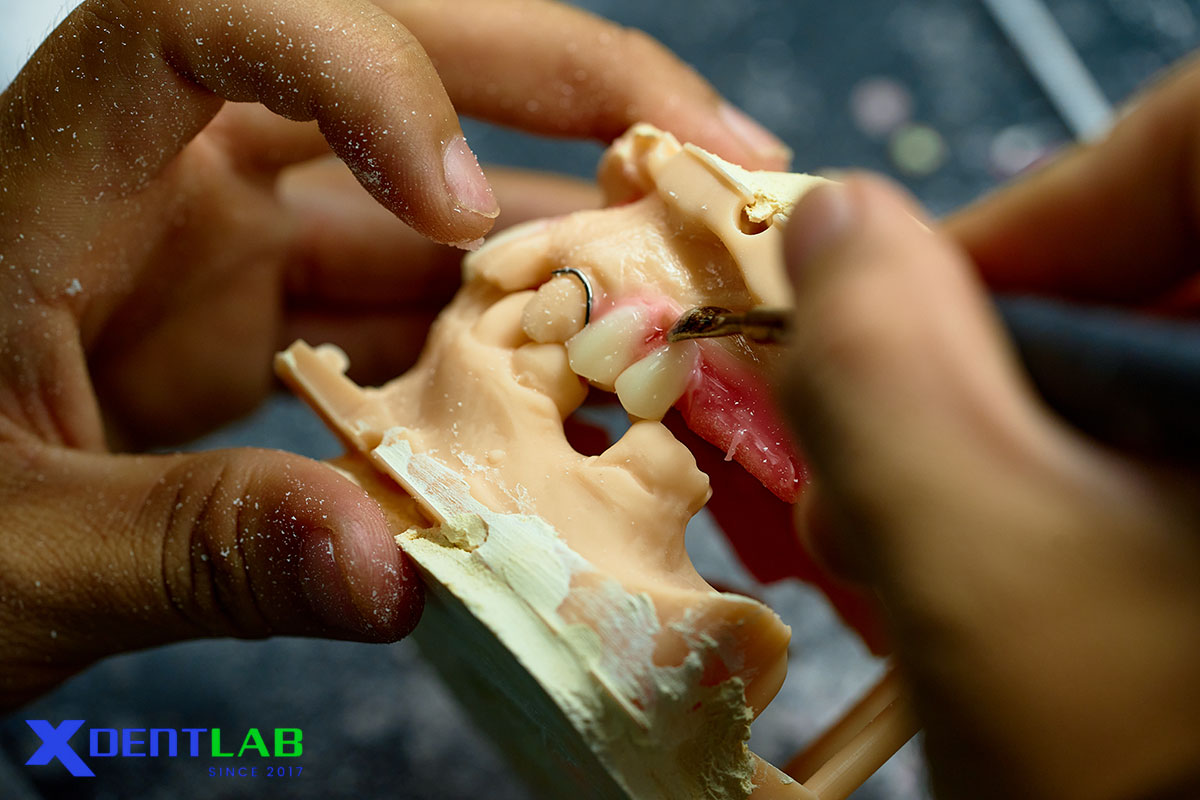
In prosthodontics, a clasp is a mechanical component of a removable partial denture that engages a natural tooth to provide retention and stability.
Clasps are designed to utilize the undercut areas of abutment teeth to resist dislodging forces while allowing the denture to be inserted and removed without damaging the tooth structure.
The primary functions of clasps include providing retention, improving stability during mastication, supporting the denture framework, and distributing functional forces appropriately to the abutment teeth.
Proper clasp selection depends on several clinical factors such as the Kennedy classification, esthetic requirements, the location of the tooth undercut, and the periodontal condition of the abutment teeth.
3. Common Types of Clasps in RPD
Several clasp designs are commonly used in removable partial denture frameworks. Each design serves a specific clinical purpose depending on the clinical situation and prosthetic requirements.
The I-Bar clasp is a type of bar clasp that approaches the tooth from the gingival direction.
This design minimizes the visibility of metal components and offers better esthetics compared to circumferential clasps. It is commonly used in distal extension cases and helps reduce stress on abutment teeth when properly designed.
The I-Bar clasp is frequently used in the RPI clasp system (Rest – Proximal Plate – I-Bar), which is known for its stress-releasing characteristics.
3.2 C Clasp (Circumferential Clasp)
The C clasp, also known as the circumferential clasp, is one of the most traditional and widely used clasp designs in removable partial dentures.
This clasp approaches the tooth from the occlusal direction and typically encircles more than half of the tooth surface.
Because of its strong retention and simple design, it is commonly used in Kennedy Class III removable partial dentures.
The Roach clasp, often referred to as a bar clasp, extends from the denture base and approaches the tooth from the gingival area.
This clasp design provides effective retention and is often used in distal extension cases where better stress distribution is required.
Different variations of bar clasps exist, including T clasp, Y clasp, and I clasp, each designed to adapt to different clinical conditions.
3.4 Flexible Clasp
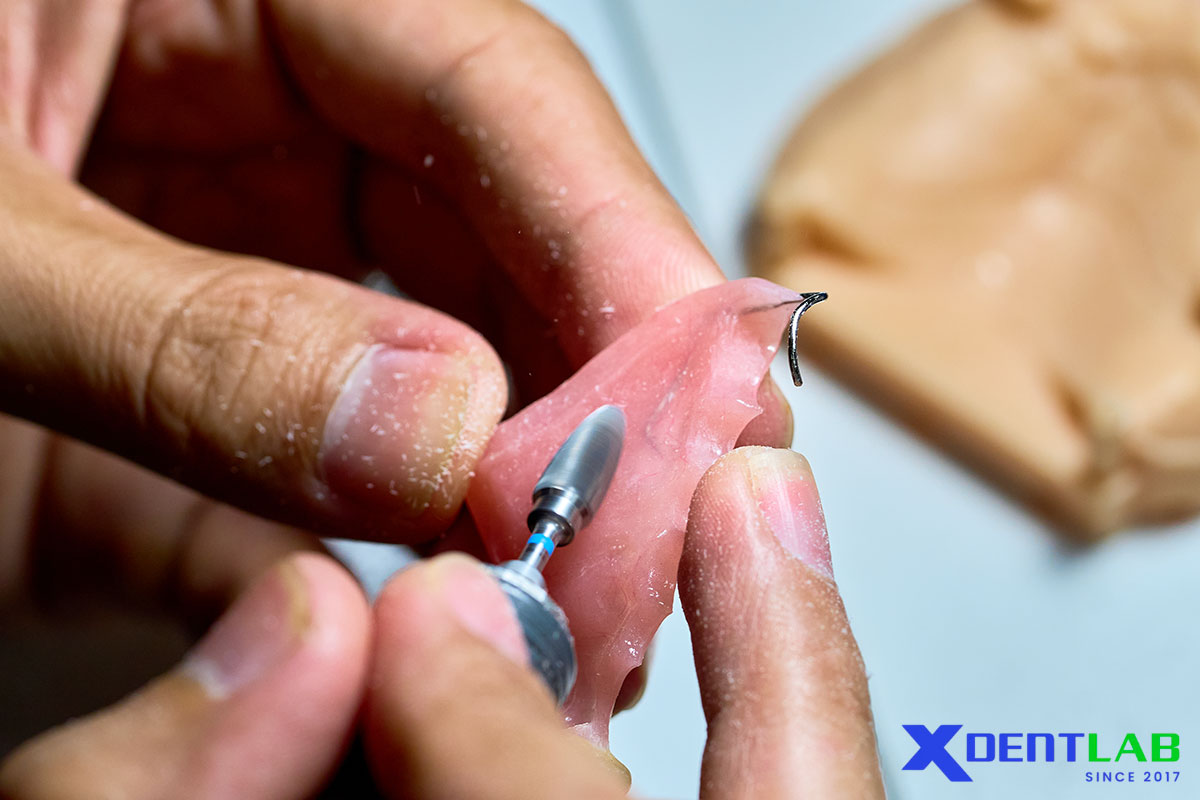
Flexible clasps are commonly used in flexible partial dentures made from materials such as nylon or Valplast.
These clasps are highly aesthetic because they eliminate the visibility of metal components. They are also adaptable to tooth contours and provide improved comfort for patients.
Flexible clasps are particularly popular among patients who prefer metal-free removable prostheses.
3.5 Tooth-Colored Clasp
Tooth-colored clasps are designed to enhance the esthetic appearance of removable partial dentures.
They are typically made from composite or acrylic materials that blend with the natural color of teeth.
This type of clasp is often used in anterior regions where visible metal clasps may compromise the patient’s smile aesthetics.
4. Importance of Proper Clasp Design
The success of a removable partial denture largely depends on the proper design of its clasp assembly.
Incorrect clasp design can lead to excessive stress on abutment teeth, denture instability, tooth mobility, and patient discomfort.
Dental professionals must carefully evaluate factors such as tooth undercut location, esthetic requirements, Kennedy classification, and functional load distribution when selecting a clasp design.
A properly designed clasp system ensures both functional efficiency and long-term oral health.
5. Conclusion
Clasps are a fundamental component in removable partial denture design, providing the necessary retention and stability required for proper prosthesis function.
Different clasp types such as I-Bar clasps, circumferential clasps, Roach clasps, flexible clasps, and tooth-colored clasps each serve specific clinical purposes.
Selecting the appropriate clasp design allows dental professionals to achieve better comfort, improved esthetics, and long-term success in removable partial denture treatment.
References
Carr AB, Brown DT. McCracken’s Removable Partial Prosthodontics. 13th ed. St. Louis: Elsevier; 2016.
Phoenix RD, Cagna DR, DeFreest CF. Stewart’s Clinical Removable Partial Prosthodontics. 4th ed. Chicago: Quintessence Publishing; 2008.
Zarb GA, Hobkirk J, Eckert SE, Jacob RF. Prosthodontic Treatment for Edentulous Patients: Complete Dentures and Implant-Supported Prostheses. 13th ed. St. Louis: Elsevier; 2013.
Shillingburg HT, Sather DA, Wilson EL, Cain JR, Mitchell DL, Blanco LJ, et al. Fundamentals of Fixed Prosthodontics. 4th ed. Chicago: Quintessence Publishing; 2012.
American College of Prosthodontists. Glossary of Prosthodontic Terms. J Prosthet Dent. 2017.
About XDENT LAB:
We are experts in Lab-to-Lab Full Service from Vietnam, with the signature services of Removable, meet U.S. market standards, FDA-registered, ISO 13485-certified. Founded in 2017, from local root to global reach, we scale with 2 Factories with over 100+ employees.
Our Commitments Built on “Trusted. Commitment. Quality”
- Commit to Large-Scale Manufacturing, high volume, remake rate < 1%.
- Commit to 5-Year Warranty
- Commit to Competitive Price
XDENT LAB | A Trusted Lab-to-Lab Service from Vietnam
Share this post:
Related Posts
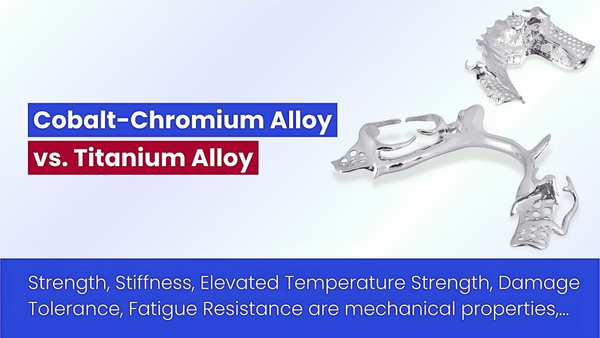
Learn the key differences between titanium and cobalt-chromium alloys used in removable partial denture frameworks, from mechanical properties to production requirements.
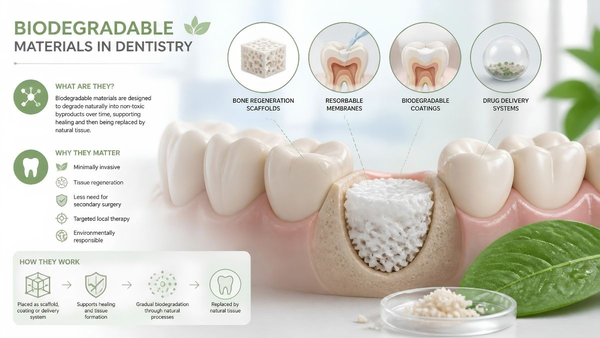
Explore biodegradable materials in dentistry, including their applications, benefits, limitations, and future potential in regenerative and sustainable dental care.
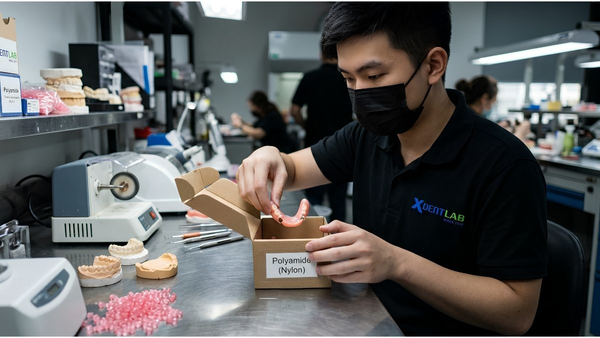
Learn how polyamide dental materials support flexible dentures and removable prosthetics through biocompatibility, aesthetics, comfort, and lightweight performance.

