
Explore silicone polymers in dentistry, including their properties, applications, advantages, limitations, and role in impressions, prosthetics, and soft liners.
Table of contents [Show]
- What Are Silicone Polymers in Dentistry?
- Core Properties of Silicone Polymers in Dentistry
- Main Applications of Silicone Polymers in Dentistry
- Advantages of Silicone Polymers in Dentistry
- Limitations and Challenges of Silicone Polymers
- Silicone Polymers Compared with Other Dental Materials
- Future Directions for Silicone in Dentistry
- Why Silicone Polymers Matter for Dental Labs and Outsourcing
- Key Takeaways
- References
Silicone polymers are among the most important material families in modern dentistry because they combine elasticity, chemical stability, thermal resistance, biocompatibility, and dimensional reliability in ways that few dental materials can match. Known chemically as polysiloxanes, these polymers are used in several clinical and laboratory applications, from precision impression materials to soft denture liners, maxillofacial prosthetics, and selected orthodontic and restorative workflows.
For dental practices and dental laboratories, silicone materials matter not only because of what they are, but because of what they enable. They support more accurate impressions, more comfortable prosthetic interfaces, more lifelike extraoral prostheses, and more predictable handling in demanding clinical situations. Their relevance spans prosthodontics, removable dentistry, oral rehabilitation, implant impression workflows, and facial prosthetic fabrication. Below is a comprehensive overview of silicone polymers in dentistry, including their chemistry, properties, uses, benefits, limitations, and future directions.
What Are Silicone Polymers in Dentistry?
Silicone polymers are synthetic materials based on a silicon-oxygen backbone, typically described as polysiloxanes. In dentistry, the most widely recognized forms are silicone elastomers, which are flexible, rubber-like materials capable of reproducing surface detail while maintaining structural stability.
Why Silicone Materials Matter in Dental Science
Unlike many conventional polymers that rely on carbon-only backbones, silicones derive key performance advantages from the silicon-oxygen structure. This molecular arrangement contributes to high flexibility, resistance to thermal change, chemical inertness, low toxicity, and long-term stability.
These characteristics make silicone especially valuable in dental fields where soft tissue adaptation, detail reproduction, and patient comfort are important.
Common Dental Forms of Silicone Polymers
In dentistry, silicone polymers are often encountered as addition silicone impression materials, condensation silicone impression materials, maxillofacial silicone elastomers, soft denture lining materials, and silicone-based auxiliary materials in laboratory procedures.
Among these, vinyl polysiloxane (VPS) remains one of the most widely used silicone-based impression materials in restorative and prosthodontic dentistry.
Core Properties of Silicone Polymers in Dentistry
The value of silicone polymers comes from a combination of physical, biological, and handling properties that suit both clinical and laboratory environments.
Thermal Stability
Silicone polymers are known for excellent thermal stability.
They can maintain useful material properties across a broad temperature range, often cited from approximately -100°C to 250°C depending on formulation. In dental practice, this means silicone materials generally remain stable during storage, handling, clinical placement, and laboratory processing.
This thermal resilience also contributes to shelf stability and reliability in variable working environments.
Elasticity and Flexibility
This is one of silicone’s most important qualities.
Silicone elastomers can flex without permanent deformation, allowing them to adapt to undercuts, record complex oral anatomy, improve comfort in soft-contact applications, and support removal without major distortion in many impression procedures.
In maxillofacial and soft liner applications, elasticity also helps create a more comfortable interface between the prosthesis and human tissue.
Chemical Resistance
Silicone polymers are chemically stable and relatively resistant to degradation.
This helps materials perform reliably in environments where they may encounter saliva, temperature fluctuations, cleansing agents, air exposure, oral secretions, and environmental contamination.
This durability is particularly important for long-term extraoral prostheses and selected resilient liner applications.
Biocompatibility
Medical-grade silicone is widely regarded as biocompatible, especially in formulations such as polydimethylsiloxane (PDMS) and related elastomer systems.
Biocompatibility is essential because materials placed in or around the mouth must minimize tissue irritation, toxicity risk, hypersensitivity, and chronic inflammatory response.
Silicone’s generally favorable tissue response is one reason it remains a leading material in maxillofacial prosthetics and soft-contact dental applications.
Dimensional Stability
Silicone impression materials are especially valued for dimensional stability.
A stable impression material helps preserve recorded detail between impression taking and model or restoration fabrication. This supports better accuracy, lower distortion risk, more predictable prosthetic outcomes, and improved restoration fit.
Among impression materials, addition silicones such as VPS are particularly well known for retaining accuracy over time.
Hydrophobic Nature
Silicone polymers are naturally hydrophobic, meaning they repel water.
This property can support detail integrity and material stability, but it also creates handling challenges in moist environments.
In practice, hydrophobicity means good material integrity after setting, potential difficulty displacing moisture during impression making, need for good soft tissue management, and the importance of field control during clinical procedures.
Some modern VPS materials include surfactant modifications to improve wettability, but the inherent hydrophobic character still matters.
Main Applications of Silicone Polymers in Dentistry
Silicone polymers are used across multiple branches of dentistry. Their role is especially prominent where elasticity, detail capture, and soft tissue compatibility are required.
Impression Materials
This is perhaps the best-known use of silicone in dentistry.
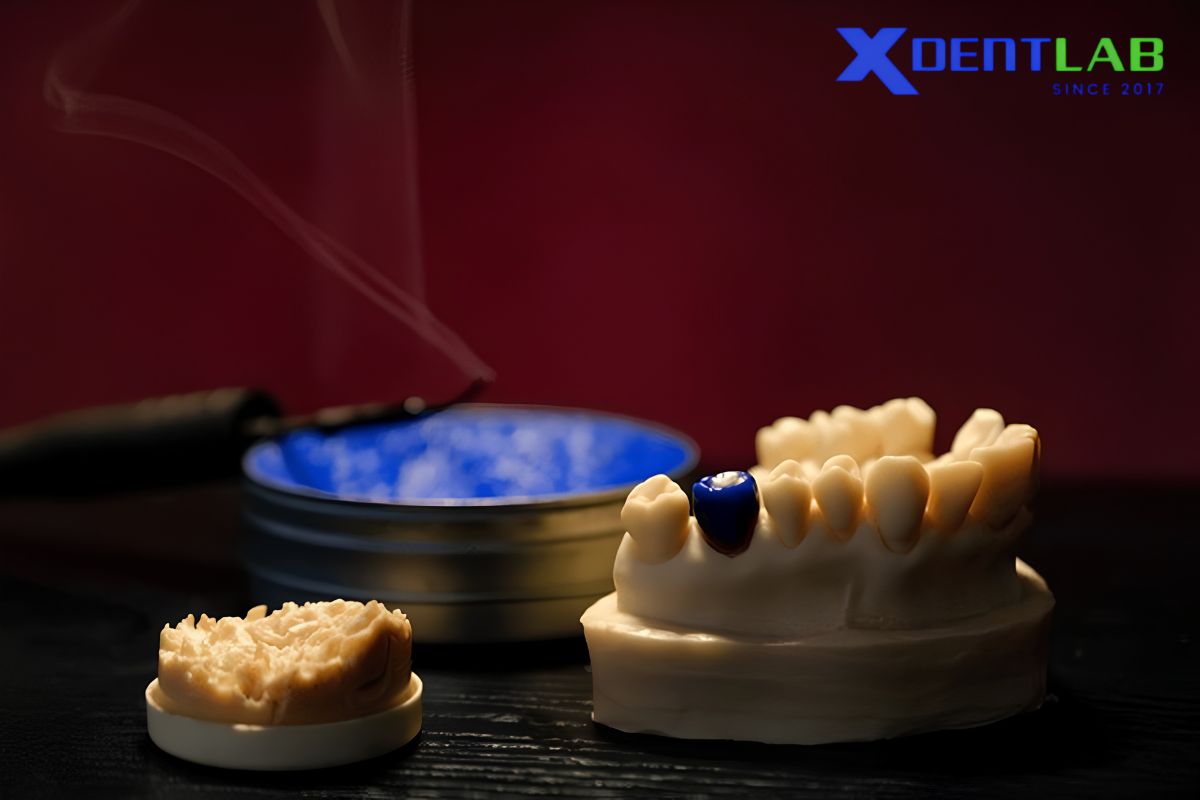
Silicone-based impression materials, especially vinyl polysiloxanes, are widely used because they offer high accuracy, excellent elastic recovery, good dimensional stability, fine detail reproduction, and convenient handling characteristics.
These materials are commonly used in crown and bridge impressions, implant impressions, inlay and onlay cases, full-arch prosthodontic records, and removable prosthetic impressions in selected protocols.
A precise impression directly affects margin integrity, contact accuracy, occlusal fit, prosthetic seating, and remake rates. When the impression is accurate, the laboratory has a better chance of producing a restoration that fits correctly the first time.
Maxillofacial Prosthetics
Silicone elastomers are a major material class in maxillofacial rehabilitation.
They are used to fabricate artificial ears, nasal prostheses, orbital prostheses, facial soft tissue replacements, and other extraoral prosthetic devices.
Silicone offers several advantages in facial prosthetics, including soft, tissue-like flexibility, good esthetic adaptability, ability to accept intrinsic and extrinsic coloration, patient comfort, and acceptable durability under practical wear conditions.
This combination makes silicone one of the best options for creating prostheses that are both functional and lifelike.
Soft Denture Liners
Silicone polymers are also used as soft liners for removable dentures.
Soft liners are indicated when patients need a more resilient interface between the denture base and mucosa, such as in cases involving thin mucosa, chronic soreness, irregular ridges, post-surgical healing, and reduced tolerance to hard acrylic bases.
The material cushions functional forces and may reduce irritation, improving comfort in selected patients.
That said, long-term maintenance, bonding performance, hygiene, and surface changes remain important considerations.
Silicone materials may also be used in selected orthodontic and appliance workflows.
Applications can include precision impressions for orthodontic models, retainer and appliance fabrication processes, bite registration materials in some workflows, and auxiliary cushioning or resilient interface components.
Their elastic behavior and dimensional consistency make them useful where detail and controlled flexibility are required.
Sealants, Adhesives, and Auxiliary Uses
Silicone-based materials can also appear in certain dental auxiliary products, including selected sealants and bonding-related applications.
These uses are more specialized than impressions or prosthetics, but they reflect the versatility of silicone chemistry in dentistry.
Advantages of Silicone Polymers in Dentistry
Silicone remains important because it solves multiple clinical and laboratory challenges effectively.
High Accuracy
Silicone impression materials can record very fine anatomical details, supporting prosthetic precision.
Excellent Patient Comfort
Their softness and flexibility are beneficial in applications involving soft tissue contact or extended wear.
Good Durability
Silicones resist many forms of environmental and chemical degradation, supporting longer service life in selected applications.
Strong Esthetic Potential
In maxillofacial prosthetics, silicone can be colored and textured to mimic natural tissues with impressive realism.
Reliable Dimensional Behavior
This is especially critical in impression materials, where distortion directly affects restoration quality.
Broad Clinical Versatility
Few material groups serve such different roles across impressions, removable prosthetics, facial prosthetics, and supportive dental workflows.
Limitations and Challenges of Silicone Polymers
Despite their advantages, silicone materials are not without drawbacks.
Cost
High-quality dental silicone, especially medical-grade or maxillofacial-grade formulations, can be relatively expensive.
Material cost can affect case profitability, product selection, access in cost-sensitive practices, and long-term maintenance budgets for prosthetic devices.
In premium applications, however, the performance benefits often justify the expense.
Hydrophobic Handling Challenges
Although hydrophobicity can help with stability, it may complicate clinical use when moisture control is poor.
In wet fields, silicone impression materials may struggle to flow evenly over moist tissues, capture margins cleanly without technique support, and avoid defects caused by saliva or blood contamination.
This is why soft tissue management and isolation remain critical during impression procedures.
Surface Roughness and Finishing Needs
In prosthetic applications, silicone surfaces may require careful finishing to achieve acceptable smoothness and esthetics.
Poor surface quality can influence comfort, hygiene, color appearance, debris accumulation, and prosthesis longevity.
This is particularly relevant in extraoral prosthetics and resilient liners.
Tear Resistance Limitations
Although silicone elastomers are flexible, not all formulations have ideal tear resistance.
Thin sections or delicate margins may be vulnerable during impression removal, prosthesis handling, and repeated use and cleaning.
This is one reason material selection and thickness planning are important.
Silicone Polymers Compared with Other Dental Materials
Silicone is best understood not in isolation, but in comparison with alternatives used for similar purposes.
| Material Type | Main Strength | Typical Dental Use | Common Limitation |
|---|---|---|---|
| Silicone polymers | Elasticity and dimensional stability | Impressions, soft liners, maxillofacial prostheses | Hydrophobicity, cost |
| Alginate | Speed and affordability | Preliminary impressions | Lower dimensional stability |
| PMMA | Rigidity and polishability | Denture bases | Less resilient, can be irritating in some cases |
| Polyether | Hydrophilicity and detail capture | Precision impressions | Greater stiffness, patient discomfort in some cases |
This comparison shows why silicone occupies a unique middle ground: it combines softness and precision, but requires technique awareness and cost justification.
Future Directions for Silicone in Dentistry
Research continues to expand and refine the role of silicone polymers in modern dental materials science.
Enhanced Biocompatibility
New formulations aim to further improve tissue response, reduce sensitization risk, and support longer safe use.
Hybrid Material Systems
Researchers are investigating combinations of silicone with nanoparticles, reinforcing fillers, other polymers, and surface modifiers.
The goal is to improve properties such as tear resistance, surface behavior, strength, and long-term esthetic performance.
Digital Dentistry Integration
As dentistry becomes more digital, silicone materials may intersect with 3D printed molds, hybrid fabrication systems, customized prosthetic workflows, and digital planning for maxillofacial rehabilitation.
While silicone itself is not universally the main printable material in routine dentistry, its role in digital-assisted workflows is growing.
Sustainability
Material science is also moving toward reduced waste, smarter packaging, more efficient formulation chemistry, and a lower environmental burden across dental manufacturing.
Why Silicone Polymers Matter for Dental Labs and Outsourcing
For dental laboratories, silicone polymers are not just raw materials. They are workflow enablers that influence accuracy, efficiency, comfort, and restoration quality.
Relevance in Laboratory Operations
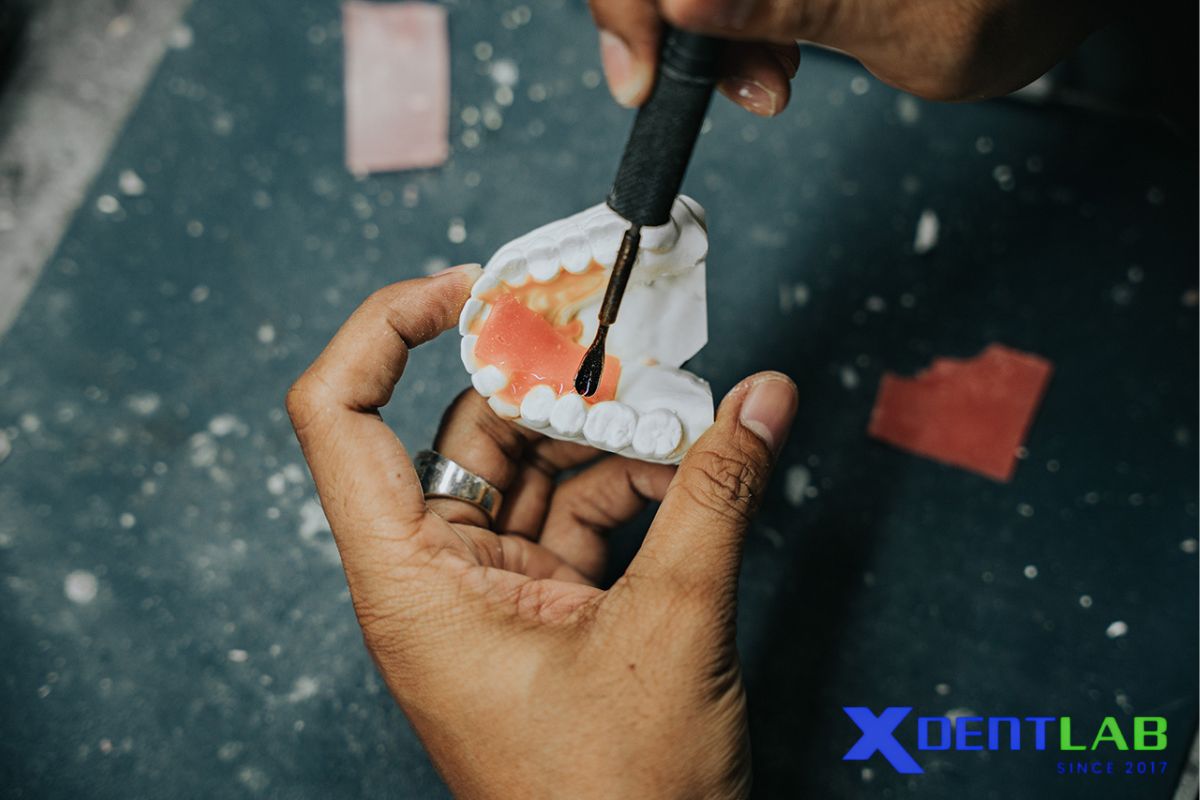
Silicone-based materials affect impression accuracy, prosthetic adaptation, soft tissue contact performance, removable appliance comfort, facial prosthetic realism, case acceptance, and remake risk.
Relevance to XDENT LAB
For XDENT LAB, expertise in removable prosthetics, implant-related workflows, and lab-to-lab service quality makes silicone-related knowledge strategically important. A modern Vietnam dental lab serving international partners must understand how silicone materials impact impression fidelity, soft liner selection, prosthetic comfort, cross-disciplinary material compatibility, and case predictability in restorative and removable dentistry.
In high-quality dental outsourcing, understanding material behavior is not optional. It is part of what separates reliable production from expensive guesswork.
Key Takeaways
Silicone polymers are a core material group in dentistry because they combine elasticity, biocompatibility, thermal and chemical stability, dimensional accuracy, and clinical versatility.
They are especially important in impression materials, maxillofacial prosthetics, soft denture liners, and selected orthodontic and restorative workflows.
Their strengths include accuracy, comfort, durability, and esthetic adaptability, while their challenges include cost, hydrophobic handling, finishing requirements, and tear resistance limitations in some formulations.
The main takeaway is clear: silicone polymers remain indispensable in modern dentistry because they support precision, comfort, and realistic prosthetic outcomes across both clinical and laboratory settings.
References
- Contemporary Use of Polymers in Dentistry: A Narrative Review - PMC
- Polysiloxane Overview - ScienceDirect
- A Review on Silicone Biomaterials for Prosthodontics and Maxillofacial Prosthetics - Research VU
- The Application of Silicon and Silicates in Dentistry - PubMed
About XDENT LAB:
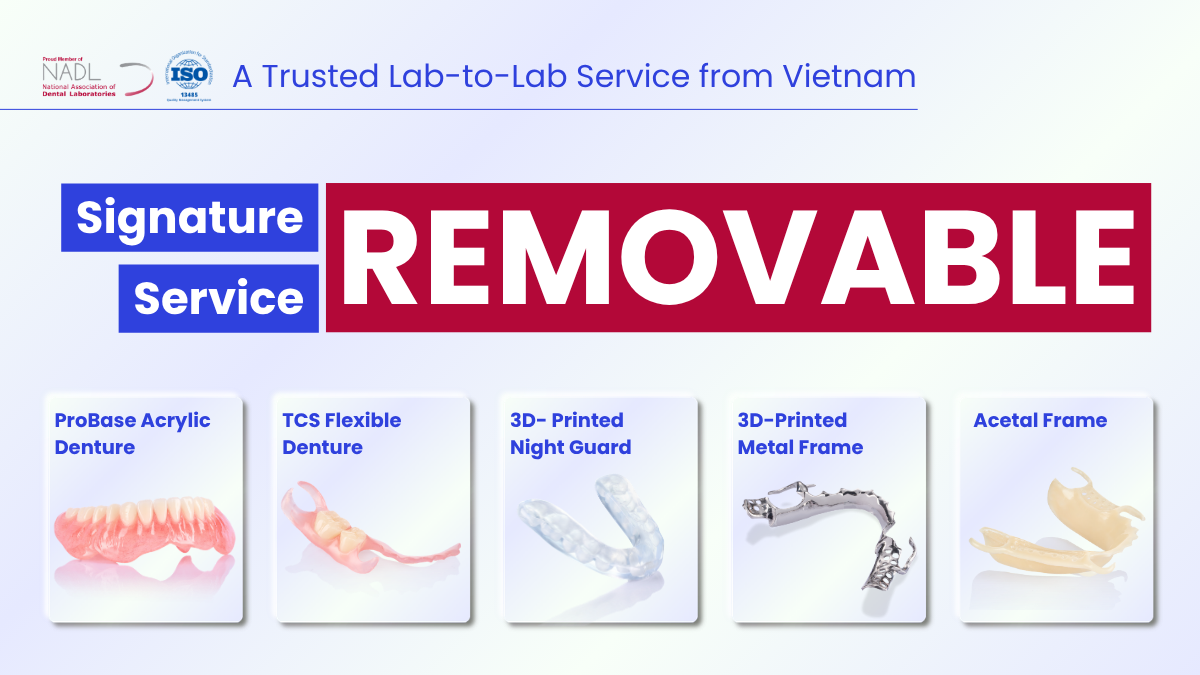
We are experts in Lab-to-Lab Full Service from Vietnam, with the signature services of Removable, meet U.S. market standards, FDA-registered, ISO 13485-certified. Founded in 2017, from local root to global reach, we scale with 2 Factories with over 100+ employees.
Our Commitments Built on “Trusted. Commitment. Quality”
- Commit to Large-Scale Manufacturing, high volume, remake rate < 1%.
- Commit to 5-Year Warranty
- Commit to Competitive Price
XDENT LAB | A Trusted Lab-to-Lab Service from Vietnam
Share this post:
Related Posts
Learn the key differences between titanium and cobalt-chromium alloys used in removable partial denture frameworks, from mechanical properties to production requirements.
Explore biodegradable materials in dentistry, including their applications, benefits, limitations, and future potential in regenerative and sustainable dental care.
Learn how polyamide dental materials support flexible dentures and removable prosthetics through biocompatibility, aesthetics, comfort, and lightweight performance.

