
Learn how polyamide dental materials support flexible dentures and removable prosthetics through biocompatibility, aesthetics, comfort, and lightweight performance.
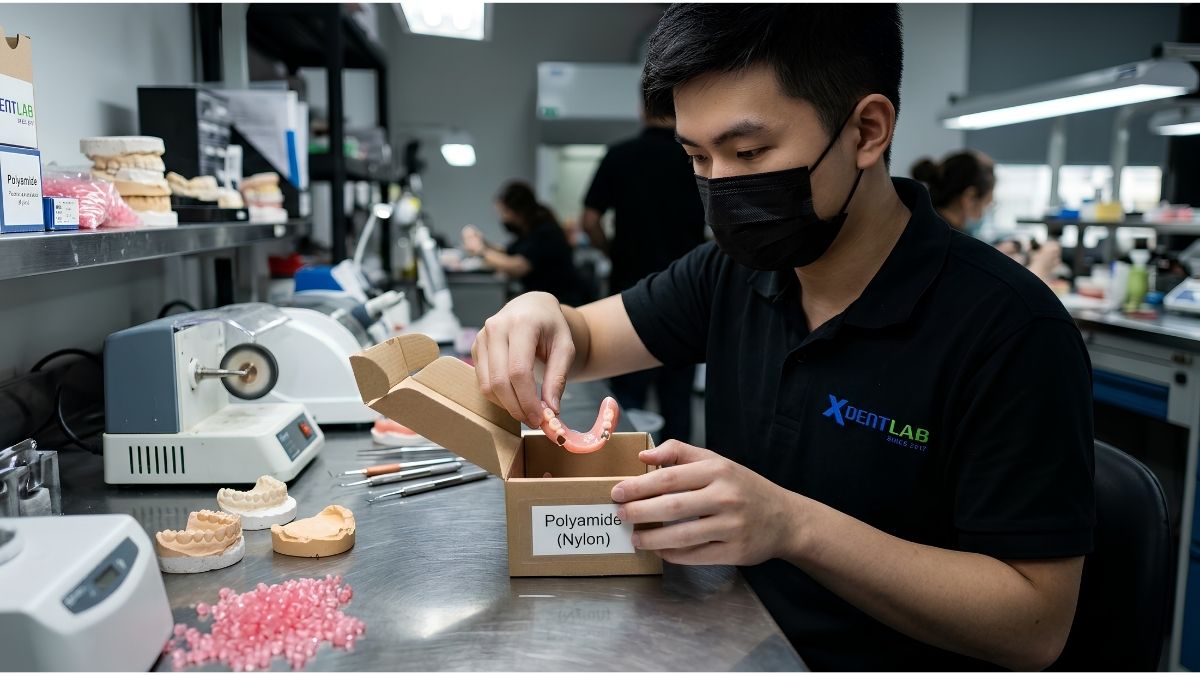
Table of contents [Show]
- What are polyamides in dentistry?
- Core properties of polyamides
- Main applications of polyamides in dentistry
- Advantages of polyamides in dentistry
- Challenges and limitations of polyamides
- Advancements in polyamides for dentistry
- Future directions
- Why polyamides matter for dental labs and outsourcing
- Key takeaways
- References
Polyamides have become an important material category in modern dentistry, especially in the field of removable prosthetics. Known widely as nylon-based thermoplastic polymers, polyamides offer a distinct balance of flexibility, strength, aesthetics, and biocompatibility. These qualities make them especially relevant in dental applications where patient comfort, lightweight design, and metal-free appearance are priorities. For dental laboratories and clinicians, polyamides represent more than just an alternative to conventional denture materials. They represent a different design philosophy, one that emphasizes flexibility, tissue adaptation, and improved aesthetic integration in selected cases.
In recent years, polyamides have gained attention across complete dentures, removable partial dentures, orthodontic appliances, and other specialized prosthetic applications. Their role is especially significant in cases involving patients with material sensitivities, aesthetic concerns about visible clasps, or a need for lighter prosthetic solutions. At the same time, advances in digital dentistry, CAD/CAM workflows, and material engineering are expanding how polyamides can be processed and optimized. This article provides a comprehensive overview of polyamides in dentistry, including their definition, material properties, clinical applications, advantages, limitations, and future direction in dental manufacturing.
What are polyamides in dentistry?
Polyamides are synthetic polymers that contain repeating amide groups in their molecular structure. In dentistry, they are commonly used as nylon-based thermoplastic materials for removable prosthetic and appliance fabrication.
Basic material concept
Polyamides differ from conventional acrylic-based materials in several important ways. Unlike traditional polymethyl methacrylate systems, many polyamide formulations are processed as thermoplastics rather than through conventional heat-cured acrylic polymerization.
This means they can offer greater flexibility, lower brittleness, metal-free design options, and good patient comfort in selected removable cases.
Why they matter in dental prosthetics
Polyamides are especially relevant when a prosthesis must deliver flexible insertion and removal, improved esthetics in clasp areas, lightweight wear, better tolerance in patients sensitive to residual monomer-related concerns, and a softer-feeling alternative to rigid materials.
In practical terms, polyamides are often associated with flexible partial dentures, but their usefulness extends further into a broader removable prosthetic context.
Core properties of polyamides
The performance of polyamides in dentistry depends on a combination of mechanical, biological, and aesthetic characteristics.
Flexibility
Flexibility is one of the most recognized features of polyamide materials.
This property allows the material to adapt to undercuts more easily, improve comfort in some removable prosthetic designs, support metal-free clasp concepts, and reduce the feeling of rigidity for certain patients.
In partial denture design, flexibility may improve insertion and comfort, especially where conventional rigid frameworks may be less acceptable esthetically or subjectively.
However, flexibility is not always an advantage in every case. In prosthodontics, what feels comfortable must still remain biomechanically appropriate.
High strength and elasticity
Polyamides combine flexibility with good tensile properties and elastic behavior.
These materials may offer resistance to fracture, better resilience under repeated stress, and reduced risk of brittle cracking compared with some rigid materials.
This makes polyamides attractive in cases where impact resistance and repeated flexural loading are relevant.
Biocompatibility
Polyamides are often valued for their favorable tissue tolerance.
Many polyamide materials are monomer-free or associated with reduced residual monomer concerns, suitable for patients with sensitivity to conventional acrylic components, and well tolerated in the oral cavity when processed correctly.
This can be especially useful for patients with allergy concerns, patients who prefer metal-free and more tissue-friendly prosthetic options, and long-term removable appliance wearers.
Aesthetic qualities
Aesthetics are a major reason polyamides are chosen in removable prosthetics.
Polyamide materials can offer gingiva-like base shades, reduced visibility of clasping elements, more discreet integration in partial denture cases, and a more natural appearance than visible metal in selected designs.
In many removable partial cases, the shift from a visible metal clasp to a more aesthetic flexible clasp can significantly improve patient acceptance.
Chemical resistance and moisture behavior
Polyamides also have useful chemical and environmental resistance characteristics.
Depending on formulation, they may provide resistance to certain chemicals in the oral environment, useful durability under normal oral conditions, and controlled water sorption characteristics.
Water behavior affects dimensional stability, surface integrity, staining tendency, and long-term hygiene performance.
Not all polyamides behave identically, which is why formulation-specific understanding matters.
Lightweight character
Polyamides are relatively lightweight compared with some traditional removable prosthetic materials and framework options.
Lower weight may contribute to better comfort, easier adaptation, and reduced bulk perception in some designs.
This can be especially relevant for patients who are highly sensitive to appliance feel.
Main applications of polyamides in dentistry
Polyamides are used in several removable and appliance-related areas of dentistry.
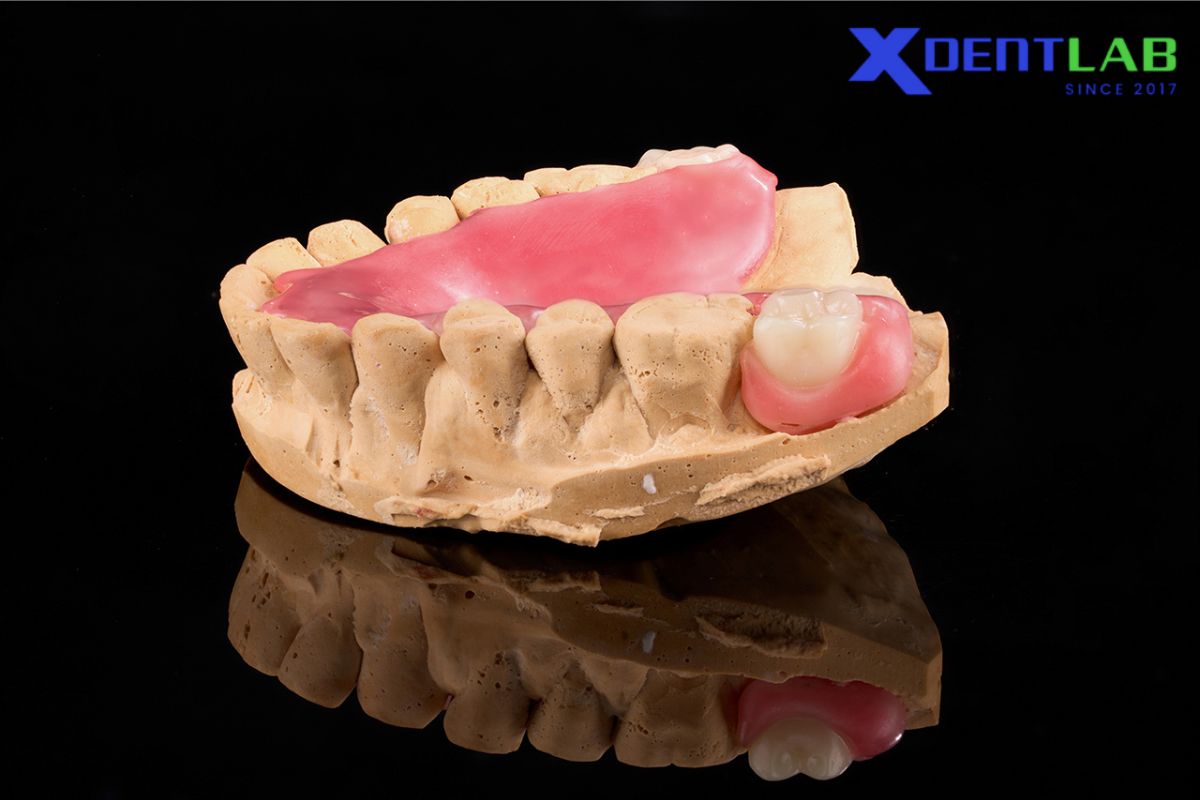
Removable partial dentures
This is the most common and recognizable application of polyamides.
They are often selected for flexible partial dentures, metal-free removable solutions, esthetic clasp designs, and patients who dislike visible metal components.
In suitable cases, polyamide RPDs may provide better cosmetic acceptance, comfortable insertion, lightweight wear, and good adaptation to soft tissue contours.
They are particularly attractive in interim prosthetics, esthetic-zone clasp concerns, patients with acrylic or metal intolerance concerns, and selected anatomies where flexibility improves wearability.
Complete dentures
Polyamides can also be used in complete denture applications, though case selection remains important.
Potential reasons include comfort-oriented design, lightweight feel, reduced rigidity for sensitive patients, and material preference in selected patient groups.
Complete denture biomechanics are complex. A flexible material may feel more comfortable, but stability, border control, and occlusal behavior still require careful evaluation.
Orthodontic and adjunctive appliances
Polyamides may be used in certain orthodontic or protective appliances.
These may include retainers, selected removable adjunctive devices, and other applications requiring flexibility and biocompatibility.
Their usefulness depends on the appliance design and required stiffness profile.
Maxillofacial and specialized prosthetics
Because of their flexibility and aesthetic potential, polyamides may also be considered in selected facial or specialized prosthetic applications.
These materials may help provide better comfort in delicate tissue areas, more discreet prosthetic margins, and lightweight solutions where bulk should be minimized.
In some cases, polyamides may be involved in implant-supported removable prosthetic concepts or overdenture-related components.
Their contribution may include reduced weight, patient comfort, and selected aesthetic design advantages.
This is a more specialized application and depends heavily on prosthetic design requirements.
Advantages of polyamides in dentistry
Polyamides offer a number of meaningful advantages when used in the right indications.
Strong aesthetic appeal
One of their clearest advantages is visual integration.
They can help create natural-looking gingival bases, less visible retention elements, and more acceptable anterior partial designs.
This is especially relevant in patients who are reluctant to wear a removable prosthesis because of visible metal.
Patient comfort
Comfort is another major reason for their use.
Comfort may improve because of flexibility, lower weight, soft-feeling adaptation in selected areas, and reduced rigid edge sensation for some users.
Better comfort often supports better acceptance and compliance.
Good fracture resistance
Polyamides are generally less brittle than some traditional rigid denture base materials.
This may reduce sudden fracture risk, breakage under impact, and cracking during function or accidental dropping.
Hypoallergenic potential
Polyamides are often preferred in cases involving sensitivity concerns.
For patients who cannot tolerate certain conventional materials well, a polyamide-based option may provide a useful alternative.
Many polyamide prostheses can be designed without visible metal elements.
This supports better appearance, lighter weight, improved patient acceptance, and a non-metal solution for selected esthetic demands.
Challenges and limitations of polyamides
Like every dental material category, polyamides also present important limitations.
Surface roughness and plaque accumulation
One of the commonly discussed concerns is surface behavior.
If the surface is rougher or harder to polish effectively, it may retain more plaque, increase staining tendency, require stricter hygiene maintenance, and affect long-term surface appearance.
Finishing and polishing protocols become especially important here.
Discoloration over time
Some polyamide materials may be more prone to color change than expected.
Discoloration may be influenced by oral fluids, food pigments, smoking, hygiene habits, and material formulation.
This makes patient education and material selection especially important.
More difficult repair and adjustment
Compared with conventional acrylics, polyamides can be harder to modify.
Challenges may include more complex chairside adjustment, less straightforward repair, relining limitations in some systems, and higher remake probability if the original design is inadequate.
This is one of the biggest practical trade-offs in real-world clinical use.
Cost considerations
Polyamide materials and their associated fabrication systems may cost more than basic acrylic approaches.
The increase may come from material price, specialized processing equipment, technique sensitivity, and remake risk if case selection is poor.
The cheaper material is not always cheaper by the time it becomes a remake.
Advancements in polyamides for dentistry
The role of polyamides continues to evolve as material science and digital workflows improve.
Improved formulations
Newer formulations aim to improve color stability, polishability, wear behavior, strength consistency, and esthetic integration.
Digital manufacturing integration
Digital dentistry is helping expand how polyamide-related prosthetics may be designed or incorporated into modern workflows through CAD-based planning, more standardized case communication, improved repeatability, and integration with model and appliance design systems.
Hybrid material development
Some systems aim to combine polyamides with other polymers or design concepts to balance flexibility, strength, appearance, and long-term usability.
Sustainability interest
Material science is also moving toward more responsible production approaches, including lower-waste processing and improved lifecycle considerations.
Future directions
The future of polyamides in dentistry will likely be shaped by both material innovation and better clinical selection.
Nanotechnology and enhanced performance
Research may improve antibacterial properties, surface smoothness, mechanical behavior, and long-term service life.
More personalization
As digital workflows improve, polyamide-based prosthetics may become more customized in fit, clasp design, tissue adaptation, and esthetic integration.
Better long-term evidence
Ongoing research is important to clarify long-term dimensional behavior, wear resistance, patient satisfaction, maintenance patterns, and best-use indications.
Why polyamides matter for dental labs and outsourcing
For dental laboratories, polyamides represent both an opportunity and a technical responsibility. They can solve real patient and clinician needs, but only when case selection, material handling, and finishing protocols are well controlled.
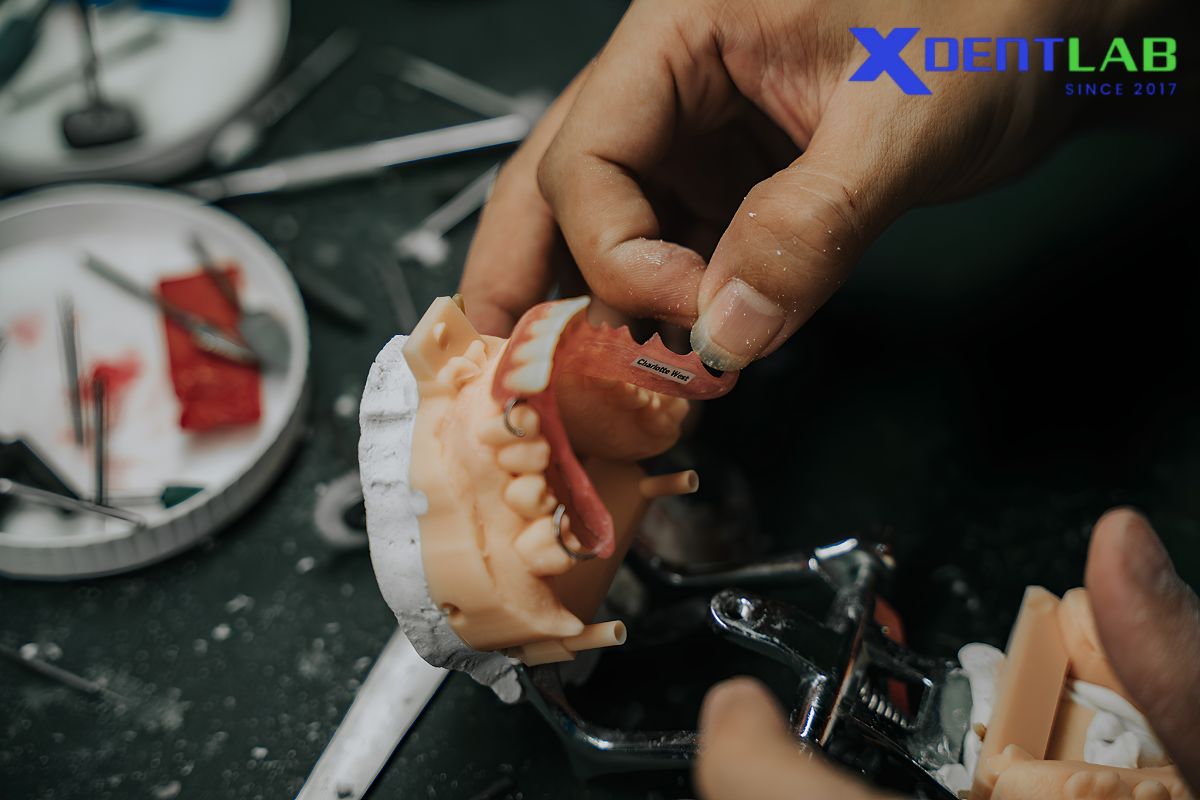
What dental practices need from a lab partner
A reliable lab partner should understand when polyamide is appropriate, how to process it correctly, how to design for esthetics and function, how to manage finishing and polishing requirements, and how to communicate limitations clearly.
Relevance to XDENT LAB
For XDENT LAB, polyamides fit naturally within a broader removable prosthetic expertise that includes material selection, flexible appliance fabrication, and scalable lab-to-lab manufacturing. As a Vietnam dental lab serving international partners, XDENT LAB supports dental practices with skilled technicians, FDA and ISO-aligned quality systems, digital and conventional removable workflows, consistent production standards, and reliable dental lab outsourcing for complex removable cases.
In polyamide prosthetics, success does not come from flexibility alone. It comes from knowing when flexibility helps, when it compromises, and how to manufacture accordingly.
Key takeaways
Polyamides are nylon-based thermoplastic polymers used in dentistry for applications such as flexible removable partial dentures, selected complete dentures, orthodontic appliances, and specialized prosthetic solutions. Their main strengths include flexibility, biocompatibility, lightweight comfort, fracture resistance, and improved esthetics in metal-free designs.
At the same time, they present important limitations related to polishing, discoloration, repair complexity, and case selection. As material science and digital workflows continue to advance, polyamides are likely to remain an important part of removable prosthetic dentistry, especially in cases where comfort, aesthetics, and material tolerance are high priorities.
References
- Polyamide as a denture base material: a literature review - PMC
- Polyamides in dentistry - a review (ResearchGate)
- Polyamides in dentistry (IJSS)
- Polyamide resins in removable dentures - Dental News
About XDENT LAB:
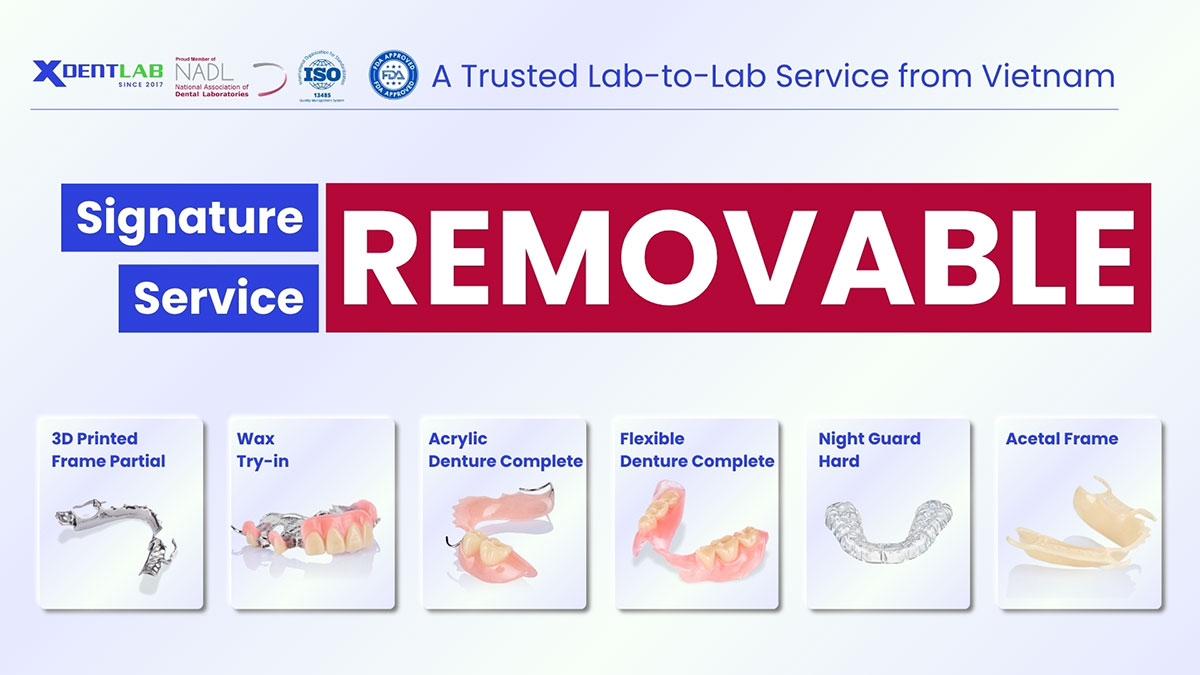
We are experts in Lab-to-Lab Full Service from Vietnam, with the signature services of Removable, meet U.S. market standards - approved FDA & ISO. Founded in 2017, from local root to global reach, we scale with 2 Factories with over 100+ employees.
Our 5 Commitments Built on “Trusted. Commitment. Quality”
- Commit to 100% FDA-Approved Materials
- Commit to Large-Scale Manufacturing, high volume, remake rate < 1%.
- Commit to 2~3 days in lab (*digital file)
- Commit to Cost Savings 30%
- Commit to Best Price
XDENT LAB | A Trusted Lab-to-Lab Service from Vietnam
Share this post:
Related Posts
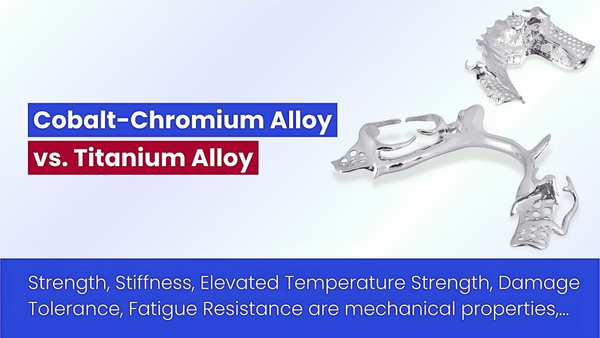
Learn the key differences between titanium and cobalt-chromium alloys used in removable partial denture frameworks, from mechanical properties to production requirements.
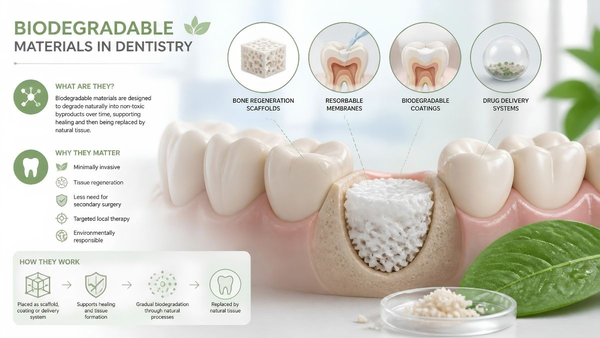
Explore biodegradable materials in dentistry, including their applications, benefits, limitations, and future potential in regenerative and sustainable dental care.
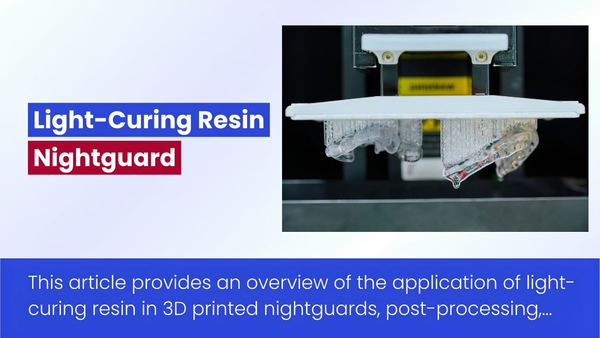
Explore how light-curing resin is being applied in 3D printed nightguards, from flexible materials and digital workflows to post-processing techniques that improve accuracy, durability, and overall pe...

