
Explore high‑viscosity glass ionomer cements (HVGICs): composition, setting kinetics, mechanical strength, fluoride release, ART protocols, pediatric and geriatric uses, antibacterial innovations, and comparative performance vs GICs, amalgam, and composites - Optimized for predictable, cost‑effective care with FDA/ISO‑aligned quality from XDENT LAB.
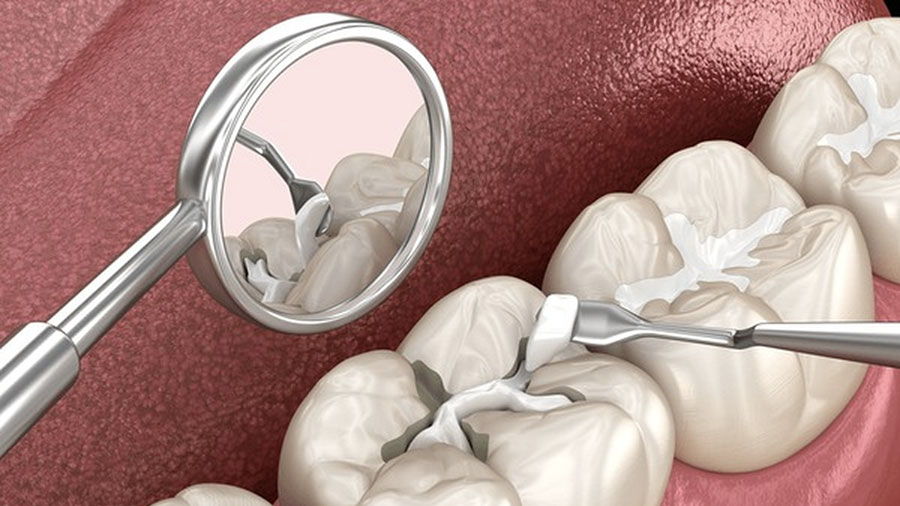
Table of contents [Show]
- Overview
- Historical Evolution
- Composition & Chemistry
- Physical & Mechanical Properties
- Setting Characteristics
- Clinical Applications
- Advantages of HVGICs
- Clinical Performance
- Antibacterial Modifications
- Clinical Technique
- Comparative Analysis
- Special Formulations
- Quality Standards
- Limitations and Challenges
- Future Directions
- Public Health Impact
- Clinical Decision Making
- Key Takeaways & Chairside Tips
- XDENT LAB Perspective (Quality & Consistency)
Overview
HVGICs evolved to support Atraumatic Restorative Treatment (ART) and minimally invasive dentistry by strengthening conventional GICs while preserving fluoride release, chemical adhesion, and biocompatibility. Their hallmark is a higher powder-to-liquid ratio with optimized glass and acid composition, yielding faster set, greater early strength, and improved wear resistance. In the right indications - Particularly small posterior lesions, ART in community settings, pediatric restorative care, and cervical lesions - HVGICs offer a cost-effective, durable solution with reduced technique sensitivity.
Historical Evolution
A brief development arc helps explain why HVGICs behave differently at the chairside.
Development Timeline
1990s: Initial HVGICs introduced for ART.
Iterations focused on hand-mixing feasibility and powder–liquid optimization.
Progressive enhancements to mechanical properties and early water resistance.
Alignment with minimally invasive dentistry and community-health delivery.
Endorsed in public health guidance (WHO/FDI) for field-friendly restorative care.
ART Association
Designed for use with hand instruments and limited infrastructure.
Emphasis on self-adhesion, fluoride release, and short working-to-setting windows.
Targeted at school-based and community programs with predictable outcomes.
Composition & Chemistry
The high-viscosity profile stems from engineered powder and liquid characteristics.
Powder Modifications
High powder-to-liquid ratio (approx. 3.6:1 to 6.8:1).
Optimized particle size distribution for packability and strength.
Enhanced glass reactivity with refined fluoroaluminosilicate chemistry.
Radiopacity via strontium/barium; elevated fluoride content for sustained release.
Particle morphology tailored for mechanical reinforcement.
Glass Formulation
Calcium fluoroaluminosilicate base with tuned SiO2:Al2O3 ratios.
Increased calcium and fluoride for robust acid–base cross-linking and release.
Radiopaque glass for diagnostic clarity and follow-up.
Liquid Components
Higher-concentration polyacrylic acid with optimized molecular weight.
Lower water content to support rapid gelation and early strength.
Tartaric acid (≈5–10%) for improved working/set balance.
Copolymers (e.g., acrylic/maleic) to modulate viscosity and reactivity.
Physical & Mechanical Properties
HVGICs sit at the upper strength end of the GIC spectrum, with clinically relevant wear resistance.
Enhanced Strength Characteristics
Compressive strength: 150–250 MPa.
Flexural strength: 15–35 MPa.
Tensile strength: 10–20 MPa.
Improved fracture toughness and wear resistance vs conventional GICs.
Clinically meaningful gains for small posterior and cervical indications.
Hardness Properties
Knoop hardness: 48–72 KHN.
Better indentation resistance and surface durability.
Supports improved longevity in occlusal contact for limited-load scenarios.
Comparative Positioning
30–50% stronger than conventional GICs; typically below amalgam/composite.
Approaches amalgam in select properties but not a substitute in high-load cases.
Suitable for load-bearing only in small, well-selected restorations.
Setting Characteristics
Formulation and powder–liquid ratio deliver faster gelation and earlier water resistance.
Reaction Kinetics
Working time: about 1.5–2 minutes.
Initial set: about 3–5 minutes.
Accelerated early strength and improved early water resistance.
Faster maturation trajectory than conventional GICs.
Maturation Process
Rapid gelation forms a calcium polyacrylate matrix.
Progressive aluminum cross-linking elevates strength over days to weeks.
Continued hardening and wear resistance with adequate protection and hydration control.
Clinical Applications
HVGICs align with minimally invasive philosophies and public health delivery models.
Atraumatic Restorative Treatment (ART)
Hand-mixing and instrument-friendly manipulation.
Adequate strength and chemical adhesion without complex bonding steps.
Fluoride release supports caries control in high-risk communities.
Proven in school and outreach settings with constrained resources.
Load-Bearing Restorations
Acceptable for small posterior occlusal lesions and single-surface cavities.
Not equivalent to amalgam or composite for extensive load-bearing.
Reliable interim or definitive solution in select occlusal contexts.
Pediatric Dentistry
Efficient placement supports behavior management.
Stronger than conventional GICs for primary teeth.
Ideal for community and school-based programs.
Geriatric Dentistry
Effective for root caries and cervical restorations.
Chemical adhesion benefits sclerotic dentin.
Simplified workflow and reduced sensitivity to technique.
Advantages of HVGICs
Clinically relevant improvements reduce operational friction and enhance outcomes.
Mechanical Improvements
Higher compressive and flexural strength; better wear resistance.
Reduced brittleness; improved fracture toughness.
Better clinical longevity than conventional GICs in indicated uses.
Clinical Handling Benefits
Packable consistency for controlled placement.
Faster set shortens chair time and reduces contamination risk.
Better adaptation and improved marginal seal with proper conditioning.
Lower moisture sensitivity than conventional GICs during early set.
Biological Properties
Sustained fluoride release with recharge potential.
Chemical bonding to enamel/dentin; minimal pulpal irritation.
Intrinsic antimicrobial effects; compatible with added antibacterial agents.
Clinical Performance
Evidence supports HVGICs as efficient, cost-effective materials within defined indications.
Systematic Review Highlights
Comparable survival to composites in select ART and primary-tooth contexts.
Lower failure rates than conventional GICs; strong public health value.
Cost-effectiveness from reduced equipment and shorter appointments.
Long-Term Outcomes
3–6 year survival: approximately 70–90% in small cavities and primary teeth.
Good retention in cervical lesions with appropriate isolation and protection.
Typical failure modes: gross fracture in oversized restorations, marginal wear, partial loss.
Antibacterial Modifications
Material innovation targets caries control and biofilm management.
Recent Directions
Organic antibacterial modifications to address residual caries in ART.
Improved biofilm inhibition and caries-preventive potential.
Agents and Additives
Chlorhexidine, silver nanoparticles, quaternary ammonium compounds.
Natural antimicrobials and bioactive glass to enhance remineralization and defense.
Clinical Technique
Standardized protocols increase predictability and reduce remakes or early failures.
ART Procedure
Remove caries with hand instruments.
Clean cavity with moistened cotton pellets.
Condition with polyacrylic acid (per protocol).
Hand-mix HVGIC to recommended consistency.
Place with finger pressure to enhance adaptation; protect surface promptly.
Conventional Placement
Minimal cavity prep with rounded internal angles; preserve tooth structure.
Optional conditioning for improved bonding.
Ensure isolation; use capsulated or hand-mixed material.
Incremental placement as indicated; avoid dehydration during early set.
Finishing & Protection
Remove excess; perform occlusal adjustment carefully.
Apply protective coating/varnish to prevent early moisture exchange.
Delay definitive finishing ideally 24 hours if conditions allow; schedule follow-up.
Comparative Analysis
Versus Conventional GICs
30–50% higher strength, faster set, better wear resistance.
Improved handling and early durability; superior clinical performance in ART.
Versus Amalgam
Lower ultimate strength and wear, but adhesive and fluoride-releasing.
No mercury; suitable for small, well-selected posterior cases.
Versus Composite Resins
Simpler, less technique-sensitive placement; no bonding system required.
Lower aesthetics and strength; excels in community and minimally invasive contexts.
Special Formulations
HVGICs continue to diversify for speed, strength, and therapeutic benefits.
Reinforced HVGICs
Metal- and fiber-reinforced types; nano-particle and bioactive glass modifications.
Improved powder technology for enhanced strength and wear.
Fast-Setting Variants
Tailored powders and liquids shorten working/set times.
Higher early strength and moisture resistance for field use.
Quality Standards
Standard compliance underpins predictable clinical and lab workflows.

Material Specifications
ISO 9917-1 for water-based cements; ART-focused criteria in public health guidance.
Mechanical thresholds and fluoride release performance.
Clear labeling for mixing ratios and working/set times.
Clinical Guidelines
Case selection grounded in occlusal load and cavity size.
Training for ART protocols; consistent isolation and surface protection.
Documentation and recall for margin evaluation and maintenance.
Limitations and Challenges
Strategic restraint prevents misapplication and early failure.
Material Limitations
Still weaker than amalgam/composite; not for large multi-surface posterior restorations.
Aesthetic limitations compared to resin composites.
Susceptible to moisture disruption during early setting if unprotected.
Clinical Constraints
Not ideal in high-stress occlusal areas or deep subgingival margins.
Technique-dependent outcomes in poor isolation conditions.
Requires case selection discipline and ART-specific training.
Future Directions
Research aims to bridge the gap with resin materials while preserving bioactivity.
Material Development
Increased strength and wear resistance.
Enhanced antibacterial and bioactive properties.
Smart, ion-responsive release and improved color stability.
Clinical Applications
Integration with silver diamine fluoride protocols.
Expanded preventive programs and Hall technique adjacencies.
Broader role in global health and minimally invasive care models.
Public Health Impact
HVGICs enable high-volume, quality care with minimal infrastructure.
Deployed in WHO-aligned school and community programs.
Reduced equipment and operatory demands lower total care costs.
Shorter appointments improve throughput and access.
Clinical Decision Making
Match indication to material strengths for durable outcomes.
Indication Criteria
Small to medium cavities, especially in primary teeth.
ART procedures in field settings.
Cervical lesions and preventive restorations.
Contraindications
Large multi-surface cavities under heavy load.
High-aesthetic anterior zones requiring superior color/stability.
Deep subgingival margins with poor isolation potential.
Key Takeaways & Chairside Tips
Use HVGICs for ART, pediatric, and cervical restorations where chemical adhesion and fluoride release provide a clear benefit.
Protect the surface immediately after placement to control early moisture exchange.
Favor small, single-surface posterior restorations; avoid overstretching into high-load, multi-surface cases.
Plan recalls to monitor margins and wear; reapply surface sealants if indicated.
XDENT LAB Perspective (Quality & Consistency)
For practices working with XDENT LAB’s lab-to-lab services, consistent chairside protocols directly support predictable indirect outcomes. When HVGICs are used for cores, cervical bases, or ART-related temporization, standardized isolation, mixing, protection, and documentation help maintain FDA/ISO-aligned quality across sites. This continuity, from conservative preparation to restoration - Strengthens product reliability, reduces remakes, and supports scalable, evidence-based care across multi-location practices.
About XDENT LAB:
We are experts in Lab-to-Lab Full Service from Vietnam, with the signature services of Removable, meet U.S. market standards, FDA-registered, ISO 13485-certified. Founded in 2017, from local root to global reach, we scale with 2 Factories with over 100+ employees.
Our Commitments Built on “Trusted. Commitment. Quality”
- Commit to Large-Scale Manufacturing, high volume, remake rate < 1%.
- Commit to 5-Year Warranty
- Commit to Competitive Price
XDENT LAB | A Trusted Lab-to-Lab Service from Vietnam
Share this post:
Related Posts
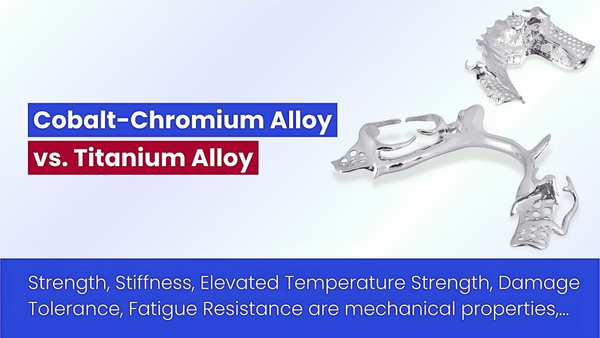
Learn the key differences between titanium and cobalt-chromium alloys used in removable partial denture frameworks, from mechanical properties to production requirements.
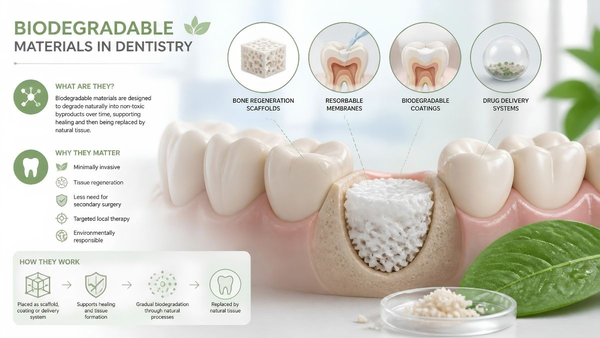
Explore biodegradable materials in dentistry, including their applications, benefits, limitations, and future potential in regenerative and sustainable dental care.
Learn how polyamide dental materials support flexible dentures and removable prosthetics through biocompatibility, aesthetics, comfort, and lightweight performance.

