
Discover removable dentistry methods and applications in dental labs, from complete dentures to partials, overdentures, and digital production workflows.
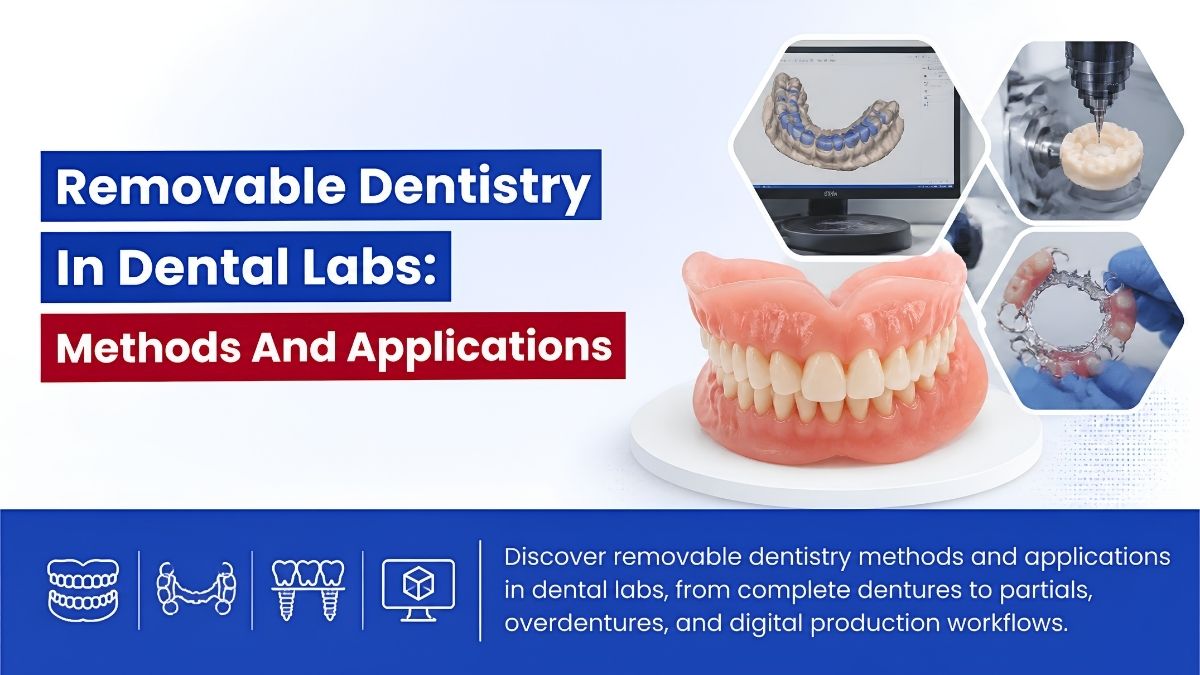
Table of contents [Show]
- What Is removable dentistry?
- Main types of removable dental prostheses
- Materials used in removable dentistry
- Technologies shaping removable dentistry
- Clinical applications of removable dentistry
- Benefits of removable dentistry
- Challenges and limitations in removable dentistry
- Future trends in removable dentistry
- Why removable dentistry matters in dental lab outsourcing
- Key takeaways
Removable dentistry remains one of the most important areas of restorative dental care because it provides practical, scalable, and cost-conscious solutions for tooth replacement and oral rehabilitation. It covers prosthetic devices that patients can insert and remove themselves, including complete dentures, partial dentures, overdentures, temporary prostheses, and selected orthodontic appliances. While removable dentistry has a long clinical history, it is also evolving quickly through digital workflows, improved materials, and more precise laboratory production methods.
For dental practices that need dependable quality, consistency, and turnaround from their laboratory partners, removable dentistry is not just about making dentures. It is about restoring oral function, aesthetics, phonetics, comfort, and long-term patient confidence through a coordinated clinic-lab workflow. This article explains what removable dentistry is, its main treatment categories, the materials and technologies involved, clinical applications, benefits, limitations, future developments, and why it matters in dental lab outsourcing.
What Is removable dentistry?
Removable dentistry refers to the branch of dentistry focused on designing, fabricating, and maintaining removable oral prostheses and appliances.
Core definition
These prosthetic solutions are made to replace missing teeth, restore oral function, support facial aesthetics, or guide tooth movement while remaining removable by the patient.
In practical terms, removable dentistry includes:
- Complete dentures
- Partial dentures
- Implant-supported overdentures
- Immediate dentures
- Temporary removable prostheses
- Retainers and other removable orthodontic appliances
Why removable dentistry matters
Removable prosthetics remain essential because not every patient is a candidate for fixed restorations or implant-based treatment. Economic factors, anatomical limitations, healing phases, systemic conditions, and patient preference all influence treatment selection.
This makes removable dentistry highly relevant across:
- General dentistry
- Prosthodontics
- Implant dentistry
- Geriatric dentistry
- Transitional treatment planning
Main types of removable dental prostheses
Removable dentistry includes several prosthetic categories, each designed for different clinical needs.
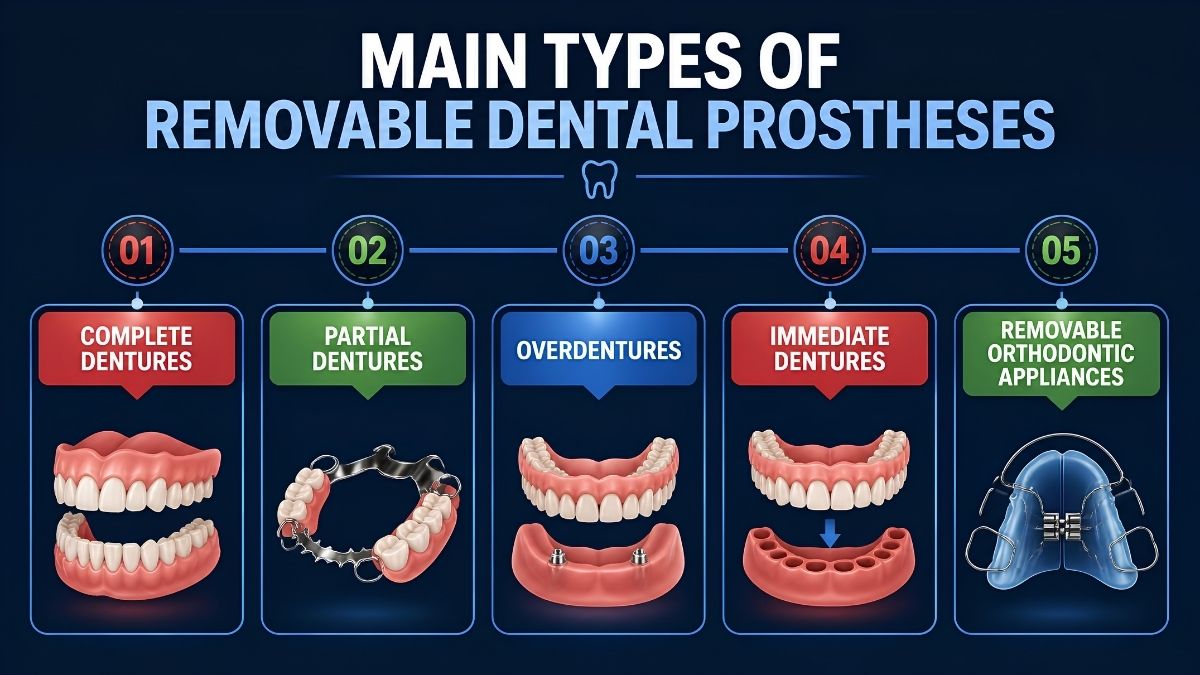
Complete dentures
Complete dentures replace all missing teeth in the upper arch, lower arch, or both.
Main indications
They are commonly used for:
- Fully edentulous patients
- Patients seeking non-surgical full-arch solutions
- Cases where implant therapy is not feasible or not selected
Clinical goals
A complete denture should support:
- Mastication
- Speech
- Facial contour
- Lip support
- Aesthetic tooth display
- Basic comfort and retention
Partial dentures
Partial dentures replace one or more missing teeth while preserving the remaining natural dentition.
Main types
Partial dentures may include:
- Acrylic partial dentures
- Cast metal partial dentures
- Flexible partial dentures
Clinical value
They help:
- Restore function and appearance
- Prevent shifting of adjacent teeth
- Maintain arch integrity
- Offer a more conservative alternative to fixed solutions in selected cases
Overdentures
Overdentures are removable prostheses supported by retained roots, natural teeth, or dental implants.
Why overdentures are important
Compared with conventional dentures, overdentures may provide:
- Better retention
- Improved stability
- Increased chewing efficiency
- Greater patient confidence
Implant-supported overdentures are especially relevant in modern removable prosthodontics because they bridge the gap between conventional removable appliances and fixed implant rehabilitation.
Immediate dentures
Immediate dentures are delivered at the time of extraction so the patient is not left without teeth during healing.
Main benefits
They help support:
- Immediate aesthetics
- Transitional function
- Psychological comfort during treatment phases
These prostheses often require later adjustment, relining, or replacement as tissues heal.
Removable orthodontic appliances
Removable dentistry may also include appliances such as retainers, aligner-related retainers, and minor movement devices.
These appliances serve different functions than dentures, but they still fall within the wider removable category because they are patient-removable and require precise laboratory fabrication.
Materials used in removable dentistry
Materials determine much of the prosthesis performance, including fit, fracture resistance, aesthetics, flexibility, and long-term maintenance needs.
Acrylic resin
Acrylic resin remains one of the most widely used materials in removable prosthetics.
Why acrylic is common
It is valued for:
- Cost-effectiveness
- Ease of adjustment
- Repairability
- Familiar clinical handling
- Suitability for denture bases and provisional appliances
Metal frameworks are commonly used in cast partial dentures, especially cobalt-chromium systems.
Their role in removable prosthetics
Metal frameworks offer:
- High strength
- Good rigidity
- Reduced bulk in some designs
- Long-term structural support
In selected applications, titanium may also be considered for specific framework needs.
Flexible resins
Flexible materials are used in selected partial denture applications where comfort and clasp esthetics are priorities.
Important characteristics
Flexible prosthetic materials may offer:
- Better comfort in some cases
- Improved aesthetic appearance of clasps
- Adaptability for selected patient preferences
However, they also require careful case selection and design planning.
Denture teeth materials
Denture teeth may be made from acrylic, composite, or porcelain depending on the clinical objective and laboratory protocol.
Key selection criteria
The choice depends on factors such as:
- Wear resistance
- Aesthetics
- Bonding behavior
- Opposing dentition
- Occlusal requirements
Technologies shaping removable dentistry
Removable dentistry is no longer only analog. It increasingly relies on digital technologies that improve standardization, communication, and production efficiency.
Digital impressions
Digital impressions can be captured directly through intraoral scanning or indirectly by scanning conventional impressions and casts.
Why they matter
They support:
- Faster data transfer
- Better case documentation
- Improved communication with the lab
- Integration into digital design workflows
Edentulous scanning can still be clinically demanding, but digital capture continues to improve.
CAD/CAM workflows
CAD/CAM plays a major role in the design and manufacturing of digital removable prostheses.
Main advantages
CAD/CAM enables:
- More repeatable design processes
- Better prosthetic standardization
- Easier file storage and reproduction
- More predictable remakes and modifications
3D printing
3D printing is increasingly used for removable prosthetic workflows, especially for try-ins, denture bases, prototypes, record bases, and selected definitive components.
What 3D printing improves
It helps laboratories with:
- Rapid prototyping
- Workflow scalability
- Reduced turnaround in certain cases
- Flexible production planning
Milling
Milling remains highly important in removable dentistry, especially for pre-polymerized PMMA denture systems.
Why milling is valued
It often provides:
- Material consistency
- Smooth surface quality
- Controlled production outcomes
- Reduced polymerization-related distortion compared with some conventional methods
Clinical applications of removable dentistry
Removable dentistry serves a wide range of restorative and transitional needs across different patient groups.
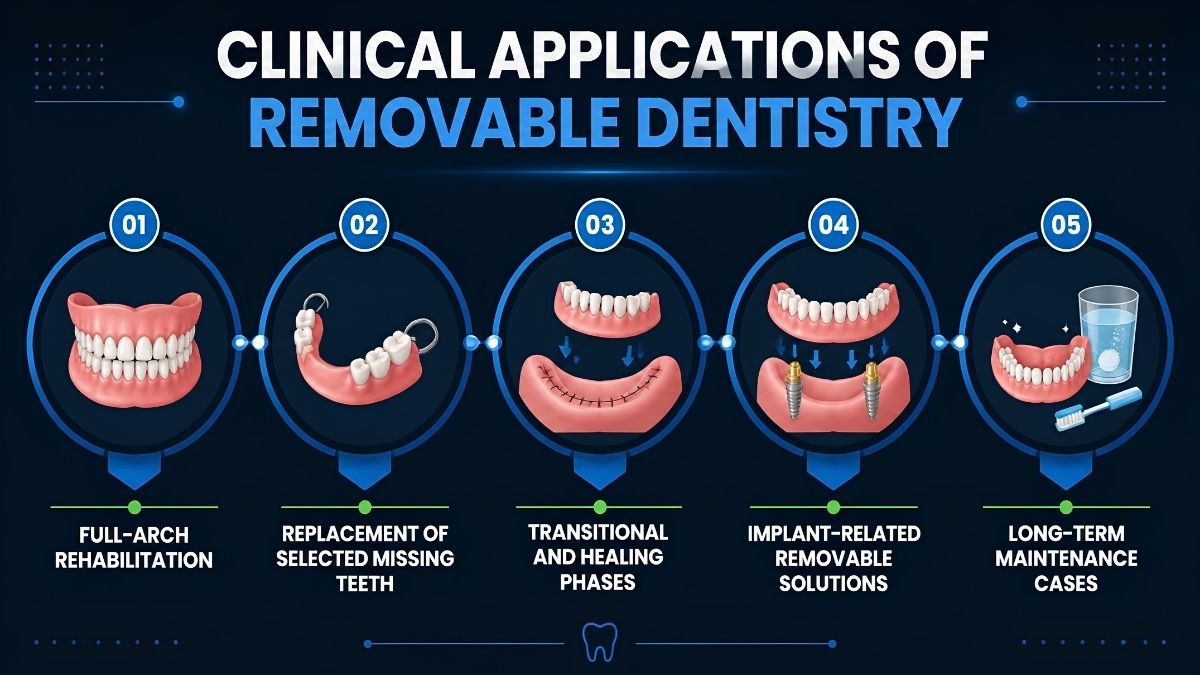
Full-arch rehabilitation
Complete dentures and overdentures are central tools for restoring edentulous arches.
Replacement of selected missing teeth
Partial dentures offer a practical treatment option when one or more teeth are missing and fixed treatment is not chosen.
Transitional and healing phases
Immediate dentures, flippers, and provisional removable prostheses support patients during extractions, implant treatment, and staged rehabilitation.
Implant-retained overdentures improve retention and function while remaining removable for hygiene and maintenance.
Long-term maintenance cases
Removable prosthetics are often easier to adjust, reline, repair, or replace as the patient’s tissues and needs change over time.
Benefits of removable dentistry
Removable dentistry continues to be widely used because it offers significant clinical and practical advantages.
Cost-efficiency
In many cases, removable prostheses are more affordable than extensive fixed or implant-based treatment.
Non-surgical accessibility
They provide treatment options for patients who are not ideal candidates for surgery or who prefer less invasive solutions.
Adaptability over time
Removable prostheses can often be relined, repaired, adjusted, or modified as oral conditions change.
Broad indication range
They are suitable for complete edentulism, partial tooth loss, transitional treatment, and certain orthodontic retention needs.
Laboratory scalability
For dental laboratories, removable dentistry supports repeatable production and a broad service offering across many case types.
Challenges and limitations in removable dentistry
Like every treatment category, removable dentistry has limitations that must be managed carefully.
Fit and retention challenges
Achieving optimal retention and comfort can be complex, especially in severely resorbed ridges or anatomically compromised arches.
Patient adaptation
Some patients need time to adapt to speech, chewing, and the sensation of wearing a removable appliance.
Maintenance demands
Daily hygiene, regular checkups, and occasional relines or repairs are necessary for long-term success.
Material wear and fracture risk
Over time, removable prostheses may wear, stain, fracture, or lose fit, especially under heavy functional demands.
Case selection sensitivity
The success of removable treatment depends heavily on correct case selection, prosthetic design, and communication between clinician and laboratory.
Future trends in removable dentistry
Removable dentistry is evolving through better materials, deeper digital integration, and stronger personalization.
More advanced materials
The industry continues to develop materials with improved flexural strength, aesthetics, color stability, and patient comfort.
Digital denture growth
Digital denture workflows are becoming more important in complete denture and overdenture production.
Stronger integration with implant planning
Removable prosthetics increasingly intersect with digital implant planning, guided surgery, and full-arch prosthetic coordination.
Greater workflow standardization
As more clinics and labs adopt digital systems, removable workflows will become more standardized and easier to scale across locations.
Patient-centered customization
Future removable prosthetics will likely offer more individualized design based on anatomy, function, aesthetic goals, and maintenance needs.
Why removable dentistry matters in dental lab outsourcing
For dental practices, removable dentistry requires a laboratory partner with technical precision, repeatable quality control, material knowledge, and reliable communication.
What practices should look for in an outsourcing partner
An outsourcing dental lab should provide:
- Strong experience in complete and partial removable prosthetics
- Reliable digital and conventional workflows
- Consistent materials and production standards
- Clear communication on case planning
- Capacity for remakes, relines, and adjustments
- Experience with implant-supported removable solutions
Relevance to XDENT LAB
Removable dentistry fits directly with XDENT LAB’s strengths as a Vietnam dental lab focused on lab-to-lab full service. With signature expertise in removable and implant cases, XDENT LAB supports dental practices that need quality consistency, scalable production, and standards aligned with the U.S. market.
Its FDA- and ISO-aligned workflows, certified technicians, advanced manufacturing systems, and multi-factory capacity make XDENT LAB a strong outsourcing partner for practices seeking dependable removable prosthetic solutions. In a field where fit, function, aesthetics, and turnaround all matter, laboratory consistency is not a luxury. It is the whole game.
Key takeaways
Removable dentistry is a foundational area of restorative care that includes complete dentures, partial dentures, overdentures, immediate dentures, and removable orthodontic appliances. It remains essential because it provides versatile, cost-effective, and adaptable solutions for patients across a wide range of clinical conditions.
As digital impressions, CAD/CAM systems, milling, and 3D printing continue to transform prosthetic workflows, removable dentistry is becoming more precise, more reproducible, and easier to integrate into modern clinic-lab collaboration. For dental practices seeking reliable outcomes and outsourcing support, a technically capable partner such as XDENT LAB can help deliver consistency and quality across removable prosthetic cases.
About XDENT LAB:
We are experts in Lab-to-Lab Full Service from Vietnam, with the signature services of Removable, meet U.S. market standards, FDA-registered, ISO 13485-certified. Founded in 2017, from local root to global reach, we scale with 2 Factories with over 100+ employees.
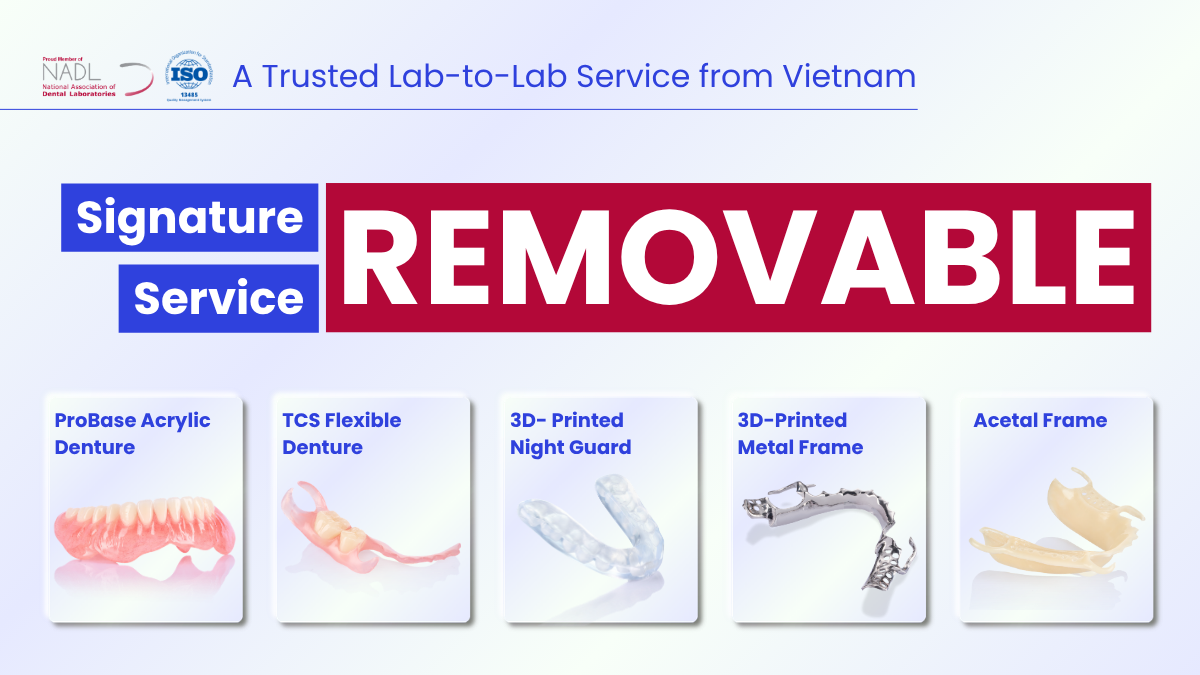
Our Commitments Built on “Trusted. Commitment. Quality”
- Commit to Large-Scale Manufacturing, high volume, remake rate < 1%.
- Commit to 5-Year Warranty
- Commit to Competitive Price
XDENT LAB | A Trusted Lab-to-Lab Service from Vietnam
Share this post:
Related Posts
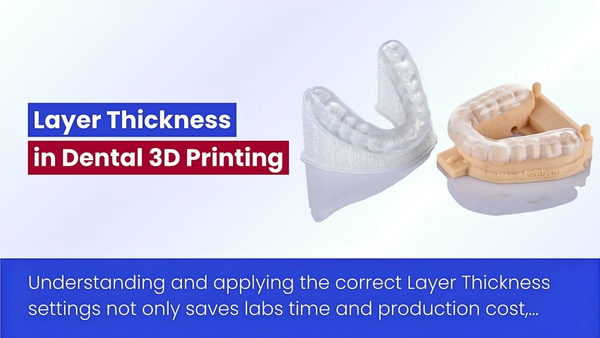
Understanding and applying the correct Layer Thickness settings not only saves labs time and production cost, but also ensures stable output quality for each specific type of dental product.
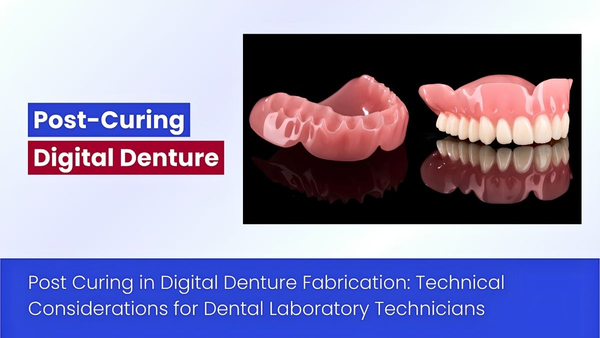
A technical guide to post curing in digital denture fabrication, helping dental lab technicians understand the parameters for consistent product quality.
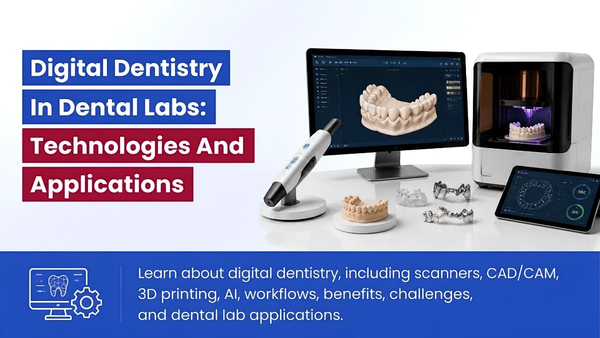
Learn about digital dentistry, including scanners, CAD/CAM, 3D printing, AI, workflows, benefits, challenges, and dental lab applications.

