
From digital scan to final glaze, see how a full zirconia crown or bridge is designed, milled, sintered and finished, and what affects quality along the way.
Table of contents [Show]
Full-contour zirconia has become one of the most requested restorations in everyday dentistry, and for many U.S. labs it is also one of the highest-volume products on the bench. This guide walks through each stage of making a full zirconia crown or bridge, explains why each stage matters, and shows what a dependable production partner does at every step.
What Is A Full Zirconia Crown?
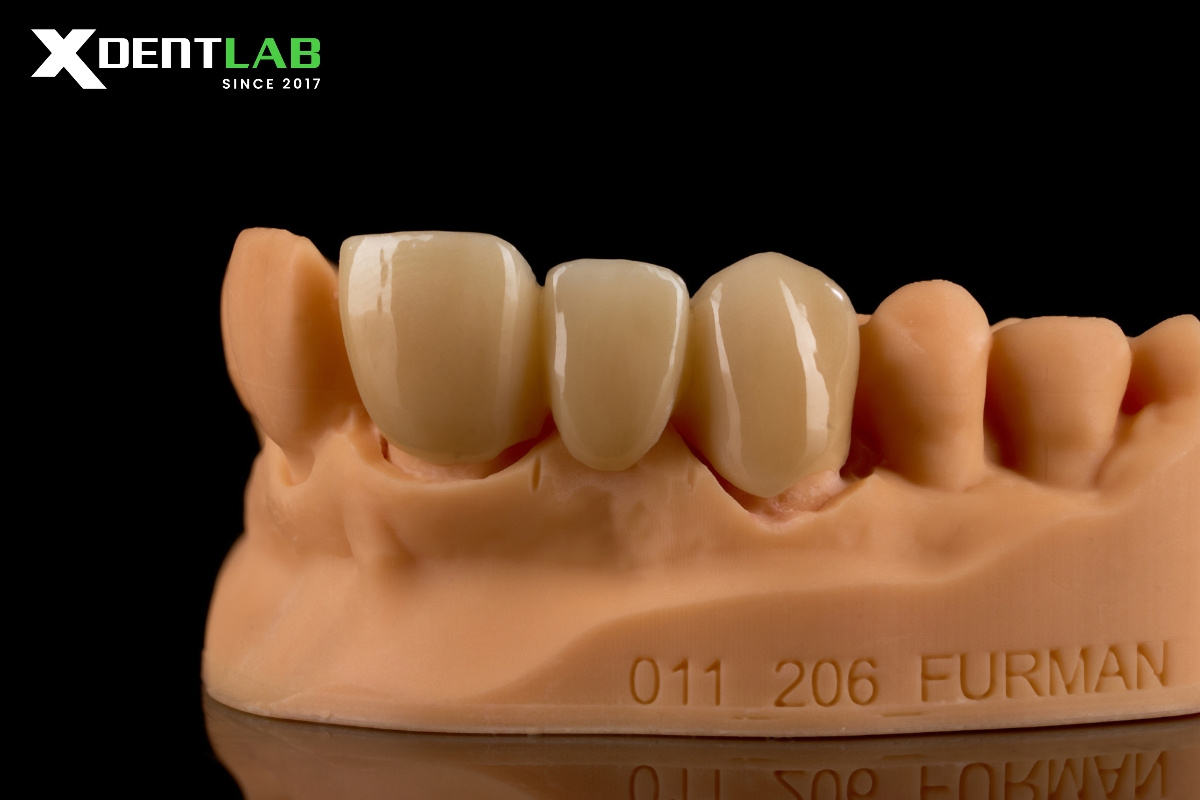
A full zirconia crown is milled from a single block of zirconia in the full shape of the tooth, with no porcelain layered on top. Shade and surface detail come from the zirconia itself, along with staining and glazing. Compared with layered restorations, this means fewer failure points and generally less risk of veneer chipping, which is why many practices use it for posterior crowns and multi-unit bridges.
Why Full Zirconia Earns Its Place
Full zirconia is milled and finished from a single material, without a layer of veneering porcelain. For a lab owner, that brings practical advantages:
- Fewer chipping failures: With no veneering layer to fracture, a classic failure mode of layered restoration is removed.
- Predictable strength: Zirconia handles posterior load well, which is why it is widely used for molars and multi-unit bridges.
- Improved aesthetics: Modern multilayer and higher-translucency blanks look far more natural than earlier generations.
- Efficient production: Fewer manual layering steps tend to produce more consistent results from case to case.
Consistency is the real selling point. A process that is digital, documented and repeatable is easier to scale, and easier to trust.
A Step-by-step Process
1. Case Intake and Review
Every case starts with checking what has been received: the digital scan files or physical impression or model, the prescription, shade information, material choice, and any clinical notes. A good partner reviews the case before design begins and raises questions early, such as unclear margins or insufficient occlusal clearance, rather than discovering a problem after milling.
2. CAD Design
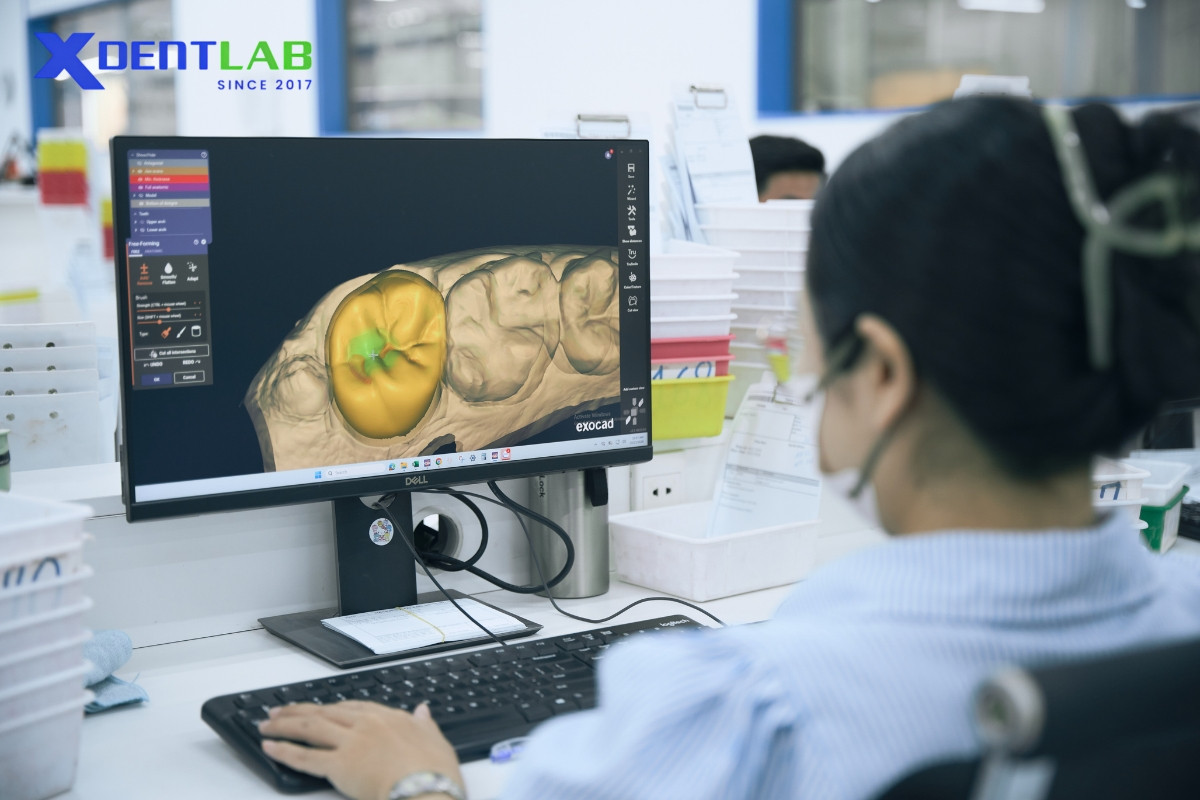
Technicians design the restoration in CAD software. They define the margin line, set contacts and occlusion, shape the anatomy, and check that thickness and connector dimensions meet the material manufacturer’s minimums. For bridges, connector size and span design matter as much as the crown form.
3. Nesting and Milling
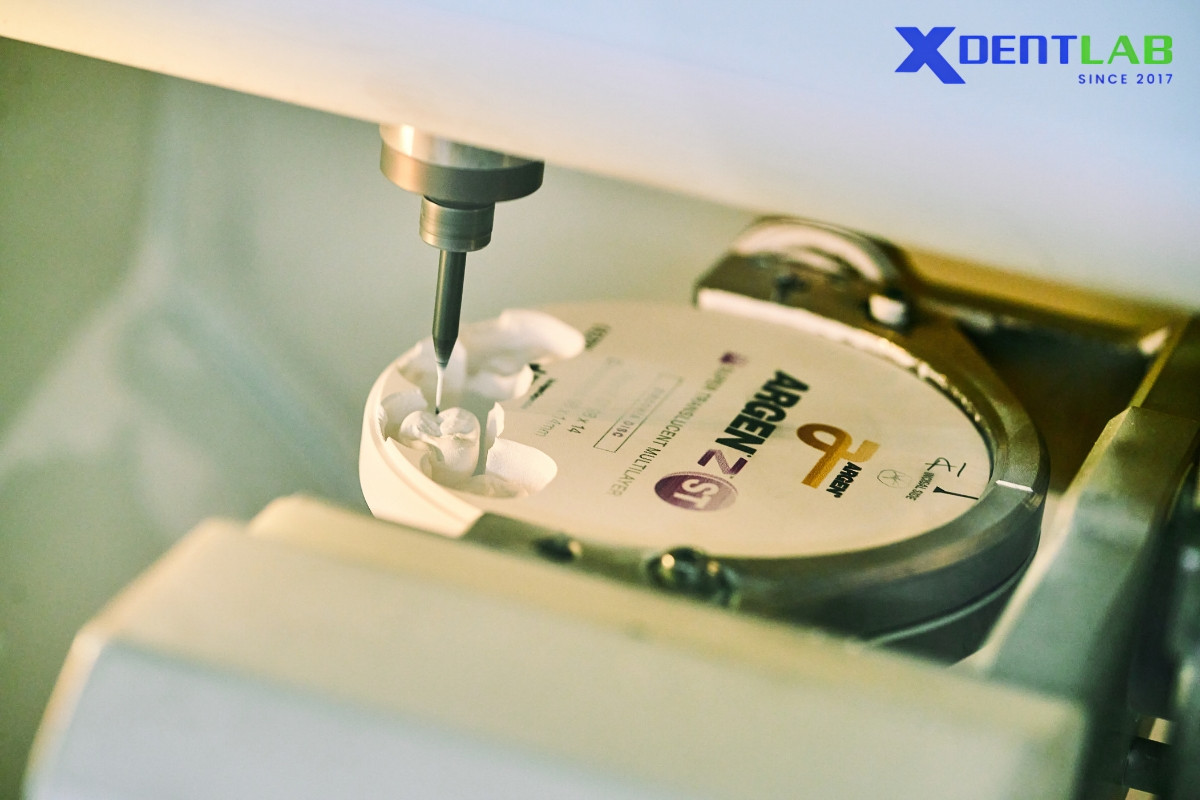
The design is positioned (nested) inside a pre-sintered zirconia disc, enlarged to compensate for shrinkage during sintering, which is roughly a fifth in linear terms, using the factor supplied with each blank. A milling machine then cuts the restoration, with tool wear and machine calibration monitored to keep margins accurate.
4. Sintering
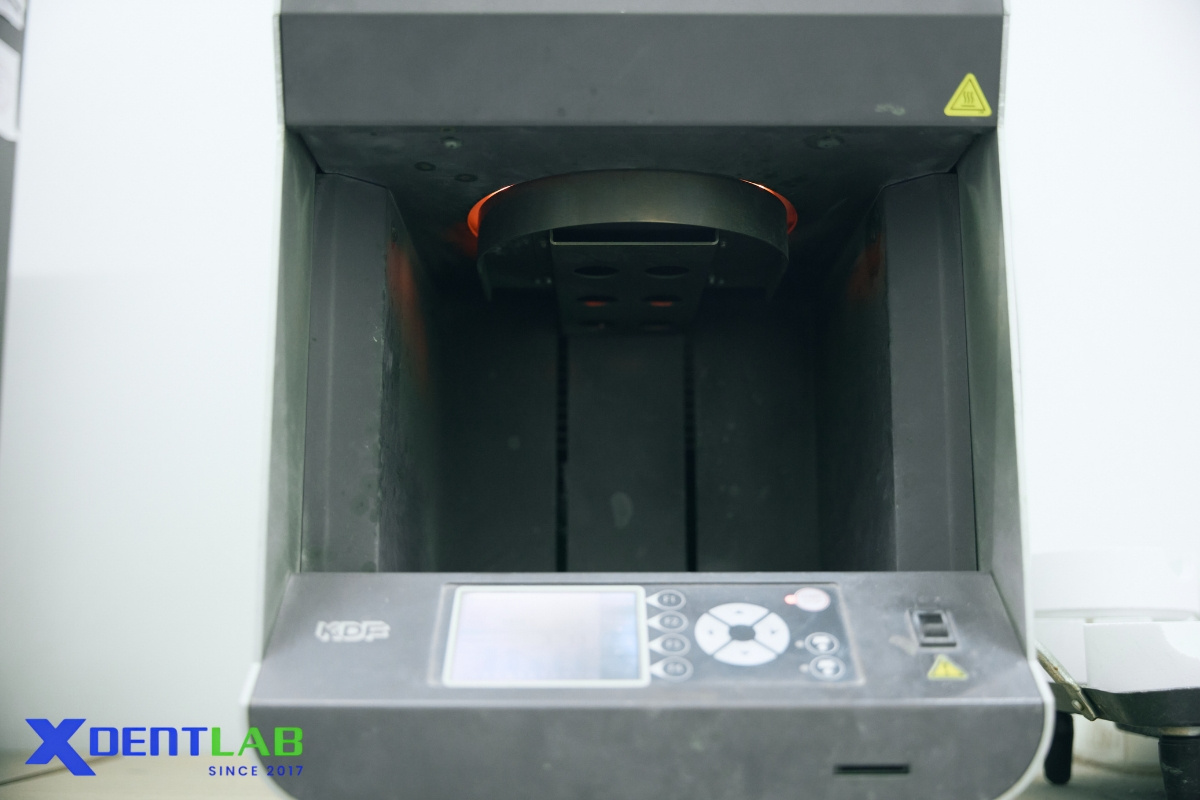
The milled restoration is placed in a high-temperature furnace, where it densifies to its final strength and size. Temperature and time follow the blank manufacturer’s instructions, and furnaces need regular calibration. Shortening a cycle to save time can affect strength and translucency.
5. Staining, Glazing and Finishing
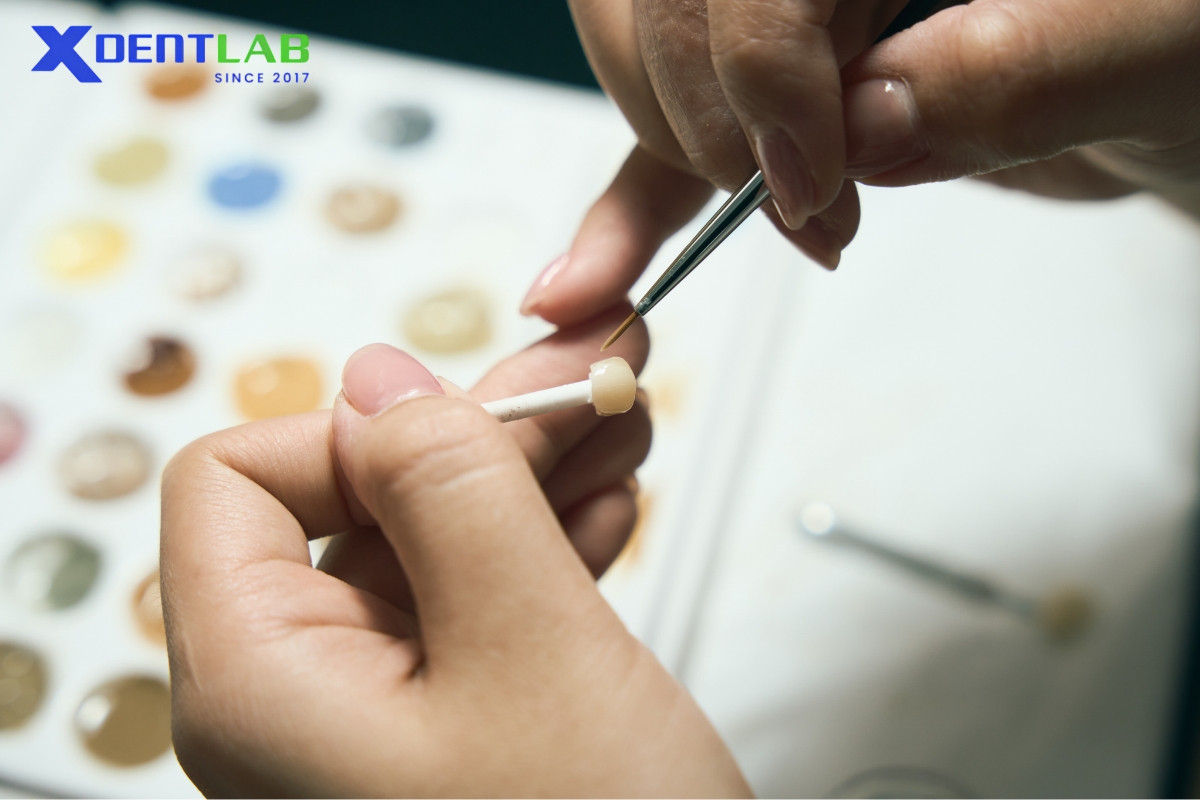
After sintering, the technician adjusts contacts and occlusion on the model, then adds characterization and glaze for the final look. Depending on the material system, shading liquids may also be applied before sintering.
6. Quality Control

Each restoration is checked for fit on the model, margin integrity, contacts, occlusion, surface finish and shade, ideally under magnification.
7. Packaging and Shipping
Restorations are packed to protect margins and surfaces during transit, with case identification so each piece reaches the right dentist and patient.
Why Many U.S. Lab Owners Outsource Zirconia C&B
Lab owners tend to outsource high-volume zirconia for practical reasons: handing volumes peaks without hiring, freeing in-house technicians for complex or high-margin work, and keeping predictable unit costs. Outsourcing works best when the partner is transparent, and it fails when it becomes a black box.
Conclusion
A full zirconia crown looks simple when it arrives in the box, but it is the result of many controlled steps: careful intake, thoughtful design, correct material, accurate milling, proper sintering, and honest quality control. For a U.S. lab owner, the best outsourcing partner is the one who lets you see that process clearly. If it would help to see how XDENT LAB handles any of these stages, you are welcome to contact us.
About XDENT LAB:
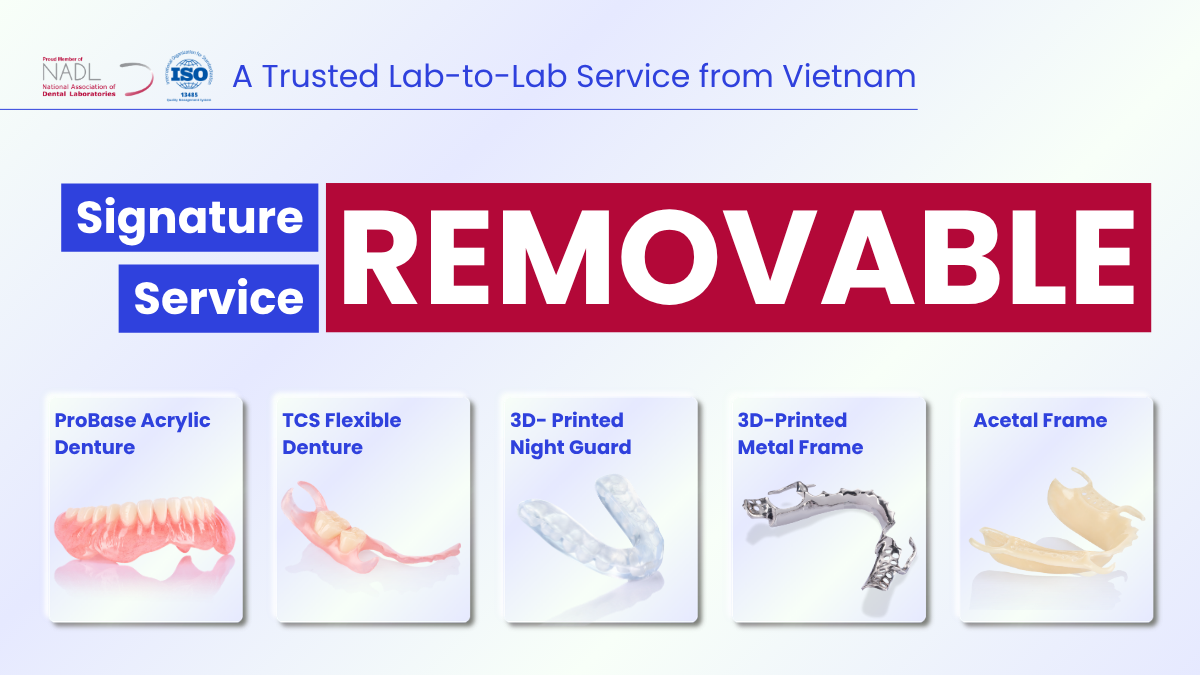
We are experts in Lab-to-Lab Full Service from Vietnam, with the signature services of Removable, meet U.S. market standards, FDA-registered, ISO 13485-certified. Founded in 2017, from local root to global reach, we scale with 2 Factories with over 100+ employees.
Our Commitments Built on “Trusted. Commitment. Quality”
- Commit to Large-Scale Manufacturing, high volume, remake rate < 1%.
- Commit to 5-Year Warranty
- Commit to Competitive Price
XDENT LAB | A Trusted Lab-to-Lab Service from Vietnam
Share this post:
Related Posts
A practical guide to single implant crowns, covering abutments, Ti-bases, crown materials, common complications and ongoing care.
A practical guide to implant crowns, bridges and overdentures, covering materials, component compatibility and laboratory workflow.
Explore the types, materials, retention methods and lab workflows for maxillofacial removable prostheses, with practical guidance for dental practices.

