
Explore lab workflow and quality standards for inlays, onlays, and overlays to improve fit, occlusion, durability, and restorative consistency.
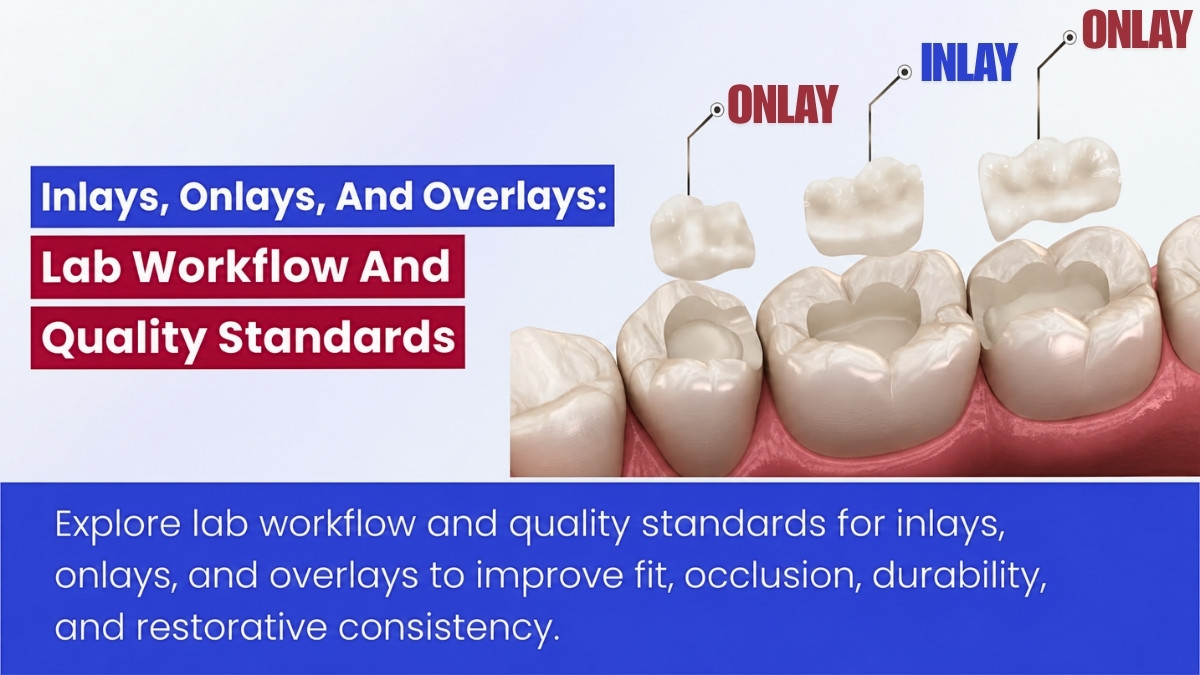
Table of contents [Show]
- What are inlays, onlays, and overlays in prosthodontics?
- Why inlays, onlays, and overlays matter
- Inlay vs onlay vs overlay
- Indications
- Contraindications and caution cases
- Classification by restoration type
- Materials for inlays, onlays, and overlays
- Ceramic inlays, onlays, and overlays
- Indirect composite and hybrid materials
- Gold inlays and onlays
- Preparation principles
- Minimum thickness considerations
- Cusp coverage decision
- Adhesive bonding and cementation
- Deep margin elevation
- Digital workflow for inlays, onlays, and overlays
- Conventional laboratory workflow
- Occlusion in inlays, onlays, and overlays
- Inlays, onlays, overlays vs crowns
- Use in endodontically treated teeth
- Overlays and worn dentition
- Complications
- Laboratory quality control
- Standards and documentation
- Why this matters for XDENT LAB
- Key takeaways
Inlays, onlays, and overlays are conservative indirect restorations used to restore posterior teeth while preserving more natural tooth structure than full-coverage crowns. From a dental laboratory perspective, these restorations are precision-engineered partial coverage prostheses where cavity geometry, cusp coverage, material thickness, bonding protocol, occlusal design, marginal integrity, and CAD/CAM accuracy determine long-term success.
For dental practices looking to ensure quality and consistency, these restorations represent a practical balance between structural protection and biological preservation. They sit between direct fillings and crowns in the restorative spectrum, making them highly relevant in minimally invasive prosthodontics and modern adhesive dentistry.
Inlays, onlays, and overlays are indirect partial coverage restorations used mainly for posterior teeth. They are fabricated outside the mouth, either in a dental laboratory or with chairside CAD/CAM systems, and then bonded or cemented into the prepared tooth.
They fit into the restorative continuum as follows:
Direct filling → Inlay → Onlay → Overlay → CrownBasic definitions
| Restoration | Coverage | Typical clinical role |
|---|---|---|
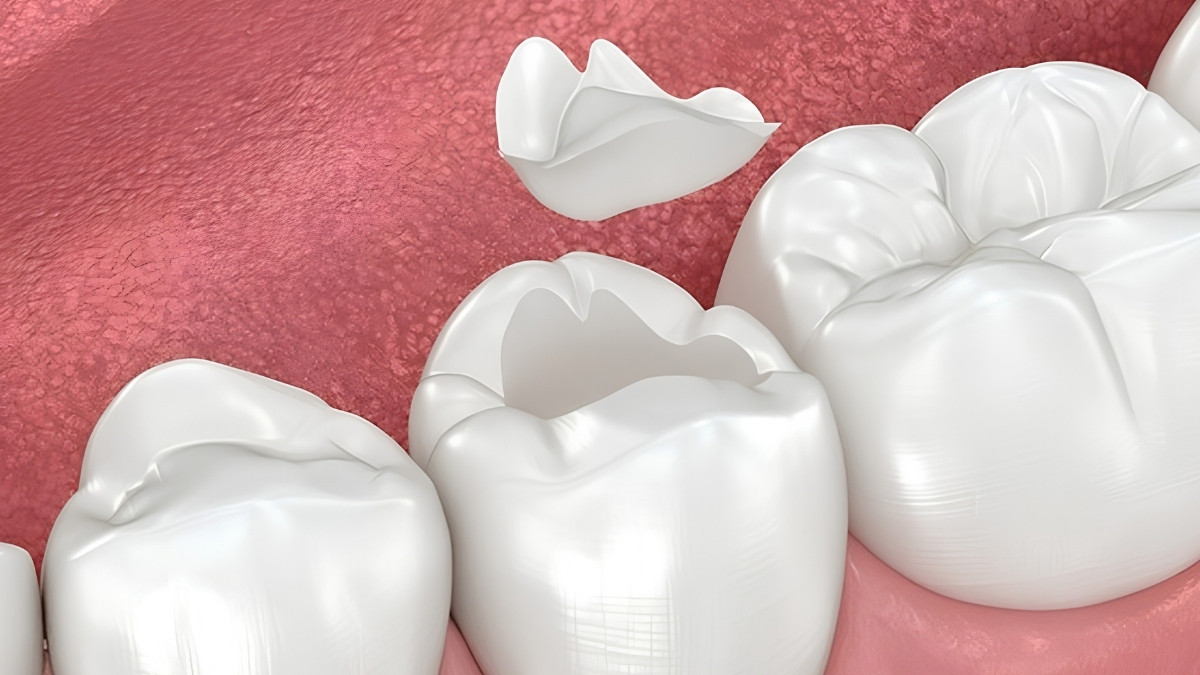
| Inlay | Fits within the cusps, does not cover cusps | Restores intracoronal defects |
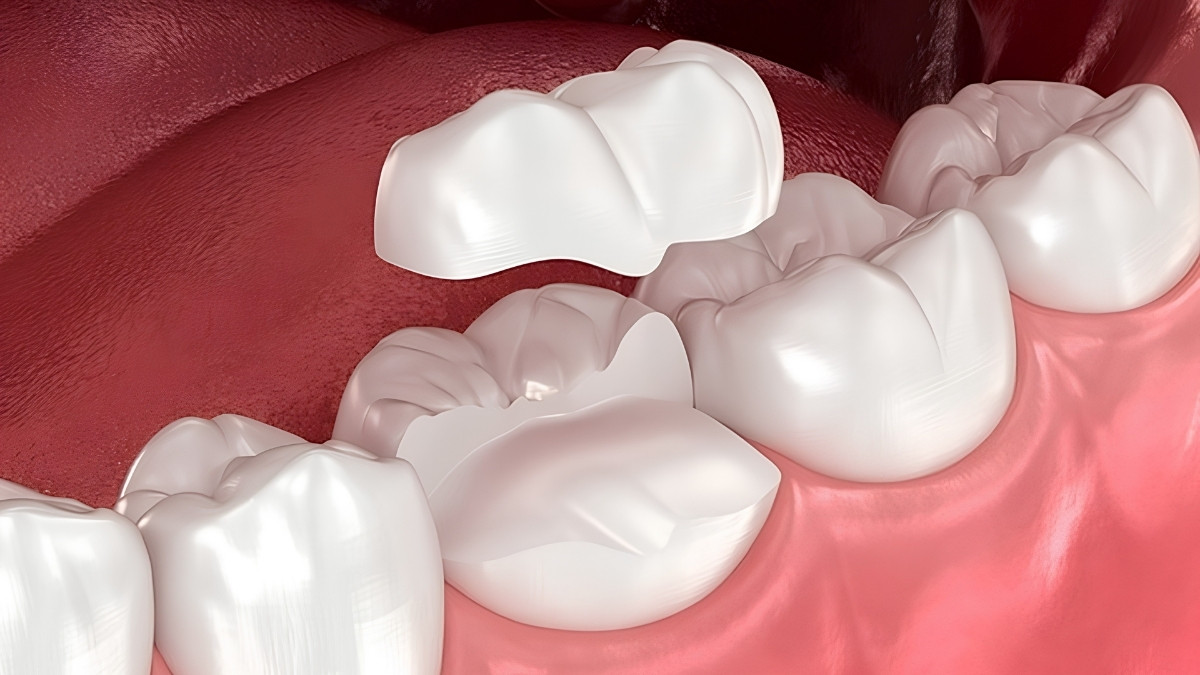
| Onlay | Covers one or more cusps | Restores larger defects and protects weakened cusps |
| Overlay | Covers most or all occlusal cusps, often the full occlusal surface | Restores severely worn or structurally compromised posterior teeth while avoiding full crown when possible |
These restorations are often grouped as partial coverage restorations or indirect partial restorations.
The primary value of these restorations is tooth preservation.
A full crown requires circumferential axial reduction. By contrast, inlays, onlays, and overlays aim to preserve enamel, maintain supragingival margins when possible, and protect weakened cusps only when necessary.
Core benefits
- Preserve more natural tooth structure
- Maintain enamel for adhesive bonding
- Reduce biological cost compared with crowns
- Restore posterior anatomy accurately
- Improve strength compared with large direct fillings
- Provide better contour and contact control than direct restorations
- Protect cusps when needed
- Support minimally invasive dentistry
- Allow excellent esthetics with ceramic or composite materials
- Fit well into digital CAD/CAM workflows
These restorations are a good example of dentistry behaving with restraint, which is a lovely change from the occasional temptation to prepare first and philosophize later.
Although the terms are sometimes used loosely, they describe different levels of coverage.
| Feature | Inlay | Onlay | Overlay |
|---|---|---|---|
| Cusp coverage | No cusp coverage | One or more cusps | Most or all cusps or occlusal surface |
| Tooth preservation | Highest | Moderate to high | Moderate |
| Main purpose | Restore internal defect | Restore and protect weakened cusps | Restore occlusion and worn tooth structure |
| Common use | Moderate posterior cavities | Large MOD cavities, cracked cusps | Severe wear, erosion, cuspal breakdown |
| Retention | Adhesive bonding or cementation | Adhesive bonding or cementation | Adhesive bonding or cementation |
| Alternative to | Direct filling | Crown or large direct restoration | Crown or full occlusal rehabilitation |
| Lab complexity | Moderate | High | High |
Practical interpretation
- Choose an inlay when cusps are strong and only the internal cavity needs restoration.
- Choose an onlay when one or more cusps are weakened and need coverage.
- Choose an overlay when the occlusal table requires broader reconstruction but full crown coverage is not necessary.
A good indirect partial restoration restores only what is missing or structurally compromised. That is conservative dentistry done properly.
Indications
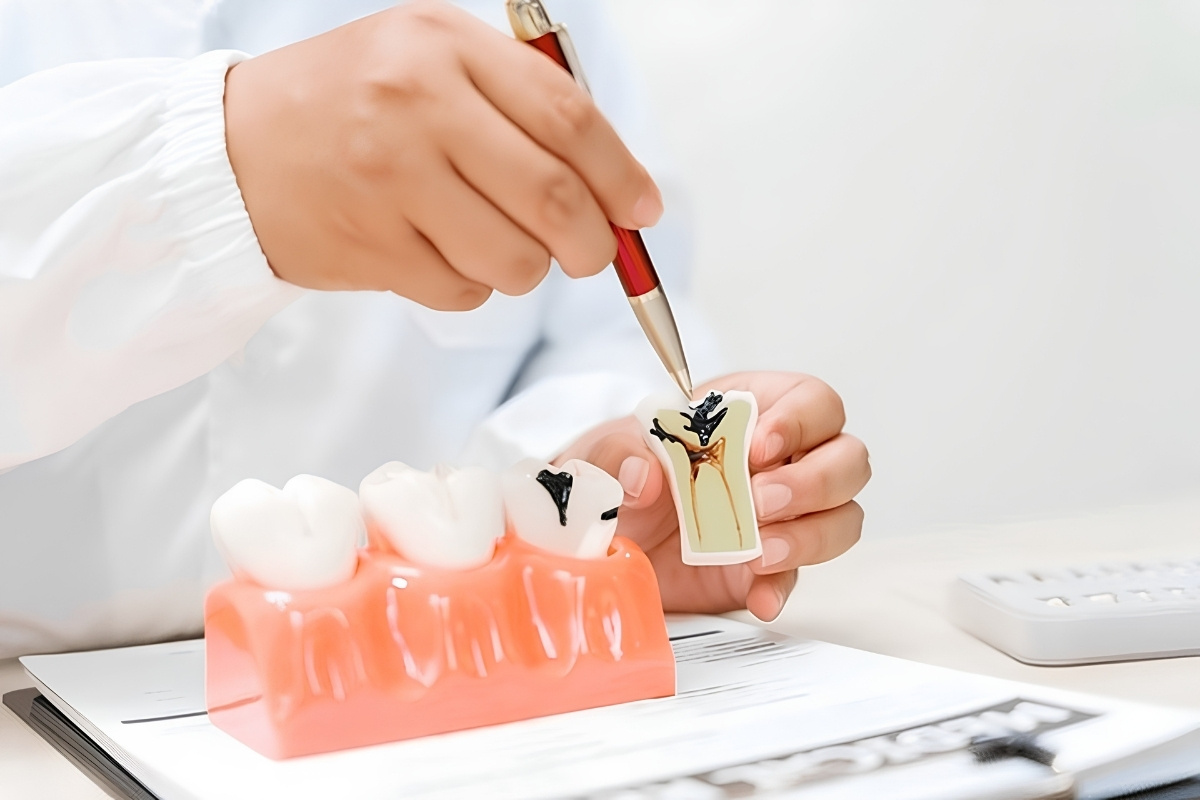
Inlays, onlays, and overlays are indicated when a direct restoration may be insufficient but a full crown may be unnecessarily invasive.
Common indications
| Clinical situation | Suitable restoration | Reason |
|---|---|---|
| Moderate posterior cavity | Inlay | Cusps remain strong |
| Large MOD restoration replacement | Onlay | Cuspal reinforcement may be needed |
| Cracked cusp | Onlay | Cusp coverage helps protect the tooth |
| Endodontically treated posterior tooth with preserved walls | Onlay or overlay | Cuspal coverage and adhesive reinforcement |
| Severe occlusal wear | Overlay | Restores occlusal anatomy and vertical dimension |
| Erosion or attrition rehabilitation | Overlay or occlusal veneer | Conservative additive restoration |
| Defective large amalgam | Onlay | Replaces restoration and protects weakened cusps |
| Need for improved contacts | Inlay or onlay | Better proximal contour than direct restoration |
| Esthetic posterior restoration | Ceramic inlay or onlay | Tooth-colored indirect option |
| Limited need for axial coverage | Onlay or overlay | Avoids full crown preparation |
Indirect partial restorations are increasingly used as conservative options for posterior teeth and worn dentitions, especially when adhesive protocols can preserve more tooth structure.
Contraindications and caution cases
These restorations are not ideal for every tooth or every patient.
Contraindications
- Poor oral hygiene
- High caries activity
- Inability to isolate for bonding
- Very short clinical crown with poor bonding substrate
- Deep subgingival margins that cannot be isolated
- Severe parafunction without protection
- Insufficient enamel or dentin support
- Uncontrolled periodontal disease
- Tooth with poor structural prognosis
- Active cracks extending subgingivally
- Unrestorable tooth
- Inability to attend maintenance visits
Caution cases
| Condition | Risk |
|---|---|
| Heavy bruxism | Ceramic fracture, debonding, opposing wear |
| Deep margin below gingiva | Poor isolation and bonding failure |
| Very thin remaining cusps | Need for cusp coverage or crown |
| Severe discoloration | Esthetic limitations depending on material |
| Limited occlusal clearance | Insufficient material thickness |
| Endodontically treated tooth | Requires careful ferrule and structure assessment |
| Large unsupported enamel | Fracture risk if not reduced or bonded correctly |
Classification by restoration type
These restorations are best understood by how much tooth structure they cover and protect.
Inlays
An inlay restores an intracoronal preparation and remains within the cusp tips.
Best uses
- Moderate Class I or Class II defects
- Replacement of medium restorations
- Strong remaining cusps
- Proximal contact reconstruction
- Esthetic posterior restoration
Advantages
- Conservative
- Good proximal contour
- Good anatomy control
- Better polymerization than direct composite if indirect composite is used
- Strong ceramic option when bonded properly
Limitations
- Does not reinforce weak cusps as much as an onlay
- Internal stress at line angles must be controlled
- Bonding is technique-sensitive
- May be overtreatment for very small cavities
Onlays
An onlay covers one or more cusps.
Best uses
- Large MOD defects
- Cracked cusps
- Weakened posterior cusps
- Replacement of large amalgams
- Endodontically treated teeth with adequate remaining structure
- Need for cuspal protection without full crown coverage
Advantages
- Protects cusps
- More conservative than crowns
- Strong adhesive potential
- Excellent posterior function when designed properly
- Useful alternative to full coverage in selected cases
Limitations
- More complex preparation than inlays
- Requires sufficient material thickness
- Occlusal design is critical
- Margins may be more extensive
- Requires accurate bonding or cementation
An overlay covers most or all occlusal cusps and may restore the entire occlusal surface without full axial crown coverage.
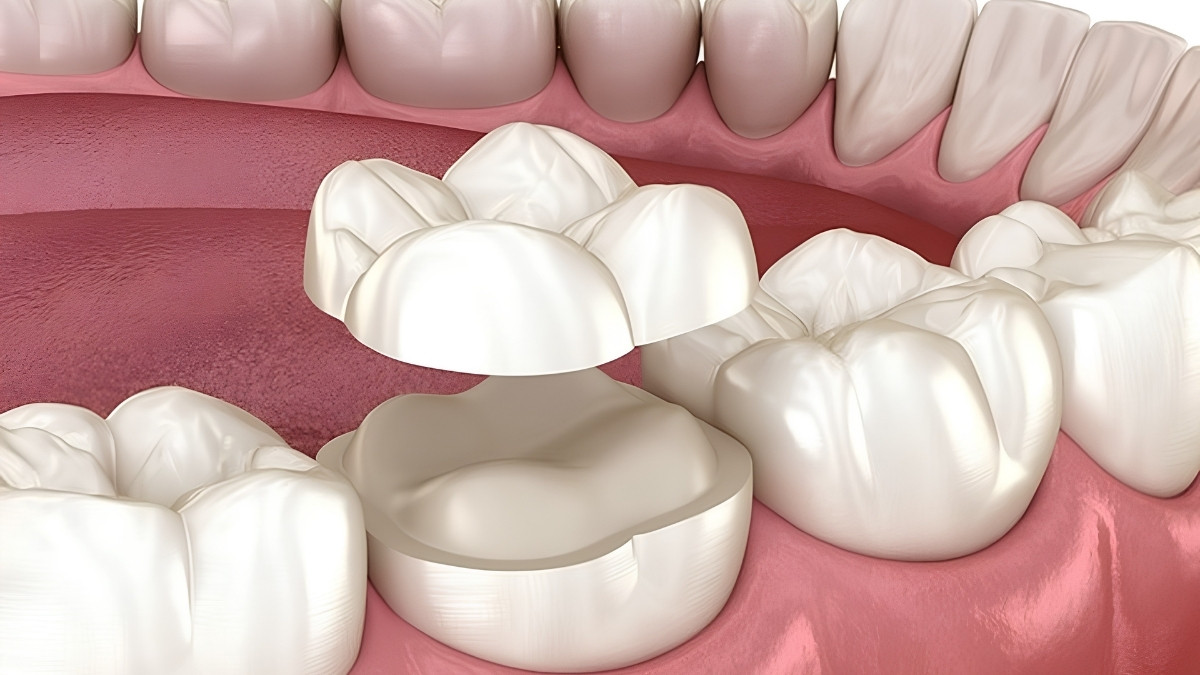
Best uses
- Severe occlusal wear
- Erosion or attrition
- Occlusal vertical dimension rehabilitation
- Posterior teeth needing broad occlusal reconstruction
- Conservative alternative to crowns
- Selected endodontically treated teeth
- Occlusal veneer-style restorations
Advantages
- Restores occlusal anatomy
- Preserves axial tooth structure
- Useful in minimally invasive full-mouth rehabilitation
- Can be additive in worn dentition
- Reduces need for aggressive crown preparation
Limitations
- Requires careful occlusal planning
- Adhesive bonding is critical
- Thin ceramics may fracture if under-designed
- Bruxism increases risk
- Marginal design and path of insertion require precision
Material selection has a direct effect on survival, esthetics, and workflow.
| Material | Strengths | Limitations | Common use |
|---|---|---|---|
| Lithium disilicate | Esthetic, bondable, strong glass ceramic | Needs thickness and bonding control | Inlays, onlays, overlays |
| Feldspathic porcelain | Excellent esthetics | Brittle, technique-sensitive | Small inlays, esthetic cases |
| Leucite-reinforced ceramic | Esthetic and bondable | Lower strength than lithium disilicate | Inlays and onlays |
| Hybrid ceramic | Millable, resilient, CAD/CAM friendly | Long-term evidence varies | Inlays and onlays |
| Indirect composite | Repairable, lower modulus | Wear, staining, degradation | Inlays, onlays, overlays |
| Zirconia | Strong, fracture resistant | Bonding less predictable, less translucent | High-load onlays and overlays in selected cases |
| Gold alloy | Excellent longevity, conservative, kind to opposing teeth | Poor esthetics, cost | Posterior inlays and onlays |
| PMMA | Provisional only | Not definitive | Temporary overlays or prototypes |
Material selection logic
In practice, material choice depends on:
- Occlusal load
- Remaining tooth structure
- Esthetic demand
- Available enamel for bonding
- Thickness requirements
- Digital or pressed workflow
- Opposing dentition
- Bruxism risk
Ceramic materials are widely used because they combine esthetics with wear resistance and good adhesive potential.
Lithium disilicate
Lithium disilicate is one of the most common materials for indirect partial restorations.
Advantages
- Excellent esthetics
- Strong adhesive bonding after etching and silane
- Suitable for CAD/CAM and press workflows
- Good fracture resistance when sufficient thickness is present
- Good marginal stability
- Wide range of shades and translucencies
Limitations
- Requires proper thickness
- Brittle before bonding
- Requires isolation
- Less suitable for uncontrolled bruxism unless protected
- Requires careful occlusal adjustment and polishing
Feldspathic porcelain
Feldspathic porcelain is best suited for esthetic, lower-load cases.
Advantages
- Very natural translucency
- Excellent esthetics
- Conservative thickness possible
Limitations
- Lower strength
- Higher technique sensitivity
- Less ideal for high-load posterior onlays
Zirconia
Zirconia may be considered when strength is the main priority, though the bonding strategy differs from glass ceramics.
Advantages
- High strength
- Useful in high-load cases
- Efficient CAD/CAM workflow
- Good option when fracture resistance is critical
Limitations
- Less predictable adhesive bonding than etched glass ceramics
- Requires air abrasion and MDP primer or cement
- More opaque than glass ceramics
- Must be polished extremely well to protect opposing dentition
Indirect composite and hybrid materials
Indirect composite and hybrid ceramic materials can be useful in conservative posterior restorations.
Indirect composite advantages
- Repairable
- Less brittle than ceramic
- May absorb stress better
- Easier to adjust and polish
- Useful for provisional or transitional cases
- Lower cost in some workflows
Limitations
- More wear over time
- Greater discoloration risk
- Surface degradation
- Lower long-term stability than ceramics in some studies
- Technique-sensitive bonding
Hybrid ceramics
Hybrid ceramic or resin ceramic materials combine ceramic and resin characteristics.
Potential benefits include:
- CAD/CAM millability
- Lower brittleness
- Easier finishing
- More elastic behavior
Potential limitations include:
- Material-specific bonding protocols
- Long-term clinical data varies by product
- Wear and staining behavior require monitoring
Gold inlays and onlays
Gold remains one of the most durable materials for posterior indirect restorations.
Advantages
- Excellent marginal integrity
- Excellent longevity
- Conservative preparation possible
- Less brittle than ceramic
- Excellent wear compatibility
- Strong in thin sections
- Good for posterior load
Limitations
- Poor esthetics
- Higher material cost
- Less patient demand
- Requires casting expertise
- Unsuitable for patients who reject visible metal
Gold may not win social media popularity contests, but clinically it has an excellent track record.
Preparation principles
Preparation design depends on restoration type and material, but some rules apply broadly.
General principles
- Remove caries and defective restorations
- Preserve sound tooth structure
- Preserve enamel for bonding when possible
- Round internal line angles
- Avoid sharp internal corners
- Provide adequate material thickness
- Provide smooth margins
- Avoid unsupported enamel
- Ensure a clear path of insertion
- Keep margins supragingival when possible
- Ensure cleanable contours
- Provide cusp coverage when cusps are weak
Inlay preparation
Key features include:
- Divergent walls for path of insertion
- Rounded internal angles
- Smooth pulpal floor
- No bevels for most ceramic inlays
- Adequate isthmus width for the material
- Proximal box with clear margins
- Avoidance of thin ceramic extensions
Onlay preparation
Additional features include:
- Functional cusp reduction when needed
- Nonfunctional cusp reduction if weakened
- Rounded occlusal transitions
- Butt-joint or shoulder-like cusp coverage
- Adequate ceramic or composite thickness
- Smooth continuous margins
Additional features include:
- Broad occlusal coverage
- Uniform occlusal reduction
- Rounded line angles
- Occlusal veneer-style design in additive cases
- Axial preservation when possible
- Controlled restorative space
- Occlusal scheme planned before preparation
Minimum thickness considerations
Minimum thickness depends on both material and manufacturer instructions.
| Material | Approximate minimum thickness consideration |
|---|---|
| Lithium disilicate | Often around 1.0–1.5 mm depending on location and indication |
| Feldspathic porcelain | Requires careful support; thickness varies by case |
| Hybrid ceramic | Product-specific, sometimes lower than glass ceramic in selected indications |
| Indirect composite | Product-specific, requires bulk for wear resistance |
| Zirconia | Can be thinner than glass ceramics depending on type and indication |
| Gold alloy | Can function in thinner sections than ceramics |
Always follow the manufacturer’s instructions for use. In the lab, almost thick enough is one of those phrases that tends to age very badly.
Cusp coverage decision
The decision to cover cusps is central to choosing between an inlay and an onlay.
Consider cusp coverage when
- A cusp is undermined
- Cusp thickness is reduced
- An MOD restoration is wide
- A crack is present
- A functional cusp is weakened
- The tooth is endodontically treated
- Occlusal load is high
- Remaining walls are thin
- The restorative margin extends close to the cusp tip
Functional vs nonfunctional cusps
Functional cusps usually experience higher occlusal load:
- Maxillary palatal cusps
- Mandibular buccal cusps
These cusps often require more attention in onlay design.
Adhesive bonding and cementation
Most ceramic and composite inlays, onlays, and overlays depend heavily on adhesive bonding.
| Cement type | Typical use |
|---|---|
| Light-cure resin cement | Thin translucent restorations |
| Dual-cure resin cement | Thicker or less translucent restorations |
| Self-adhesive resin cement | Selected cases, less technique-sensitive |
| Resin-modified glass ionomer | Some zirconia or metal restorations with retentive preparations |
| Conventional cement | Gold or retentive metal restorations |
Surface treatment by material
| Material | Typical internal surface treatment |
|---|---|
| Lithium disilicate | Hydrofluoric acid etch and silane |
| Feldspathic porcelain | Hydrofluoric acid etch and silane |
| Leucite ceramic | Hydrofluoric acid etch and silane |
| Hybrid ceramic | Product-specific etch or air abrasion plus primer |
| Indirect composite | Air abrasion plus adhesive or primer |
| Zirconia | Air abrasion plus MDP primer |
| Gold alloy | Air abrasion plus metal primer if bonding |
Tooth surface considerations
Adhesive success depends on:
- Moisture control
- Enamel availability
- Dentin bonding protocol
- Isolation
- Clean surface
- Proper curing
- Cement thickness
- Complete seating
- Excess cement removal
Deep margins and poor isolation are major risk factors for adhesive failure.
Deep margin elevation
Deep margin elevation, also called cervical margin relocation, is used when a proximal margin is too deep for predictable bonding or scanning.
Purpose
- Move the margin supragingivally
- Improve isolation
- Improve impression or scan capture
- Improve bonding access
- Improve cement cleanup
Indications
- Deep proximal box
- Subgingival margin
- Rubber dam difficulty
- CAD/CAM scanning limitation
- Need for adhesive restoration
Cautions
- Must be well bonded
- Must have excellent marginal seal
- Must not violate periodontal health
- Requires proper finishing
- Is not appropriate for every deep defect
Deep margin elevation can be very helpful, but it is not a magic elevator out of every subgingival problem.
Digital dentistry is especially well suited to indirect partial restorations.
Digital workflow
Diagnosis and treatment planning
→ Tooth preparation
→ Intraoral scan
→ Margin and bite verification
→ CAD design
→ Material selection
→ Milling or printing prototype
→ Crystallization, sintering, or curing
→ Finishing and polishing
→ Try-in
→ Bonding
Laboratory digital workflow
Digital file received
→ Case review
→ Margin marking
→ CAD design
→ Contact and occlusion design
→ CAM nesting
→ Milling
→ Crystallization or sintering
→ Staining, glazing, or polishing
→ Fit and QC check
→ Delivery
Digital benefits
- Efficient production
- Accurate anatomy replication
- Digital design storage
- Controlled occlusion
- Better contact design
- Reduced model dependency
- Faster remakes
- Integration with chairside systems
- Improved communication
Digital risks
- Poor margin capture
- Scan distortion
- Bite scan errors
- Thin restoration design
- Milling bur limitations
- Sharp internal preparation
- Overmilled margins
- Inadequate polishing
- Wrong material block selection
Conventional laboratory workflow
Conventional workflows remain valuable for pressed ceramics, cast gold, and certain high-esthetic cases.
Conventional workflow
- Receive impression and prescription
- Disinfect impression
- Pour working model
- Trim die
- Mark margins
- Apply die spacer
- Wax restoration
- Press ceramic or cast alloy
- Divest and fit
- Adjust contacts
- Finish anatomy
- Stain, glaze, or polish
- Final QC
- Deliver to clinic
Conventional strengths
- Excellent for pressed lithium disilicate
- Strong fit control with experienced technicians
- Useful for gold restorations
- Good for complex occlusal morphology
- Allows high-level hand finishing
Occlusion is critical because these restorations function in posterior load-bearing areas.
Occlusal design principles
- Avoid thin ceramic at contact points
- Keep contacts away from margins when possible
- Avoid sharp occlusal anatomy in ceramic
- Provide enough material thickness under functional contacts
- Check working and non-working movements
- Avoid high spots on restoration margins
- Use protective splints for bruxers
- Design overlays within a full occlusal plan
High-risk occlusal situations
- Bruxism
- Clenching
- Deep bite
- Limited posterior support
- Opposing zirconia
- Worn dentition
- Endodontically treated teeth
- Cracked tooth syndrome
- Thin ceramic areas
- Cantilevered cuspal extensions
Partial coverage restorations are often compared with crowns because both can manage larger posterior defects.
| Feature | Inlay/Onlay/Overlay | Crown |
|---|---|---|
| Tooth reduction | Less invasive | More invasive |
| Enamel preservation | Better | Less |
| Adhesive dependence | High | Moderate to high depending on preparation |
| Mechanical retention | Lower | Higher |
| Esthetic potential | High | High |
| Cusp protection | Onlays and overlays provide it | Full coverage provides it |
| Indication | Moderate to large defects | Severely compromised teeth |
| Repair or remake complexity | Moderate | Moderate |
| Biological cost | Lower | Higher |
| Suitability for short teeth | Depends on bonding | May be better if retention form is possible |
Crowns may show slightly higher average survival in some reviews, but partial restorations offer a more conservative option when the case is selected correctly.
Use in endodontically treated teeth
Endodontically treated posterior teeth often require cuspal protection.
- Onlay
- Overlay
- Endocrown
- Full crown
- Adequate remaining tooth structure
- Good enamel margins
- Strong peripheral walls
- Controlled occlusion
- No vertical root fracture
- Good isolation possible
- Conservative approach preferred
When crown may be better
- Extensive loss of axial walls
- Minimal enamel
- Poor ferrule
- Heavy occlusal load
- Deep cracks
- Weak remaining structure
- Poor bonding conditions
Overlays are increasingly used in the conservative rehabilitation of worn teeth.
Indications in tooth wear
- Attrition
- Erosion
- Abrasion
- Loss of occlusal anatomy
- Reduced vertical dimension
- Posterior support restoration
- Full-mouth adhesive rehabilitation
Advantages
- Additive approach may be possible
- Preserves axial tooth structure
- Restores occlusal vertical dimension
- Can be tested with provisionals
- Suitable for staged rehabilitation
Important planning steps
- Diagnose the cause of wear
- Stabilize erosion or parafunction
- Evaluate vertical dimension
- Use a diagnostic wax-up
- Use mock-ups or prototypes
- Select material carefully
- Control occlusion
- Provide a night guard when needed
Complications
Complications may be biological, mechanical, adhesive, or esthetic.
| Complication | Possible cause |
|---|---|
| Debonding | Poor isolation, contamination, inadequate bonding |
| Ceramic fracture | Insufficient thickness, bruxism, sharp internal angles |
| Tooth fracture | Uncovered weak cusp, crack progression |
| Marginal discoloration | Microleakage, cement degradation |
| Secondary caries | Poor margins, hygiene, high caries risk |
| Sensitivity | Dentin exposure, bonding issues |
| High occlusion | Bite error, insufficient adjustment |
| Open contact | Design or fabrication error |
| Wear of opposing teeth | Rough ceramic or zirconia surface |
| Marginal gap | Poor scan or impression, milling limitations |
| Chipping | Thin restoration or occlusal overload |
Complications are usually not mysterious. They tend to appear when preparation design, bonding, material thickness, or occlusion is compromised.
Laboratory quality control
Inlays, onlays, and overlays require precise quality control because seating, margins, and occlusal fit are highly sensitive.
Final QC checklist
| QC area | What to verify |
|---|---|
| Case identity | Patient or case ID and tooth number |
| Prescription | Material, shade, restoration type |
| Margin | Smooth, closed, no chips |
| Internal fit | Full seating without binding |
| Proximal contact | Correct tightness |
| Occlusal anatomy | Functional and not too thin |
| Thickness | Meets material minimums |
| Surface finish | Polished or glazed appropriately |
| Internal surface | Clean and ready for clinical treatment |
| Shade | Matches prescription |
| Cement space | Appropriate |
| Path of insertion | No undercut interference |
| Marginal ridge | Proper height and contour |
| Emergence profile | Cleanable and anatomical |
| Packaging | Protected from fracture |
Common laboratory errors
- Margins overmilled or chipped
- Internal binding
- Contacts too tight
- Occlusion too high
- Thin ceramic at cusp tips
- Inadequate bulk in overlay extensions
- Poor anatomy
- Rough surface after adjustment
- Wrong translucency block
- Cement space too tight or too loose
- Incomplete crystallization or sintering
- Poor polish on zirconia or ceramic
Standards and documentation
Inlays, onlays, and overlays are patient-specific dental devices and should be produced through controlled, traceable processes.
Relevant standards and frameworks
| Standard / framework | Relevance |
|---|---|
| ISO 13485 | Quality management system for medical devices |
| ISO 6872 | Dental ceramic materials |
| ISO 4049 | Polymer-based restorative materials |
| ISO 10993 series | Biological evaluation of medical devices |
| ISO 7405 | Biocompatibility evaluation of dental materials |
| ISO 22674 | Metallic materials for dental restorations |
| FDA medical device framework | Relevant to U.S. dental device manufacturing |
| Manufacturer IFU | Processing and bonding instructions |
Documentation should include
- Dentist prescription
- Case ID
- Tooth number
- Restoration type
- Material brand
- Lot or batch number
- Shade
- CAD design file
- Manufacturing method
- Firing, crystallization, or sintering cycle
- Technician name
- Final QC record
- Delivery date
Why this matters for XDENT LAB
These restorations align closely with XDENT LAB’s value proposition because they demand exactly what high-performing dental practices and lab partners need: consistency, traceability, precision, and scalable production quality.
Strategic relevance for XDENT LAB
- Digital design consistency
- Controlled production workflows
- Material traceability
- FDA and ISO-aligned quality systems
- Skilled technician finishing
- Reliable posterior anatomy and occlusion control
- Lab-to-lab outsourcing support for high-volume or specialty cases
- Vietnam dental lab manufacturing capacity with international standards
For dental practices looking to ensure quality and consistency, indirect partial restorations are one of the clearest areas where lab precision directly affects clinical outcome.
Key takeaways
Inlays, onlays, and overlays are conservative indirect restorations used to restore posterior teeth while preserving more natural structure than crowns.
The most important principles are
- Inlays restore internal defects without cusp coverage.
- Onlays cover one or more cusps to protect weakened tooth structure.
- Overlays restore broader occlusal surfaces and are useful in worn dentition and conservative rehabilitation.
- Material selection matters, especially among lithium disilicate, indirect composite, hybrid ceramic, zirconia, and gold.
- Adhesive bonding is central to success, especially for ceramic and composite restorations.
- Occlusal design must be controlled because these restorations function in high-load posterior areas.
- Cusp coverage should be based on remaining tooth strength, not habit.
- Digital workflows are highly suitable, but scan quality, margin design, thickness, and post-processing remain critical.
- Laboratory QC must verify fit, margins, contacts, occlusion, thickness, surface finish, and material traceability.
- Clinical evidence supports high survival rates for well-designed indirect partial restorations when case selection and laboratory execution are sound.
A successful inlay, onlay, or overlay restores the damaged tooth while respecting the healthy tooth that remains. That is the real prosthodontic advantage: strength with restraint.
About XDENT LAB:
We are experts in Lab-to-Lab Full Service from Vietnam, with the signature services of Removable, meet U.S. market standards, FDA-registered, ISO 13485-certified. Founded in 2017, from local root to global reach, we scale with 2 Factories with over 100+ employees.
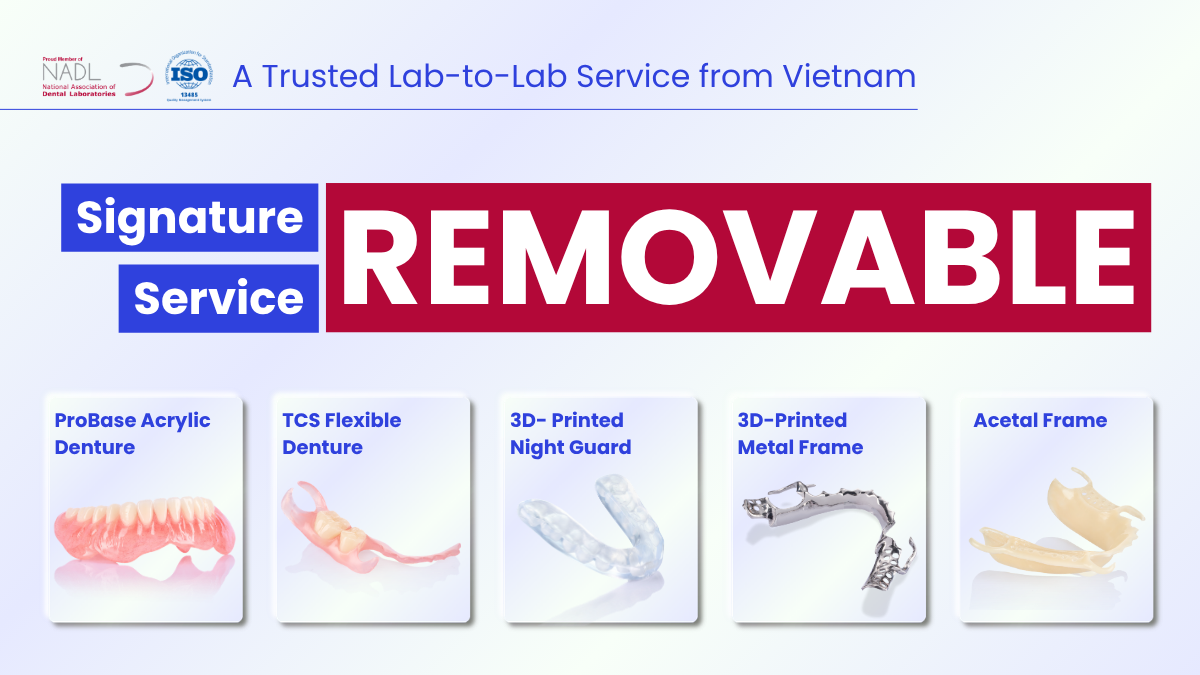
Our Commitments Built on “Trusted. Commitment. Quality”
- Commit to Large-Scale Manufacturing, high volume, remake rate < 1%.
- Commit to 5-Year Warranty
- Commit to Competitive Price
XDENT LAB | A Trusted Lab-to-Lab Service from Vietnam
Share this post:
Related Posts
Explore veneer laboratory workflow, shade control, and quality checks in prosthodontics for predictable esthetics, fit, bonding, and long-term results.
Rest seat geometry controls how force enters the abutment tooth. Here are the design rules every RPD technician needs to know, with the reasoning behind each one.
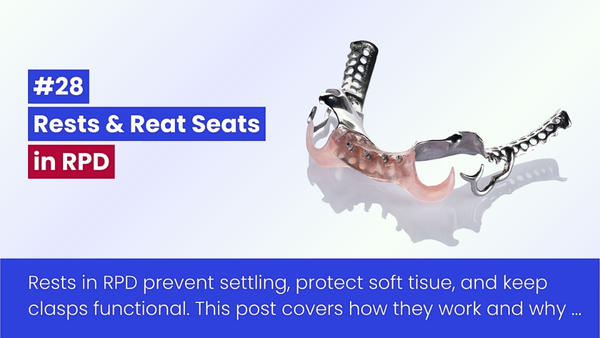
Rests in removable partial dentures prevent settling, protect soft tissue, and keep clasps functional. Here is how they work and why their design matters.

