
Learn when to use a lingual bar in RPD, its design features, indications, limitations, and clinical considerations in mandibular major connector design.
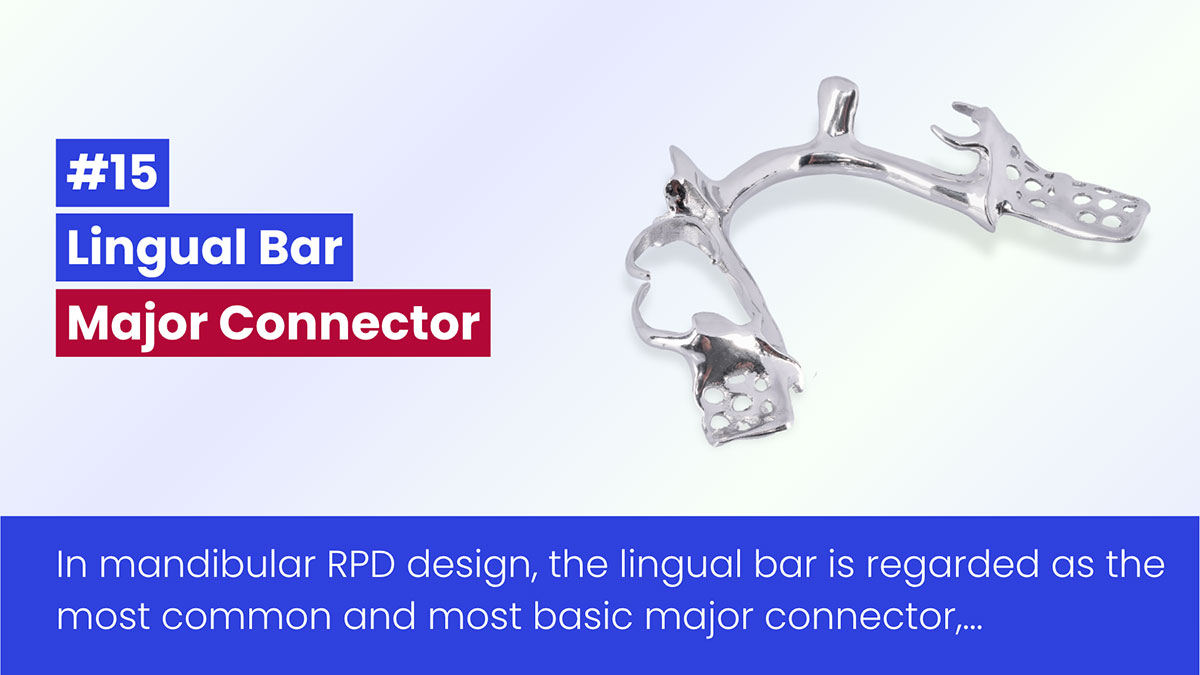
Table of contents [Show]
- Introduction
- Key points
- What Is a Lingual Bar in RPD?
- Why Is the Lingual Bar Commonly Preferred?
- Basic Form of the Lingual Bar
- Where Should a Lingual Bar Be Positioned?
- How Is Available Space Evaluated?
- When Is a Lingual Bar Indicated?
- When Is a Lingual Bar Not the Best Choice?
- Common Design Errors with a Lingual Bar
- A Practical Way to Think About the Lingual Bar
- Clinical Summary Table
- Conclusion
- FAQ
- References
Introduction
In mandibular removable partial denture design, the lingual bar in RPD is generally regarded as the most common and most basic major connector when anatomical conditions are favourable. Although it may appear simple, its design depends on careful respect for tissue anatomy, functional movement, and the need for rigidity.
The lingual bar is not just a standard connector to memorize. It is a connector chosen for specific mechanical and biological reasons. When used correctly, it can provide effective cross-arch connection with relatively limited tooth and tissue coverage. When used in the wrong situation, however, it may impinge on soft tissue, lack sufficient clearance from the gingiva, or lose effectiveness because of inadequate rigidity.
This article explains what a lingual bar mandibular major connector is, why it is often preferred, how it should be shaped and positioned, when it is indicated, and when another connector such as a linguoplate may be more appropriate.
Key points
- The lingual bar is the most common mandibular major connector when adequate space is available.
- Its typical cross-sectional form is half-pear shaped, with the greatest bulk at the inferior border.
- It should be placed above movable tissue but as far below the gingival margin as possible.
- Adequate clearance and rigidity are essential to prevent tissue irritation and framework flexure.
- When functional space is insufficient, a linguoplate is often preferred instead of forcing a lingual bar into a compromised position.
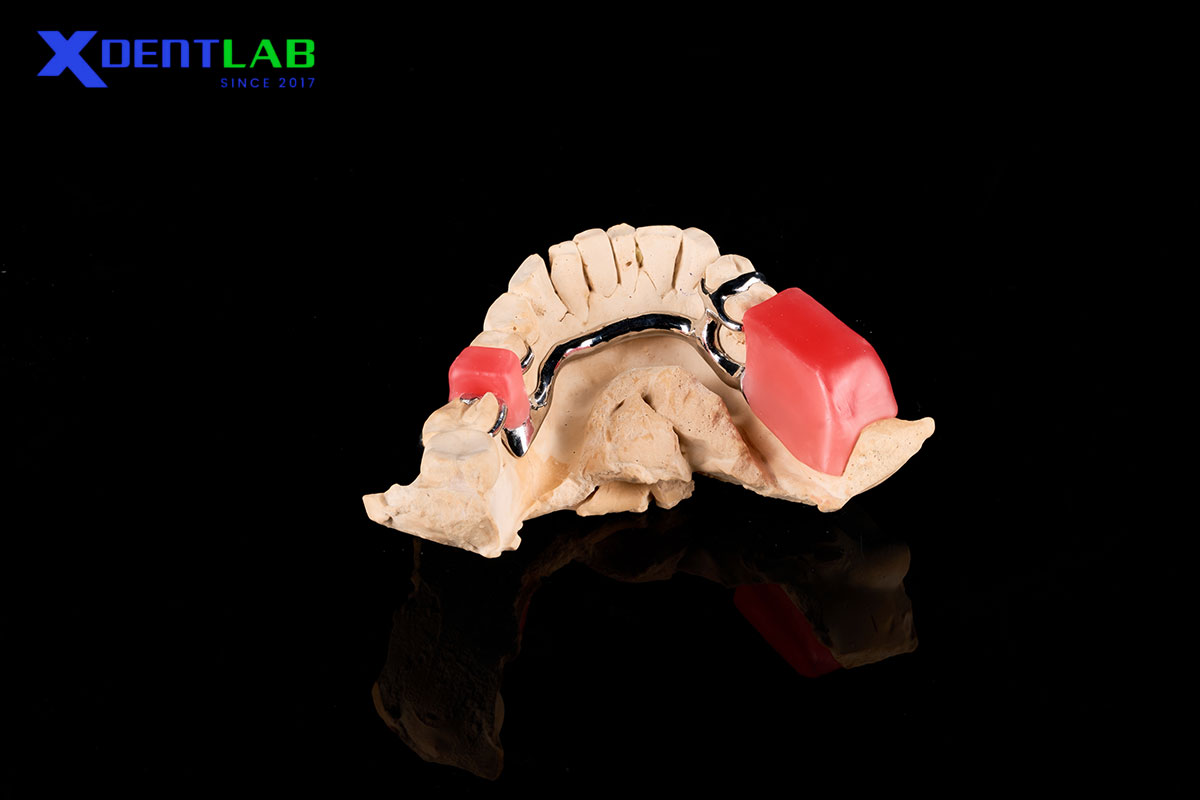
A lingual bar is a mandibular major connector positioned along the lingual side of the arch. It connects the components of the removable partial denture across the arch while maintaining minimal coverage of the teeth and gingival tissues compared with broader designs such as a linguoplate.
It is usually considered the first choice for a mandibular major connector when there is enough space to place it correctly. In that sense, the lingual bar is often treated as the standard design from which other mandibular connectors are considered when clinical conditions become less favorable.
The lingual bar is commonly preferred because it can provide the required rigidity for a mandibular major connector while keeping tooth coverage relatively limited. This is important because major connectors should not be added arbitrarily. Every component should serve a definite purpose.
When a lingual bar can be used properly, it offers several practical advantages:
1. It provides cross-arch connection with limited coverage
Compared with a linguoplate, the lingual bar does not extend onto the lingual surfaces of the anterior teeth. This means less contact with tooth surfaces and less metal coverage overall.
2. It helps preserve gingival freedom
Because the superior border is positioned below the gingival margin, the connector can avoid direct impingement on the gingival tissues when adequate space exists.
3. It can be comfortable when properly contoured
A correctly shaped lingual bar should not present sharp or angular margins to the tongue. Its contour is designed to reduce irritation during function.
These advantages explain why the lingual bar is often the preferred connector in routine mandibular RPD cases. However, preference only applies when the anatomy allows correct placement.
The classic form of the lingual bar is half-pear shaped in cross-section. This is not simply a traditional shape. It reflects functional design requirements.
Why the half-pear shape matters
The superior border of the bar should taper toward the gingival tissues, while the greatest bulk should be located at the inferior border. This arrangement helps achieve two things at the same time:
- A smoother contour near the gingiva and tongue
- Sufficient bulk in the lower part of the bar to maintain rigidity
The connector should not have sharp edges or an angular form that irritates the tongue. After polishing, the inferior border should remain slightly rounded rather than sharp.
This is especially important because under occlusal loading, denture bases may rotate slightly. A rounded inferior border is less likely to impinge on lingual tissues if such movement occurs.
Correct positioning of the lingual bar is one of the most important parts of the design.
The connector should be placed:
- Above the movable tissue of the floor of the mouth
- As far below the gingival margin as possible
- With enough bulk and width to remain rigid
This creates a balance between biologic safety and mechanical effectiveness.
Superior border
The superior border of the lingual bar should generally be located at least 4 mm below the gingival margin. This spacing helps protect gingival tissues from impingement.
Inferior border
The inferior border is limited by the functional height of the floor of the mouth. The floor of the mouth changes position during speaking, swallowing, mastication, and other normal movements. For that reason, the lingual bar must not extend into tissue that elevates during function.
At the same time, it is logical to position the bar as inferiorly as possible within the available space. A lower position helps:
- Reduce interference with the tongue at rest
- Reduce food trapping
- Allow the superior border to remain farther from the gingival tissues
In short, the lingual bar should be placed as low as function permits, but not so low that it impinges on the moving floor of the mouth.
How Is Available Space Evaluated?
In mandibular major connector design, the available vertical space is critical. A lingual bar should not be selected just because it is the default option. It should be selected because the anatomy supports proper placement.
Two clinically acceptable methods are commonly described for evaluating the floor of the mouth and locating the inferior border of a lingual bar.
1. Direct clinical measurement
A periodontal probe may be used to measure the distance from the lingual gingival margins of adjacent teeth to the floor of the mouth while the patient lightly touches the vermilion border of the upper lip with the tip of the tongue. This method helps estimate the functional space available.
2. Functional impression approach
An individualized impression tray may be used with borders kept short of the elevated floor of the mouth, followed by impression molding during functional movements such as lip licking. This allows the lingual sulcus form to be recorded more functionally.
In practical terms, direct measurement is often regarded as less variable and more clinically convenient.
The lingual bar is indicated when the following conditions are present:
Adequate vertical space is available
There must be enough space to place the superior border at least 4 mm below the gingival margin while still preserving enough height and bulk for rigidity.
The floor of the mouth does not interfere
The connector must remain clear of tissue that elevates during function.
Gingival tissues can be avoided
The design should not crowd the lingival gingival tissues or create a risk of impingement.
A simple, rigid connector is sufficient
When no additional stabilization of anterior teeth is required, and no other special indication exists for a linguoplate or other design, the lingual bar is often the most conservative appropriate choice.
A lingual bar may be inappropriate when anatomical or functional limitations prevent correct placement.
1. Insufficient vertical space
If the distance from the free gingival margins to the slightly elevated floor of the mouth is too limited, the superior border of a lingual bar would be placed too close to the gingiva. In such cases, forcing a lingual bar into the design can create irritation or require excessive relief.
2. High lingual frenum or interfering soft tissue anatomy
If the frenum or adjacent soft tissue interferes with proper connector placement, another major connector may be more appropriate.
3. Need for additional stabilization
If the remaining teeth, especially anterior teeth, would benefit from additional splinting or stabilization, a linguoplate may provide more support than a lingual bar alone.
4. Future tooth loss is anticipated
When future replacement of one or more anterior teeth is likely, a linguoplate may be easier to modify for that purpose.
In many of these situations, the practical alternative is not to distort the lingual bar design but to change the connector type.
Several errors can reduce the effectiveness of a lingual bar or create patient discomfort.
Placing the superior border too close to the gingiva
This risks gingival impingement and compromises tissue health.
Making the connector too small
If the bar lacks sufficient bulk, it may lose rigidity. A major connector that flexes becomes less effective and can contribute to harmful stress on supporting structures.
Creating sharp or angular contours
Sharp margins may irritate the tongue and reduce patient tolerance.
Ignoring floor-of-mouth function
A connector designed only on a cast, without clinical appreciation of functional tissue movement, may impinge during speech or swallowing.
A useful way to think about the lingual bar is this: it is the simplest acceptable mandibular connector when anatomy permits simplicity.
That phrasing matters. It reminds students and clinicians that the lingual bar is not always correct simply because it is common. It is correct when:
- There is adequate functional space
- The gingiva can be respected
- The floor of the mouth will not interfere
- Rigidity can be maintained
If those conditions are not met, another connector may be better.
Clinical Summary Table
| Feature | Lingual bar |
| Main role | Standard mandibular major connector |
| Typical form | Half-pear shaped |
| Key design principle | Rigid, smooth, positioned below gingiva and above movable tissue |
| Main advantage | Limited tooth coverage |
| Main limitation | Requires adequate vertical space |
| Commom alternative | Linguoplate |
Conclusion
The lingual bar in RPD is the most common mandibular major connector because it can provide rigidity and cross-arch connection with relatively limited coverage of teeth and tissues. However, its apparent simplicity should not hide the precision required in its design. Position, contour, tissue clearance, and bulk all matter.
In practice, the lingual bar works best when the anatomy of the floor of the mouth and the available vertical space allow correct placement. When those conditions are not present, it is better to select another connector, most commonly a linguoplate, rather than compromise biologic safety or mechanical performance.
FAQ
What is the lingual bar in RPD?
The lingual bar is a mandibular major connector that joins both sides of a removable partial denture along the lingual side of the arch.
Why is the lingual bar the most common mandibular major connector?
It is commonly used because it can provide rigidity and cross-arch connection with less tooth coverage than broader designs, provided enough space is available.
What shape should a lingual bar have?
A lingual bar is typically half-pear shaped, with the greatest bulk at the inferior border and a tapered superior border.
When should a lingual bar not be used?
It should not be used when there is insufficient vertical space, when the floor of the mouth interferes, or when added stabilization is needed that a linguoplate would provide better.
References
McCracken's Removable Partial Prosthodontics.
About XDENT LAB:
We are experts in Lab-to-Lab Full Service from Vietnam, with the signature services of Removable, meet U.S. market standards, FDA-registered, ISO 13485-certified. Founded in 2017, from local root to global reach, we scale with 2 Factories with over 100+ employees.
Our Commitments Built on “Trusted. Commitment. Quality”
- Commit to Large-Scale Manufacturing, high volume, remake rate < 1%.
- Commit to 5-Year Warranty
- Commit to Competitive Price
XDENT LAB | A Trusted Lab-to-Lab Service from Vietnam
Share this post:
Related Posts
Explore telescopic denture materials, retention designs and lab workflows, with practical guidance on fit, fabrication and maintenance for dental practices.
Materials used in fixed prosthodontics, from zirconia and lithium disilicate to alloys, with guidance on indications, bonding, workflows, and selection.
Learn how implant-retained overdentures rely on clinical planning, attachment selection, and laboratory QC for stable, predictable removable outcomes.

