
Overview of 3D Printed Custom Trays and Their Applications in Removable Prosthodontics.
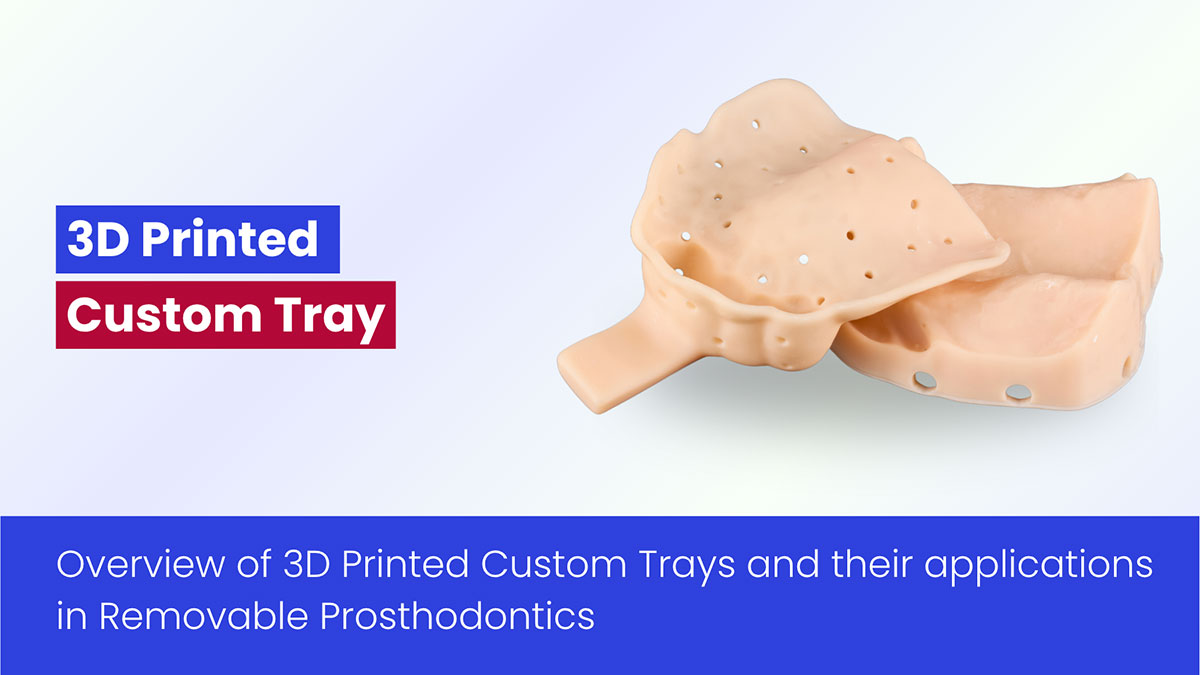
Table of contents [Show]
- What is a 3D Printed Custom Tray?
- Key Benefits of 3D Printed Custom Trays
- 3D Printing Technologies: SLA vs DLP
- Materials for 3D Printed Custom Trays
- CAD Design and Technical Requirements
- Standardized Production Workflow
- Advanced Post-Processing and Quality Control
- Performance Compared to Traditional Methods
- Clinical Applications
- Conclusion
- References
In the context of continuously evolving digital dentistry, 3D printing technology is being increasingly adopted across various applications. Among them, custom impression trays stand out as a key solution in removable prosthodontics, helping improve accuracy and consistency in final restorations.
What is a 3D Printed Custom Tray?
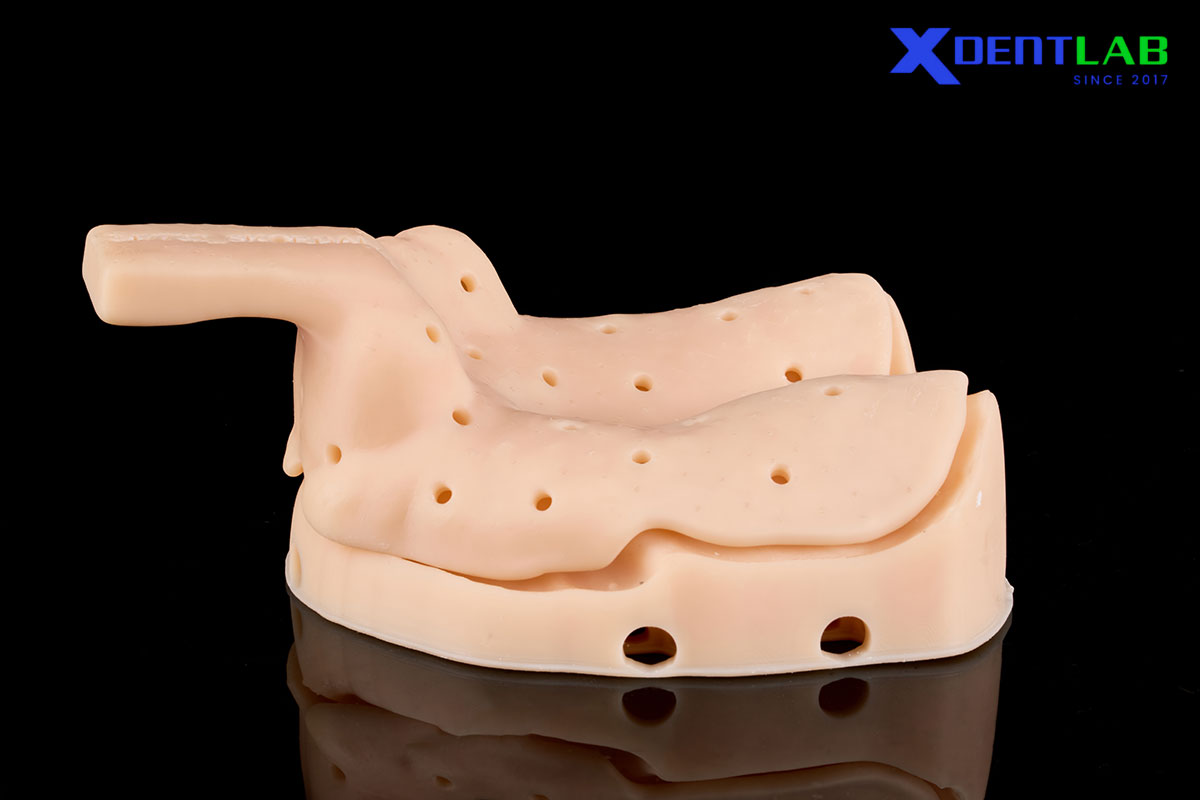
A 3D Printed Custom Tray is an impression tray designed using CAD software based on 3D scan data (intraoral or model scan) and manufactured using additive technologies such as SLA or DLP.
Unlike stock trays, custom trays are fully personalized to the patient’s anatomy, allowing for:
- Better control of impression material thickness
- Improved adaptation to soft tissues
- Higher accuracy in final restorations
Key Benefits of 3D Printed Custom Trays
High Precision (Micron-Level Accuracy)
3D printing enables highly accurate reproduction of anatomical details, reducing distortion during impression-taking.
Improved Operational Efficiency
Digital workflows reduce manual labor, minimize remakes, and optimize material usage—especially beneficial for high-volume laboratories.
Enhanced Patient Comfort
Custom-fit trays reduce pressure and discomfort, improving patient cooperation during procedures.
Standardized and Scalable Workflow
Fully compatible with digital dentistry workflows, enabling consistent quality and scalable production.
3D Printing Technologies: SLA vs DLP
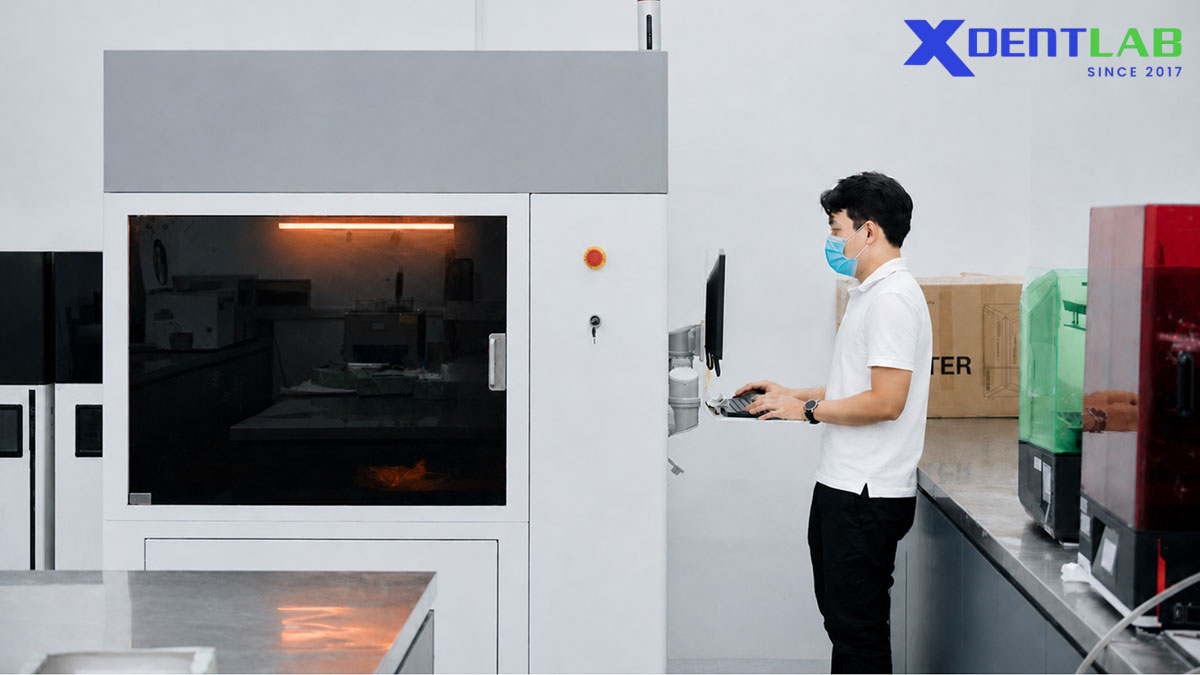
SLA (Stereolithography)
- Uses a laser to cure resin point-by-point
- High accuracy and smooth surface finish
- Ideal for detail-sensitive applications
DLP (Digital Light Processing)
- Uses projected light to cure an entire layer at once
- Faster printing speed
- Efficient for high-volume production
The choice between SLA and DLP depends on production priorities: detail vs speed vs scalability.
Materials for 3D Printed Custom Trays
Specialized dental resins for custom trays are designed to meet clinical and production requirements:
- High rigidity to maintain shape during impression-taking
- Fine detail reproduction
- Class I biocompatibility for clinical use
- Dimensional stability with minimal deformation
Some systems also support open material platforms, allowing laboratories to select materials based on cost and performance optimization.
CAD Design and Technical Requirements
Design is a critical factor influencing both clinical performance and manufacturing success.
Standard Design Parameters
- Tray wall thickness: ≥ 2 mm
- Handle thickness: ≥ 3 mm
- Retention holes: 3 mm diameter (especially for heavy body materials)
CAD Workflow
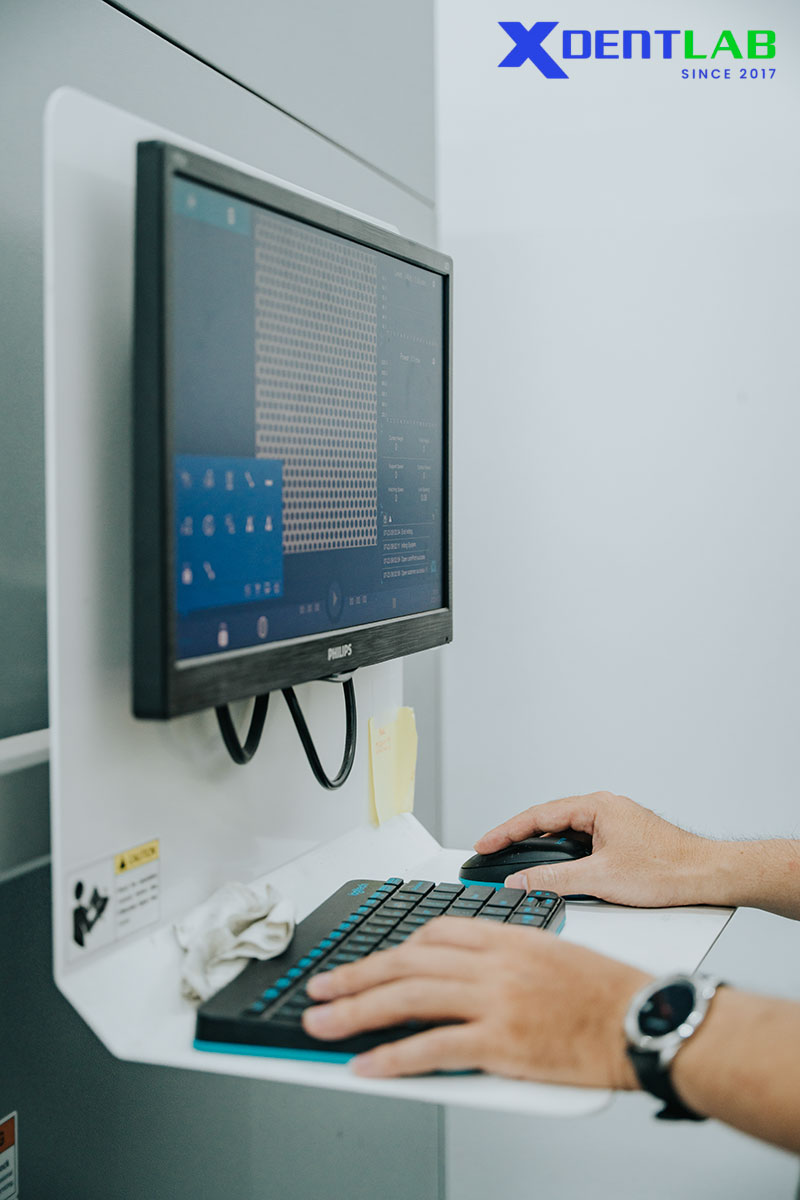
- Dental CAD software for tray design
- Integration with printing preparation software
- Export formats: STL or OBJ
Proper design ensures material retention, structural stability, and accurate impressions.
Standardized Production Workflow
1. Scan
Capture digital impressions using intraoral scanners or desktop scanners.
2. Design
Create custom trays in CAD following technical specifications.
3. Print
- Orient the intaglio surface away from the build platform
- Optimize support structures for accuracy and surface quality
4. Post-Processing
- Wash in IPA ≥ 99% (avoid overexposure)
- Air dry for at least 30 minutes
- Post-cure to achieve optimal mechanical properties
- Remove supports and polish surfaces
Advanced Post-Processing and Quality Control
Proper post-processing is essential for both clinical safety and product performance:
- Remove parts carefully to avoid cracks or deformation
- Smooth and polish surfaces for patient comfort
- Clean with a soft brush and neutral soap
- Disinfect using 70% alcohol for 5 minutes
Safety Inspection
After processing:
- Inspect for cracks or defects
- Discard and reprint if any damage is detected
Quality control ensures clinical safety and consistent performance.
Performance Compared to Traditional Methods
Compared to conventional manual trays:
- Equal or higher mechanical strength
- More uniform internal structure
- Reduced dependency on technician variability
Long-Term Efficiency
While initial investment may be higher, laboratories benefit from:
- Reduced labor costs
- Lower material waste
- Increased production efficiency
Clinical Applications
- Complete dentures
- Removable partial dentures (RPD)
- Cases requiring precise soft tissue control
Conclusion
3D Printed Custom Trays represent a critical component of modern digital dentistry workflows. By integrating scan, CAD design, additive manufacturing (SLA/DLP), and standardized post-processing, dental laboratories can achieve higher accuracy, improved efficiency, and scalable production.
Adopting this technology is not only a technical upgrade but a strategic move toward consistent quality and long-term competitiveness in the global dental market.
References
- Dawood, A., Marti Marti, B., Sauret-Jackson, V., & Darwood, A. (2015). 3D printing in dentistry. British Dental Journal, 219(11), 521–529.
- Javaid, M., & Haleem, A. (2019). Current status and applications of additive manufacturing in dentistry: A literature-based review. Journal of Oral Biology and Craniofacial Research, 9(3), 179–185.
- Alharbi, N., Wismeijer, D., & Osman, R. B. (2016). Additive manufacturing techniques in prosthodontics: Where do we currently stand? International Journal of Prosthodontics, 30(5), 474–484.
- Revilla-León, M., & Özcan, M. (2019). Additive manufacturing technologies used for processing polymers: Current status and potential application in prosthetic dentistry. Journal of Prosthodontics, 28(2), 146–158.
- ISO 10993-1:2018. Biological evaluation of medical devices – Part 1: Evaluation and testing within a risk management process.
About XDENT LAB:
We are experts in Lab-to-Lab Full Service from Vietnam, with the signature services of Removable, meet U.S. market standards, FDA-registered, ISO 13485-certified. Founded in 2017, from local root to global reach, we scale with 2 Factories with over 100+ employees.
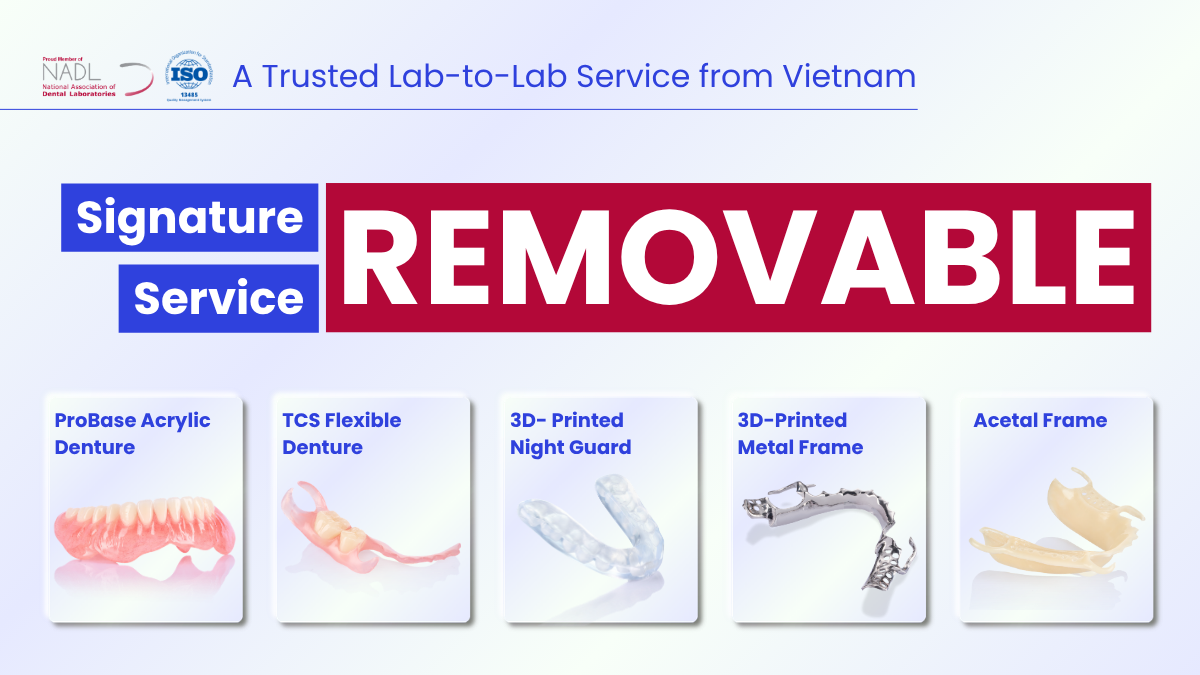
Our Commitments Built on “Trusted. Commitment. Quality”
- Commit to Large-Scale Manufacturing, high volume, remake rate < 1%.
- Commit to 5-Year Warranty
- Commit to Competitive Price
XDENT LAB | A Trusted Lab-to-Lab Service from Vietnam
Share this post:
Related Posts
Learn how tooth-supported overdentures rely on careful clinical planning, abutment selection, attachments, and laboratory QC for stable, predictable results.
Explore cast metal framework partial dentures, including design principles, material selection, lab workflow, fit, hygiene, and long-term clinical performance.
Not all occlusal rests are the same. Here is what distinguishes the extended, interproximal, internal types, and the clinical situations each one is designed for.

