
Discover how Stereolithography (SLA) is revolutionizing dental 3D printing. Explore academic insights, biocompatible materials, clinical applications, workflow integration, and quality control. Learn how XDENT LAB delivers FDA- and ISO-compliant Lab-to-Lab dental solutions with unmatched precision and efficiency.
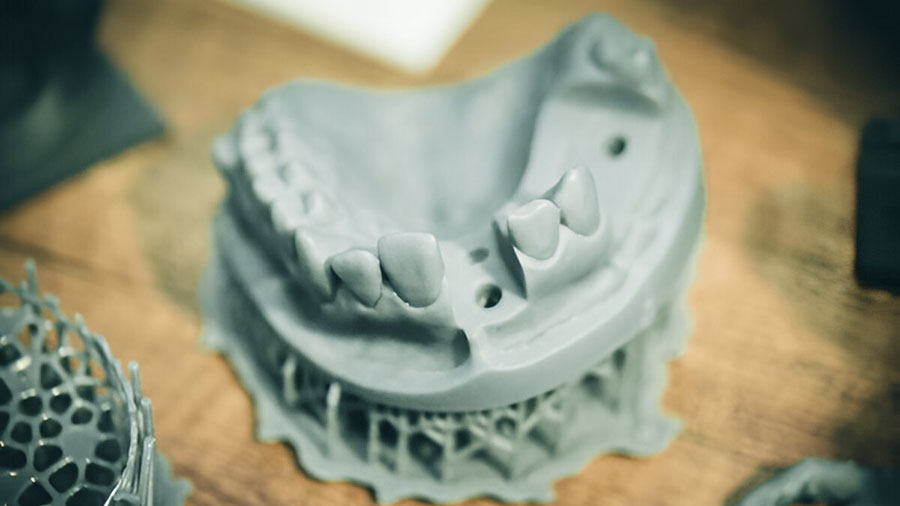
Table of contents [Show]
- Introduction to Stereolithography
- Fundamental Process and Technology
- Materials Science in SLA
- Biomedical Applications
- Industrial and Engineering Applications
- Recent Technological Advancements
- Challenges and Limitations
- Quality Control and Characterization
- Environmental and Sustainability Considerations
- Future Research Directions
- Comparative Analysis with Other AM Technologies
- Academic Research Trends
- Standardization and Regulations
- Economic Considerations
- Practical Implications for Dental Labs and Practices
- How XDENT LAB Implements SLA for Lab-to-Lab Quality
- Conclusion
Introduction to Stereolithography
Stereolithography (SLA) is the pioneering additive manufacturing technology that uses a UV light source to selectively cure liquid photopolymers layer-by-layer. Since its inception, SLA has evolved into a mature platform for research and industry due to its high resolution (typically 25–100 μm layer thickness), smooth surfaces, and dimensional accuracy - Qualities critical for dental and biomedical applications where fit and reproducibility matter.
Fundamental Process and Technology
Working Principle
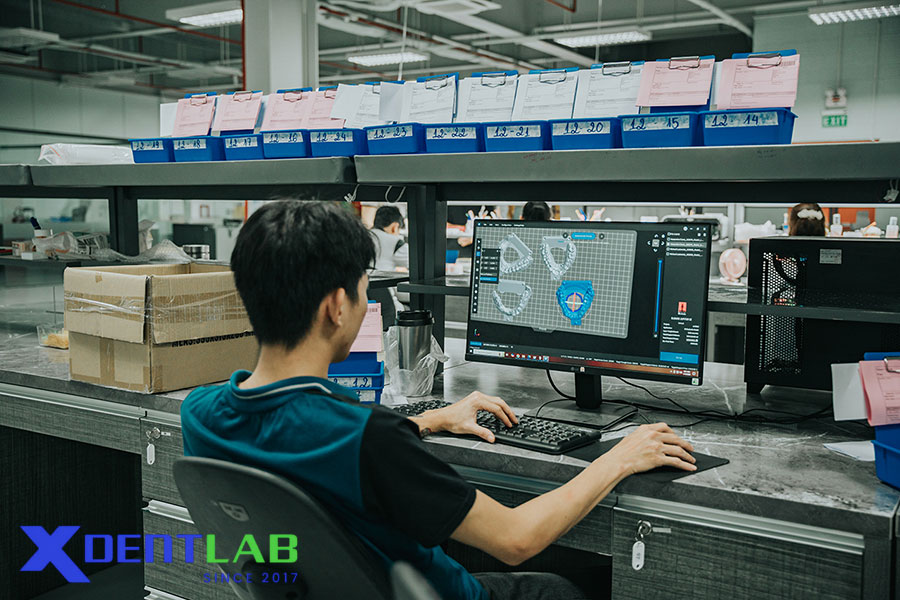
Selective photopolymerization: A UV laser (or projected light) cures photosensitive resin along toolpaths corresponding to each cross-sectional layer.
Incremental Z-lifting: After each layer cures, the build platform moves by a defined layer height.
Chemical bonding: Subsequent layers bond via ongoing polymerization, producing near-isotropic microstructures when parameters are optimized.
Resolution envelope: Typical layer thickness 25–100 μm; in-plane XY resolution depends on spot size or pixel pitch and resin kinetics.
Core hardware components:
UV Laser System: Provides focused energy for polymerization with tightly controlled spot size and power.
Resin Tank: Holds photosensitive liquid polymer; transparency and release characteristics are key in bottom-up systems.
Build Platform: Controls Z-axis precision, adhesion, and detachment dynamics.
Technical Variations
Top-Down SLA: Laser cures from above. Pros: simpler peel dynamics for certain geometries. Cons: larger resin volumes.
Bottom-Up SLA: Laser cures through a transparent tank bottom with non-stick interfaces. Pros: reduced resin volume, compact footprint. Cons: peel forces must be managed.
Digital Light Processing (DLP): Projects an entire layer at once. Pros: faster layer exposure, pixel-based XY resolution. Cons: potential pixelation; optics and uniformity control are critical.
Materials Science in SLA
Photopolymer Chemistry
Photoinitiator activation: UV photons generate reactive species (radicals/cations).
Chain propagation: Monomers/oligomers polymerize into long chains.
Cross-linking: Network formation sets mechanical properties, Tg, and chemical resistance.
Material Categories
Standard Resins: Balanced mechanicals and cost; ideal for models, patterns, fixtures.
Engineering Resins: Elevated heat deflection, impact, or chemical resistance; suitable for functional prototypes and select tooling.
Biocompatible Resins: Certified for intraoral and medical use cases (class-dependent); used for surgical guides, splints, try-ins, and certain temporary restorations when validated.
Material Characterization Studies (Academic Focus)
Time-dependent behavior: Viscoelasticity, creep, and stress relaxation under intraoral conditions.
Post-processing effects: Post-cure UV/thermal cycles significantly increase conversion, modulus, and stability.
Environmental stability: Water sorption, temperature cycles, and disinfectant exposure.
Biocompatibility: Cytotoxicity, sensitization, and long-term leachables—especially relevant for medical/dental devices.
Biomedical Applications
Tissue Engineering
Scaffolds: Tunable porosity and architectures for cell infiltration.
Vascularization: Embedded channels for nutrient transport.
Anatomical models: Patient-specific organs for pre-surgical planning and education.
Medical Device Manufacturing
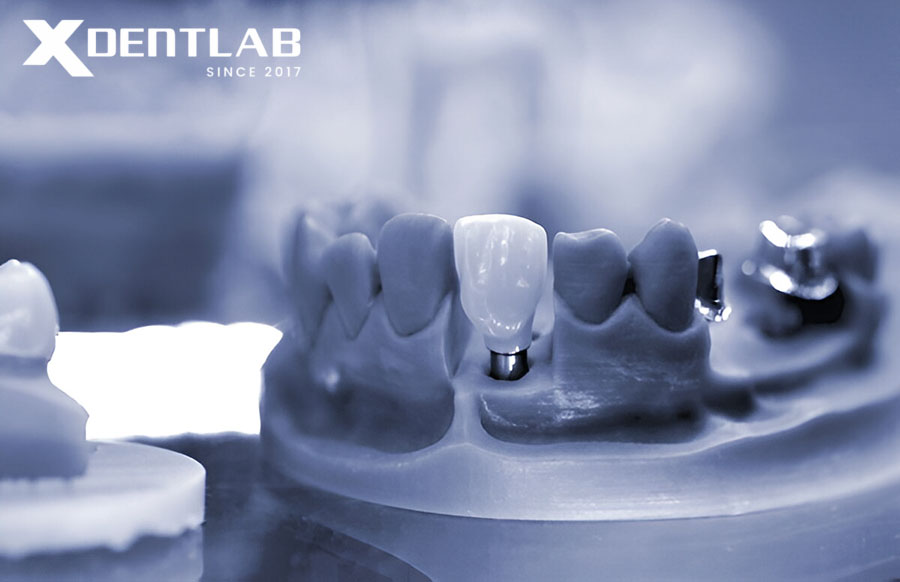
Dental: Surgical guides, splints, study models, aligner models, custom trays, provisional restorations (with validated biocompatible resins).
Orthopedic: Patient-specific guides, jigs, and prototype implants.
Cardiovascular/Pharma: Heart valve models, microfluidics, and drug delivery devices.
Regenerative Medicine
Cell-laden hydrogels and hybrid constructs.
Growth factor release and biodegradable scaffolds.
Multi-material patterning for heterogeneous tissues.
Practical dental note: For permanent restorations and frameworks, ceramics and metals remain gold standards; SLA complements the workflow with high-fidelity guides, models, and provisionals.
Industrial and Engineering Applications
Integrated Circuit (IC) and Microfluidics
Microfluidic chips with complex channels.
High-resolution dielectric structures and prototype enclosures.
Conductive photopolymers in development for embedded electronics.
Aerospace and Automotive
Rapid, accurate prototypes of aerodynamic surfaces.
Wind tunnel models, jigs, and fixtures.
Select end-use components where operating environments match resin capabilities.
Recent Technological Advancements
Process Innovations
Continuous Liquid Interface Production (CLIP): Sustained “dead zone” enables continuous growth, boosting speed and surface quality while reducing peel forces.
Multi-Material Printing: Layer- or voxel-level material swaps for graded properties and integrated functionality.
Resolution Enhancement
Sub-micron features via refined optics and resin kinetics.
Nano-texturing for wettability, adhesion, or optical effects.
Tighter dimensional control reducing post-processing needs.
Challenges and Limitations
Technical Challenges
Material breadth: Fewer options than traditional subtractive/molding; thermal limits for many resins.
Post-curing: Mandatory to reach target mechanicals/biocompatibility.
Long-term stability: UV, water, and chemical exposure can degrade properties; proper selection and validation are essential.
Supports: Necessary for overhangs; can mark surfaces and add labor.
Process Constraints
Build volume vs. throughput trade-offs.
Speed: Faster than many laser-scanned methods via DLP/CLIP, but slower than some powder-bed or filament methods for large parts.
Adhesion/peel: Requires tuned parameters to avoid delamination.
EHS: Resin handling, PPE, VOC control, and waste protocols are required.
Research Challenges
Next-gen formulations: Toughness, fatigue resistance, heat stability, and true dental-long-term intraoral durability.
Enhanced biocompatibility and reduced leachables.
Lower environmental footprint: bio-based chemistries and greener solvents.
Quality Control and Characterization
Mechanical Testing
Tensile, compressive, and flexural tests for stiffness and strength.
Fatigue and creep for long-term function (mouthguard/splint scenarios).
Impact and fracture behavior for chairside handling robustness.
Surface and Dimensional Analysis
SEM/AFM for microstructure and surface topography.
Surface roughness (Ra/Rz) and contact angle for bonding/wettability.
Dimensional validation: CT scanning or CMM for fit-critical parts (e.g., guides).
Dental-Specific QA Considerations
Build orientation and compensation strategies for drill sleeve fit, entry angulation, and guide seating.
Post-cure validation: Degree of conversion checks and batch records.
Traceability: Lot numbers, machine logs, and environmental records supporting FDA/ISO compliance.
Environmental and Sustainability Considerations
Sustainable Materials
Bio-based monomers/oligomers.
Recyclable/repairable networks and lower VOC photoinitiator systems.
Energy-efficient curing pathways (optimized exposure, LED sources).
Waste Management
Safe handling and disposal of uncured resin per MSDS and local regs.
Support recycling when compatible; solvent recovery for IPA/ethanol.
Life Cycle Assessments to guide resin and process choices.
Future Research Directions
Emerging Applications
4D Printing: Stimuli-responsive dental splints and aligner accessories.
Nano-SLA: Microfluidic and surface-functional dental devices.
Hybrid Manufacturing: SLA patterns for casting, plus CNC finishing.
Smart Materials: Self-healing, antimicrobial, or sensor-embedded resins.
Computational Advances
Machine learning for printability windows and defect prediction.
In-situ monitoring (machine vision, photodiode feedback) for closed-loop control.
Predictive models and digital twins to standardize outcomes across sites.
Comparative Analysis with Other AM Technologies
Versus FDM
SLA advantages: Finer features, smoother surfaces, better isotropy, higher accuracy for fit-critical dental devices.
FDM advantages: Broader commodity materials, lower cost, faster for large, low-detail parts.
Versus SLS
SLA advantages: No powder handling, superior surface finish, transparent/translucent parts, lower process temperature.
SLS advantages: Nylon-class durability and thermal resistance; no support structures.
Academic Research Trends
Publication Landscape
Biomedical applications ≈ 40%.
Material development ≈ 30%.
Process optimization ≈ 20%.
Novel applications ≈ 10%.
Interdisciplinary Collaboration
Materials science, biomedical engineering, computer science, chemistry, and physics co-drive advances in resolution, resin chemistry, and in-situ control.
Standardization and Regulations
Industry Standards
ASTM AM standards (e.g., F42 series) for terminology, testing, and processes.
ISO standards for medical/dental devices and quality systems.
FDA guidance for device classification, biocompatibility, and process validation.
Academic Contributions
Test method development and round-robin studies.
Material databases with statistically meaningful datasets.
Parameter optimization playbooks and certification protocols.
Economic Considerations
Cost Analysis
Material vs. subtractive/molding trade-offs based on volume and complexity.
Equipment and facility setup: optics maintenance, controlled environment, post-processing.
Opex: resin, IPA/solvents, filters, consumables, labor, QC, and waste management.
Total Cost of Ownership (TCO): Throughput modeling and batch nesting to reduce unit cost.
Market Growth
~20% annual growth in SLA segments, driven by dentistry, medical devices, microfluidics, and high-precision prototyping.
Declining hardware costs and widening resin portfolios expand feasibility for SMEs and multi-site labs.
Practical Implications for Dental Labs and Practices
Where SLA Excels in Dentistry
Surgical guides with tight sleeve tolerances.
Highly accurate diagnostic and aligner models with minimal post-finishing.
Custom trays, splints, and short-term provisionals using certified resins.
Try-ins and aesthetic mockups where surface fidelity matters.
Known Limitations and Mitigations
Moisture and UV sensitivity: mandate validated post-cure and storage.
Mechanical durability: choose engineering/biocompatible resins matched to indication and wear profile.
Support artifacts: optimize orientation, support tip size, and post-processing SOPs.
Validation and Compliance
Device master records, resin lot traceability, machine qualification (IQ/OQ/PQ).
Biocompatibility documentation for intraoral devices.
Consistent calibration, color/stability checks for shade-critical applications.
How XDENT LAB Implements SLA for Lab-to-Lab Quality
FDA- and ISO-aligned workflows: Documented SOPs, resin-specific post-cure cycles, and environmental controls.
Metrology-first QA: Fit gauges for sleeves, CT sampling for high-risk geometries, and surface/roughness checks.
Secure data and consistency across sites: Parametric build profiles and digital job tickets ensure repeatability.
Cost-optimized scaling: Batch nesting, cross-factory load balancing, and service-level guarantees for U.S. partners.
Conclusion
Stereolithography remains a cornerstone of additive manufacturing, propelled by advances in resin chemistry, optics, and computational control. Its high resolution and surface quality make it indispensable in biomedical and dental domains, from surgical guides to highly accurate models. Academic research continues to push limits in materials, sustainability, and nano-scale precision, while industry standards and regulatory frameworks mature to support safe, repeatable use.
For dental practices and labs, SLA’s value lies in validated materials, tightly controlled post-processing, and rigorous QA—areas where a Lab-to-Lab partner like XDENT LAB can de-risk adoption, stabilize quality, and scale output for the U.S. market. If you need a compliant, consistent SLA workflow—from digital case intake to finished guide or model—XDENT LAB provides the expertise, documentation, and throughput to help you deliver predictable outcomes at scale.
About XDENT LAB:
We are experts in Lab-to-Lab Full Service from Vietnam, with the signature services of Removable, meet U.S. market standards, FDA-registered, ISO 13485-certified. Founded in 2017, from local root to global reach, we scale with 2 Factories with over 100+ employees.
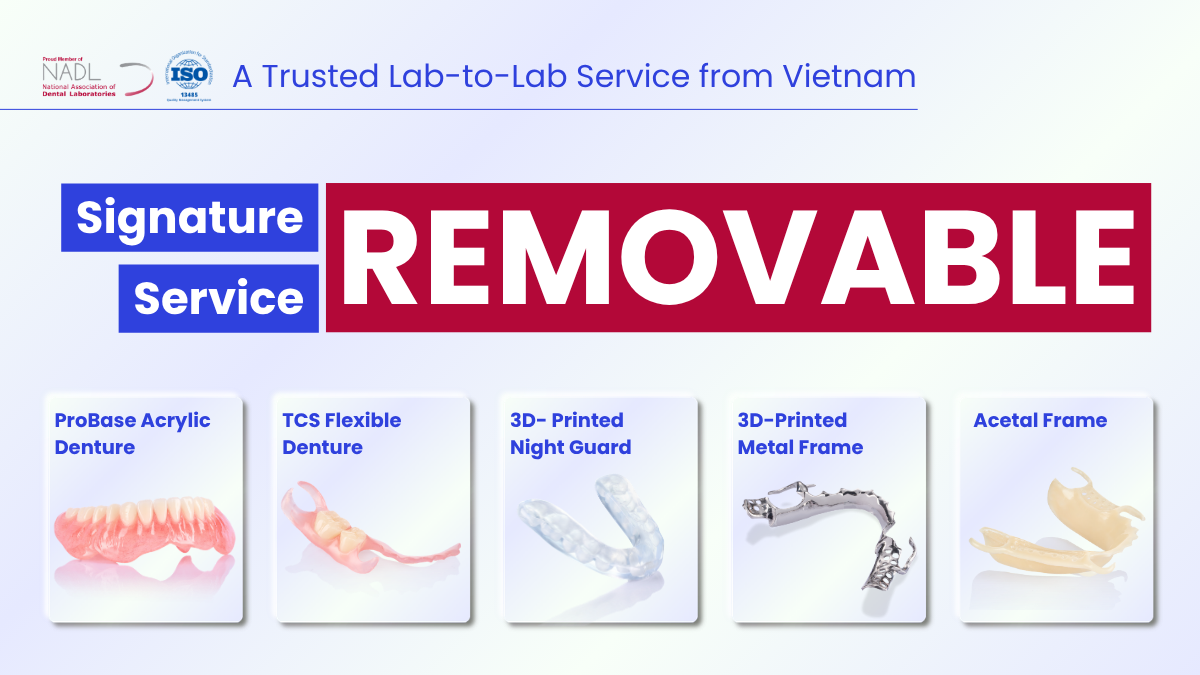
Our Commitments Built on “Trusted. Commitment. Quality”
- Commit to Large-Scale Manufacturing, high volume, remake rate < 1%.
- Commit to 5-Year Warranty
- Commit to Competitive Price
XDENT LAB | A Trusted Lab-to-Lab Service from Vietnam
Share this post:
Related Posts
See 5 Acrylic Partial Denture cases (cases 11 to 15) from XDENT LAB, a Vietnamese dental laboratory that is a member of the National Association of Dental Laboratories (NADL). XDENT LAB is an expert i...
See 5 completed Acrylic Partial Denture cases (Case 6 ~ Case 10) from XDENT LAB, a Vietnamese dental laboratory that is FDA registered and ISO 13485 certified. A trusted overseas outsourcing dental la...
Discover how critical laboratory checks reduce remakes and improve restoration quality in dental lab outsourcing for fixed and implant cases.

