
Explore open-source material options in dental 3D printing, why multi-material capability matters, and how open-system printers empower labs.
Table of contents [Show]
Introduction
Digital dentistry is evolving rapidly, and 3D printing is now a core driver of efficiency and production scalability in dental laboratories. Labs are adopting additive technology to keep pace with digital workflows, eliminate manual bottlenecks, shorten turnaround time, and meet growing dentist demand for printed units and models. In fact, 69% of labs that already print in-house report a measurable reduction in turnaround time, and 84% rely on vat-polymerization units, reflecting the dominance of resin-based printing in dentistry.
According to LMTmag’s survey in November/December 2025, more labs plan their next investment with 36% expecting to purchase a 3D printer this year. This makes the 3D printers market becoming more selective. Accuracy (75%) and reliability (59%) remain non-negotiable, but a noteworthy trend has emerged: 41% of labs now rank the open-source option for materials as a top deciding factor, equivalent to the importance of speed (41%). Another 39% prioritise the diversity of the material portfolio.
This pattern reveals a clear demand from buyers: labs no longer want to be restricted to proprietary materials. They need the flexibility to choose resin freely, adapt to new applications, control costs, and future-proof their investment. In other words, open-source material capability is no longer a secondary feature, it has become a key requirement in decision-making when purchasing 3D printers.
Why Multi-Material Capability Matters in Dental 3D Printing
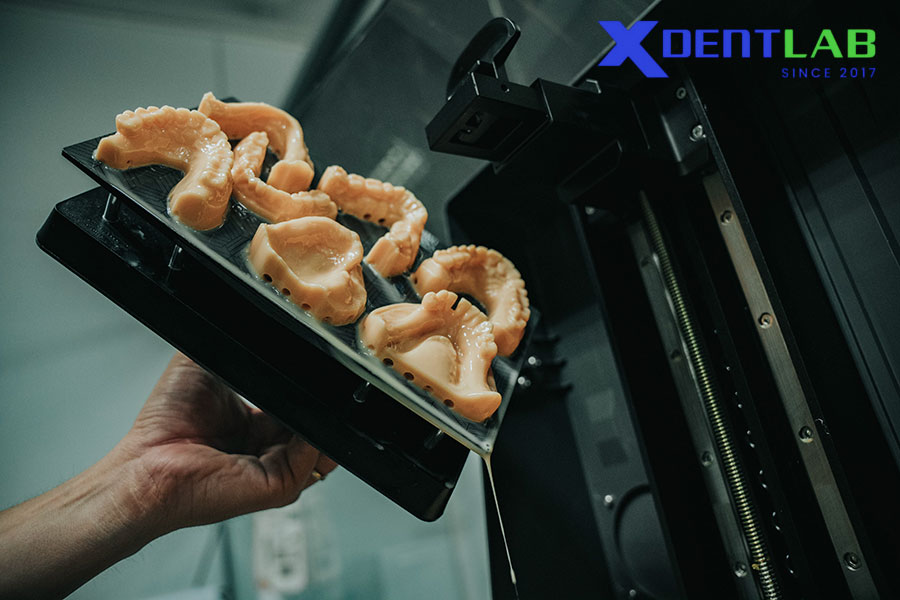
As digital dentistry expands, labs are no longer looking for a printer that can produce just models or just splints. The clinical and commercial reality is that laboratories must support a wide and ever-growing range of indications. This is the core reason multi-material capability has become one of the most important factors in selecting 3D printers in dental labs.
Below is an explanation of why multi-material flexibility matters, not just technically, but strategically.
Supporting A Full Spectrum Of Clinical Indications
Today, a single lab may need to print:
Implant models
Surgical guides
Occlusal splints
Try-in prototypes or long-term temporaries
Castable patterns for metal frameworks
Gingiva masks and soft tissue components
Custom impression trays
Diagnostic mock-ups
Ect.
Each output demands a resin with distinct mechanical behaviors from rigidity and fracture strength to elasticity, translucency, and burnout performance. No single material can satisfy all these requirements. This is why multi-material capability is now essential since it allows labs to confidently allocate the right resin to the right application while ensuring each case meets its intended clinical function.
Meeting Evolving Dentist Demand With Greater Agility
Dentists increasingly expect labs to adapt quickly:
changing materials,
changing case types,
changing esthetic expectations,
and changing turnaround times.
But a closed-material ecosystem forces labs into a single vendor’s resin line, making it hard to:
upgrade to newer resin chemistries,
match specific case requirements,
control cost per unit,
or choose the best material for each clinical purpose.
As a result, labs with limited material flexibility struggle to meet expectations or adapt to new restorative trends. This explains why 39% of labs prioritize the diversity of the material portfolio when choosing a printer. Labs want freedom. Labs want choices. Labs want to future-proof their investment. Multi-material capability empowers labs to operate with agility, enabling them to adopt new materials quickly, fulfill diverse clinical requests, and stay aligned with evolving prosthodontic practices.
Controlling Cost Per Unit And Managing Material Economics
Price point (37%) and cost per unit (33%) appear prominently among the top purchasing criteria for labs, underscoring how financially sensitive equipment investment has become. However, both considerations extend beyond the upfront cost of a printer, material flexibility plays a decisive role in long-term economics. In a closed-material ecosystem, labs are limited to a single vendor’s resin catalog, which restricts their ability to choose materials that align with case complexity, production volume, or budget constraints. By contrast, with open multi-material capability, a lab can:
choose the most cost-efficient resin for models,
choose a premium validated resin for guides and splints,
test alternative brands when prices change,
negotiate better supplier terms,
and avoid vendor-dependent pricing spikes.
This flexibility gives labs greater control over ongoing operating expenses and helps ensure that the initial equipment investment remains cost-effective over time, especially as material needs evolve.
Future-Proofing Against Rapid Resin Innovation
Resin innovation evolves faster than hardware cycles. Every year, manufacturers release:
stronger temporary materials,
clearer biocompatible resins,
more durable splint polymers,
improved burnout resins,
and better gingiva composites.
Printers locked into proprietary ecosystems cannot benefit from these advancements unless the vendor chooses to adopt them, which may take months or may never occur. In contrast, an open material system allows labs to incorporate new materials immediately, keeping pace with market advancements and enhancing the longevity of their equipment investment. In this sense, multi-material capability protects the lab’s technological future and ensures that its digital workflow remains adaptable.
Four 3D Printers Supporting Open-Material Systems
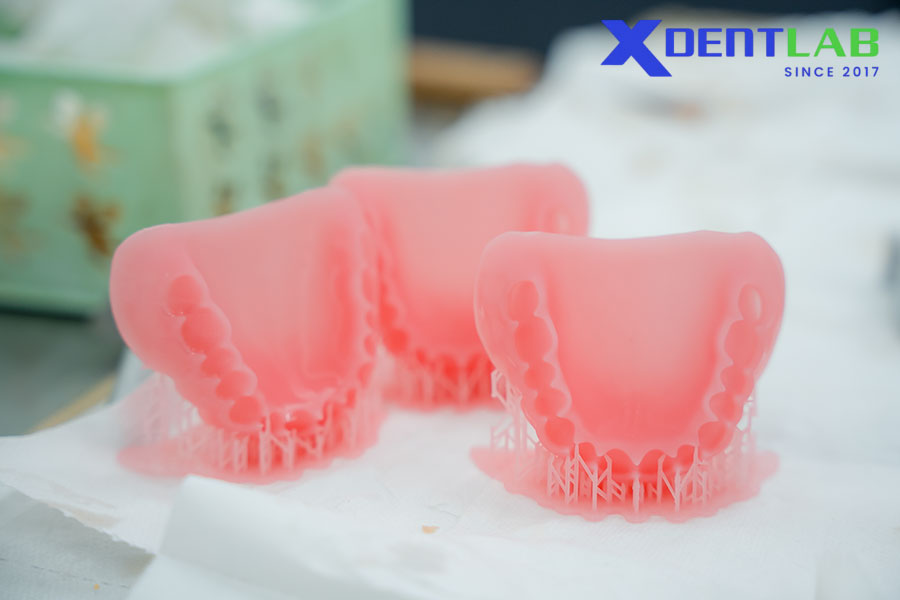
Below are four strong options for labs seeking flexibility, reliability, and third-party material compatibility.
Asiga Ultra
Asiga Ultra is widely regarded as one of the most advanced open-material platforms in dental 3D printing. Its full Open Material Mode gives labs material freedom with access to +500 qualified resins from the world's leading material manufacturers, enabled by Asiga’s open material architecture. Combined with highly stable DLP exposure control and excellent repeatability, the Ultra is an ideal choice for labs that require maximum flexibility while maintaining high accuracy across diverse indications.
Printing technology: DLP
Rapid Shape PRO 30
The Rapid Shape PRO 30 offers industrial-grade precision with a certified open-material ecosystem that supports +200 validated materials and 15+ specialized dental workflows. Designed for high-volume, production-oriented environments, the PRO 30 delivers exceptional reliability and print speed while giving labs the flexibility to adopt a wide range of third-party dental resins. This makes it a strong choice for scaling multi-material production without sacrificing repeatability.
Printing technology: DLP
SprintRay Pro S
The SprintRay Pro S integrates high-speed production with a streamlined user experience while offering selective material flexibility through its Open Certified Resin System. This framework allows the printer to work with approved third-party dental materials, giving labs more freedom than fully closed ecosystems while preserving SprintRay’s hallmark workflow simplicity. As a result, the Pro S is well suited for labs seeking an accessible, efficient system that still provides a degree of material openness for expanding their applications.
Printing technology: DLP
Elegoo Jupiter 6K
The Elegoo Jupiter 6K is a versatile open-material option, supporting most resin types on the market, including water-washable, standard, ABS-like, and plant-based formulations. Its broad compatibility makes it a practical choice for labs seeking flexibility at a lower entry cost, especially for high-volume model production or exploratory material testing. As a system actively integrated into XDENT LAB’s workflow, the Jupiter 6K demonstrates how an accessible, open-material printer can deliver dependable results when paired with robust calibration and quality-control protocols.
Printing technology: MSLA
When Investing in a Multi-Material 3D Printer May Not Be the Best Decision
Despite the appeal, buying a multi-material printer is not always the optimal choice. You may want to wait or avoid investing if your lab:
Has low or inconsistent print volume
Lacks a technician for calibration and resin validation
Needs predictable quality without the learning curve
Wants to avoid equipment costs
Cannot allocate time for SOP development and QC protocols
Many labs underestimate the complexity of open-material workflows, which require careful calibration, resin testing, and strict post-processing control.
XDENT LAB as a Trusted Outsourcing Partner
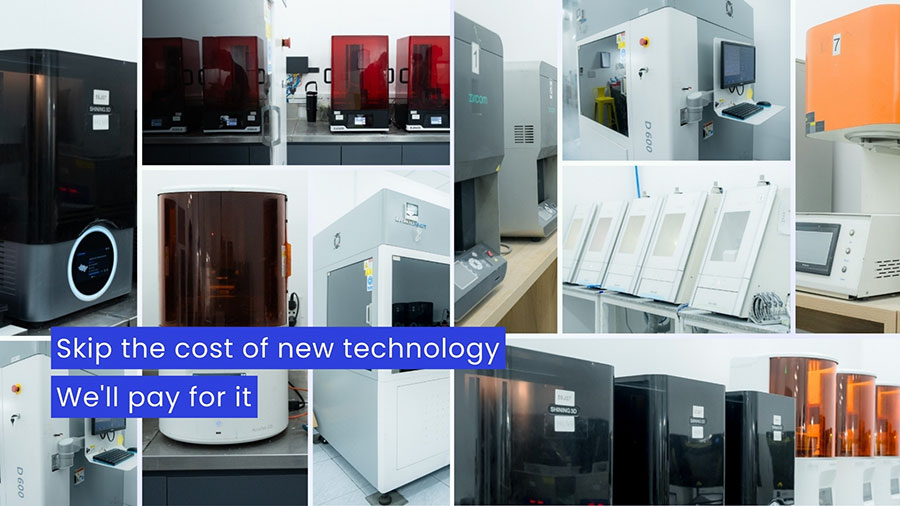
XDENT LAB helps labs gain the benefits of multi-material 3D printing without investing in equipment.
Why labs choose us
We invest in advanced multi-material 3D printers, so you don’t have to
We validate third-party resin profiles for accuracy, biocompatibility, and consistency
We support the full range of dental indications
We reduce turnaround time while maintaining high-quality standards
We help labs scale production without capital expenditure
By outsourcing to XDENT LAB, labs gain access to the technology, expertise, and material flexibility they need without the risk or cost of owning equipment.
Conclusion
Open-material capability is shaping the future of 3D printing in dental laboratories. With systems like Asiga Ultra, Rapid Shape PRO 30, SprintRay Pro95S, and Elegoo Jupiter 6K, labs now have more flexibility than ever before to choose materials tailored to each clinical indication.
However, owning the equipment is not always the best choice. Whether you want to avoid equipment cost, streamline production, or guarantee accuracy, XDENT LAB stands ready to support you with reliable, multi-material 3D printing workflows.
About XDENT LAB:
We are experts in Lab-to-Lab Full Service from Vietnam, with the signature services of Removable, meet U.S. market standards, FDA-registered, ISO 13485-certified. Founded in 2017, from local root to global reach, we scale with 2 Factories with over 100+ employees.
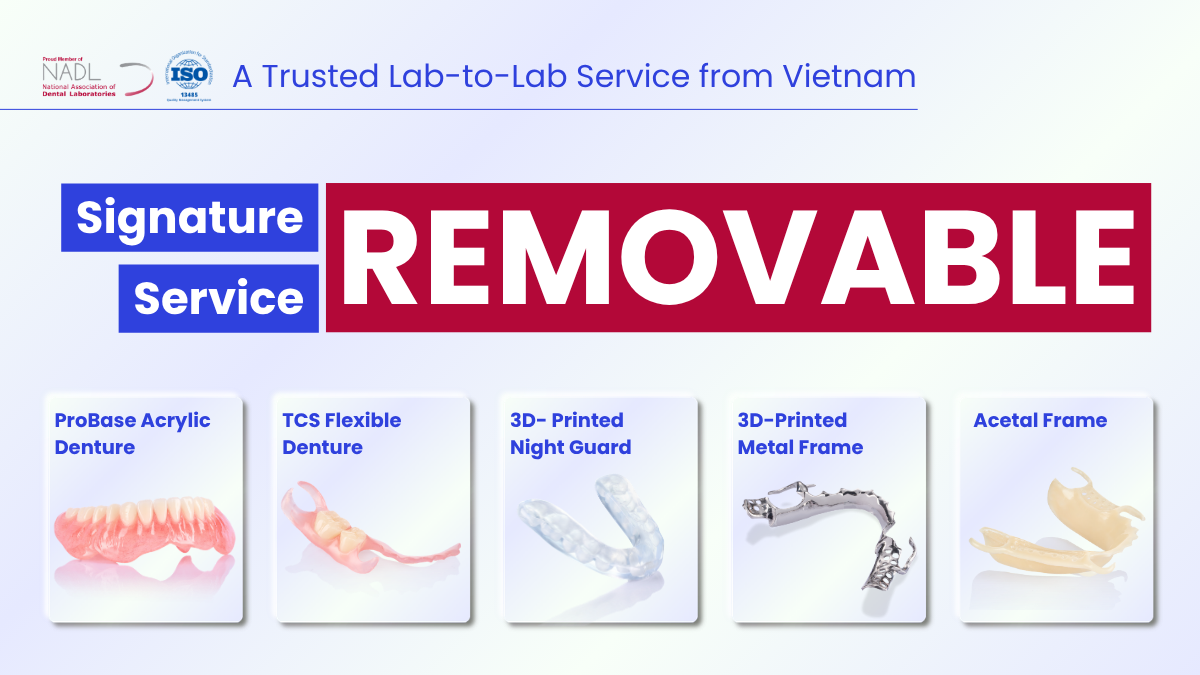
Our Commitments Built on “Trusted. Commitment. Quality”
- Commit to Large-Scale Manufacturing, high volume, remake rate < 1%.
- Commit to 5-Year Warranty
- Commit to Competitive Price
XDENT LAB | A Trusted Lab-to-Lab Service from Vietnam
Share this post:
Related Posts
Learn the key differences between titanium and cobalt-chromium alloys used in removable partial denture frameworks, from mechanical properties to production requirements.
Explore biodegradable materials in dentistry, including their applications, benefits, limitations, and future potential in regenerative and sustainable dental care.
Learn how polyamide dental materials support flexible dentures and removable prosthetics through biocompatibility, aesthetics, comfort, and lightweight performance.

