
A design breakdown of the palatal plate connector: its two fabrication methods, real indications, and the trade-offs that come with full coverage.
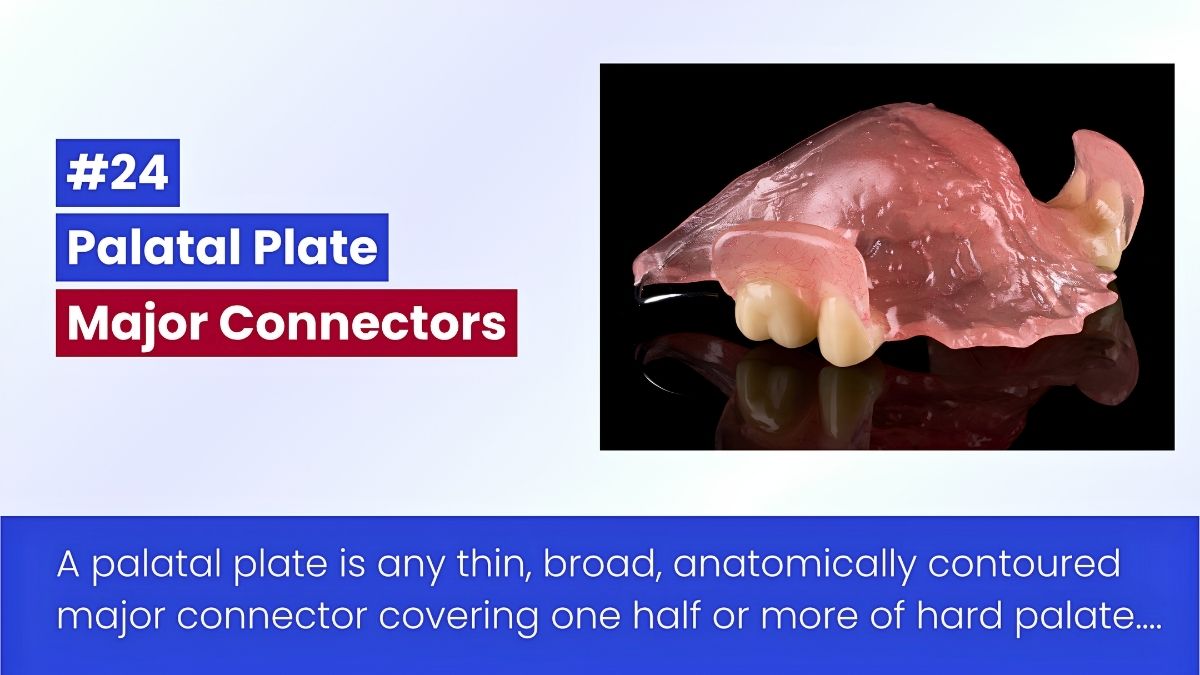
Table of contents [Show]
Of the six maxillary major connector types, the palatal plate is the one that trades the most tissue coverage for the most support. That trade-off makes it easy to misjudge in either direction: some cases get pushed toward it out of caution when a narrower connector would have been adequate, and some cases that genuinely need it get undersupported by a strap or bar that can't carry the load.
The palatal plate isn't a fallback for "when in doubt." It has a specific anatomical profile it's built for, most clearly Kennedy Class I cases with a compromised terminal abutment and significant ridge resorption, and understanding exactly why that profile calls for broad coverage is what makes the connector easy to select correctly.
This article covers what qualifies as a palatal plate, how it's placed and fabricated, its two construction methods, where it's indicated and contraindicated, and the trade-offs that come with covering more of the palate than any other connector design.
Key Points
- Any thin, broad, anatomically contoured connector covering half or more of the hard palate.
- The posterior border always terminates at the vibrating line, never beyond it, at a right angle to the median suture line.
- Two fabrication methods: full cast metal to the vibrating line, or cast metal anteriorly with an acrylic resin extension posteriorly for future relining.
- Strongest indication: Kennedy Class I with the last remaining abutment a canine or first premolar, combined with significant vertical ridge resorption.
- Contraindicated for an inoperable palatal torus and for cases with minimal tooth loss where a strap or bar is sufficient.
What is a Palatal Plate
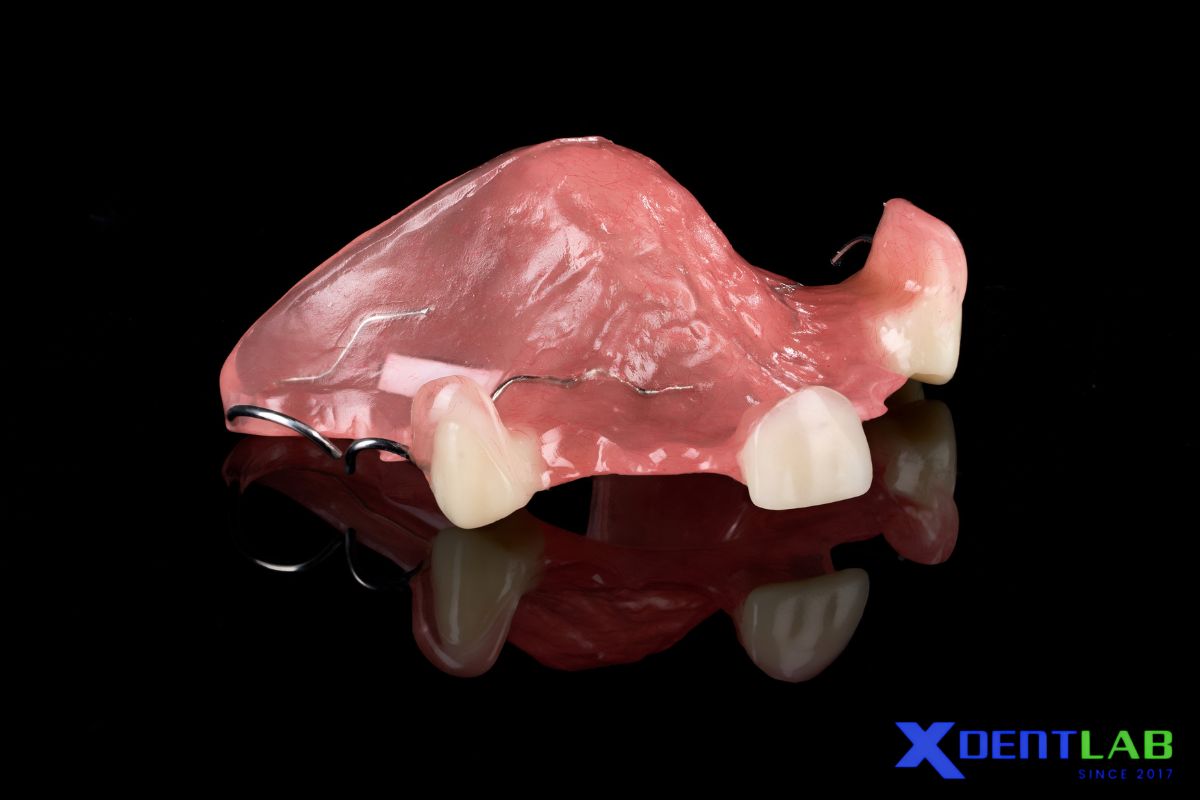
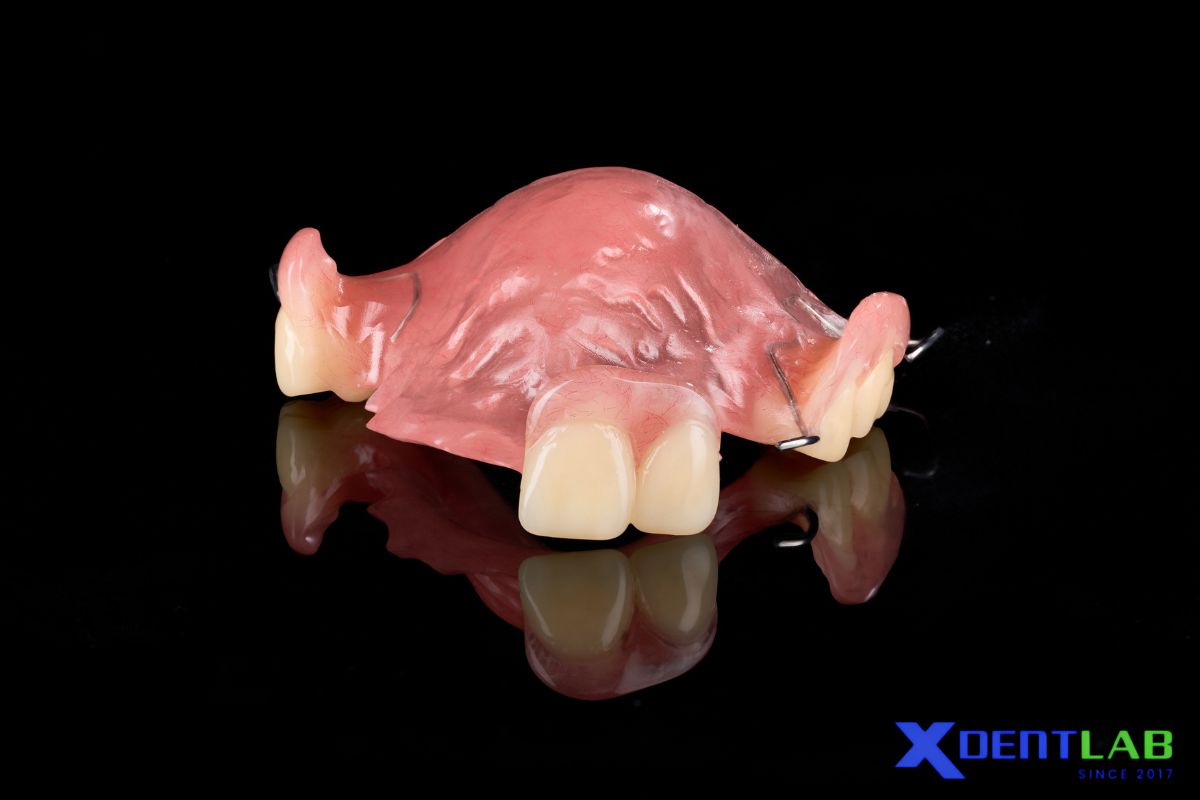
A palatal plate is any thin, broad, anatomically contoured major connector covering one half or more of the hard palate. It sits entirely within the hard palate, with the posterior border terminating at the vibrating line, the junction of the hard and soft palates, and never extending beyond it. That border runs at a right angle to the median suture line, following the same placement principle that governs every other maxillary connector type.
Design Characteristics
The palatal plate is built using an anatomic replica technique, meaning it faithfully reproduces the patient's own palatal contours rather than a generic shape. That approach delivers several properties at once:
Uniform thinness with adequate rigidity
The corrugated contour of the palate itself, reproduced accurately in the metal, provides the rigidity a flat plate of the same thickness wouldn't have.
Thermal conductivity
Because it's thin cast metal rather than a bulk resin base, the patient retains a natural sense of food temperature, something acrylic-based coverage doesn't replicate as well.
Retention through intimate tissue contact
Close adaptation to the palate generates interfacial surface tension, adding a meaningful retentive component beyond what the clasps and rests provide.
No posterior palatal seal required
Unlike a complete denture, the palatal plate doesn't need a posterior seal to achieve a stable, well-retained fit. The accuracy of cast metal against the tissue is enough on its own.
Two Fabrication Methods
| Full Cast Metal | Metal + Acrylic Resin | |
| Description | Complete cast plate extending to the vibrating line | Cast metal framework anteriorly, acrylic resin base extending posteriorly |
| Preferred when | Residual ridges are stable and relining isn't anticipated | Relining is expected, or cost is a consideration |
| Key advantage | Durable, precise, full thermal conductivity | Flexible; the acrylic portion can be relined as the bone resorbs over time |
The choice between the two isn't cosmetic. It's a decision about whether the case is expected to change. Stable ridges with low resorption risk favor the durability of full cast metal. Cases where continued resorption is likely, which is common in long-term RPD wear, favor the acrylic extension specifically because that portion, unlike the metal, can be relined later.
Where the Palatal Plate Is Indicated
Kennedy Class I with a compromised terminal abutment
This is the strongest and most specific indication, and the reasoning behind it connects two separate problems that compound each other. When the last remaining abutment is a canine or first premolar, that tooth has a smaller root and correspondingly less capacity to bear heavy occlusal load on its own. At the same time, a resorbed residual ridge offers poor tissue support, meaning the denture base can't reliably pick up the slack either. Neither the tooth nor the tissue alone can carry the case. The palatal plate resolves this by distributing load across a much wider surface area, reducing the burden on both the compromised abutment and the resorbed ridge simultaneously.
Extensive maxillary tooth loss
When the arch has lost enough teeth that support and retention both need reinforcing, broad palatal coverage is the most direct way to provide both at once.
Anticipated future relining
The metal-plus-acrylic fabrication method exists specifically for this scenario, and it's a legitimate reason to select a palatal plate even when the current support picture is only moderately compromised.
If a narrower connector has already been ruled out on mechanical grounds, insufficient rigidity, insufficient support, or insufficient retention, the palatal plate is the next step up rather than a stopgap.
Where It's Contraindicated
An inoperable palatal torus
Intimate tissue contact is central to how the palatal plate achieves both retention and fit, and an unyielding torus makes that contact impossible to achieve across the full plate. A different connector type, most often a U-shaped design, becomes necessary instead.
Minimal tooth loss with sufficient remaining abutments
When the case doesn't need the level of support a plate provides, using one anyway means covering more tissue than necessary for no functional benefit. A strap or bar connector accomplishes the same goal with less palatal coverage and less patient adaptation.
Advantages and Disadvantages
Advantages
- Maximum support, retention, and stabilization from broad coverage.
- A relatively straightforward design concept compared to multi-component connectors like the A-PP strap.
- Fewer metal edges in contact with the teeth, reducing tissue irritation at those contact points.
- Easy to add prosthetic teeth to the framework later if the case changes.
- Can be converted into an interim complete denture if it becomes necessary.
Disadvantages
- Covers more tissue than any other major connector, requiring a longer patient adaptation period.
- May affect phonetics, since broad coverage changes how sound resonates within the oral cavity.
- The vibrating line and hamular notch areas must be identified precisely on the master cast, a technically demanding step where errors are easy to make and hard to correct later.
- Metal-tissue contact is difficult to adjust once the plate is cast.
- The metal portion itself cannot be relined. Only the acrylic resin extension, when that fabrication method is used, allows for future relining.
Conclusion
The palatal plate earns its coverage. It's the right connector when a compromised abutment and a resorbed ridge are working against each other, or when the case genuinely needs more support and retention than a strap, bar, or combination design can deliver. It's the wrong connector when it's chosen as a default for uncertainty rather than a response to a specific support deficit, since every square millimeter of extra coverage comes with a real cost in adaptation time, phonetics, and long-term serviceability of the metal portion.
References
[1] Carr AB, Brown DT (2011) McCracken's Removable Partial Prosthodontics. 12th edn, Mosby, 45.
[2] Gad MM (2017) Removable Partial Denture Designing: Variation of Hard and Soft Tissue Anatomy and Maxillary Major Connector Selection. Int J Dentistry Oral Sci. 4(4): 457-463.
[3] Laird RE, Laminie GA (1986) Osborne and Laminie’s Partial Dentures. (5th edn), Blackwell Scientific Publications, London. 23-38, 51-72, 273-278.
[4] Phoenix RD, Cagna DR, DeFreest CF (2003) Stewart's Clinical Removable Partial Prosthodontics. (4th Edn), Chicago: Quintessence Publ. 19-31.
[5] Polychronakis N, Sotiriou M, Zissis A (2013) A Survey of Removable Partial Denture Casts and Major Connector Designs Found in Commercial Laboratories, Athens, Greece. J Prosthodont. 22(3): 245-249.
Share this post:
Related Posts
Explore the types, materials, retention methods and lab workflows for maxillofacial removable prostheses, with practical guidance for dental practices.
Explore precision attachment denture types, benefits and limitations, plus key considerations for design, fabrication and maintenance in dental practices.
Explore telescopic denture materials, retention designs and lab workflows, with practical guidance on fit, fabrication and maintenance for dental practices.

