
Comprehensive guide to ISO 20795-1 for dental base polymers: material types (Types 1–5), key requirements, flexural testing methods, FDA/EN compliance, water sorption/solubility limits, and lab QA practices tailored for XDENT LAB’s lab-to-lab workflows.

Table of contents [Show]
- Overview
- Introduction to ISO 20795-1
- Scope & Material Classification
- Key Performance Requirements
- Testing Methodologies
- Regulatory Significance
- FDA-Aligned Performance Criteria
- Testing Equipment & Procedures
- Practical Implications for Dental Laboratories
- Recent Developments & Future Directions
- XDENT LAB Approach (Lab-to-Lab, FDA/ISO Aligned)
- Key Takeaways
Overview
ISO 20795-1 is the cornerstone international standard for denture base polymers, defining how materials are classified, tested, and validated for clinical safety and performance. For dental practices and labs, it provides a common language for quality assurance, regulatory alignment (FDA/EN ISO), and predictable outcomes across traditional and digital workflows. Below is a comprehensive analysis tailored to XDENT LAB’s lab-to-lab model and U.S. market expectations.
Introduction to ISO 20795-1
ISO 20795-1:2013 “Dentistry — Base polymers — Part 1: Denture base polymers” sets uniform requirements and test methods for materials used in denture bases. Reviewed and confirmed in 2021, it remains the prevailing reference for manufacturers, testing labs, clinicians, and regulators. Adoption streamlines product development, quality control, and compliance across global markets.
Scope & Material Classification
The standard covers definitions, material types, performance requirements, test methods, packaging/marking, instructions for use, and provisions for impact-resistant claims.
Scope Highlights
Classification of denture base polymers and copolymers.
Mechanical, physical, and chemical property requirements.
Detailed test methods for compliance verification.
Packaging, labeling, and IFU requirements.
Special criteria for improved impact resistance.
Material Families
Poly(acrylic acid esters) and substituted esters.
Poly(vinyl esters), polystyrene.
Rubber-modified PMMA (high-impact).
Polycarbonate, polyamides.
Processing Types (ISO Types 1–5)
Type 1: Heat-polymerizable (powder/liquid).
Type 2: Self-polymerizable (auto-/cold-cure).
Type 3: Thermoplastic blank or powder.
Type 4: Light-activated.
Type 5: Microwave-activated.
Key Performance Requirements
ISO 20795-1 defines minimum thresholds to ensure clinical durability and safety.
Mechanical Properties
Flexural strength:
Types 1, 3, 4, 5: ≥ 65 MPa (min., 4 of 5 specimens).
Type 2: ≥ 60 MPa (min., 4 of 5 specimens).
Flexural modulus: Minimum values specified to ensure rigidity.
Impact strength: Additional validation for materials claiming improved impact resistance.
Physical & Chemical Properties
Residual monomer: Maximum limits to reduce irritation and improve stability.
Water sorption and solubility: Maximum values to ensure dimensional stability.
Color stability: Requirements for aesthetic durability under defined conditions.
Biocompatibility: Expected alignment with ISO 10993 frameworks.
Testing Methodologies
Standardized methods enable comparable, reproducible results across labs.
Flexural Testing (Three-Point Bend)
Specimen: 64 × 10 × 3.3 mm.
Span: 50 mm.
Crosshead speed: 5 mm/min.
Environment: 23 ± 2°C; 50 ± 10% RH.
Calculations:
Flexural strength: σ = 3FL/2bh².
Flexural modulus: E = L³m/4bh³.
Standards Comparison Notes
Methodology differs from ASTM D790 (specimen size, span, speed, formulas).
Results are not directly interchangeable; always cite the standard used.
Regulatory Significance
ISO 20795-1 underpins recognition and harmonization in major markets.

FDA Recognition (U.S.)
Recognized consensus standard (e.g., Recognition Number framework).
Supports 510(k) submissions by demonstrating safety/effectiveness aspects.
European Harmonization
Adopted as EN ISO 20795-1.
Facilitates trade and consistent quality benchmarks across the EU.
FDA-Aligned Performance Criteria
Benchmarks commonly referenced by regulators and QA teams.
Core Criteria
Flexural strength:
Types 1, 3, 4, 5: ≥ 65 MPa.
Type 2: ≥ 60 MPa.
Water sorption: ≤ 32 μg/mm³.
Water solubility:
Type 1: ≤ 1.6 μg/mm³.
Types 2–5: ≤ 8.0 μg/mm³.
Flexural modulus: Minimum values per material type.
Testing Equipment & Procedures
Compliance requires calibrated systems and controlled environments.
Equipment
Universal testing machine with three-point bend fixtures.
Environmental control (temperature and humidity per ISO).
Data acquisition for precise load–deflection capture.
Procedural Controls
Specimen preparation per ISO dimensions/tolerances.
Calibration logs for span, speed, and sensors.
Operator SOPs to reduce variability.
Practical Implications for Dental Laboratories
ISO 20795-1 guides material selection, QA, and documentation in daily operations.
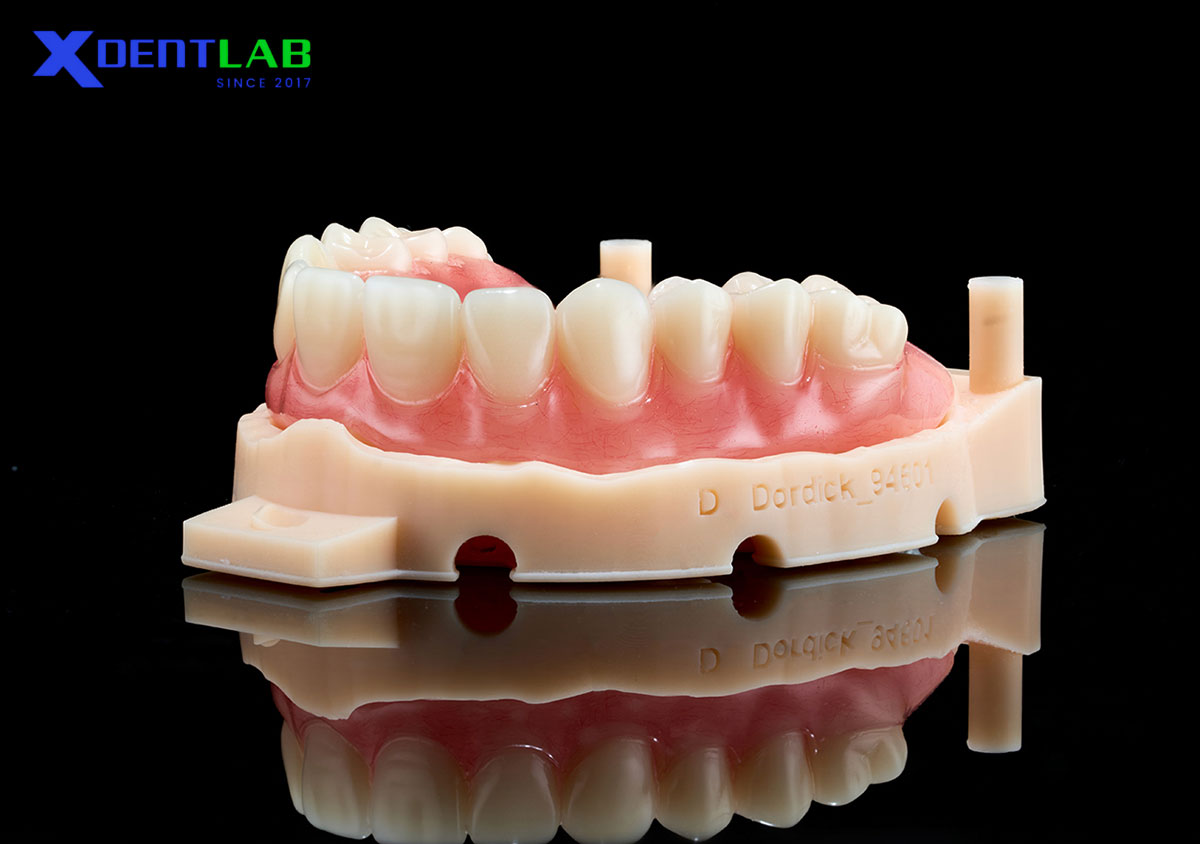
Quality Assurance
Use ISO-conforming materials and verify incoming lot certificates.
Run periodic validation tests (flexural, sorption/solubility) for SPC tracking.
Document environmental conditions during testing and production.
Material Selection & Use-Case Fit
Type 1 (heat-cure) for definitive bases; Type 2 (self-cure) for repairs/interim.
Type 3 (thermoplastic) for CAD/CAM blanks; Types 4–5 for specialized workflows.
Regulatory Compliance
Align with FDA and EN ISO references for smoother submissions and audits.
Maintain traceability: lot numbers, IFUs, cure cycles, and device history records.
Recent Developments & Future Directions
Expect updates as materials and workflows evolve.
Digital Dentistry Integration
Potential future guidance for CAD/CAM-specific materials and prints.
Advanced Properties
Antimicrobial additives and enhanced biocompatibility pathways.
Color stability improvements and reduced monomer formulations.
Sustainability
Emerging considerations for environmental impact and lifecycle documentation.
XDENT LAB Approach (Lab-to-Lab, FDA/ISO Aligned)
XDENT LAB operationalizes ISO 20795-1 through rigorous QA and digital-first execution.
Production Strategy
Heat-cure injection or milled PMMA for definitive strength and fit.
Self-cure materials reserved for repairs and interim use with reinforcement.
Quality System
Lot traceability, calibrated equipment, and SPC checkpoints.
Incoming material verification and periodic in-house testing per ISO.
Communication & Documentation
Structured Rx forms, IFU adherence, and device history records.
Audit-ready logs for environmental conditions, cure cycles, and inspection outcomes.
Key Takeaways
ISO 20795-1 is the definitive framework for denture base polymers, enabling consistent quality and regulatory confidence.
Flexural strength/modulus, sorption/solubility, and residual monomer thresholds are central to clinical performance.
Citing the exact test standard (ISO vs. ASTM) is essential for valid comparisons.
XDENT LAB’s ISO/FDA-aligned workflows translate the standard into predictable, patient-safe outcomes for lab-to-lab partners.
About XDENT LAB:
We are experts in Lab-to-Lab Full Service from Vietnam, with the signature services of Removable, meet U.S. market standards, FDA-registered, ISO 13485-certified. Founded in 2017, from local root to global reach, we scale with 2 Factories with over 100+ employees.
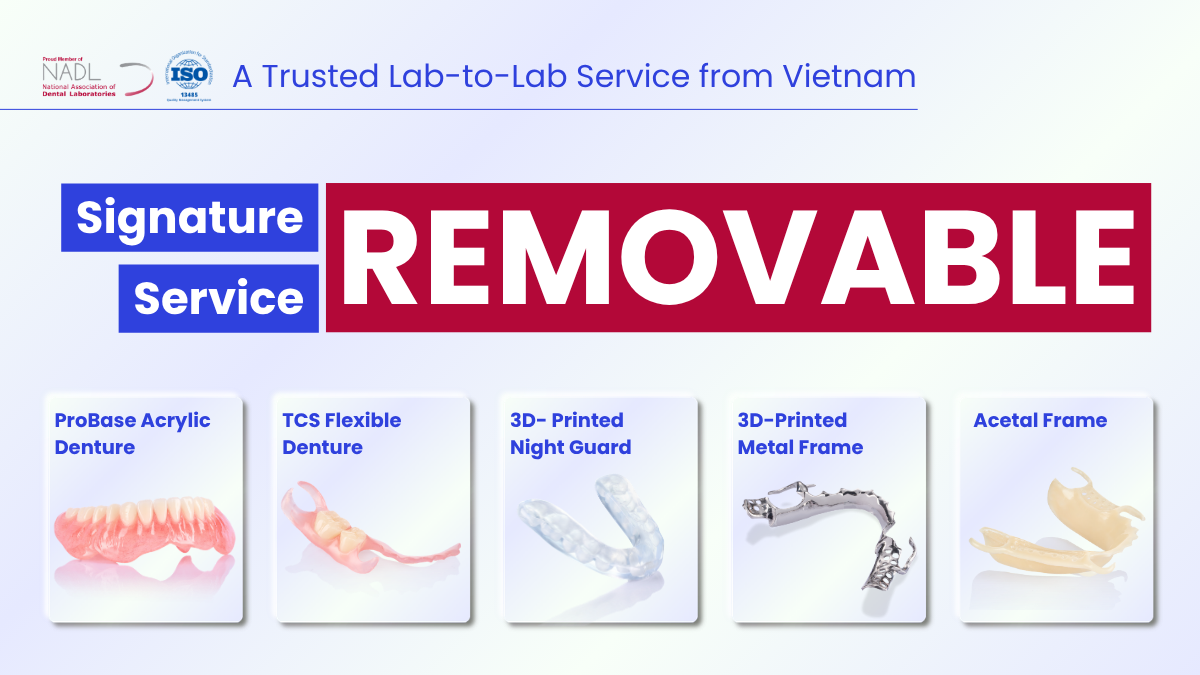
Our Commitments Built on “Trusted. Commitment. Quality”
- Commit to Large-Scale Manufacturing, high volume, remake rate < 1%.
- Commit to 5-Year Warranty
- Commit to Competitive Price
XDENT LAB | A Trusted Lab-to-Lab Service from Vietnam
Tags:
Quality Standards & Compliance ISO Certification ISO 20795-1 Digital Workflow Dental Base PolymersShare this post:
Related Posts
Discover the QA/QC criteria behind consistent Zirconia Crown & Bridge quality, and what to look for when choosing an outsourcing dental lab.
Ensure reliable dental outsourcing with ISO 9001/13485, FDA 21 CFR 820, and MDR. Vendor qualification, traceability, QA protocols, and CAPA for consistent quality.

Concise, practical guide to Good Manufacturing Practices (GMP). Covers regulatory frameworks (21 CFR), quality systems, documentation, validation, inspections, data integrity (ALCOA+), and best practi...

