
Compomers in dentistry explained: composition, fluoride release, pros/cons vs GICs, RMGICs, and composites, plus clinical technique and use cases for reliable outcomes.
Table of contents [Show]
- What Compomers Are: Chemistry & Setting
- Properties & Clinical Performance
- Indications, Contraindications, and Technique
- Comparison at a Glance
- Decision Pathway for Busy Clinics
- Recent Innovations & Future Directions
- XDENT LAB Perspective: QA, Materials, and Lab-to-Lab Consistency
- Practical Takeaways
Compomers—polyacid-modified resin sealants—sit between composites and glass ionomer systems. They offer fluoride release, friendlier handling in mildly moist fields, and adequate strength for low-stress restorations. For clinics prioritizing predictable outcomes and fewer remakes, indication control and standardized technique are as important as the material choice. Below is a practical analysis you can scan quickly or use as a training reference, with notes on how XDENT LAB’s FDA/ISO-aligned workflows support consistency.
What Compomers Are: Chemistry & Setting
Compomers are essentially composite resins enhanced with acidic monomers and ion-leachable glass to enable delayed, glass-ionomer-like ion interactions.
Composition at a Glance
- Resin matrix: UDMA/TEGDMA/Bis-GMA families (light-cured).
- Acidic monomers: Carboxylated dimethacrylates that later participate in acid–base reactions.
- Fillers: Fluoroaluminosilicate glass for fluoride release; approximately 42–67% by volume (77–80% by weight).
- Photoinitiators: Typically camphorquinone-based systems.
- No initial water: The acid–base reaction occurs only after intraoral water sorption.
Dual Setting Mechanism
- Primary: Light-activated free-radical polymerization (as in composites).
- Secondary: Slow acid–base reaction after water uptake, forming limited salt bridges and enabling ion release.
In clinical use, compomers behave like composites with a mild, delayed ion-releasing assist.
Properties & Clinical Performance
Compomers trade some strength and wear resistance for fluoride release and friendlier handling—especially valuable in pediatric and cervical restorations.
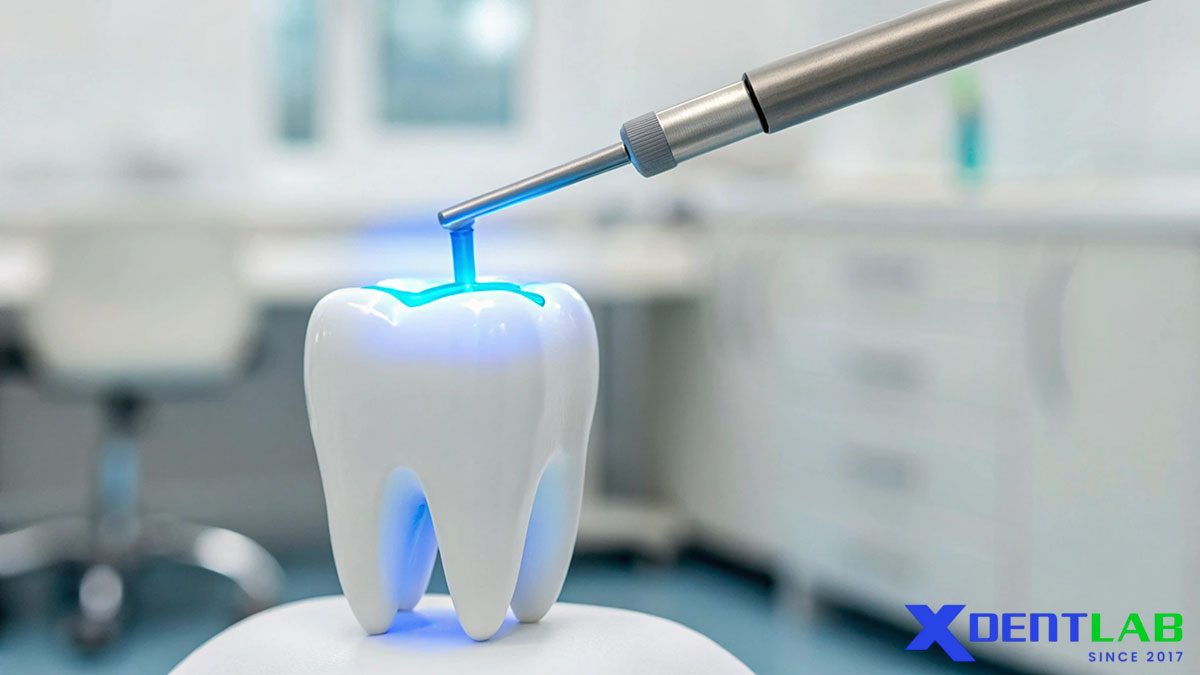
Mechanical and Physical Profile
- Flexural strength: Mid-range—higher than GICs, lower than top composites.
- Compressive strength & microhardness: Adequate for low-stress areas; not ideal for heavy occlusion.
- Elastic modulus: Slightly lower than composites (more forgiving in primary teeth).
- Wear resistance: Better than GICs/RMGICs, below nano-hybrid composites.
- Polymerization shrinkage: Approximately 2–3% by volume—use incremental technique.
- Water sorption: Higher than composites, enabling ion release but with potential for color and marginal changes over time.
- Radiopacity: Most commercial compomers are radiopaque.
- Color stability: Good initially; more stain-prone than premium composites over time.
Ion Release, Bioactivity, and Biocompatibility
- Fluoride: Initial burst over 24–48 hours, then lower steady release; modest recharge capability.
- Other ions: Limited calcium/aluminum release depending on glass composition.
- Biocompatibility: Generally favorable; early mild acidity diminishes as reactions proceed.
- Antibacterial effect: Modest and largely fluoride-mediated.
Clinical Performance Notes
- Strong utility in pediatric, cervical, and preventive contexts.
- Not a substitute for high-wear posterior composite indications.
- More forgiving than composites regarding moisture, but still requires proper bonding.
Indications, Contraindications, and Technique
Think of compomers as a smart compromise for specific sites and patient profiles.
Primary Indications
- Class III and V in permanent teeth where fluoride benefit is desirable.
- Pediatric restorations in primary teeth (shorter service life, higher caries risk).
- Pit and fissure sealants that benefit from fluoride release.
- Preventive resin restorations and small non–stress-bearing lesions.
- Selective core build-ups where fluoride benefit is prioritized.
Contraindications
- High-stress occlusal surfaces (Class I/II in permanent molars).
- Large load-bearing restorations or bruxism cases.
- Aesthetically critical anterior cases where top-tier composites excel.
Technique Essentials
- Isolation: Rubber dam or high-quality retraction; compomers are more forgiving than composites but still need control.
- Bonding: Etch-rinse or selective-etch with compatible primer/adhesive per IFU.
- Placement: Incremental for depths > 2 mm; adapt well; light-cure 20–40 seconds per increment.
- Finishing/Polishing: Standard composite protocols; expect slightly lower final gloss than elite composites.
- Maintenance: Encourage fluoride toothpaste/varnish to leverage recharge capability.
Comparison at a Glance
This table accelerates material selection by contrasting core attributes.
| Material | Setting & Adhesion | Fluoride Release | Strength/Wear | Moisture Tolerance | Best Use Cases |
|---|---|---|---|---|---|
| Glass Ionomer (GIC) | Acid–base; self-adhesive | Highest; strong recharge | Lowest | High sensitivity during set | High caries risk; atraumatic care; non-stress areas |
| RMGIC | Dual (light + acid–base); self-adhesive | High; good recharge | Low–moderate | Moderate | Cervical/liners/bases; when adhesion + fluoride are priorities |
| Compomer | Light-cure primary + delayed acid–base; requires bonding | Moderate; modest recharge | Moderate | Better than composites | Pediatric, Class V/III, sealants, preventive restorations |
| Composite | Light-cure; requires bonding | Minimal (unless modified) | Highest | Lowest tolerance | Stress-bearing occlusals; aesthetics-critical cases |
Key point: compomers bridge the gap—offering fluoride and easier handling than composites with better strength than GICs/RMGICs, but they are not designed for heavy occlusion.
Decision Pathway for Busy Clinics
A quick, defensible selection logic you can standardize across providers.
- Caries risk high or primary dentition? Yes → Prefer GIC/RMGIC/Compomer depending on site and load. No → Composite for load-bearing; compomer for cervical/small interproximal where fluoride helps.
- Stress level of the site? High occlusal load → Composite. Low to moderate → Compomer is reasonable.
- Isolation quality? Compromised but acceptable → Compomer or RMGIC. Poor → GIC/RMGIC. Excellent → Composite viable anywhere.
- Aesthetic priority? Very high → Premium nano-hybrid/micro-hybrid composite. Moderate → Compomer acceptable.
- Prevention goal (white spot, root caries, orthodontics)? Compomer or RMGIC for fluoride advantage.
Recent Innovations & Future Directions
- Higher fluoride-yield glasses and better recharge without compromising strength.
- Nanohybrid fillers improving wear and polish.
- Bioactive additives (e.g., calcium phosphate) to enhance remineralization.
- Bulk-fill variants for faster pediatric workflows.
- Orthodontic uses (sealing around brackets to reduce white spot lesions).
- Digital integration exploration (block materials/CAD-CAM compatibility) and color-change cure indicators.
XDENT LAB Perspective: QA, Materials, and Lab-to-Lab Consistency
XDENT LAB supports clinics aiming for reliability and scale by standardizing materials and documentation under FDA and ISO frameworks.
How Quality Is Operationalized
- FDA/ISO-aligned procurement: Approved compomer lines with validated lot traceability and radiopacity benchmarks.
- Bonding system pairing: Material-specific adhesive/bonding protocol sheets to minimize sensitivity and marginal gaps.
- Parameterized indications: Chairside-to-lab checklists mapping site, load, isolation, and caries risk to material choice.
- Digital forms and evidence packs: Batch-linked IFUs, SDS, and curing guidelines included with cases for training and audit.
- Outcome feedback loop: Structured remake analysis (marginal integrity, color shift, wear patterns) feeding protocol updates.
Where Compomers Fit in XDENT LAB Workflows
- Pediatric and cervical restorations: standardized compomer kits with shade mapping and polishing sequences.
- Sealant programs: fluoride-forward protocols with in-office recharge guidance.
- Orthodontic prevention: peri-bracket sealing and white-spot mitigation kits.
- Geriatric/root caries: compomer pathways for aesthetic cervical/root surfaces with moisture-tolerant bonding options.
Practical Takeaways
- Compomers function as “composites with benefits”: moderate fluoride release, friendlier handling, and adequate strength for low-stress sites.
- Deploy them where they shine: pediatric teeth, Class V/III, sealants, preventive resin restorations, and select cores—avoid heavy occlusion.
- Success depends on fundamentals: isolation, compatible bonding, incremental cure, and disciplined finishing.
- Standardize a decision tree: match caries risk, stress level, isolation, and aesthetic demand to the material class.
- With FDA/ISO-aligned workflows, XDENT LAB helps clinics use compomers strategically—documented, repeatable, and scalable across teams.
About XDENT LAB:
We are experts in Lab-to-Lab Full Service from Vietnam, with the signature services of Removable, meet U.S. market standards, FDA-registered, ISO 13485-certified. Founded in 2017, from local root to global reach, we scale with 2 Factories with over 100+ employees.
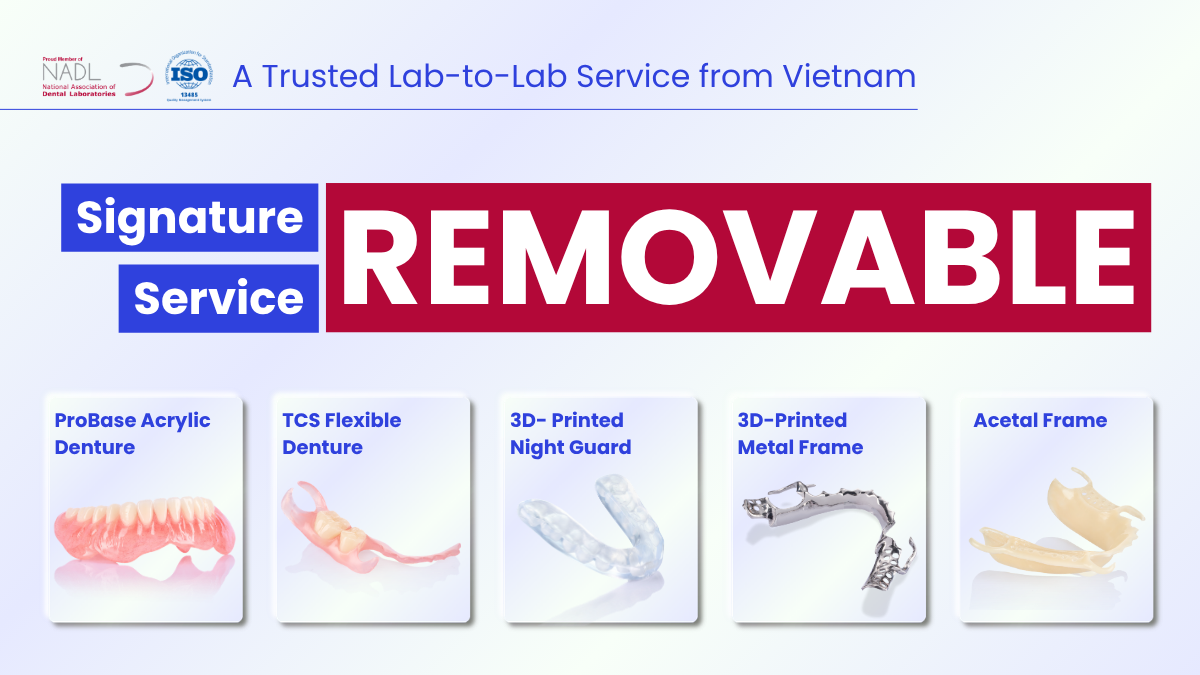
Our Commitments Built on “Trusted. Commitment. Quality”
- Commit to Large-Scale Manufacturing, high volume, remake rate < 1%.
- Commit to 5-Year Warranty
- Commit to Competitive Price
XDENT LAB | A Trusted Lab-to-Lab Service from Vietnam
Share this post:
Related Posts
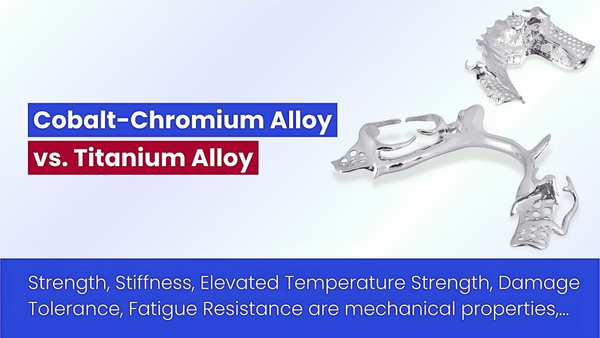
Learn the key differences between titanium and cobalt-chromium alloys used in removable partial denture frameworks, from mechanical properties to production requirements.
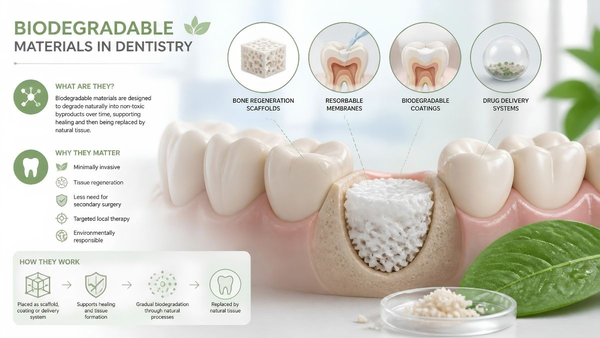
Explore biodegradable materials in dentistry, including their applications, benefits, limitations, and future potential in regenerative and sustainable dental care.
Learn how polyamide dental materials support flexible dentures and removable prosthetics through biocompatibility, aesthetics, comfort, and lightweight performance.

