
Explore digital denture workflow and technologies in dentistry, including CAD/CAM, 3D printing, materials, benefits, and modern lab production processes.
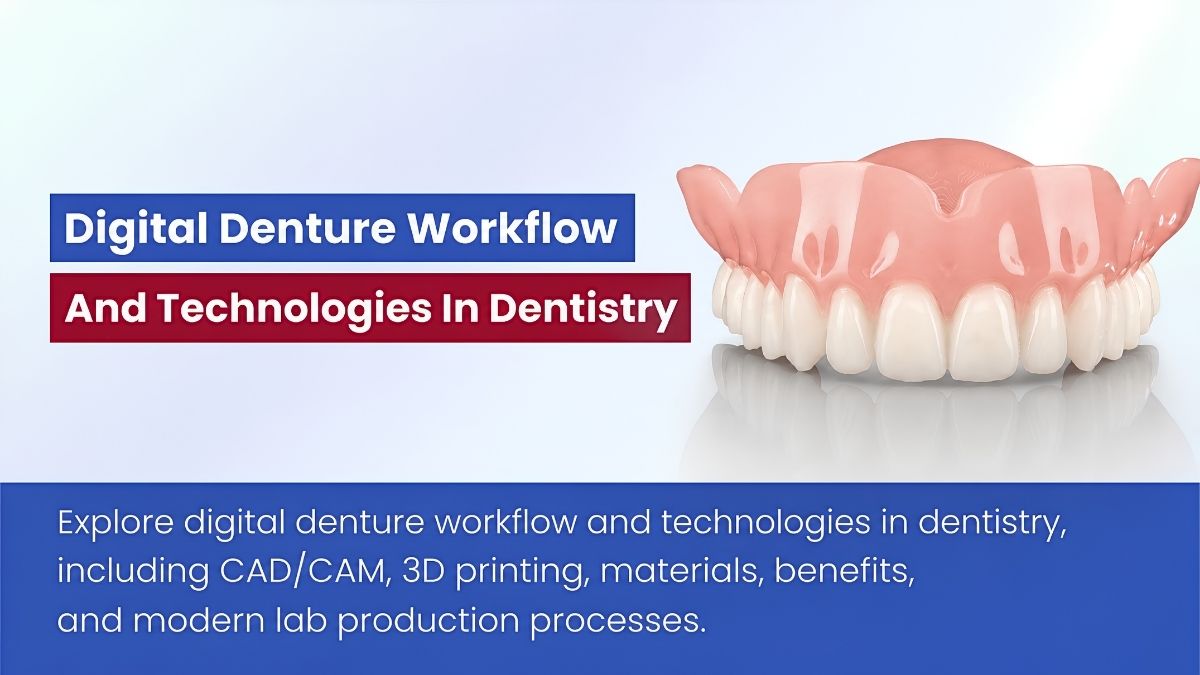
Table of contents [Show]
- What are digital dentures?
- Main technologies used in digital dentures
- Materials used for digital dentures
- Clinical applications of digital dentures
- Benefits of digital dentures
- Challenges and limitations
- Future direction of digital dentures
- Why digital dentures matter for lab-to-lab outsourcing
- Key takeaways
Digital dentures are reshaping removable prosthodontics by replacing many traditional analog steps with precise digital workflows. Instead of relying entirely on manual impressions, wax setups, and hand-processed fabrication, digital dentures use technologies such as intraoral scanning, CAD software, CAM milling, and 3D printing to design and produce prostheses with greater consistency and efficiency. The result is a more controlled process for both dental practices and laboratory partners.
For dental practices seeking dependable quality and streamlined collaboration, digital dentures represent more than a technology upgrade. They reflect a broader shift toward standardized production, faster turnaround, improved record retention, and stronger communication between clinic and lab. This is especially important in full-arch and implant-related cases, where fit, occlusion, aesthetics, and reproducibility all matter. This article explores what digital dentures are, how they are made, the technologies and materials involved, their clinical applications, benefits, limitations, future trends, and why they matter in dental lab outsourcing.
What are digital dentures?
Digital dentures are removable prosthetic restorations designed and manufactured through digital dentistry technologies rather than relying solely on conventional manual methods.
Core definition
A digital denture workflow typically includes digital impression capture or scanned conventional impressions, CAD-based denture design, CAM production through milling or 3D printing, and digital storage of case data for reproduction or modification.
This allows the prosthesis to be fabricated with a higher level of process control and repeatability.
How digital dentures differ from traditional dentures
Traditional dentures depend heavily on hand-crafted laboratory procedures at multiple stages. Digital dentures reduce variability by using software-guided design and machine-based manufacturing.
In practice, this means more standardized workflows, easier case duplication, faster communication between clinic and lab, and greater consistency across remakes or future adjustments.
Main technologies used in digital dentures
Digital dentures depend on a connected ecosystem of technologies rather than a single device or software platform.
Digital impressions
Digital impressions are often captured with intraoral scanners or created by scanning conventional impressions and casts.
Why they matter
They help improve data accuracy, case transfer speed, communication with the laboratory, and integration into digital design software.
In edentulous cases, digital capture can be more technique-sensitive, but workflows continue to improve.
CAD software
Computer-aided design software is used to create the denture base, tooth arrangement, borders, and occlusal scheme.
What CAD supports
It enables anatomical customization, virtual tooth setup, aesthetic planning, controlled adjustments before fabrication, and more predictable communication between dentist and technician.
CAM milling
Milling is a subtractive production method that fabricates dentures or denture components from pre-polymerized discs or blocks, commonly PMMA.
Why milling is important
Milled dentures are often valued for material homogeneity, consistent fit, good surface quality, and reduced polymerization shrinkage compared with conventional processing.
3D printing
3D printing is an additive manufacturing method used in digital denture workflows for bases, try-ins, prototypes, records, and in some systems definitive components.
What 3D printing adds
It supports rapid prototyping, efficient try-in workflows, scalable production, lower material waste in selected cases, and flexible appliance manufacturing.
Digital articulators
Digital articulators simulate jaw relationships and occlusal movements within the software environment.
Their role in workflow accuracy
They help laboratories and clinicians evaluate vertical dimension, centric relation records, occlusal contacts, and functional movement patterns.
This supports improved functional outcomes in complete and implant-supported dentures.
Materials used for digital dentures
Material selection plays a major role in the strength, aesthetics, biocompatibility, and long-term performance of digital dentures.
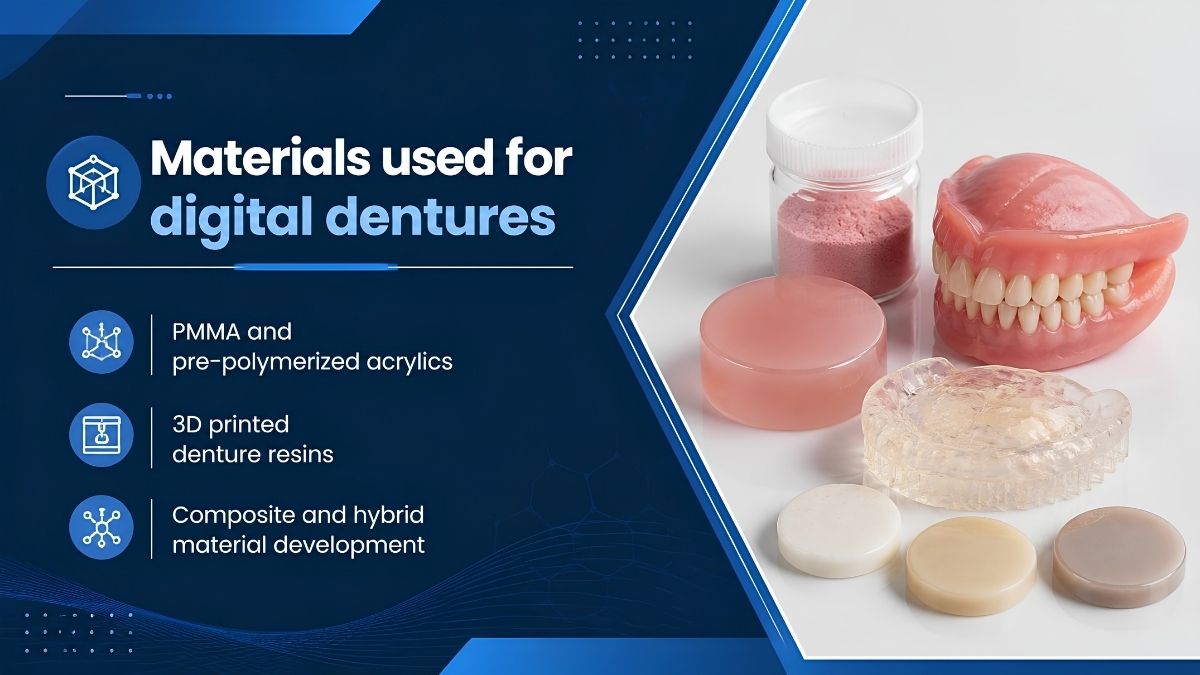
PMMA and pre-polymerized acrylics
Polymethyl methacrylate, or PMMA, remains a leading material in digital denture fabrication, especially for milling workflows.
Why PMMA is widely used
It offers good mechanical properties, reliable aesthetics, established clinical history, and compatibility with milled denture systems.
Pre-polymerized PMMA discs may also provide greater material consistency than conventionally processed acrylics.
3D printed denture resins
Specialized resins are used for printed denture bases, try-ins, and selected definitive prosthetic components depending on system validation and indication.
Important considerations
These materials must be assessed for biocompatibility, wear resistance, strength, color stability, and regulatory approval for intended use.
Composite and hybrid material development
Ongoing development in composite and hybrid denture materials aims to improve fracture resistance, esthetics, and long-term performance.
This is an active area of innovation as digital removable prosthodontics continues to mature.
Clinical applications of digital dentures
Digital dentures are used in a growing number of removable and implant-related clinical scenarios.
Complete dentures
Complete dentures are one of the most established applications of digital denture workflows.
Main advantages in full-arch cases
Digital methods can help improve standardization of tooth setup, reproducibility, documentation, and efficiency in production and remake scenarios.
Implant-supported dentures
Digital workflows are highly valuable for overdentures and implant-retained removable prostheses.
Why digital matters here
These cases benefit from better prosthetic planning, improved coordination with implant positions, more controlled occlusion, and easier collaboration between clinic and laboratory.
Immediate dentures
Digital technologies can support immediate denture fabrication by improving planning before extractions and simplifying future modifications.
Try-ins, duplicates, and replacement dentures
Because the design is stored digitally, laboratories can more easily reproduce or modify an existing case when a denture is lost, damaged, or requires revision.
This improves continuity and reduces the need to restart every case from the beginning.
Benefits of digital dentures
Digital dentures offer important advantages for dental practices, laboratories, and patients.
Better precision and consistency
Digital workflows reduce dependence on highly variable manual steps, improving consistency across cases and remakes.
Faster turnaround
Digital production can shorten fabrication time, particularly when records, approvals, and communication are well organized.
Easier record retention and reproduction
Stored design files support future duplication, repair, replacement, or modification without restarting the case from zero.
Improved communication
Dentists and laboratories can collaborate more effectively through shared digital records, design previews, and structured workflows.
Scalable production for laboratories
For laboratories, digital dentures support more standardized training, repeatable output, and scalable manufacturing systems.
Challenges and limitations
Despite their advantages, digital dentures also involve real clinical and operational challenges.
Initial equipment and software costs
Digital systems require investment in scanners, software, milling units or printers, and training.
Learning curve
Dentists and technicians must adapt to digital records, software tools, and new fabrication protocols.
Material and indication limitations
Not every printed or milled material performs the same way, and some workflows remain better suited to selected indications rather than every clinical situation.
Edentulous scanning complexity
Capturing accurate digital records in fully edentulous patients can still be more difficult than scanning dentate arches, especially in mobile tissue areas.
Post-processing and verification
Even digital dentures require finishing, fitting checks, occlusal verification, and sometimes analog refinement.
Digital workflows do not eliminate craftsmanship. They reorganize it.
Future direction of digital dentures
Digital dentures are expected to play an increasingly central role in removable prosthodontics.
AI-assisted denture design
Artificial intelligence may improve tooth arrangement, border design, occlusal planning, and workflow automation.
Better printable and milled materials
Material development is likely to improve durability, aesthetics, and long-term stability for definitive digital dentures.
Stronger integration with implant workflows
Digital dentures will increasingly connect with implant planning, surgical guides, and full-arch restorative workflows.
Broader adoption across dental markets
As technology becomes more accessible and validated, digital dentures are likely to become standard rather than specialized in many laboratory environments.
Why digital dentures matter for lab-to-lab outsourcing
Digital dentures are especially relevant to outsourcing because they depend on process control, technical expertise, material validation, and consistent manufacturing systems.
What dental practices need from a lab partner
Practices need outsourcing partners who can provide accurate removable prosthetic workflows, reliable communication on records and case design, validated digital manufacturing systems, consistent quality control, scalable turnaround capacity, and experience with implant and removable solutions.
Relevance to XDENT LAB
For XDENT LAB, digital dentures align directly with its strengths in removable prosthodontics, implant-related solutions, and lab-to-lab full service. As a Vietnam dental lab serving practices that require quality consistency and U.S.-market standards, XDENT LAB is positioned to support digital denture workflows with advanced technology, certified technicians, and compliance-focused production systems.
See more Digital Denture products from XDENT LAB at: https://xdentlab.com/digital-denture
With FDA and ISO-oriented standards, multiple factories, and scalable technical capacity, XDENT LAB provides the kind of dependable outsourcing structure that practices need when moving toward modern removable workflows.
Key takeaways
Digital dentures represent a major advancement in removable dentistry by combining CAD/CAM design, digital records, milling, and 3D printing into a more controlled production process. They improve precision, reproducibility, communication, and efficiency across complete denture, implant-supported denture, and replacement denture workflows.
For dental practices and laboratory partners, the real value of digital dentures lies in predictable execution. When backed by validated materials, skilled technicians, and dependable lab systems, digital dentures can deliver stronger consistency and better long-term workflow management in modern prosthetic dentistry.
About XDENT LAB:
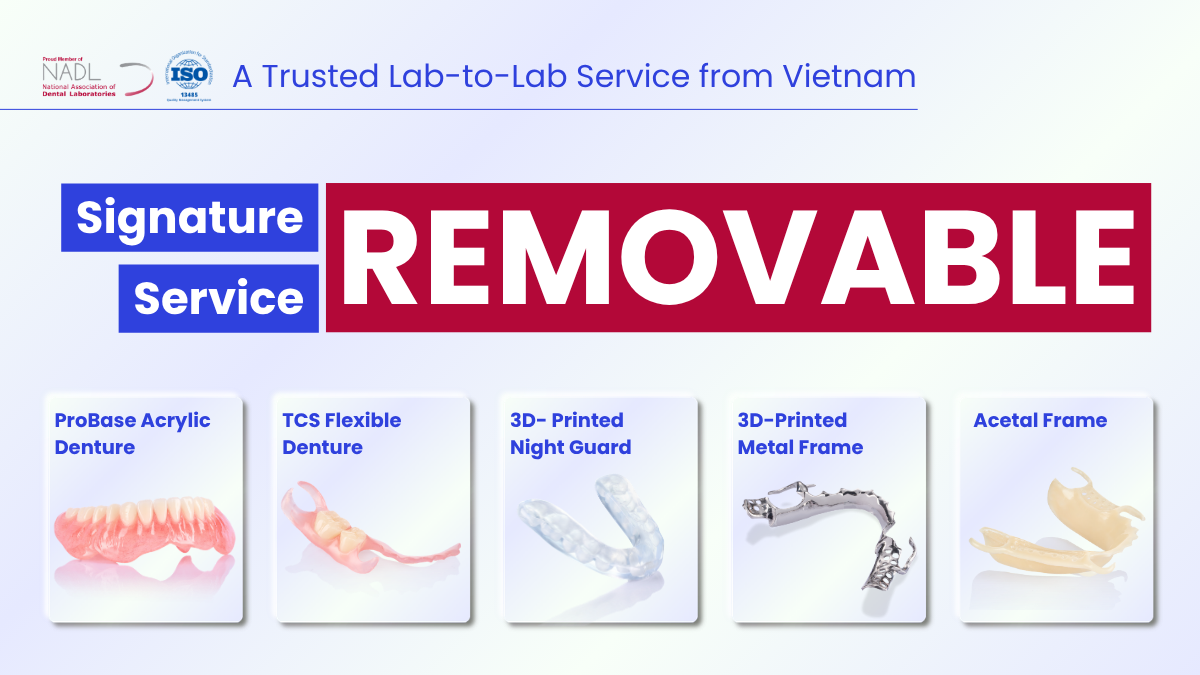
We are experts in Lab-to-Lab Full Service from Vietnam, with the signature services of Removable, meet U.S. market standards, FDA-registered, ISO 13485-certified. Founded in 2017, from local root to global reach, we scale with 2 Factories with over 100+ employees.
Our Commitments Built on “Trusted. Commitment. Quality”
- Commit to Large-Scale Manufacturing, high volume, remake rate < 1%.
- Commit to 5-Year Warranty
- Commit to Competitive Price
XDENT LAB | A Trusted Lab-to-Lab Service from Vietnam
Share this post:
Related Posts
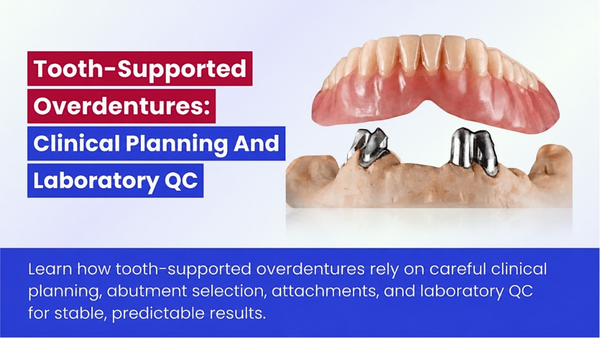
Learn how tooth-supported overdentures rely on careful clinical planning, abutment selection, attachments, and laboratory QC for stable, predictable results.
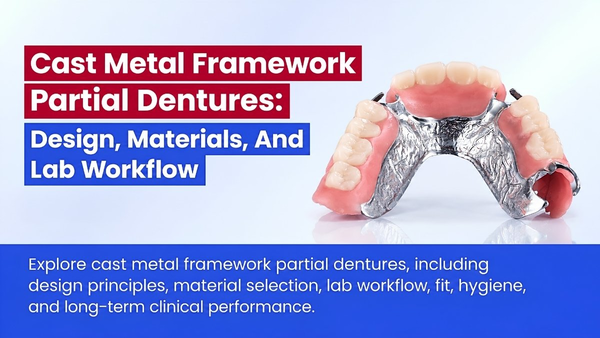
Explore cast metal framework partial dentures, including design principles, material selection, lab workflow, fit, hygiene, and long-term clinical performance.
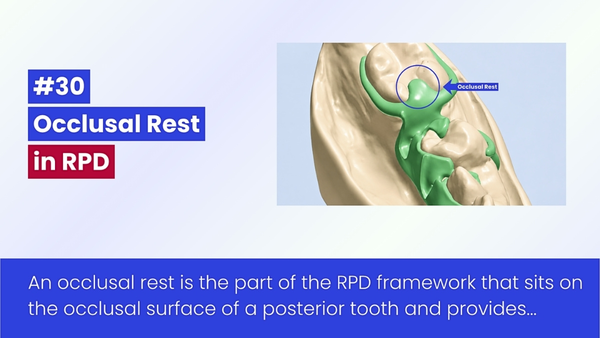
Not all occlusal rests are the same. Here is what distinguishes the extended, interproximal, internal types, and the clinical situations each one is designed for.

