
Learn how fixed prosthodontics supports dental lab outsourcing with scalable production, precise workflows, material consistency, and reliable restorative quality.
Table of contents [Show]
- What Fixed Prosthodontics Means
- Main Types Of Fixed Prosthodontic Restorations
- Clinical Objectives Of Fixed Prosthodontics
- Tooth Preparation Principles
- Materials Used In Fixed Prosthodontics
- Zirconia In Fixed Prosthodontics
- Lithium Disilicate And Glass-Ceramics
- Metal-Ceramic And Full-Metal Restorations
- Fiber-Reinforced Composites In Fixed Prosthodontics
- Digital Dentistry And CAD/CAM Workflows
- Laboratory Workflow In Fixed Prosthodontics
- Occlusion In Fixed Prosthodontics
- Margins, Gingival Health, And Cleanability
- Cementation And Bonding
- Provisional Restorations
- Implant Fixed Prosthodontics
- Common Complications In Fixed Prosthodontics
- Quality Standards And Case Planning Considerations
- Fixed Prosthodontics From The Dental Laboratory Perspective
- Why Fixed Prosthodontics Matters For Dental Lab Outsourcing
- Key Takeaways
Fixed prosthodontics is a core area of restorative dentistry focused on repairing damaged teeth and replacing missing teeth with restorations that remain securely fixed in the mouth. Unlike removable prostheses, these restorations are cemented, bonded, or screw-retained to natural teeth or implants. From a clinical and laboratory perspective, fixed prosthodontics brings together diagnosis, preparation design, occlusion, biomaterials, digital workflows, and high-precision fabrication.
For dental practices, fixed prosthodontics is more than placing crowns or bridges. It is a treatment discipline that must balance esthetics, mechanical durability, biological health, and long-term function. For dental laboratories, it is one of the most technically demanding categories because the smallest error in fit, margin, contact, or occlusion can affect patient comfort and restoration longevity. This is why fixed prosthodontics remains central to both restorative dentistry and high-quality dental lab outsourcing.
What Fixed Prosthodontics Means
Fixed prosthodontics deals with non-removable prosthetic restorations used to restore form, function, and appearance. These restorations are attached to prepared teeth or implants and are not normally removed by the patient.
Main Restorations In Fixed Prosthodontics
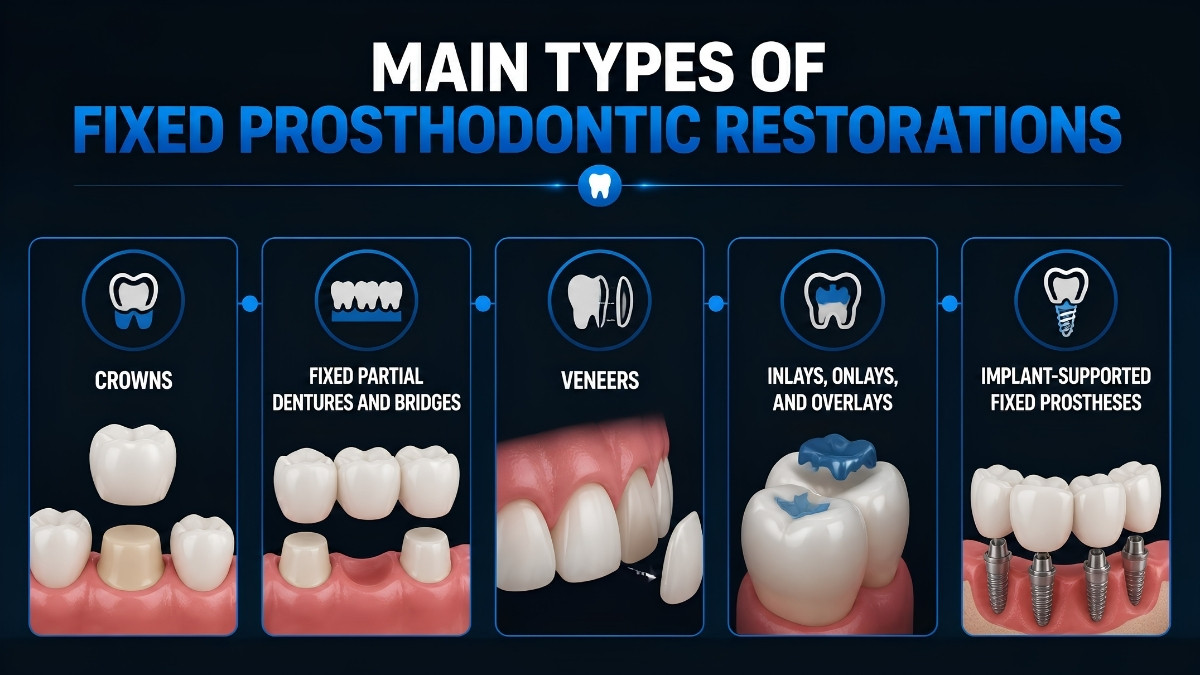
Common categories include:
- Crowns
- Fixed partial dentures or bridges
- Veneers
- Inlays
- Onlays
- Overlays
- Implant-supported crowns
- Implant-supported bridges
- Resin-bonded bridges
- Post-and-core supported crowns
- Full-arch fixed implant restorations
These restorations may be fabricated through conventional or digital workflows depending on the case type, material choice, and laboratory system.
Why Fixed Prosthodontics Matters
Fixed restorations are often necessary when a tooth is too damaged for a direct filling, when a tooth is missing, or when esthetic and functional rehabilitation is required. Their role includes:
- Restoring chewing efficiency
- Improving speech in selected cases
- Protecting weakened teeth
- Replacing missing teeth
- Stabilizing occlusion
- Enhancing smile appearance
- Supporting patient confidence
In practice, good fixed prosthodontics should never be judged by appearance alone. A crown that looks beautiful but traps plaque or creates destructive occlusion is a very expensive problem wearing a ceramic disguise.
Main Types Of Fixed Prosthodontic Restorations
Fixed prosthodontics includes several restoration types, each with different indications, preparation requirements, and material options.
Crowns
A crown covers or restores a tooth that has lost significant structure. It may also be used over an implant abutment.
Common Indications For Crowns
These include:
- Extensive caries
- Large failing restorations
- Fractured teeth
- Endodontically treated teeth
- Severe wear
- Esthetic rehabilitation
- Implant restoration
Common Crown Materials
Crowns may be made from:
- Monolithic zirconia
- Layered zirconia
- Lithium disilicate
- Feldspathic porcelain
- Porcelain-fused-to-metal
- Full cast metal
- Resin-based CAD/CAM materials
Fixed Partial Dentures And Bridges
A bridge replaces one or more missing teeth by using abutment teeth or implants to support one or more pontics.
Common Bridge Types
| Bridge Type | Support | Typical Use |
|---|---|---|
| Conventional bridge | Natural abutment teeth | Replacement of one or more missing teeth |
| Cantilever bridge | One-sided support | Limited cases with careful occlusal control |
| Resin-bonded bridge | Bonded wings to enamel | Conservative anterior replacement |
| Implant-supported bridge | Dental implants | Replacement of multiple missing teeth |
Bridges require careful planning because the abutments must tolerate added load, and connector design directly affects strength.
Veneers
Veneers are thin restorations bonded to the facial surface of teeth, usually in the esthetic zone.
Common Indications For Veneers
These include:
- Discoloration
- Minor malalignment
- Shape correction
- Diastema closure
- Enamel defects
- Conservative esthetic improvement
Veneers often rely on enamel preservation, adhesive bonding, and excellent laboratory characterization.
These are indirect restorations used when a tooth does not require full crown coverage.
- Inlay: Stays within the cusps
- Onlay: Covers one or more cusps
- Overlay: Covers most or all occlusal surfaces
They are commonly used in conservative posterior rehabilitation and are often fabricated from lithium disilicate, zirconia, composite, or gold.
Implant-Supported Fixed Prostheses
Implant fixed prosthodontics includes:
- Single implant crowns
- Implant-supported bridges
- Screw-retained prostheses
- Cement-retained prostheses
- Full-arch fixed restorations
These restorations demand high precision because implants do not have the same mobility or shock absorption as natural teeth.
Clinical Objectives Of Fixed Prosthodontics
The goal of fixed prosthodontics is to restore the oral system in a way that is mechanically sound, biologically compatible, and esthetically appropriate.
Primary Treatment Goals
Fixed prosthodontic care aims to:
- Restore mastication
- Improve phonetics when affected
- Re-establish esthetics
- Protect compromised tooth structure
- Maintain tooth position
- Replace missing teeth
- Rebuild occlusal stability
- Support periodontal and peri-implant health
- Improve comfort and confidence
Biological Principles That Must Be Respected
A successful fixed restoration must consider:
- Pulp vitality
- Periodontal health
- Gingival architecture
- Supracrestal tissue attachment
- Emergence profile
- Cleanability
- Functional loading
- Parafunctional habits
- Caries risk
- Material biocompatibility
In short, the restoration must fit the patient’s biology, not just the software design.
Tooth Preparation Principles
Preparation design is fundamental to fixed prosthodontics because it determines material thickness, fit, retention, and resistance.
Key Preparation Factors
Important principles include:
- Occlusal reduction
- Axial reduction
- Total occlusal convergence
- Finish line design
- Retention and resistance form
- Ferrule effect
- Path of insertion
- Margin placement
- Smooth surface geometry
- Enamel preservation where bonding is planned
Taper And Resistance
A preparation must allow the restoration to seat while resisting dislodgement.
- Too little taper can prevent seating
- Too much taper reduces retention
From a lab perspective, over-tapered preparations often create restorations that seat easily but depend too heavily on cement for stability.
Finish Line Design
| Finish Line | Common Indication | Notes |
|---|---|---|
| Chamfer | Metal, zirconia, PFM | Conservative and widely used |
| Deep chamfer | Zirconia, lithium disilicate | Provides ceramic bulk |
| Shoulder | All-ceramic crowns, veneers | Clear margin and ceramic support |
| Shoulder with bevel | Metal or PFM margins | Less common in modern ceramics |
| Knife-edge | Selected zirconia or reduced tooth structure cases | Technique-sensitive |
Margin clarity is essential. A blurry margin on the scan or impression is one of the fastest ways to create a remake.
Ferrule Effect
The ferrule effect is especially important in endodontically treated teeth. It refers to sound tooth structure extending above the finish line to help resist fracture.
A weak ferrule situation may require:
- Crown lengthening
- Orthodontic extrusion
- Post-and-core
- Alternative restoration planning
- Extraction and implant replacement in severe cases
Materials Used In Fixed Prosthodontics
Material selection is a major factor in treatment success. The right choice depends on function, esthetics, bonding, occlusion, available space, and the production method.
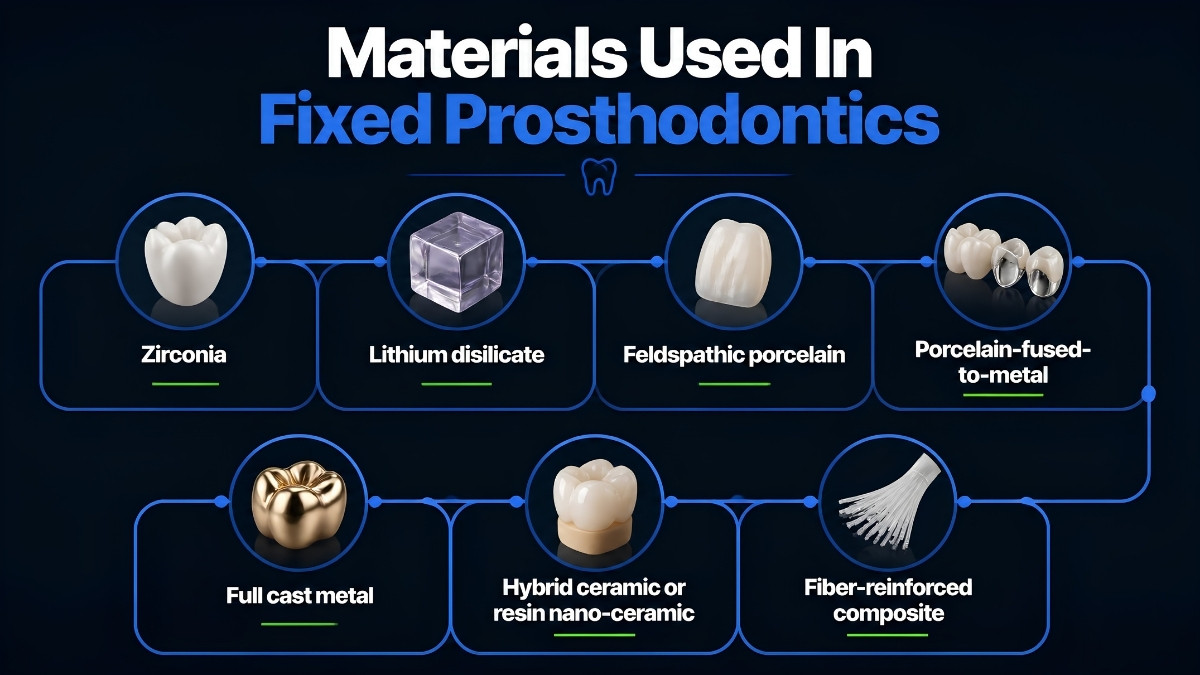
Main Material Categories
| Material | Strengths | Limitations |
|---|---|---|
| Zirconia | High strength, biocompatible, efficient CAD/CAM use | Bonding requires protocol, esthetics vary by type |
| Lithium disilicate | Excellent esthetics, bondable, versatile | Limited for long-span high-load bridges |
| Feldspathic porcelain | Excellent esthetics, ideal for thin veneers | Brittle and technique-sensitive |
| Porcelain-fused-to-metal | Long clinical history, strong framework | More opaque appearance, metal margin risk |
| Full cast metal | Excellent longevity, conservative prep | Poor esthetics |
| Hybrid ceramic or resin nano-ceramic | CAD/CAM-friendly, resilient | Wear, discoloration, debonding risk depending on case |
| Fiber-reinforced composite | Conservative, repairable, useful in selected cases | Limited durability in high-load indications |
Modern dentistry increasingly favors metal-free ceramics, especially zirconia and lithium disilicate, but indication-based selection still matters more than trends.
Zirconia In Fixed Prosthodontics
Zirconia is now one of the most widely used materials in dental laboratory fixed workflows.
Why Zirconia Is Popular
Zirconia offers:
- High flexural strength
- Good fracture resistance
- Strong CAD/CAM compatibility
- Biocompatibility
- Suitability for posterior crowns
- Utility in many bridge designs
- Improved esthetics in newer generations
- Monolithic options that reduce veneering risk
Common Zirconia Categories
| Type | Typical Feature | Common Use |
|---|---|---|
| 3Y zirconia | Highest strength, lower translucency | Posterior bridges, implant frameworks |
| 4Y zirconia | Balanced strength and translucency | Crowns and short-span bridges |
| 5Y zirconia | Higher translucency, lower strength | Anterior crowns and esthetic cases |
| Multilayer zirconia | Shade and translucency gradient | Monolithic esthetic restorations |
Laboratory Considerations For Zirconia
Labs must control:
- Sintering cycle
- Connector dimensions
- Occlusal thickness
- Margin thickness
- Surface polishing
- Glazing
- Sandblasting protocol
- Primer compatibility
- Adjustment after sintering
One practical rule is worth remembering: polished zirconia is generally friendlier to opposing enamel than rough adjusted zirconia. Tiny finishing steps can have giant consequences.
Lithium Disilicate And Glass-Ceramics
Lithium disilicate remains one of the leading materials for esthetic fixed restorations.
Common Indications
It is commonly used for:
- Veneers
- Inlays
- Onlays
- Overlays
- Anterior crowns
- Premolar crowns
- Selected posterior crowns
- Some short-span anterior cases
Advantages Of Lithium Disilicate
These include:
- Excellent translucency
- Strong adhesive bonding potential
- Good esthetics
- Versatility
- Conservative preparation opportunities
- Good marginal adaptation with proper workflow
Laboratory Notes
Lithium disilicate can be fabricated through:
- Press techniques
- CAD/CAM milling
- Stain and glaze methods
- Cut-back and layering
Bonded cases require strict internal surface treatment and communication with the clinician regarding cementation protocol.
Even in the ceramic era, metal-based restorations still have important roles.
PFM restorations provide:
- Strong metal support
- Long clinical history
- Reliable use in crowns and bridges
- Good performance in high-load cases
Limitations include:
- More opaque esthetics
- Porcelain chipping risk
- Metal margin visibility
- Possible gray cervical appearance
- Greater reduction needs
Full metal crowns still offer:
- Excellent longevity
- Favorable wear behavior
- Thin restoration design
- Strong marginal adaptation
- Conservative preparation
Their weakness is obvious: they are not winning beauty contests anytime soon.
Fiber-Reinforced Composites In Fixed Prosthodontics
Fiber-reinforced composites are used in selected fixed prosthodontic applications, particularly when a conservative or interim approach is preferred.
Common Uses
These may include:
- Resin-bonded fixed partial dentures
- Temporary or provisional bridges
- Conservative tooth replacement
- Splinting mobile teeth
- Reinforced composite prostheses
Advantages
FRCs can provide:
- Conservative preparation
- Good esthetics
- Lower cost
- Repairability
- Minimally invasive treatment options
Limitations
Their limitations include:
- Technique sensitivity
- Lower long-term durability than many ceramic or metal options
- Dependence on bonding
- Wear and discoloration risk
- Limited use in heavy posterior loading
Digital Dentistry And CAD/CAM Workflows
Digital dentistry has significantly changed how fixed prosthodontic cases are planned, designed, and fabricated.
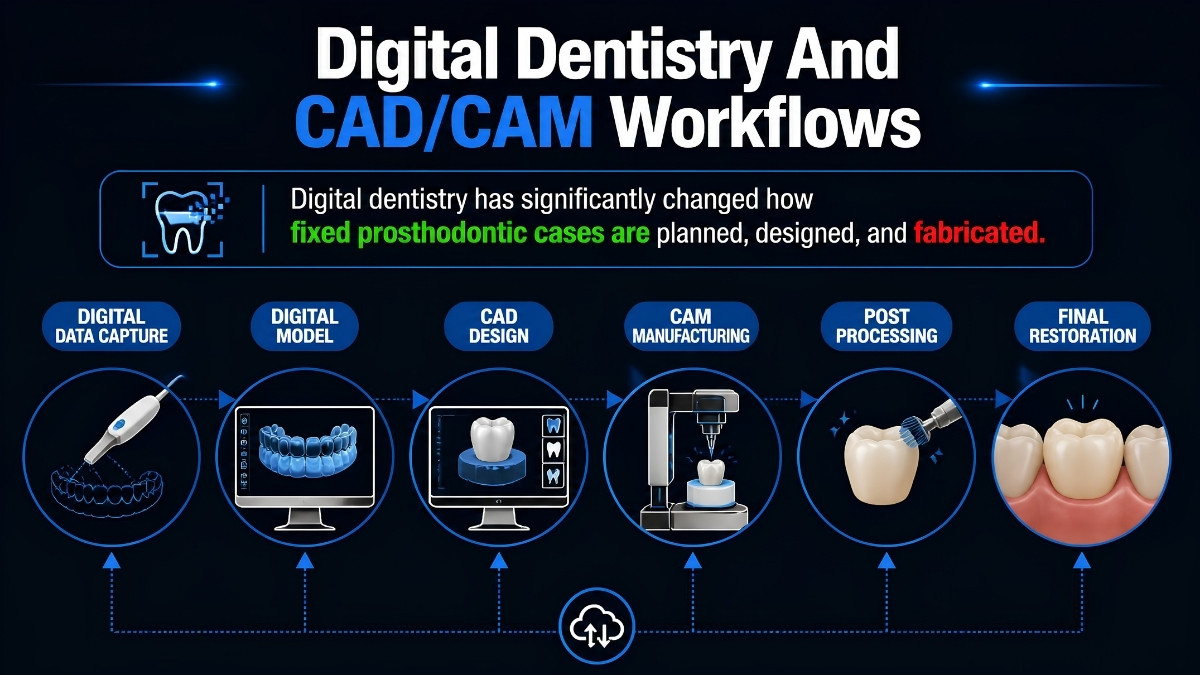
Common Digital Workflow Stages
A modern workflow may include:
- Intraoral scanning
- Digital impression review
- CAD design
- Virtual articulation
- Smile design when needed
- Milling or printing
- Sintering, crystallization, or curing
- Characterization and finishing
- Quality control
- Clinical try-in and delivery
Benefits Of CAD/CAM In Fixed Prosthodontics
Digital systems can improve:
- Workflow speed
- Reproducibility
- Data storage
- Clinic-lab communication
- Design consistency
- Occlusal planning
- Implant integration
- Remake efficiency
Digital Workflow Risks
Digital tools shift the location of errors rather than eliminating them.
Common issues include:
- Poor subgingival margin capture
- Inaccurate bite registration
- Incorrect spacer settings
- Thin occlusal design
- Over-contoured emergence profile
- Milling bur wear
- Sintering distortion
- Inadequate finishing
A scanner is brilliant, but it still cannot rescue a bad preparation from its own life choices.
Laboratory Workflow In Fixed Prosthodontics
The dental laboratory is central to the success of fixed restorations.
Conventional Lab Workflow
A traditional sequence may include:
- Receive impression and prescription
- Disinfect impression
- Pour working cast
- Fabricate dies
- Mount models
- Wax the restoration
- Cast, press, or scan
- Build framework
- Layer ceramic or shape monolithic form
- Finish and polish
- Perform quality control
- Return to clinic
Digital Lab Workflow
A digital workflow may include:
- Receive STL, PLY, or OBJ file
- Review margin clarity
- Check contacts and occlusion
- Design restoration in CAD
- Nest restoration
- Mill or print
- Sinter, crystallize, or cure
- Characterize
- Polish or glaze
- Verify on a model if needed
- Inspect final restoration
- Deliver
Critical Laboratory Checks
Before delivery, the lab should verify:
- Marginal integrity
- Internal fit
- Proximal contact
- Occlusal contact
- Anatomy
- Shade
- Surface texture
- Connector dimensions
- Pontic design
- Emergence profile
- Screw access position when relevant
- Cleanability
Laboratory precision is where theory becomes reality, sometimes heroically and sometimes expensively.
Occlusion In Fixed Prosthodontics
Occlusion plays a major role in whether a fixed restoration succeeds or fails over time.
Key Occlusal Considerations
The team must evaluate:
- Maximum intercuspation
- Centric relation when required
- Excursive movements
- Anterior guidance
- Canine guidance or group function
- Working and non-working contacts
- Bruxism or clenching
- Occlusal vertical dimension
- Wear facets
- Opposing restorative material
- Implant occlusion
High-Risk Situations
Particular caution is needed in:
- Bruxism
- Deep bite
- Limited restorative space
- Implant-supported restorations
- Full-mouth rehabilitation
- Severe wear
- Long-span bridges
- Cantilever designs
- Cases with multiple ceramic opposing surfaces
Implants deserve special attention because they lack a periodontal ligament, so their force response is less forgiving.
Margins, Gingival Health, And Cleanability
A fixed restoration must support periodontal and peri-implant health, not work against it.
Margin Placement
Margins may be:
- Supragingival
- Equigingival
- Subgingival
Whenever possible, supragingival margins are preferred because they are easier to prepare, scan, finish, cement, and keep clean.
Subgingival margins may still be needed for:
- Esthetics
- Existing caries
- Previous restorations
- Short clinical crowns
- Discoloration masking
- Retention needs
Emergence Profile
A well-designed emergence profile should support tissue gently without over-contouring.
Over-contoured restorations may lead to:
- Plaque retention
- Gingival inflammation
- Food impaction
- Poor esthetics
- Peri-implant complications
Biology is wonderfully consistent about one thing: it punishes bulky contours without sending a warning email first.
Cementation And Bonding
Cement selection depends on restoration design, preparation geometry, material, and long-term goals.
Common Cement Categories
| Cement Type | Common Use | Key Feature |
|---|---|---|
| Resin-modified glass ionomer | Many crowns and bridges | Easy handling and fluoride release |
| Conventional glass ionomer | Metal, PFM, zirconia with retentive preps | Chemical adhesion to tooth |
| Resin cement | Veneers, onlays, lithium disilicate, short preps | High bond strength |
| Self-adhesive resin cement | Zirconia and selected ceramic crowns | Simplified protocol |
| Temporary cement | Provisionals or retrievable cases | Designed for removal |
Material-Specific Bonding Needs
Different materials require different protocols:
- Lithium disilicate: Hydrofluoric acid etch, silane, resin cement
- Feldspathic porcelain: Hydrofluoric acid etch, silane
- Zirconia: Air abrasion, MDP primer, resin cement where indicated
- Metal: Air abrasion and metal primer when needed
- Composite or hybrid ceramic: Follow manufacturer-specific surface treatment
Bonding success depends on both clinical execution and good lab communication.
Provisional Restorations
Provisionals are essential in fixed prosthodontics, especially in complex rehabilitation.
Functions Of Provisional Restorations
A provisional should:
- Protect prepared teeth
- Maintain tooth position
- Preserve occlusion
- Support esthetics
- Guide gingival contour
- Help phonetic assessment
- Test vertical dimension
- Preview final contours
- Improve patient comfort
Laboratory-Fabricated Provisionals
These are especially useful for:
- Full-mouth rehabilitation
- Implant temporization
- Long-span bridges
- Esthetic anterior cases
- Vertical dimension changes
- Complex occlusal correction
Common materials include PMMA, bis-acryl, printed resin, milled resin, and reinforced composite.
Implant Fixed Prosthodontics
Implant-supported fixed restorations are now a major segment of modern prosthodontics and dental lab production.
Single Implant Crowns
A single implant crown may be:
- Screw-retained
- Cement-retained
- Screwmentable
Key design considerations include:
- Implant position
- Soft tissue thickness
- Emergence profile
- Contact strength
- Occlusion
- Screw access location
- Abutment material
- Crown material
Full-Arch Fixed Implant Prostheses
Common full-arch options include:
- Titanium-acrylic hybrids
- Zirconia full-arch prostheses
- Titanium bar-supported prostheses
- Monolithic zirconia with titanium bases
- PFM full-arch designs
These cases require control of:
- Passive fit
- Prosthetic space
- Hygiene access
- Phonetics
- Lip support
- Occlusal scheme
- Framework strength
- Screw mechanics
Screw-Retained Vs Cement-Retained
| Feature | Screw-Retained | Cement-Retained |
|---|---|---|
| Retrievability | Excellent | Limited |
| Residual cement risk | None | Present |
| Esthetics | Depends on access location | Often favorable |
| Maintenance | Easier | More difficult |
| Lab complexity | Sometimes higher | Often simpler |
Screw retention is often preferred when maintenance and retrievability are high priorities.
Common Complications In Fixed Prosthodontics
Complications can be biological, mechanical, esthetic, or technical.
Biological Complications
These may include:
- Secondary caries
- Pulpitis
- Endodontic complications
- Periodontal inflammation
- Gingival recession
- Peri-implant mucositis
- Peri-implantitis
- Root fracture
- Abutment mobility
Mechanical Complications
These may include:
- Crown fracture
- Veneering ceramic chipping
- Connector fracture
- Loss of retention
- Debonding
- Screw loosening
- Screw fracture
- Framework fracture
- Occlusal wear
- Proximal contact loss
Technical And Laboratory Complications
These may include:
- Open margins
- Poor contacts
- High occlusion
- Incorrect shade
- Poor anatomy
- Weak connector dimensions
- Poor pontic design
- Implant misfit
- Incorrect emergence profile
- Inadequate polishing or surface finishing
Quality Standards And Case Planning Considerations
Fixed prosthodontics depends on both technical precision and proper quality systems.
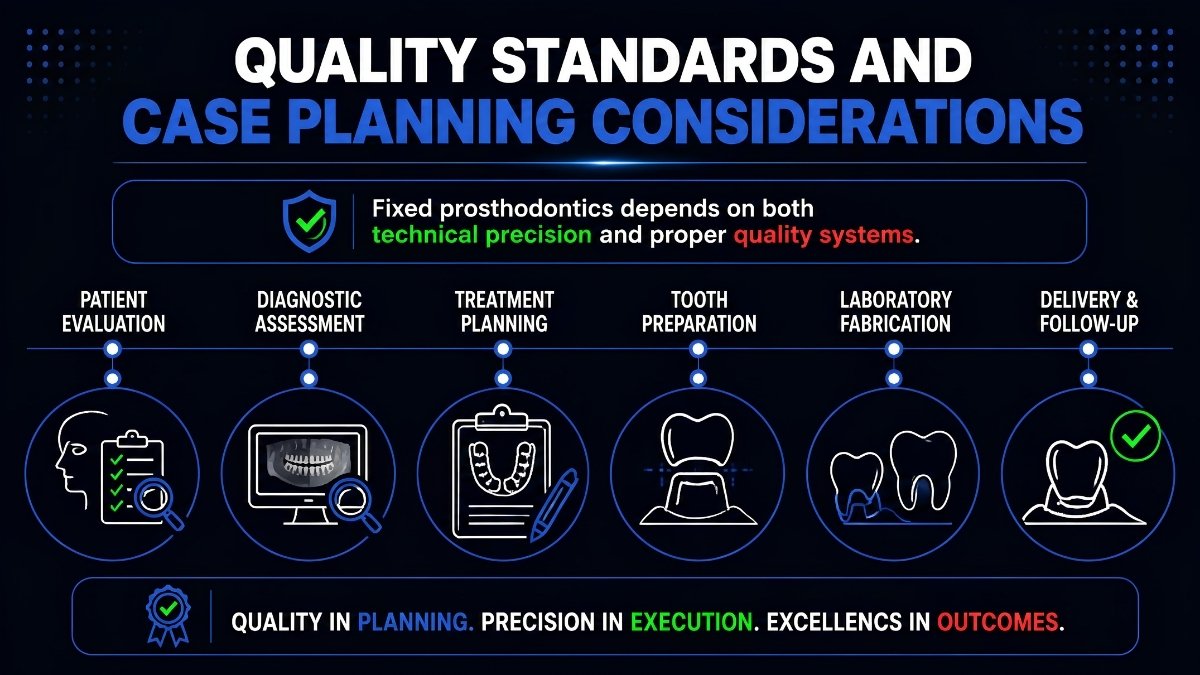
Important Quality Areas
Dental labs must consider:
- Biocompatibility
- Material validation
- Ceramic and alloy classification
- Digital file management
- Device traceability
- Manufacturing documentation
- Infection control
- Quality management systems
- Market-specific compliance requirements
Case Planning Factors
A successful case begins with proper evaluation of:
- Medical history
- Dental history
- Caries risk
- Periodontal health
- Endodontic status
- Occlusion
- Smile line
- Tooth display
- Parafunction
- Remaining tooth structure
- Implant bone availability when needed
- Esthetic expectations
- Financial considerations
- Maintenance ability
Good treatment planning prevents the awkward situation where the lab is asked to fabricate a miracle out of unclear data and optimistic thinking.
Fixed Prosthodontics From The Dental Laboratory Perspective
From the laboratory side, fixed prosthodontics is where biology, mechanics, and material science must become a precise manufactured result.
What The Lab Needs From The Clinician
For a predictable restoration, the lab should receive:
- Clear prescription
- Accurate impression or scan
- Clear margins
- Correct bite registration
- Opposing arch
- Shade information
- Stump shade when relevant
- Clinical photos
- Material preference
- Occlusal instructions
- Implant component details
- Desired emergence profile
- Delivery expectations
What The Lab Must Provide
The laboratory should deliver:
- Accurate fit
- Proper contacts
- Stable occlusion
- Correct shade and translucency
- Natural anatomy
- Smooth polished surfaces
- Adequate connector dimensions
- Cleanable pontic design
- Correct implant interface
- Documentation and traceability
Common Communication Failures
Frequent causes of remakes include:
- Unclear margins
- Incomplete prescriptions
- Incorrect shade communication
- Missing photos
- Inaccurate bite records
- Material mismatch with reduction space
- Poor implant information
- Lack of discussion in complex cases
This is where strong lab-to-lab service and outsourcing support can make a measurable difference for dental practices.
Why Fixed Prosthodontics Matters For Dental Lab Outsourcing
Fixed prosthodontics is one of the most quality-sensitive areas in dental lab outsourcing because fit, material handling, and occlusion cannot be improvised.
What Practices Should Look For In A Partner Lab
A strong dental laboratory partner should offer:
- Experience with fixed and implant prosthetics
- Digital and conventional workflow capability
- Consistent margin and contact control
- Material traceability
- Reliable turnaround
- Clear communication
- Quality inspection protocols
- Compliance-minded production systems
Where XDENT LAB Fits
For dental practices seeking a Vietnam dental lab or lab-to-lab full-service partner, XDENT LAB is positioned to support fixed prosthodontic workflows through:
- Certified technicians
- Scalable production capacity
- Experience in implant and removable support
- FDA and ISO-aligned standards
- State-of-the-art laboratory technology
- Consistency for outsourcing relationships serving the U.S. market
This makes XDENT LAB relevant for practices and partner labs that need dependable restorative production rather than guesswork with a shipping label.
Key Takeaways
Fixed prosthodontics is the discipline of restoring and replacing teeth with non-removable restorations such as crowns, bridges, veneers, inlays, onlays, and implant-supported prostheses. Its success depends on balancing biology, occlusion, preparation design, material selection, adhesive strategy, and precise laboratory execution.
Modern fixed prosthodontics is increasingly digital, ceramic-driven, and efficiency-focused, but the fundamentals remain unchanged. Accurate diagnosis, sound tooth preparation, appropriate material choice, disciplined laboratory workflow, and long-term maintenance still determine clinical success. For dental practices working with outsourcing partners, consistent fixed prosthodontic results depend on choosing a laboratory that can combine technical precision, scalable production, and quality control at every step.
About XDENT LAB:
We are experts in Lab-to-Lab Full Service from Vietnam, with the signature services of Removable, meet U.S. market standards, FDA-registered, ISO 13485-certified. Founded in 2017, from local root to global reach, we scale with 2 Factories with over 100+ employees.
Our Commitments Built on “Trusted. Commitment. Quality”
- Commit to Large-Scale Manufacturing, high volume, remake rate < 1%.
- Commit to 5-Year Warranty
- Commit to Competitive Price
XDENT LAB | A Trusted Lab-to-Lab Service from Vietnam
Share this post:
Related Posts
Learn how tooth-supported overdentures rely on careful clinical planning, abutment selection, attachments, and laboratory QC for stable, predictable results.
Explore cast metal framework partial dentures, including design principles, material selection, lab workflow, fit, hygiene, and long-term clinical performance.
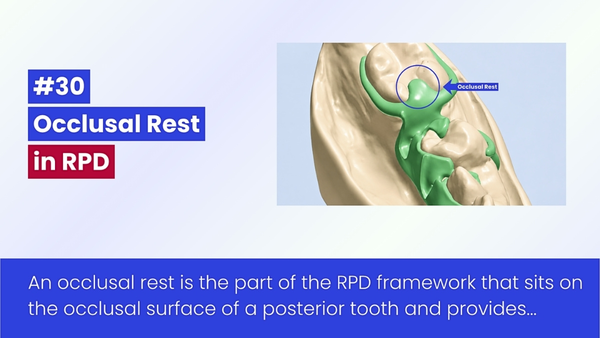
Not all occlusal rests are the same. Here is what distinguishes the extended, interproximal, internal types, and the clinical situations each one is designed for.

