
What bioactive sealants do and how they work: ion release, remineralization, clinical indications, and technique tips for high‑risk and orthodontic patients.
Table of contents [Show]
Bioactive sealants go beyond a physical barrier. They are formulated to release ions—fluoride, calcium, and phosphate—that support remineralization while sealing pits and fissures. Compared with traditional resin sealants, their value is most apparent in high-risk patients, around orthodontic appliances, and in preventive programs where retention and ion exchange matter. This article provides a structured overview of composition, properties, indications, comparisons, and implementation within FDA/ISO-aligned workflows, including how XDENT LAB supports predictable outcomes across clinics.
Composition and Mechanism of Action
Bioactive sealants blend resin chemistry with ion-releasing fillers to create a protective, therapeutic interface on occlusal surfaces.
Core Components
- Resin matrix: Methacrylate-based systems designed for light curing, flow into fissures, and micromechanical retention.
- Bioactive fillers: Ion-leachable (bioactive glass or fluoroaluminosilicate) particles that release fluoride, calcium, and phosphate.
- Additives: Optional antimicrobial agents and wetting/flow modifiers to enhance handling and therapeutic efficacy.
How They Work
- Immediate function: After enamel conditioning and light curing, the resin establishes a micromechanical seal.
- Ongoing bioactivity: Salivary exposure drives ion exchange—fluoride, calcium, and phosphate diffuse to enamel, supporting remineralization and buffering acids.
- Clinical implication: Compared with traditional sealants, bioactive options add a therapeutic layer that may reduce lesion progression in high-caries-risk patients.
Properties That Influence Clinical Outcomes
Performance depends on retention, wear, and biocompatibility alongside sustained ion release.
Mechanical and Handling Characteristics
- Compressive strength: Typically comparable to conventional sealants (approximately 100–200 MPa).
- Flexural strength: Commonly above 50 MPa, adequate for occlusal service.
- Wear resistance: Similar to resin sealants for long-term occlusal function when isolation and technique are sound.
- Bond strength: Driven by enamel conditioning and adhesive system compatibility; follow product IFUs.
- Viscosity and flow: Thixotropic behavior for deep fissure penetration without slumping.
Bioactivity and Clinical Effects
- Ion release: Fluoride plus calcium/phosphate support remineralization and reduce demineralization at margins.
- Recharge potential: Many formulations absorb fluoride from toothpaste/varnish and re-release over time.
- Antimicrobial traits: Some include agents that modestly reduce cariogenic biofilm formation.
- Biocompatibility: Favorable profiles; transient pH shifts stabilize after polymerization.
Indications, Contraindications, and Technique
Case selection and consistent technique maximize the preventive benefits of bioactive sealants.
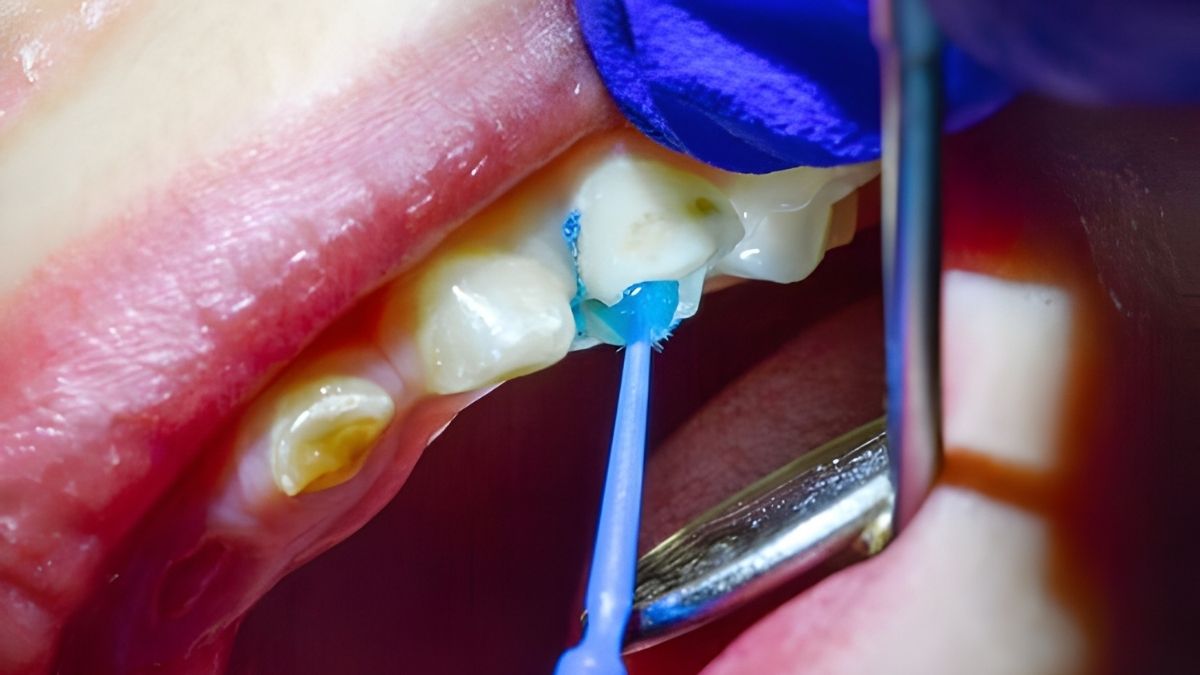
Primary Indications
- Pit and fissure sealing for children, adolescents, and high-risk adults.
- Caries management of early non-cavitated lesions (ICDAS 1–2) within minimally invasive care.
- Orthodontic applications around brackets to reduce white-spot lesion risk.
- Adjunctive prevention for special-needs and xerostomic patients with elevated caries risk.
Contraindications
- High-stress restorative needs: Class II load-bearing lesions; choose composite or RMGIC pathways.
- Extensive structural defects: Severe enamel hypoplasia or retention-poor surfaces.
- Poor isolation: When reliable bonding cannot be achieved; consider GIC alternatives or interim measures.
Technique Pearls
- Isolation: Rubber dam or meticulous retraction; moisture control is the primary determinant of retention.
- Enamel conditioning: Etch with phosphoric acid or use recommended primers per IFU; rinse and dry to a chalky enamel appearance when indicated.
- Placement: Scrub sealant into fissures; avoid puddling; gentle air thinning; light-cure as directed; verify coverage and absence of voids.
- Occlusion and finish: Check contacts; remove excess; confirm margins; re-evaluate at recalls for integrity and re-seal if needed.
- Prevention synergy: Schedule fluoride varnish and recommend high-fluoride toothpaste to leverage recharge potential.
Comparative Analysis
The table below helps differentiate bioactive sealants from traditional resin and glass ionomer options for faster decision-making.
| Sealant Type | Setting & Adhesion | Ion Release | Retention & Wear | Moisture Tolerance | Best Use Cases |
|---|---|---|---|---|---|
| Traditional resin sealant | Light-cure; micromechanical retention after etch | Fluoride (varies; often limited) | High with excellent isolation | Low; technique-sensitive | Standard pit and fissure sealing with ideal isolation |
| Glass ionomer (GIC) sealant | Acid–base set; chemical adhesion | High fluoride; strong recharge | Lower wear; faster material loss | Higher tolerance during placement | Interim sealing, compromised isolation, high-risk cases |
| Bioactive resin sealant | Light-cure; micromechanical adhesion via etch/prime | Fluoride + calcium/phosphate; recharge potential | Comparable to resin; added therapeutic benefit | Slightly more forgiving; still technique-sensitive | High-risk occlusal surfaces, around brackets, ICDAS 1–2 lesions |
Key takeaway: Bioactive sealants preserve the retention profile of resin-based systems while adding clinically meaningful ion exchange—especially valuable in high-risk and orthodontic contexts.
Decision Pathway for Busy Clinics
Use a standardized algorithm to reduce variability and improve outcomes across providers.
- Caries risk high? Favor bioactive or GIC sealants; if isolation is reliable, choose bioactive resin first-line.
- Isolation quality? Excellent → bioactive or traditional resin; compromised → consider GIC as interim, then upgrade.
- Lesion status? Non-cavitated (ICDAS 1–2) → bioactive sealant with monitoring; cavitated → minimally invasive restoration pathway.
- Orthodontic appliances? Apply bioactive sealant around brackets for white-spot prevention.
- Recall plan? Schedule re-evaluation; re-seal as needed; incorporate fluoride varnish cadence for recharge.
Recent Developments and Future Directions
- Enhanced ion-release profiles with improved calcium/phosphate kinetics and sustained fluoride without sacrificing wear resistance.
- Nanofiller systems for better fissure penetration and polish retention with lower viscosity.
- Antimicrobial integration (e.g., quaternary ammonium/biomimetic peptides) under investigation to suppress biofilm.
- Color-change cure indicators for visual confirmation of complete set in deep fissures.
- Digital synergy: aligning sealant selection with risk scoring from practice analytics and AI caries detection systems.
Implementation with XDENT LAB (FDA/ISO)
XDENT LAB supports dental practices seeking reliability and scale through standardized, FDA/ISO-aligned protocols for preventive materials, including bioactive sealants.
How XDENT LAB Standardizes Outcomes
- Validated materials library: FDA/ISO-aligned bioactive sealant SKUs with batch traceability and integrated IFUs.
- Protocol sheets by indication: Etch/adhesive pairing, curing times, and isolation checklists tailored to pediatric, orthodontic, and high-risk adult workflows.
- Chairside–lab checklists: Map risk status, isolation quality, and lesion stage to material choice; capture images for audit and training.
- Recharge workflows: Fluoride varnish cadence and at-home recommendations embedded in recall templates.
- Feedback loop: Retention audits inform continuous refinement across multi-site groups.
Where It Fits in Your Service Mix
- School-based and pediatric programs: fast, standardized placement with high recall capture.
- Orthodontic prevention packages: around-bracket sealing pathways to reduce white-spot incidence.
- Geriatric and xerostomia protocols: protective sealing for at-risk occlusal surfaces with remineralization support.
Practical Takeaways
- Bioactive sealants combine resin retention with therapeutic ion release for high-risk occlusal surfaces and around orthodontic brackets.
- Outcomes depend on isolation quality, enamel conditioning, and consistent recall for inspection and re-seal.
- Adopt a decision tree linking caries risk and isolation to material selection, with documented lot numbers and curing parameters.
- With FDA/ISO-aligned SOPs, XDENT LAB helps clinics deploy bioactive sealants as part of a preventive ecosystem that is documented, scalable, and patient-centric.
About XDENT LAB:
We are experts in Lab-to-Lab Full Service from Vietnam, with the signature services of Removable, meet U.S. market standards, FDA-registered, ISO 13485-certified. Founded in 2017, from local root to global reach, we scale with 2 Factories with over 100+ employees.
Our Commitments Built on “Trusted. Commitment. Quality”
- Commit to Large-Scale Manufacturing, high volume, remake rate < 1%.
- Commit to 5-Year Warranty
- Commit to Competitive Price
XDENT LAB | A Trusted Lab-to-Lab Service from Vietnam
Share this post:
Related Posts
Learn the key differences between titanium and cobalt-chromium alloys used in removable partial denture frameworks, from mechanical properties to production requirements.
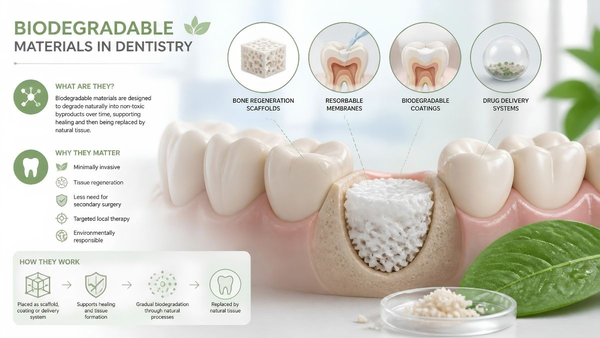
Explore biodegradable materials in dentistry, including their applications, benefits, limitations, and future potential in regenerative and sustainable dental care.
Learn how polyamide dental materials support flexible dentures and removable prosthetics through biocompatibility, aesthetics, comfort, and lightweight performance.

