
Materials used in fixed prosthodontics, from zirconia and lithium disilicate to alloys, with guidance on indications, bonding, workflows, and selection.
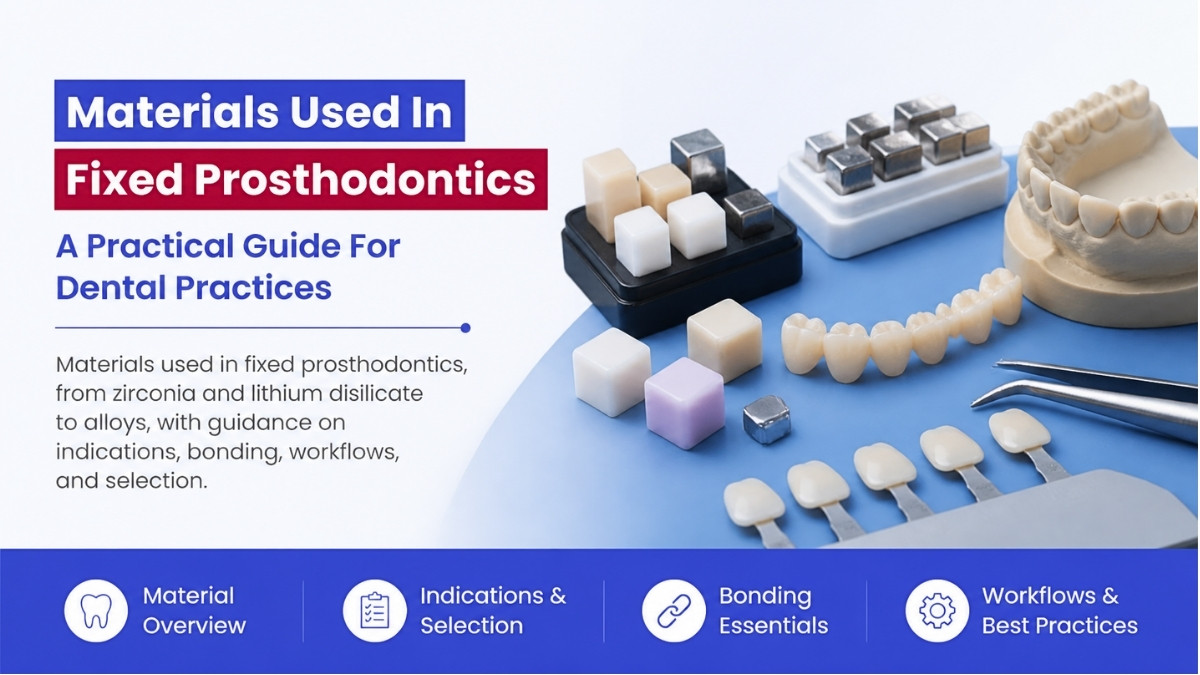
Table of contents [Show]
- What are fixed prosthodontic materials?
- Main materials used in fixed prosthodontics
- Dental alloys in fixed prosthodontics
- Metal–ceramic restorations
- Glass ceramics: esthetics and adhesive dentistry
- Zirconia in fixed prosthodontics
- Resin-matrix materials and high-performance polymers
- Luting agents and cementation protocols
- Supporting materials: cores, posts, and provisionals
- How material manufacturing affects restoration quality
- Why fixed prosthodontic restorations fail
- A practical material-selection framework
- Relevant standards for dental laboratories
- What dental practices should expect from their laboratory
- How XDENT LAB supports material-driven restorative quality
- Key takeaways
- References and further reading
Fixed prosthodontics is no longer a simple choice between metal and ceramic. Today’s crowns, bridges, veneers, inlays, onlays, and implant-supported restorations can be made from gold alloys, metal–ceramic systems, lithium disilicate, several grades of zirconia, resin-matrix materials, titanium, and more.
The right choice is not automatically the strongest material. It is the material that works reliably with the clinical indication, preparation design, occlusion, restoration geometry, manufacturing workflow, and cementation protocol.
What are fixed prosthodontic materials?
Fixed prosthodontic materials are used to create restorations that are cemented, bonded, or screw-retained in the mouth. These include:
- Single crowns
- Fixed dental prostheses and bridges
- Veneers
- Inlays, onlays, and overlays
- Implant crowns and bridges
- Full-arch fixed implant restorations
- Frameworks, veneering ceramics, cements, cores, and provisional restorations
A successful result depends on the entire restorative system, not just the selected material. A well-milled zirconia crown may still fail when preparation retention is inadequate, the bonding surface is contaminated, or post-adjustment polishing is skipped.
Main materials used in fixed prosthodontics
The table below compares the primary material families used in contemporary restorative dentistry.
| Material family | Common uses | Key advantages | Primary considerations |
|---|---|---|---|
| High-noble and noble alloys | Full-metal crowns, inlays, onlays, metal–ceramic frameworks | Long-term durability, ductility, corrosion resistance | Cost and metallic appearance |
| Cobalt–chromium alloys | Metal–ceramic restorations, bridges, implant frameworks | High stiffness, economical, versatile manufacturing | Finishing and porcelain compatibility require control |
| Titanium and titanium alloys | Implant abutments, titanium bases, implant frameworks | Biocompatibility, corrosion resistance, low weight | Requires material-specific workflows |
| Feldspathic ceramic | Veneers, veneering porcelain | Excellent translucency and characterization | Lower fracture resistance and requires strong support |
| Leucite-reinforced glass ceramic | Veneers, inlays, onlays, selected crowns | Esthetic and adhesively bondable | More limited for high-load indications |
| Lithium disilicate | Veneers, onlays, single crowns, selected short-span bridges | Strong esthetic-mechanical balance | Indications, thickness, and connector rules vary by system |
| Zirconia | Crowns, bridges, frameworks, implant restorations | High strength and broad indication range | Cannot be conventionally HF-etched and grade matters |
| Resin-matrix CAD/CAM materials | Inlays, onlays, provisionals, selected crowns | Repairable, machinable, less brittle | Wear, staining, and indication-specific evidence |
| PEEK and PEKK | Selected frameworks and specialty prostheses | Lightweight and chemically resistant | Limited evidence for routine definitive fixed cases |
Materials are not interchangeable simply because they are described as ceramic, hybrid, or high strength.
Dental alloys in fixed prosthodontics
Metal restorations remain clinically relevant because they offer a long track record, predictable strength, and favorable behavior under functional loading.
High-noble and noble alloys
Gold restorations are not made of pure gold. Dental gold alloys contain additional metals that control hardness, strength, castability, color, and compatibility with porcelain.
Common alloy classifications
- High-noble alloys: At least 60% noble metals, including at least 40% gold.
- Noble alloys: At least 25% noble metals.
- Predominantly base-metal alloys: Less than 25% noble metals.
High-noble alloys are valued for their excellent corrosion resistance, favorable ductility, reliable casting behavior, and lower risk of brittle fracture compared with ceramics. In suitable designs, full-metal restorations can also function at relatively conservative thicknesses.
Their primary limitations are esthetics and cost. Full-metal crowns remain highly durable, especially in posterior areas, but they may not meet every patient’s cosmetic expectations.
Cobalt–chromium and nickel–chromium alloys
Cobalt–chromium alloys are widely used in metal–ceramic restorations and implant frameworks. They are stiff, economical, and compatible with casting, milling, and validated additive-manufacturing workflows.
Nickel–chromium alloys have also been used extensively in metal–ceramic dentistry. However, known nickel sensitivity should be considered during material selection.
For dental laboratories, alloy handling matters. Uncontrolled reuse of alloy sprues, poor oxide management, contamination, or incorrect ceramic firing cycles can compromise a restoration before it reaches the dental practice.
Metal–ceramic restorations combine a metal framework with veneering porcelain. They remain a proven option for many crowns and bridges, especially when clinicians need strength, masking ability, and extensive long-term evidence.
- Established clinical record
- Strong and rigid frameworks
- Suitable for many bridge indications
- Effective masking of dark substrates
- Good option for high-load posterior situations
Common complications
Metal–ceramic restorations can experience the following complications:
- Veneering porcelain chipping
- Esthetic limitations at the margin
- Metal exposure after gingival recession
- Loss of retention
- Secondary caries or periodontal complications
The framework must properly support the porcelain. A strong metal substructure cannot protect unsupported porcelain from chipping under occlusal load.
Glass ceramics: esthetics and adhesive dentistry
Glass ceramics contain a glass phase that allows many products to be etched with hydrofluoric acid and treated with silane before adhesive resin cementation. This makes them especially valuable in conservative and esthetic dentistry.
Feldspathic ceramic
Feldspathic porcelain is known for its natural translucency, fluorescence, and ability to mimic enamel.
It is commonly used for:
- Highly esthetic veneers
- Ceramic layering over frameworks
- Selected adhesive restorations
Feldspathic ceramic has comparatively low fracture resistance. It performs best when it is well-supported, conservatively designed, and bonded to enamel-rich substrates.
Leucite-reinforced glass ceramic
Leucite-reinforced ceramics offer improved mechanical properties compared with conventional feldspathic porcelain.
Typical indications include:
- Veneers
- Inlays and onlays
- Selected anterior crowns
These materials offer excellent esthetics and predictable bonding but are not usually the first choice for extensive posterior restorations under heavy functional load.
Lithium disilicate
Lithium disilicate is one of the most widely used materials in modern fixed prosthodontics. It balances strength, optical quality, and adhesive versatility.
Common applications include:
- Veneers
- Inlays, onlays, and overlays
- Anterior and posterior single crowns
- Selected short-span fixed dental prostheses when the manufacturer explicitly permits them
Lithium disilicate may be pressed or milled. Depending on the product, milling can be followed by a crystallization firing cycle.
Why lithium disilicate remains popular
- Highly esthetic appearance
- Good translucency and shade options
- Can be adhesively bonded
- Appropriate for many conservative partial-coverage restorations
- Strong enough for many single-crown cases when designed within validated guidelines
Lithium disilicate is not a universal bridge material. Minimum thickness, connector dimensions, pontic location, and span limitations must follow the specific manufacturer’s instructions for use.
Zirconia in fixed prosthodontics
Zirconia has become central to contemporary restorative workflows because it offers high strength, biocompatibility, and CAD/CAM efficiency.
Dental zirconia is typically stabilized with yttria. The most commonly discussed categories are 3Y, 4Y, and 5Y zirconia.
| Zirconia type | General properties | Common clinical considerations |
|---|---|---|
| 3Y zirconia | Highest strength and fracture resistance with relatively low translucency | High-load posterior crowns, frameworks, and bridges where indicated |
| 4Y zirconia | Intermediate strength and translucency | Single crowns and selected bridge applications |
| 5Y zirconia | Greater translucency with lower transformation-toughening contribution | Esthetic anterior restorations within validated indications |
| Multilayer zirconia | Composition and shade may vary across the blank | Nesting position, connector location, and workflow require attention |
Monolithic versus layered zirconia
Monolithic zirconia is milled from a single zirconia blank without a separate veneering porcelain layer. It is frequently selected to reduce veneer chipping risk.
Layered zirconia uses zirconia as a framework and adds veneering ceramic for enhanced characterization and translucency. This can improve esthetics but introduces a potential veneer-chipping pathway.
The best decision depends on esthetic demand, available restorative space, functional loading, opposing dentition, and case-specific material indications.
Zirconia surface treatment and polishing
Zirconia is a polycrystalline ceramic. It does not respond to hydrofluoric acid etching in the same way as glass ceramics.
Depending on the manufacturer’s instructions, adhesive zirconia bonding may involve:
- Cleaning after try-in
- Manufacturer-approved air abrasion
- MDP-containing primers
- MDP-containing resin cement systems
After occlusal adjustment, zirconia must be carefully polished. A roughened surface can increase wear on opposing enamel. Glaze alone is not a substitute for high-quality polishing after adjustment.
Resin-matrix materials and high-performance polymers
Not every CAD/CAM block is a ceramic. Resin-matrix materials, polymer-infiltrated ceramic networks, and high-performance polymers have distinct structures and limitations.
CAD/CAM resin-matrix materials
These materials may include:
- Highly filled resin-composite blocks
- Polymer-infiltrated ceramic network materials
- Proprietary resin–ceramic systems
Potential advantages include easier milling, lower brittleness than ceramics, repairability, and useful shock-absorbing behavior in selected cases.
Potential limitations include wear over time, surface degradation, discoloration, water-related aging, and less mature long-term evidence for certain definitive indications.
A broad term such as hybrid ceramic does not create a universal bonding protocol. Each product requires its own validated surface-treatment and cementation instructions.
PEEK and PEKK
PEEK and PEKK belong to the polyaryletherketone family. They are lightweight, chemically resistant, and increasingly considered for selected frameworks and specialty prosthetic applications.
They require careful selection because:
- Bonding can be technique-sensitive
- Veneering adhesion may be challenging
- Their stiffness differs from metals and ceramics
- Evidence remains limited for many routine definitive fixed indications
Luting agents and cementation protocols
A crown’s material choice and cementation strategy are inseparable. The cement does not compensate for poor preparation geometry, incorrect surface treatment, or inadequate isolation.
| Luting material | Typical uses | Key consideration |
|---|---|---|
| Zinc phosphate | Conventionally retained restorations | Relies on mechanical retention and offers no chemical bonding |
| Glass-ionomer cement | Selected metal and ceramic restorations | Moisture-sensitive during early setting |
| Resin-modified glass ionomer | Many conventionally retained crowns | Not appropriate for every thin or adhesive ceramic case |
| Adhesive resin cement | Veneers, partial coverage, and adhesively retained restorations | Requires isolation and precise conditioning |
| Self-adhesive resin cement | Selected crown and bridge cases | Not equivalent to full adhesive bonding in every indication |
Cementation principles by material
Glass ceramics
Glass ceramics commonly require the following sequence:
- Clean the intaglio surface.
- Etch with hydrofluoric acid according to product instructions.
- Rinse and remove reaction products as directed.
- Apply silane or a compatible ceramic primer.
- Cement with a compatible adhesive resin cement.
Etching time and concentration are material-specific. Over-etching can damage the ceramic surface and compromise clinical performance.
Zirconia
Zirconia should not be treated with a conventional glass-ceramic hydrofluoric acid protocol.
Depending on the case and manufacturer instructions, zirconia bonding may involve:
- Cleaning after try-in
- Controlled air abrasion
- MDP-containing primers
- MDP-containing resin cement systems
Metal restorations may require air abrasion and an alloy-specific primer. Resin-matrix materials have their own conditioning requirements and should not be treated as though they were lithium disilicate or zirconia.
Supporting materials: cores, posts, and provisionals
Fixed prosthodontic success begins with the foundation.
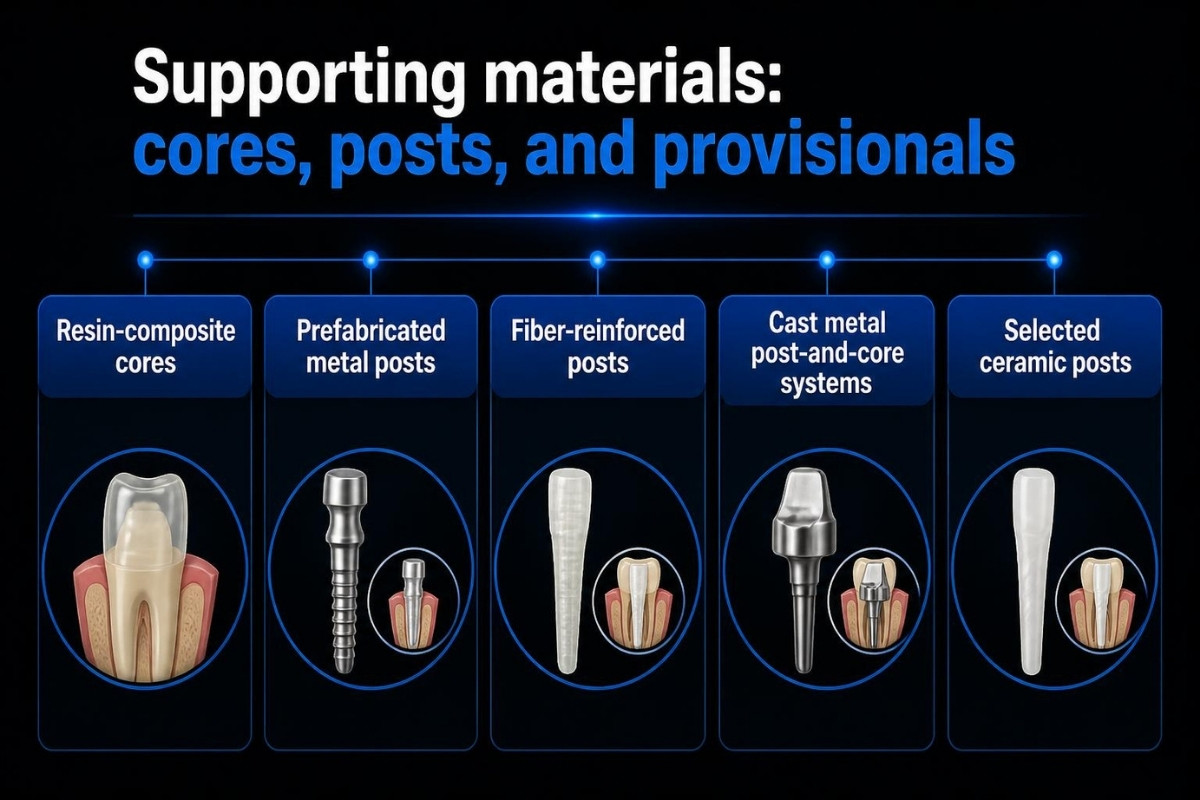
Core and post materials
Common options include:
- Resin-composite cores
- Prefabricated metal posts
- Fiber-reinforced posts
- Cast metal post-and-core systems
- Selected ceramic posts
A post is primarily used to retain a core where little coronal tooth structure remains. It does not inherently reinforce the tooth.
The most important clinical factors often include remaining tooth structure, ferrule effect, endodontic condition, occlusal forces, quality of coronal seal, and preparation design.
Provisional materials
Provisional restorations allow clinicians to protect prepared teeth, manage soft tissue, verify occlusion, assess esthetics, and test function.
Common provisional materials include:
- PMMA
- PEMA
- Bis-acryl composite
- Milled PMMA
- Approved 3D-printed provisional resins
Milled PMMA benefits from controlled industrial polymerization. Printed materials depend heavily on the complete validated workflow, including printing parameters, washing, post-curing, orientation, and finishing.
A resin approved for provisional restorations should not be assumed suitable for definitive crowns or bridges.
How material manufacturing affects restoration quality
The same material can perform very differently depending on how it is processed.
CAD/CAM milling
Milling is used for zirconia, lithium disilicate, metals, composites, and polymers. Key quality-control points include:
- Bur condition and replacement schedule
- Marginal accuracy
- Internal geometry
- Toolpath strategy
- Milling damage
- Chipping control
- Sintering or crystallization requirements
Casting
Casting remains important for alloys. Accuracy and performance depend on pattern accuracy, investment expansion, spruing design, alloy handling, temperature control, porosity prevention, and contamination control.
Pressing
Pressable ceramics require compatible investment materials, calibrated furnace programs, correct pressing temperatures, and careful finishing.
Additive manufacturing
Additive manufacturing is increasingly used for metal frameworks, resin patterns, provisional restorations, and selected definitive resin restorations where cleared and indicated.
A 3D-printed material is validated as part of a workflow, not merely as a resin bottle. Printer settings, build orientation, washing, post-curing, and finishing all influence the final material properties.
Why fixed prosthodontic restorations fail
Failure is rarely caused by one isolated factor. It usually reflects an interaction between material, design, manufacturing, cementation, function, and maintenance.
Technical complications
- Ceramic fracture
- Veneering porcelain chipping
- Debonding or loss of retention
- Marginal defects
- Wear
- Screw loosening or fracture in implant restorations
- Poor proximal contacts or occlusal discrepancies
Biological complications
- Secondary caries
- Pulpal complications
- Periodontal inflammation
- Peri-implant disease
- Poor cleansability around bridge pontics or full-arch restorations
Esthetic complications
- Shade mismatch
- Insufficient masking of dark substrates
- Surface staining
- Gingival recession exposing margins
- Poor contour or emergence profile
A fracture does not automatically mean that the material was wrong. It may indicate inadequate material thickness, sharp internal line angles, processing damage, unsupported veneer ceramic, occlusal overload, or a bonding error.
A practical material-selection framework
Material selection should begin with the clinical indication, not with the newest or most heavily marketed material.
| Clinical situation | Common material options | Primary decision factors |
|---|---|---|
| Highly esthetic veneer | Feldspathic ceramic, lithium disilicate | Enamel availability, substrate shade, thickness, bonding access |
| Posterior onlay or overlay | Lithium disilicate, selected resin-matrix materials | Remaining tooth structure, occlusion, isolation, adhesive workflow |
| Posterior single crown | Zirconia, lithium disilicate, metal–ceramic, full metal | Clearance, esthetic need, load, retention form |
| Short-span bridge | Zirconia, metal–ceramic, selected validated glass-ceramic systems | Connector dimensions, span, location, approved indication |
| Long-span bridge | Metal-based or suitable zirconia systems | Framework rigidity, load, support, connector design |
| Implant-supported crown | Zirconia, glass ceramic, metal–ceramic | Implant interface, retention type, access channel, titanium-base compatibility |
| Full-arch implant restoration | Zirconia, metal, validated polymer or composite systems | Passive fit, repairability, hygiene, cantilever design |
| High parafunctional load | Full metal, metal–ceramic, suitable high-strength zirconia | Space, occlusal design, surface polish, protective planning |
The most defensible option is usually the best-validated material and design combination for the exact indication.
Relevant standards for dental laboratories
Dental laboratories and practices should understand that standards support quality assurance, but no single certification guarantees clinical success in every case.
| Standard | Focus | Relevance |
|---|---|---|
| ISO 6872 | Dental ceramic materials | Classification and testing of ceramic materials |
| ISO 22674 | Metallic materials for dental restorations | Classification and mechanical requirements for dental alloys |
| ISO 9693 series | Metal–ceramic and ceramic–ceramic compatibility | Relevant to layered restorative systems |
| ISO 4049 | Polymer-based restorative materials | Relevant to certain resin-based materials |
| ISO 10477 | Polymer-based crown and veneering materials | Relevant to indirect polymer materials |
| ISO 9917-1 and ISO 9917-2 | Water-based dental cements | Cement classification and testing |
| ISO 7405 | Dental-device biocompatibility evaluation | Dentistry-specific biological evaluation framework |
| ISO 10993 series | Biological evaluation of medical devices | Risk-based biocompatibility framework |
| ISO 13485 | Medical-device quality-management systems | Manufacturing and quality-system controls |
ISO 13485 certification refers to a quality-management system. It does not, by itself, prove that every material or restoration meets all indication-specific performance requirements.
What dental practices should expect from their laboratory
A reliable dental laboratory should provide more than a finished crown. It should provide a controlled and traceable material workflow.
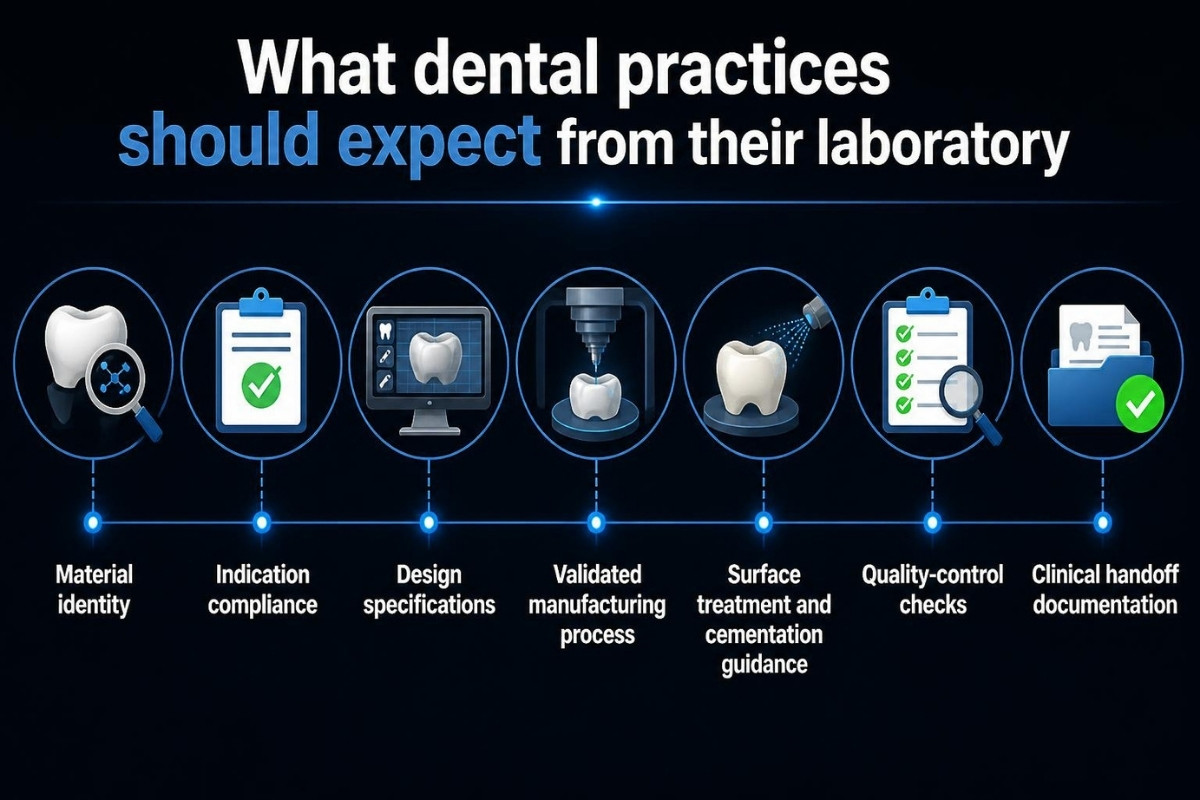
For every definitive restoration, the laboratory should be able to document:
- Material identity: Manufacturer, material name, shade, lot number, and blank details where applicable.
- Indication compliance: Whether the restoration design is within the material manufacturer’s approved use.
- Design specifications: Minimum thickness, connector dimensions, framework support, and margin geometry.
- Validated manufacturing process: Milling, pressing, casting, sintering, crystallization, firing, or post-curing protocols.
- Surface treatment and cementation guidance: Recommended cleaning, priming, polishing, bonding, or conventional cementation process.
- Quality-control checks: Margins, internal fit, contacts, occlusion, surface finish, shade, and defect inspection.
- Clinical handoff documentation: Material card, cementation recommendations, adjustment guidance, and relevant limitations.
For implant restorations, this becomes even more important. Titanium-base compatibility, passive fit, emergence profile, retention design, and torque-related specifications all require careful coordination between the dental practice and the laboratory.
How XDENT LAB supports material-driven restorative quality
For practices outsourcing fixed prosthodontic cases, material selection only works when it is paired with a repeatable laboratory process. XDENT LAB supports lab-to-lab dental outsourcing from Vietnam with a focus on removable and implant restorations, digital manufacturing, trained technicians, and documented quality control.
A dependable outsourcing workflow should prioritize:
- Material traceability
- Consistent CAD design parameters
- Clear indication-based material recommendations
- Verified milling, sintering, and finishing processes
- Restoration-specific cementation guidance
- Communication between clinician, dental practice, and laboratory team
For U.S.-market cases, dental practices should confirm the specific regulatory status, documentation, and intended use of every material and device supplied. FDA approval is not a blanket description for all dental laboratories or materials; the applicable FDA pathway, registration, listing, clearance, or exemption depends on the product and its role in the supply chain.
Key takeaways
Fixed prosthodontic success is a system outcome, not a material-only outcome.
- Metal alloys remain highly durable and useful, particularly in high-load situations.
- Metal–ceramic restorations offer extensive long-term evidence but require correct framework and veneer design.
- Lithium disilicate is highly versatile for esthetic single-unit and adhesively retained cases.
- Zirconia provides strong options across crowns, bridges, and implant restorations, but zirconia grade and finishing matter.
- Resin-matrix and polymer materials can be valuable for defined indications, yet their protocols and long-term evidence vary.
- Cementation, preparation design, manufacturing quality, and maintenance can determine whether a restoration succeeds or fails.
The most reliable approach is to maintain a validated material–indication–workflow matrix. It should state exactly which materials are approved for each restoration type, how they are processed, how they should be cemented or bonded, and what clinical evidence supports the choice.
References and further reading
For evidence-based literature reviews and standard verification, consult the following resources:
- PubMed – Biomedical literature database maintained by the U.S. National Library of Medicine.
- PubMed Central – Free full-text biomedical and life-sciences article archive.
- Cochrane Library – Systematic reviews and evidence synthesis.
- International Organization for Standardization – Official standards information.
- American Dental Association – Professional and scientific dental resources.
- American College of Prosthodontists – Prosthodontic education and professional guidance.
- Academy of Osseointegration – Evidence-based implant dentistry resources.
- FDI World Dental Federation – International dental knowledge and professional guidance.
Foundational academic papers include work by Kelly and Benetti on ceramic materials, Denry and Kelly on zirconia, Gracis and colleagues on all-ceramic material classification, Zhang and Lawn on zirconia development, and systematic reviews by Sailer, Pjetursson, and colleagues on tooth-supported fixed dental prostheses.
About XDENT LAB:
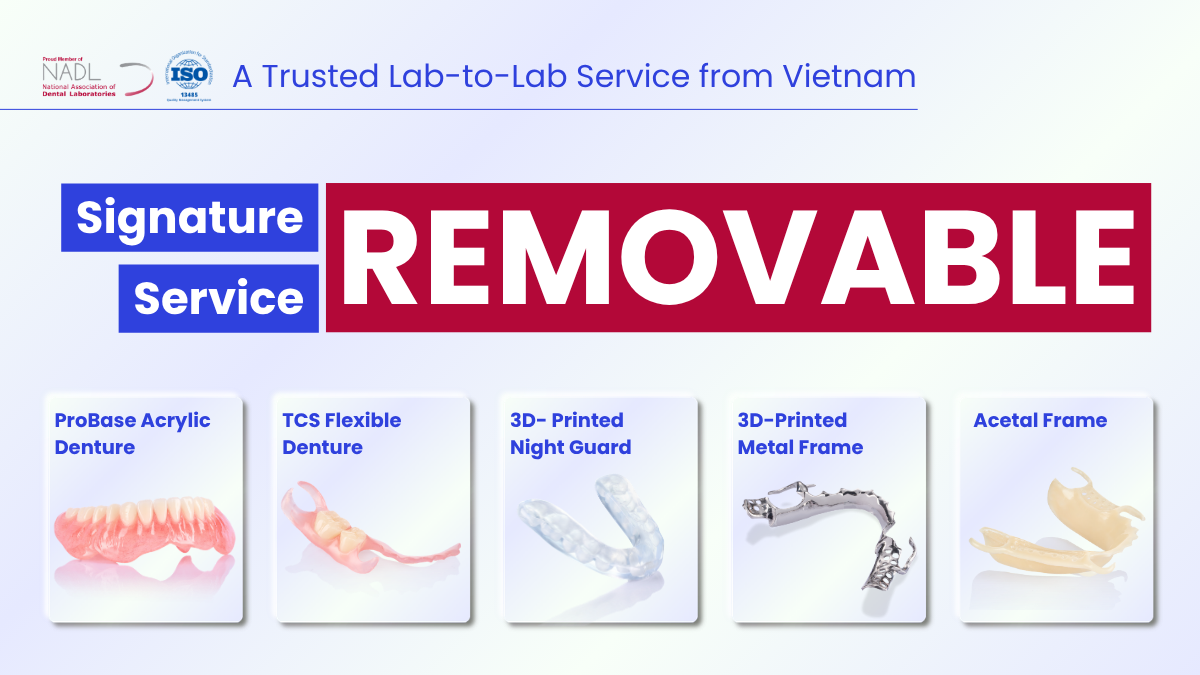
We are experts in Lab-to-Lab Full Service from Vietnam, with the signature services of Removable, meet U.S. market standards, FDA-registered, ISO 13485-certified. Founded in 2017, from local root to global reach, we scale with 2 Factories with over 100+ employees.
Our Commitments Built on “Trusted. Commitment. Quality”
- Commit to Large-Scale Manufacturing, high volume, remake rate < 1%.
- Commit to 5-Year Warranty
- Commit to Competitive Price
XDENT LAB | A Trusted Lab-to-Lab Service from Vietnam
Share this post:
Related Posts
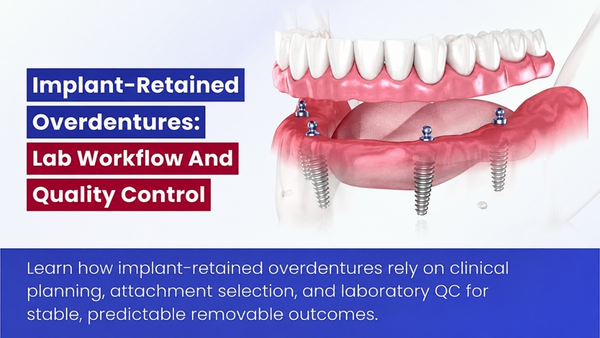
Learn how implant-retained overdentures rely on clinical planning, attachment selection, and laboratory QC for stable, predictable removable outcomes.
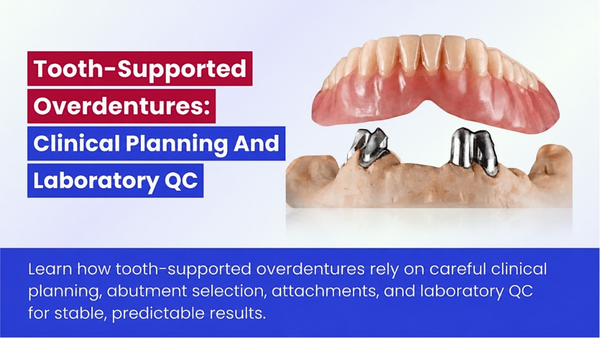
Learn how tooth-supported overdentures rely on careful clinical planning, abutment selection, attachments, and laboratory QC for stable, predictable results.
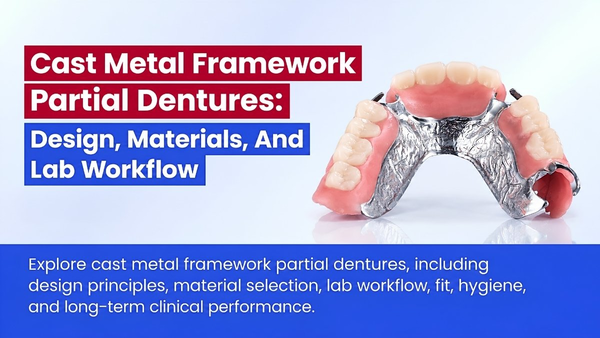
Explore cast metal framework partial dentures, including design principles, material selection, lab workflow, fit, hygiene, and long-term clinical performance.

